

SUBSCRIBE TO OUR FREE NEWSLETTER
Daily news & progressive opinion—funded by the people, not the corporations—delivered straight to your inbox.
5
#000000
#FFFFFF
To donate by check, phone, or other method, see our More Ways to Give page.
Daily news & progressive opinion—funded by the people, not the corporations—delivered straight to your inbox.
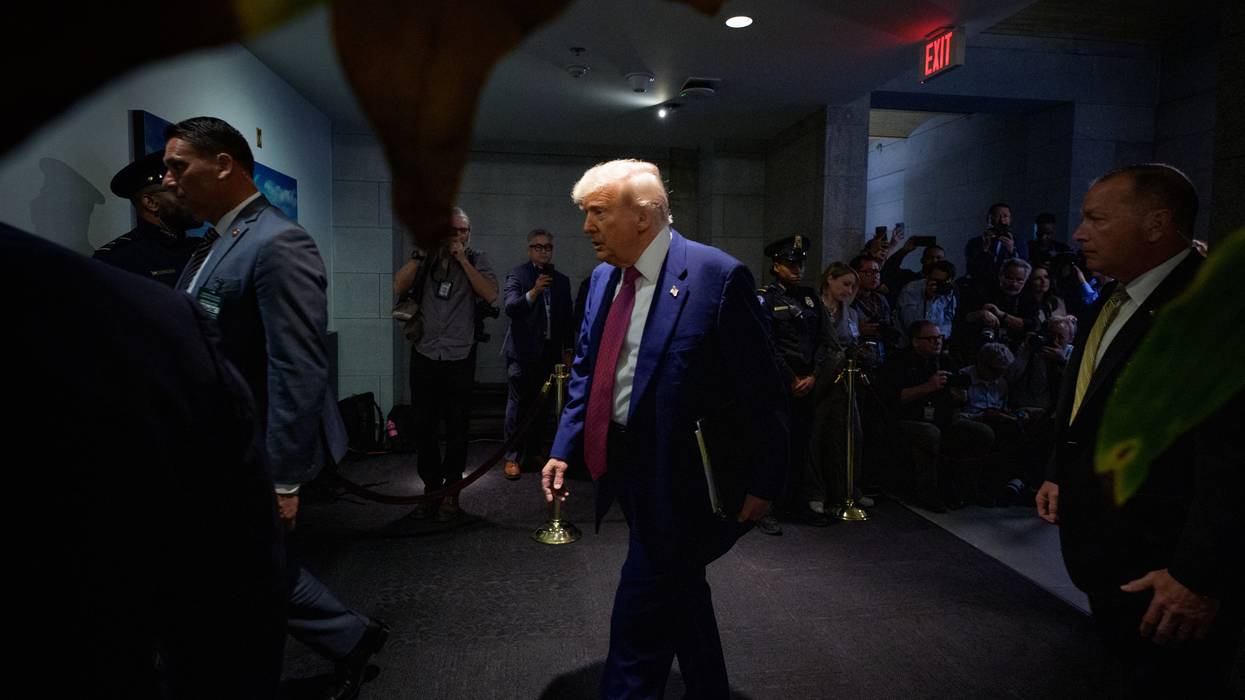
The House budget is the Make America Immobile Act. Trump is doing his best to freeze things in place: on behalf of oil companies that want to keep pumping oil, on behalf of automakers that want to keep churning out SUVs.
Credit where due: I am ever impressed by the feral energy of U.S. President Donald Trump and his crew, who are able to do an extraordinary amount of damage every single damned day. And somehow their energetic cruelty seems to drain my own reserves: I want to stay in bed. But we fight as best we can, and so here’s my assessment of one dire day, and more importantly what we still might be able to do about it.
It began, early Thursday morning, with House passage of the budget bill, which somehow managed to get even worse in the wee hours. Among other things, a single sentence was amended in such a way as to potentially kill off most of the rooftop solar industry in the U.S. As Heatmap’s Matthew Zeitlin explains:
While the earlier language from the Ways and Means committee eliminated the 25D tax credit for those who purchased home solar systems after the end of this year (it was originally supposed to run through 2034), the new language says that no credit “shall be allowed under this section for any investment during the taxable year” (emphasis mine) if the entity claiming the tax credit “rents or leases such property to a third party during such taxable year” and “the lessee would qualify for a credit under section 25D with respect to such property if the lessee owned such property.”
That arcane piece of language was enough to knock 37% off the share price of SunRun today, the biggest rooftop installer in the country. And it was only a cherry on the top of this toxic sundae, which would essentially repeal all of the Inflation Reduction Act (IRA). Nuclear power gets a little bit of a reprieve, and of course ethanol (Earth’s dumbest energy source) does great. But it’s a wipeout far greater than anyone expected even a few weeks ago. Here’s how Princeton’s Jesse Jenkins and his team at REPEAT (Rapid Energy Policy Evaluation and Toolkit) sum it up:
In the midst of all this, the Senate—ignoring its parliamentarian—bowed to the wishes of the auto industry and told California (and the 11 states that had followed it) that it couldn’t demand the phaseout of internal combustion vehicles by the middle of the next decade. (This is among other things federalism in reverse).
“Attacking these waivers will devastate our ability to advance the use of electric vehicles in the state,” California Attorney General Rob Bonta said in a press conference after the vote, flanked by California Gov. Gavin Newsom and other officials. “We won’t let it happen, not when we’re facing an air pollution and climate crisis that’s getting worse by the day.”
The 1970 Clean Air Act permits California to receive waivers from the Environmental Protection Agency that enable the state to enact clean air regulations that go further than federal limits.
Oh, and then at day’s end the Department of Homeland Security told Harvard that 27% of its student body couldn’t study there beginning in the fall because they came from foreign countries.
If you add it up, this is all an effort to keep America precisely where it is now. It’s the Make America Immobile Act. Trump is doing his best to freeze things in place: on behalf of oil companies that want to keep pumping oil, on behalf of automakers that want to keep churning out SUVs. That depends, among other things, on shutting down research at universities, because they keep coming up with things that point us in a different direction, be it temperature readings demonstrating climate change or new batteries that enable entirely different technologies. If America lived alone on this planet that would be truly terrible; luckily for everyone else, there are other places (China, and the E.U.) that are not making the same set of stupid decisions. But if this stands it will kill the future for America.
It will also, of course, kill the present. I’m not bothering to talk about the deep cruelty of the Medicaid cuts (and the fact that they will destroy America’s rural hospital system). There’s also the not-small matter of the intense attacks on transgender people the bill contains. And I won’t bother gassing on about the utter grossness of handing over yet more money to the richest among us. (The top 0.1% of earners gain $390,000 a year on average, while Americans making less than $17,000 lose on average about $1,000. This is, among other things, Christianity in reverse).
So, our job is to do what we can to make it… less worse. The U.S. Senate still has to pass its own version of the bill. Given the GOP majority, they’ll pass something very bad. Perhaps, at Trump’s urging, they’ll rush it through in the next 24 hours; more likely it will take a little longer. We need to put as much pressure as we can on that process, in order to take out the most egregious parts of the bill. Here’s what Third Act sent out on Thursday, and here’s the link we want you to use to register your opposition with Senators. It comes from our very able partners at Solar United Neighbors, who have done as much as anyone in America to help people build clean energy. Fill it out so you can get a call script and the numbers to use. Again, here’s the link. If you want a little inspiration, check out Will Wiseman’s video of rural Americans talking about one particular part of the IRA that’s helping change their lives.
I’m not going to bother pretending that this is guaranteed to work. The bad guys here are riding hard and fast, and they’re trying to shock and cow us into submission. But—don’t go easy. If they can summon the feral energy to wreck the country, we can summon the humane energy to try and save it.
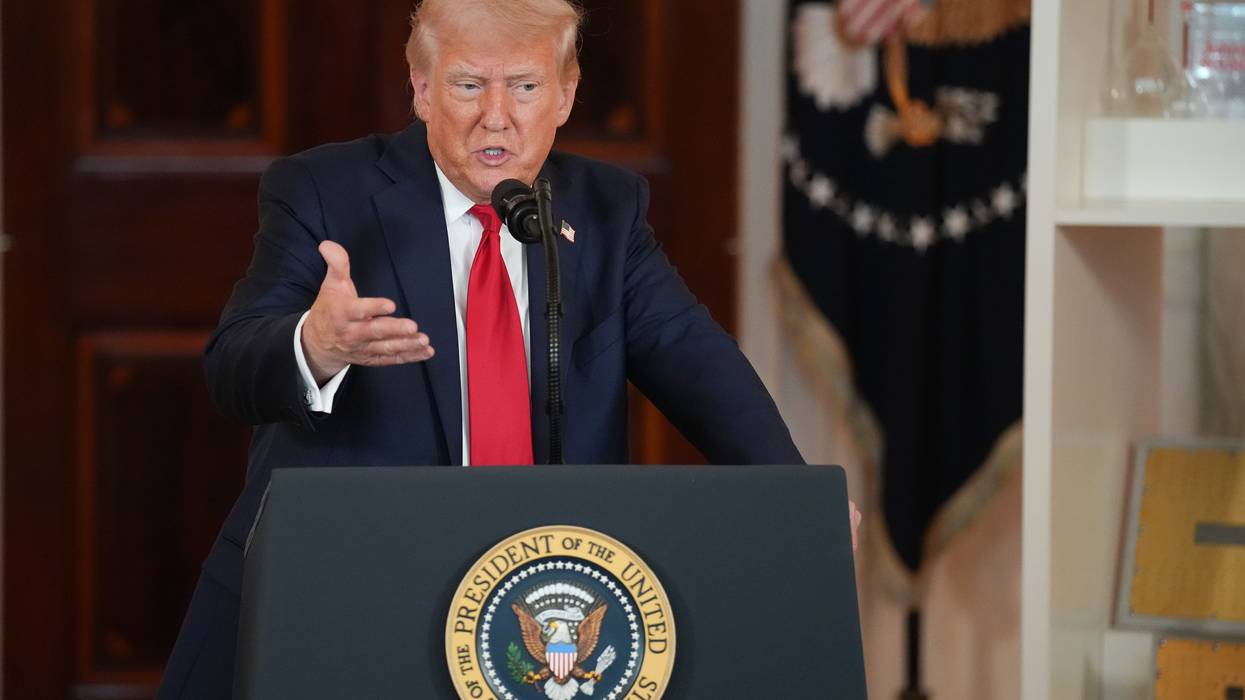
"Such an unprecedented action would endanger our ability to carry out our educational mission," said a spokesperson for the Ivy League school.
Harvard University pushed back forcefully Friday after President Donald Trump declared in a social media post that "we are going to be taking away Harvard Tax Exempt Status," adding that is "what they deserve."
Trump's comment came just hours after Democratic senators sent a letter demanding a probe into whether the administration is acting illegally by trying to compel the U.S. Internal Revenue Service to yank the university's tax exemption.
Trump's post did not specify whether the IRS, the entity that has the power to remove an organization's tax-exempt status, is opting to remove Harvard's designation. Multiple outlets noted they got no immediate response from the IRS when they asked the agency for comment.
"There is no legal basis to rescind Harvard's tax-exempt status," a university spokesperson said in a statement, according to Politico. "Such an unprecedented action would endanger our ability to carry out our educational mission."
It is illegal for the president, vice president, or other top officials to request, indirectly or directly, that the IRS audit a particular taxpayer.
Senate Minority Leader Chuck Schumer (D-N.Y.) and multiple other Democratic senators on Friday asked the Acting Treasury Inspector General for Tax Administration (TIGTA) to probe whether the IRS has received illegal pressure from the administration when it comes to Harvard, and to provide information about whether the agency is looking into other entities at the direction of the president or other top officials.
"It is both illegal and unconstitutional for the IRS to take direction from the president to target schools, hospitals, churches, or any other tax-exempt entities as retribution for using their free speech rights," the senators wrote in a letter dated Friday to the Acting TIGTA Heather Hill.
"It is further unconscionable that the IRS would become a weapon of the Trump administration to extort its perceived enemies, but the actions of the president and his operatives have now made this fear a reality. We request that you review whether the president or his allies have taken any step to direct or pressure the IRS to take politically-motivated actions regarding the tax-exempt status of the president's political targets," they continued.
Loss of tax-exempt status, something that would only typically occur after an audit process that allows the university opportunity to defend itself and appeal, would be extremely significant for the university. Tax-exempt status means the school does not pay federal income tax on charitable contributions to the school and other income. It also means that donations to the school are tax-exempt for those who make them.
Trump mused publicly on April 16 that Harvard should lose its tax-exempt status, after the university's president said the institution would not comply with a list of policy demands from the president, that included, according to the Harvard Crimson, derecognizing pro-Palestine student groups and auditing academic programs for viewpoint diversity. The pushback from Harvard prompted the administration to freeze over $2 billion in federal funding for the school.
That same week, it was reported that the IRS was making plans to revoke Harvard's tax-exempt status.
In response to Trump's bullying tactics, Harvard sued the administration, calling the freeze on funding unlawful and asking the court to restore it.
The tangling between Harvard and the Trump administration is part of a broader wave of scrutiny by the White House on higher education.
Imagine if the shoe was on the other foot and Israelis were being eradicated and driven towards expulsion.
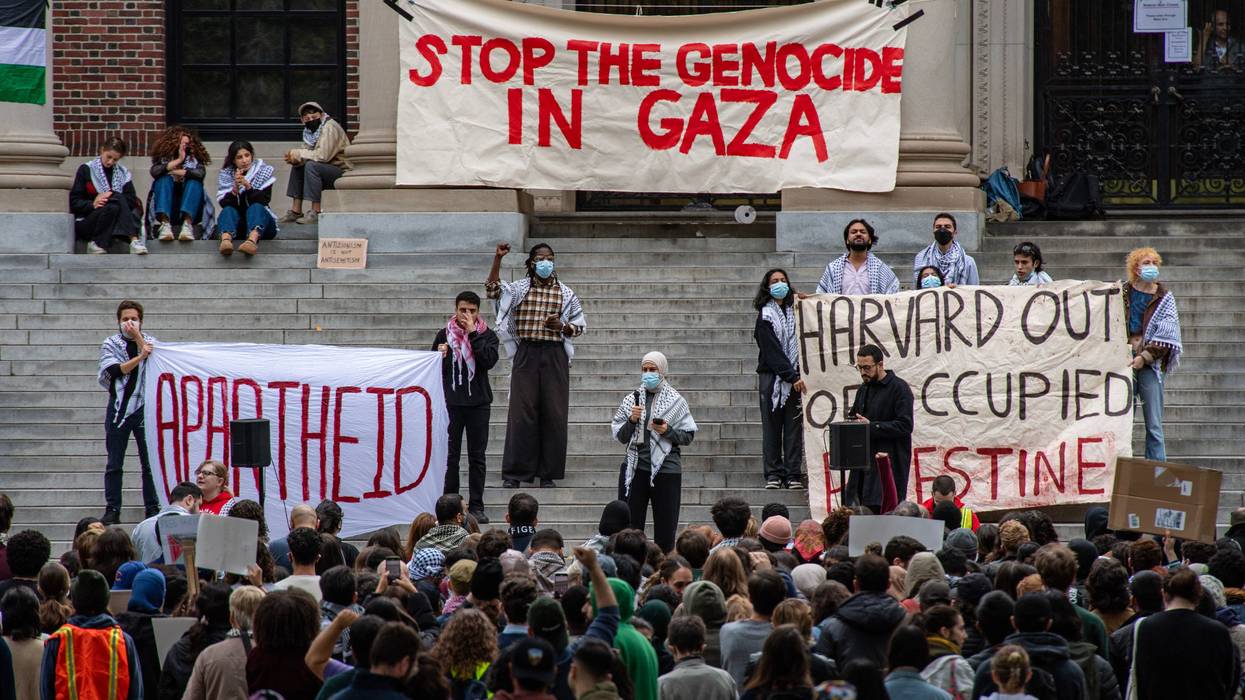
From a recent peaceful student rally at Columbia University came a chant that summed up their protest: "FOUR HUNDRED THOUSAND DEAD AND YOU’RE ARRESTING US INSTEAD."
This is the bloody omnipresence that the co-belligerent Trumpsters and their fearful university leaders, whom Trump has targeted for submission, are relegating to the shadows of the dying Hell in Netanyahu’s genocidal mass murder of Gaza’s Palestinian families.
A survey, reported in Harper’s Index (March 2025), reported that 49% of the children in Gaza “wanted to die,” while 96% of them “believed they would soon die.”
Instead of that annihilation’s intensification, with U.S. weaponry and unconditional U.S. government backing under both parties in Washington, D.C. being the subject of action, both Trump and the president of Harvard agreed that the big concern is “anti-semitism” against Jews at Harvard and other universities. Both men kept referring to such “anti-semitism” against Jews with no evidence, no examples, and no other substantiation.
Today’s operating “anti-semitism” is “ The Other Anti-Semitism,” to use the title of a lecture in Israel years ago by Jim Zogby. The “Other Anti-Semitism” is expressed lethally and daily by F-16s, Helicopter Gunships, and Tank Artillery from Israel’s regime against defenseless Palestinian Semites. Netanyahu’s genocidal policy, since the mysteriously collapsed Israeli border security apparatus on October 7 enabling the Hamas attack, is driven by the “no food, no water, no medicine, no electricity, no fuel,” for Gaza policy. After his truce-breaking in early March, blocking trucks carrying humanitarian aid, he is pushing more Palestinians into starvation.
Domestically, it is more than grotesque to describe Harvard University President Alan Garber parroting Trump’s accusations of anti-semitism against Jews on campus without mentioning that the students, including Jewish students, were protesting there and on other campuses and pressing for an end to the mass slaughter, a ceasefire, emergency humanitarian aid and a peaceful resolution of the conflict. In short, PRO-SEMITISM.
Instead of receiving praise, these protesters – Palestinian Americans and Jewish Americans in the lead, with many others – are beset upon by police, arrested, harassed, banished from their campuses, beat up (at UCLA), expelled, their events canceled, and, to rub salt into the wounds, labeled as “anti-semites.”
Leading Jewish commentators have reviled Trump – the hypocrite – for brandishing an unfounded anti-semitism smear as the laser beam for his illegal demands and freezing federal grants to these universities. They see his exploiting ploy as being cynically driven to silence or divide his opponents.
Nonetheless, until Trump demanded turning Harvard into his fiefdom, provoking Harvard to finally sue the federal government, Garber’s public communications were groveling to Trump. Especially those adopting Trump’s wild claims of anti-semitism thus further enabling Trump’s dictates.
Here is Garber on March 31, 2025 – “We fully embrace the important goal of combating anti-semitism…I have experienced anti-semitism directly even while serving as president.” Why no substantiation? Because he and others like former president Lawrence Summers, have accepted a definition of anti-semitism that mostly equates criticism of Israeli government policies (e.g., Netanyahu) with anti-semitism.
Mr. Garber has not spoken out against the Gaza genocide, or the U.S. backing it while violating six federal laws (Garber is a lawyer). His public statements reveal his own thinly veiled anti-semitism against Palestinian Arab Semites.
Imagine if the shoe was on the other foot and Israelis were being eradicated and driven towards expulsion, would Mr. Garber have remained silent? Would he have labeled pro-Israeli rights advocates on campus as “anti-semites”? He needs to be educated by Jewish Voice for Peace, B’Tselem, Breaking the Silence, and Rabbis for Human Rights.
He also needs to confront his fears and demonstrate moral courage against large complaining corporate donors, with many camouflaged axes to grind, including their ludicrous belief that Harvard has long been a hotbed of radical Marxism against capitalism.
He needs to reverse actions against faculty studying the Middle East or collaborating on public health issues with a Palestinian university. He should find ways to exit his costly hiring of a lobbying firm and lawyers close to Trump in an attempt to appease Trump. Doesn’t he know that Trump is further goaded on seeing such weakness?
He could start his self-rehabilitation consonant with his powerful position in the world of academia by having coffee with a similarly fearful Dean Goldberg of the Harvard Law School. (See, my April 4, 2025 column,
When the Dean of Harvard Law School Went Dark). They can start their reflections by absorbing Aristotle’s enduring insight, “Courage is the first of human qualities because it is the quality which guarantees the others,” and apply it to their present predicaments imposed by a fascist dictatorship moving into a police state shredding all our basic civil liberties and civil rights.
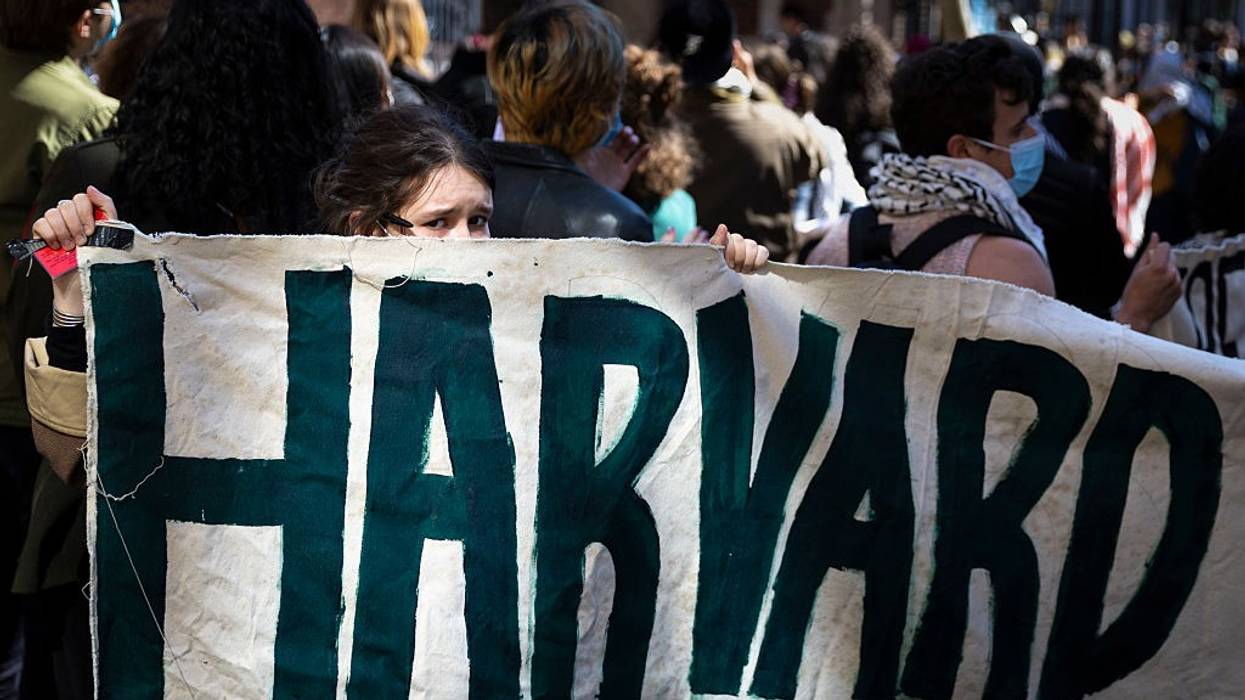
What if this was the letter the U.S. president received from those at what some consider the nation's premiere institution for aspiring lawyers.
Dear President Trump:
We are Harvard Law students who have read the lengthy and comprehensive list of demands on our Harvard University by your staff. They are assuredly designed to turn this institution of higher education, older than the U.S.A., into a fiefdom under your iron rule. As modest students of medieval history, we see that your demands provide a status for the peasants – the students, the vassals – the faculty, but no one for the role of the Lord of the Manor.
It is obvious that you want to become the LORD OF THE MANOR. We have a proposal. There is no more exalted status at Harvard than that of the law professors. They are the best and brightest law professors in the land; if you doubt that, just ask them. They are specialists in knowledge of the law. However, they are not specialists in the seriously destabilizing arena of lawlessness.
Quite candidly, we believe and can document that you are the world’s expert on lawlessness – its range, depth, rewards and modes of escape from accountability. For some unfathomable reason, you have been far too modest about your unparalleled knowledge in this fast-expanding area of immune business and political activity. We make this claim after reading your statements – about twenty of them – where you explicitly declare your superior knowledge over all in such subjects as “trade,” “technology,” “drones,” “construction,” “devaluation,” “banks,” – “renewables,” “polls” and even “the power of Facebook.” (See the book, “Wrecking America: How Trump’s Lawbreaking and Lies Betray All” by Mark Green and Ralph Nader, 2020).
Missing from your expansive proclamations of expertise is the subject of LAWLESSNESS. Having engaged in over 3000 lawsuits and having been sued under tort law and indicted under criminal law, you have demonstrated an escapist skill that even seasoned attorneys find breathtaking. No sheriff has ever caught you. Only one prosecutor has ever convicted you. E. Jean Carroll won two civil tort cases with damages that are still on appeal.
One of your remarkable tactics is interminable stalling of the legal process. Another is how you can personally and continually attack in public, with tough language, the judges and other judicial personnel with complete impunity. As we know from our studies, such vituperative language in the United Kingdom would have landed you in contempt of court and a jail term.
Now, therefore, here is our proposal to fill the position of LORD OF THE MANOR, without impinging on your Day Job as president of the United States. With your permission, we will approach our Dean and request that he appoint you as a VISITING FULL PROFESSOR OF LAW CONDUCTING THE FIRST AND ONLY COURSE IN LAWLESSNESS – its nature, function and strategies of escape from the long arm of the rule of law. It would be the largest class in Harvard Law School history, overflowing our largest auditorium, AUSTIN HALL.
YOU would provide, effortlessly from your extraordinary memory, empirical information never before revealed and analyzed.
Your self-awareness is exceptional, having said in 2019 – “With Article II, I can do whatever I want as President,” and having openly wished that you could be King. To understand the rule of law better, it is necessary to understand the outlaws. This is especially true for you, Mr. President because you once declared, “I know more about courts than any human being on earth.”
Going deeper, you are eminently qualified to lecture us on regions of lawlessness abroad and how you think one should try to establish peaceful and law-abiding governance. The Middle East comes to mind. By enlisting the law school’s reservoir of scholarship on these conflicts you could establish yourself as a Nobel-Prize worthy implementor of a profound peaceful PRO-SEMITISM between Arab and Jewish Semites. Just envision your going to Norway to receive the coveted Award that your detractors could never believe was remotely possible.
We anticipate your affirmative response and understand fully if a condition of your acceptance is that the course be taught by Zoom from the Oval Office. Should you wish to have your lectures streamed to a wider audience, the Law School has all the requisite facilities.
Just your exalted title “Honorable visiting Professor of Law, Donald J. Trump” along with your presiding over the White House will anoint you as the LORD OF THE MANOR. You would be addressed by all members of the Harvard University community as “MY LIEGE.”
We look forward to hearing from you.
Very truly yours,
Harvard Law Students
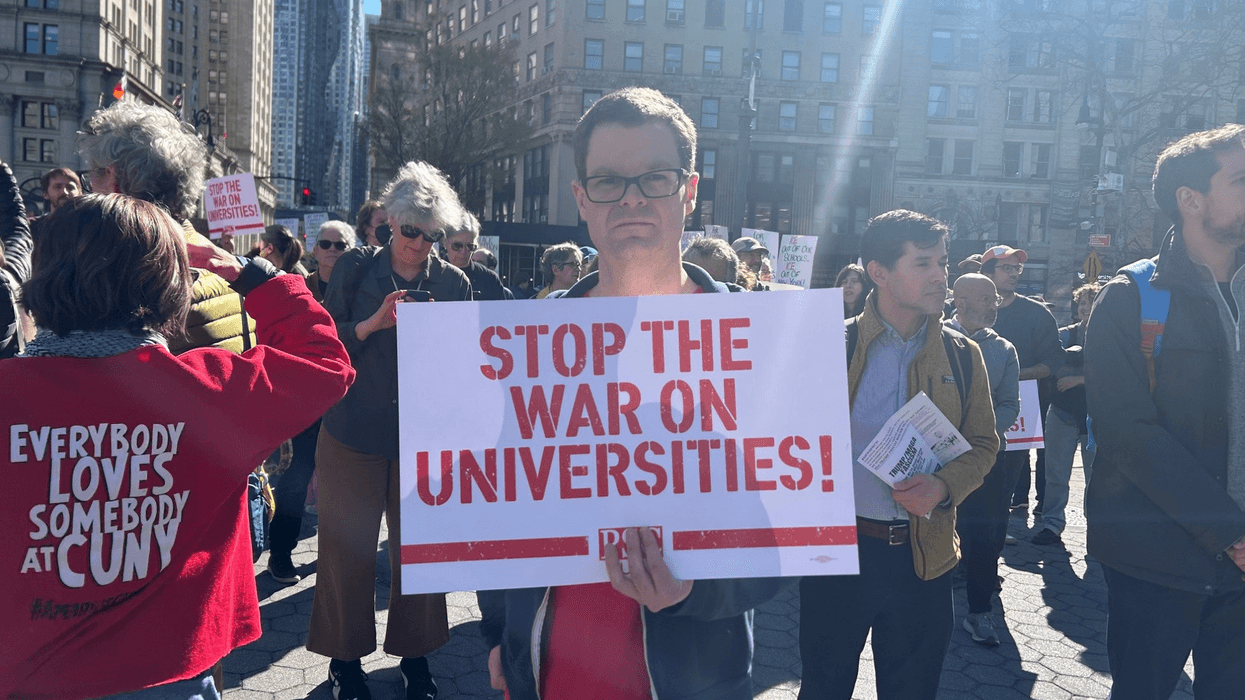
Weeks after the Rutgers University Senate passed a resolution to form a "mutual defense compact" with other Big Ten schools, at least four other schools have pushed forward their own proposals.
Weeks after the Rutgers University Senate passed a resolution to form a "mutual defense compact"—aiming to band together with other universities to protect from the Trump administration's attacks on academic freedom and free speech—university communities' push for their schools to stand up to the White House is gaining momentum.
Labor unions, Palestinian rights groups, and other advocacy groups on Thursday held rallies and events to mark the Day of Action for Higher Education, with students and faculty at more than 150 schools demonstrating against President Donald Trump's funding cuts; attacks on diversity, equity, and inclusion (DEI) initiatives; targeting of academic freedom; and deportation operations in which a number of student organizers have been rounded up in recent weeks.
"[ Immigration and Customs Enforcement] is abducting students," said the Debt Collective, a sponsor of the day of action. "The Trump administration is suppressing free speech. Tuition is rising and workers and staff aren't paid living wages. We need higher education to be a liberation machine, not a deportation and debt-making machine."
The signs displayed at one rally in Pittsburgh reflected the wide array of attacks Trump has launched against higher education—from billions dollars of funding cuts to the National Institutes of Health, impacting biomedical and scientific research at universities across the U.S. to the ICE arrests of international students who have spoken out against Israel's U.S.-funded assault on Gaza.
Like the mutual defense compact proposal that's now gained traction at several schools, the day of action is partially a response to Trump's demand that universities collaborate with the administration to punish students who took part in nationwide Palestinian solidarity protests last year.
Columbia University has drawn ire for reportedly giving the names of students, including organizer Mahmoud Khalil, to the Trump administration before he was detained by ICE; refusing to provide protection to Khalil and his fellow organizer, Mohsen Mahdawi, who was also arrested this week; and revoking degrees from some pro-Palestinian protesters.
In contrast, faculty senates at Big Ten schools including the University of Nebraska at Lincoln, Indiana University at Bloomington, Michigan State University, and the University of Massachusetts at Amherst have joined Rutgers in passing resolutions calling for the creation of mutual defense compacts to protect against the "legal, financial, and political incursion" of the Trump administration.
On Thursday, members of the faculty senate at the University of Michigan, also part of the Big Ten Academic Alliance, advocated for passage of a resolution to defend "academic freedom, institutional integrity, and the research enterprise"—and push back against administrators' closing of the school's DEI office at the behest of Trump's White House.
"The University of Michigan abandoned DEI in-part to avoid the wrath of Trump and most schools, not just ours, have been cowed into this kind of preemptive capitulation. Most schools, not just ours, have gone silent, just when we need them to speak up," sociology and law professor Sandra Levitsky told Michigan Advance on Thursday.
At Indiana University, Jim Sherman, a professor emeritus in psychological and brain sciences, said that while faculty members and students are calling on their institutions to form a coalition against Trump, many administrators at public universities seem to want to draw as little national attention to their schools as possible.
"I think a lot of universities are thinking, basically, 'Boy, I hope they don't come after us.' You know, 'Let them come after Columbia or Harvard or Stanford... Let them go after the big dogs,'" Sherman told Common Dreams. "Maybe if we stay quiet and don't do very much, they'll just ignore us."
But that approach will only worsen the sense of "anxiety, angst, uncertainty, [and] instability" that's spreading across college campuses today, said Sherman.
"When I was an active faculty member, the years and the job were just full of joy," he said. "My collaboration with colleagues across the U.S. and across the world were just incredible. I couldn't have wanted a happier and more fulfilling life."
"Rather than doing your teaching and research," he added, "I think the major goal right now for many of us is protection."
Sherman expressed hope that the growing support for mutual defense compacts will soon leave a critical mass of schools with no choice but to join—and ultimately place pressure on university presidents, who thus far have declined to back the movement.
"If you're in the Big Ten and suddenly five or six universities join, you don't want to be the one who's left out or not [doing] anything," said Sherman.
Outside the Big Ten, Harvard University garnered applause this week when it announced—unlike its Ivy League peer Columbia—that it will not comply with Trump's demands to expel students who took part in pro-Palestinian protest, end its recognition of Palestinian solidarity groups, or audit its programs for "viewpoint diversity." The elite university now faces a threat from Trump to have its tax-exempt status revoked.
The mutual defense compacts that have passed so far call for participating universities to "commit meaningful funding to a shared or distributed defense fund," which could potentially be used in cases like that of Indiana cybersecurity professor Xiaofeng Wang, a Chinese national whose home was raided last month by the Department of Homeland Security and FBI and who was fired by the university, or international students targeted by ICE.
"As long as different universities put their resources together, whether it's sharing information about legal issues, whether it's talking about cases that have been resolved one way or another, whether it's making funds available for the protection of faculty," Sherman said. "I think the biggest goal should simply be unification and coordination and cooperation among as many universities who want to join in as possible."
University presidents are also facing pressure from labor unions to support a mutual defense compact, with a dozen graduate students' unions affiliated with the United Electrical, Radio, and Machine Workers of America releasing a statement Wednesday.
The unions—representing tens of thousands of students at University of Minnesota, Northwestern University, North Carolina State University, and others—urged schools to establish an International Worker Support Fund and to ensure they won't "comply with ICE or other federal agencies initiating unconstitutional requests, such as sharing names and documentation statuses of students and workers or allowing ICE or other federal agents to enter campuses and university buildings."
Paul Boxer, a psychology professor at Rutgers who co-authored the original resolution at the school, emphasized that while university presidents have not yet expressed support for the mutual defense compact, support for defending First Amendment rights, academic freedom, and the diversity that thrives on many college campuses is strong among those who make up university communities.
"We do believe it's extremely important," Boxer told Common Dreams, "that faculty, staff, students, alumni, anyone connected to higher education at all, whether it's public or private, understands that universities—certainly at the level of the individuals who are providing higher education services, who are doing that kind of work, who are invested in the present and future of higher education—we are all committed to this cause."
A principled leadership of Harvard and of all the other great universities of this country should be giving leadership and effective direction to the movement against the war on the Palestinians—not figuring out how to destroy it.
Harvard's decision to impose the controversial International Holocaust Remembrance Alliance, or IHRA, definition of antisemitism on its campus underscores the university's complete failure to rise to the occasion of opposing Israel's crimes against humanity, its subservience to the Israeli lobby, and its actual complicity in the mass killings carried out by Israel in Gaza and the West Bank.
Not only does Harvard refuse to examine its likely investments in companies profiting from the destruction of Gaza (those investments are secret). But it actively silences opposition to that killing by large numbers of its own students through punishments and suspensions. How times have changed since a previous Harvard administration finally listened to the cries of its students for divestment from the white racist apartheid South African regime in the 1980s! The days when Harvard would welcome a Nelson Mandela to its campus to sing the glories of its protesting students who helped to end apartheid are over because of Mandela's outspoken championing of Palestinian rights during his whole political life.
Even though American Jews are among the leaders of the opposition to Israel's crimes against Palestinians, Harvard will now label these vast numbers of Jews as antisemites because of the loud opposition they are organizing against Israel's indiscriminate attack on Palestinians, against the calls of Israeli leaders to destroy Palestinians through starvation and onslaught, and against Israeli apartheid and denial of basic rights to Palestinians and their parents who once called the land their home.
Is Harvard really concerned about antisemitism? Or just policing its students' language and actions to undermine opposition to the atrocities Israel has been committing in Gaza and now in the West Bank?
The issue here is far beyond free speech. It is about playing a major role in silencing opposition to monstrous murder and destruction. In all its expressed concern about what it labels antisemitism and about the discomfort of some of its students who support the Israel's war, there is no mention at all about the reason that so many of its students condemn Israel's actions in Gaza—where it will take years just to remove the bodies of thousands of Palestinians buried under the rubble of their homes, schools, and hospitals. It is as if Israel's policies in Gaza are irrelevant to the upheaval that the Harvard administration seeks to crush. Harvard students were risking their futures not primarily for their rights to free speech but to maintain a semblance of integrity and as an expression of their grief while their own country provided Israel with full-throated support for its attack on Palestinian children.
Antisemitism is a centuries-long curse that must be opposed and challenged whenever it rears its ugly head. The Holocaust is a crime that stands out against all others in the modern age and whose lessons must never be forgotten. One of those lessons is "never again." And that is the lesson that the vast majority of young Jews who condemn Israel for its deliberate destruction of Palestinian society are acting on—as their forebears condemned white South Africa for its brutal apartheid system. The vast movement against Israel's racism and killing is not calling for Israelis to be murdered or driven into the sea. The call is for an end to the war on Palestinians and for equal rights for both peoples whether in the same country or in separate independent states. To pervert the fight against antisemitism into a weapon to be used to subdue opposition to what we have seen each day in Gaza is morally reprehensible. A principled leadership of Harvard and of all the other great universities of this country should be giving leadership and effective direction to the movement against this war on a people—not figuring out how to destroy it.
Why is the assertion by large numbers of American Jews that "the existence of a State of Israel is a racist endeavor" labeled antisemitic? It may be true or it may not be true. But why is it antisemitic? Why can a student at Harvard say that the United States is a racist endeavor without being charged with racism? They can certainly be challenged, but what does racism have to do with such a claim? Why would drawing a comparison between the brutal October 7 Gaza uprising and the Warsaw Ghetto uprising against the Nazis be considered antisemitism? It may be right, wrong, or partially wrong. Let the facts speak. But why is it antisemitic? "Denying the Jewish people their right to self-determination" is wrong. But why is it just fine for Israelis to deny Palestinians that same right without being called on the carpet for doing so? The chant "from the river to the sea" may be mistakenly experienced by many Israelis as calling for the violent destruction of Israel. Clearly the violent destruction of any people cannot be tolerated. But why was it just fine when Israeli Prime Minister Benjamin Netanyahu's Likud party enshrined the same slogan in its documents in the not too distant past? And why is the call by millions of Israelis today for the expansion of the state of Israel into wider areas of the Middle East—even beyond the river to the sea—just fine with our country's leaders?
When the International Court of Justice (ICJ) issued its legal ruling that "Israel's occupation and annexation of the Palestinian territories are unlawful, and its discriminatory laws and policies against Palestinians violate the prohibition on racial segregation and apartheid," is that antisemitism? Or just a statement of fact? When the ICJ preliminarily ruled that South Africa (now joined by Ireland) had made a plausible case that Israel was committing genocide in Gaza, was that because Ireland and South Africa are antisemitic? When the International Criminal Court issued arrest warrants for Netanyahu and former Israeli Defense Minister Yoav Gallant for crimes against humanity and war crimes, were they motivated by antisemitism or by the facts of the matter?
We applaud Harvard's commitment to oppose antisemitism whether directed against Israeli Jews, Zionist Jews, or anti-Zionist Jews. Would that Harvard was just as concerned about the pervasive doxing and harassment of its students for their support of Palestinian life by pro-Israel zealots—in some cases with dire consequences for those students' careers.
So the question is: Is Harvard really concerned about antisemitism? Or just policing its students' language and actions to undermine opposition to the atrocities Israel has been committing in Gaza and now in the West Bank?
Harvard University should be faithful to its better angels. To oppose antisemitism and Islamophobia, of course. But to jettison its imposition of the IHRA definition of antisemitism on its faculty and students. To insist that the rights of all its students be respected. But also to stand, as it has at times in the past, on the side of justice. There is a monstrous crime that poses a threat to the very existence of a people that must be ended. There are hostages on both sides that must be released. Let's hope that this first phase of the cease-fire in Gaza can be turned into the beginning of a necessary process that brings immediate peace, food, and medical care to the people of Gaza; ends land seizures and attacks in the West Bank; begins the reconstruction of Gaza; allows self-determination for Palestinians as well as Israelis; and even moves toward the reconciliation of two peoples who wish the same things for their children and who, some day, can do great things together.
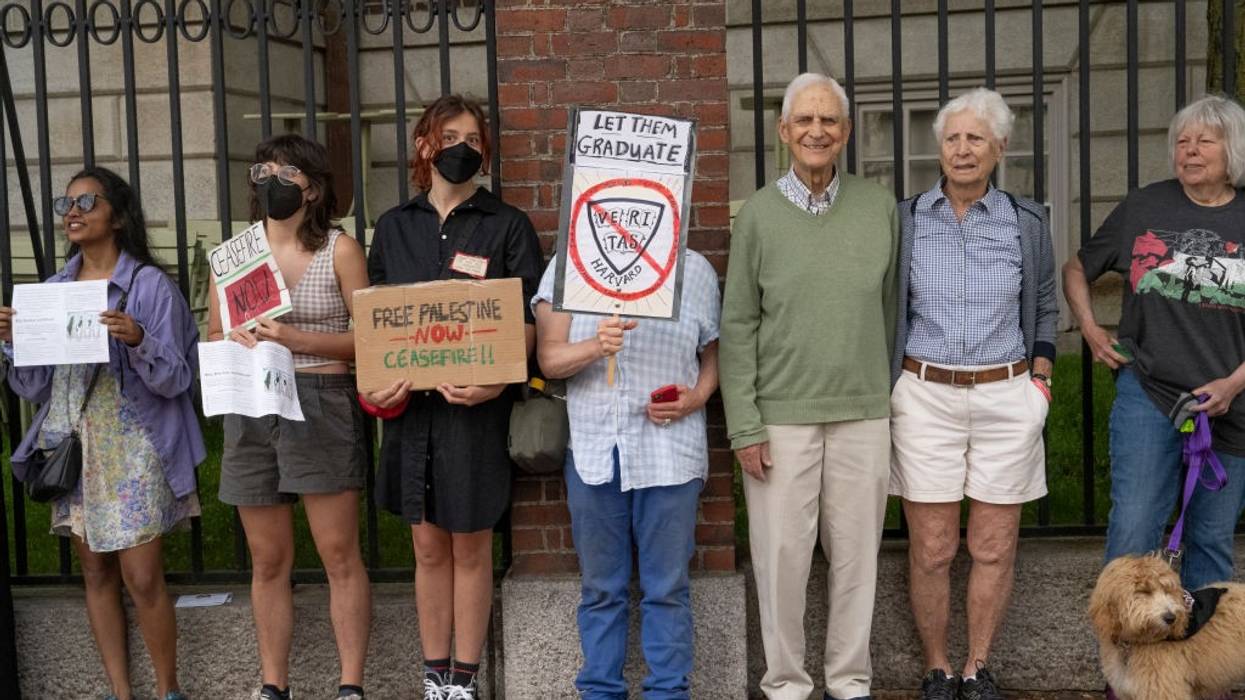
If Harvard allows students to suffer the harsh and unfair consequences meted out by a body of 12 unelected members of Harvard Corporation, fundamental faith in the institution will disappear.
Across the country unrest continues to shake university campuses and commencement ceremonies. At Harvard, over 1000 people walked out of graduation in a coordinated protest over its handling of students involved in the Palestine solidarity encampment.
On May 14, after three weeks of peaceful protest, Harvard students dismantled their solidarity encampment based on assurances from Harvard President Alan Garber that disciplinary bodies would act “expeditiously under existing precedent,” with the goal that seniors would be able to graduate. Garber led students (and faculty advisers) to trust that Harvard’s Administrative (“Ad”) Board, which enforces undergraduate academic regulations and conducts disciplinary processes, would be “guided by standard responses and considerations of equity.”
This, however, is not what happened.
The Ad Board placed 39 Harvard College students on multi-semester long probation and suspended five students. Consequently, 13 graduating seniors had their degrees delayed by multiple semesters. On May 20, the Faculty of Harvard College overwhelmingly voted to reverse the Ad Board’s decision and confer the 13 degrees. However, on May 22, the day before graduation, the Harvard Corporation refused to let the 13 seniors graduate in a shocking rebuke to faculty governance. These seniors may now lose post-graduate work opportunities and fellowships, including 2 of the 10 Harvard students awarded a Rhodes scholarship this year. These punitive actions will have lifelong consequences for students, many of whom are not from economically privileged backgrounds.
What should we now teach our students? That you may speak up, except for Palestine?
This disproportionate punishment exemplifies the “Palestine exception” by overturning decades of precedent in university disciplinary proceedings in prior student protest encampments—including many that were longer, larger, and more disruptive. Far from responding in a “content-neutral” manner to Palestine solidarity protests, the university has shown that Palestinian lives—and the rights of those who advocate for them—are expendable.
Even before the student encampment, the ACLU of Massachusetts sent a letter to Harvard’s General Counsel, warning that Harvard’s probation and suspension of the Palestine Solidarity Committee, the only recognized student Palestinian advocacy organization at Harvard College, “constitutes a breach of contract, violates Harvard’s duty to provide basic fairness in disciplinary proceedings, and may otherwise be unlawful because of its negative impact on free speech and associational rights.” In the letter, the ACLU urged Harvard to “ensure that students expressing views that may be unpopular or controversial… are not disproportionately targeted due to their viewpoints.”
As physicians and faculty at Harvard Medical School, we have dedicated our careers to caring for vulnerable people. We teach our students the importance of standing up for the oppressed, that no life is disposable, and that we must use our privilege as physicians to contest conditions that devastate health and crush life chances. While we each come from different faith traditions—Christian, Jewish, and Muslim—we teach our own children the same thing. Do the right thing, no matter what others are doing. Speak out when others are being harmed.
We see clear connections between our healthcare worker colleagues in Palestine—who refuse to leave their patients’ sides, even as bombs fall and they become targets for detention and torture—and student protesters. On April 24, when students launched their encampment demanding an end to Harvard’s silence and complicity with genocide, students knew they risked their careers, livelihoods, and possibly even their physical safety. Our students had already witnessed other university administrators, at University of Texas and Emerson College in Boston, call in police to violently remove encampments and arrest protesters.
Our students still made the principled decision to risk their education, careers, and personal safety, as privileged students at Harvard, to demand justice for the people of Palestine. There were no universities left in Gaza, students reminded us. This collective act of solidarity was so inspiring, that each of us brought our own children to witness the encampment. We wanted them to see and feel the love and principled commitment of young people in the encampment in the face of injustice. We wanted them to catch a glimpse of other worlds that might be possible. Worlds where all lives are held precious.
How will we tell our children of the unfair punishment students face at the hands of Harvard administrators for peacefully and bravely living their values, for daring to demand justice and an end to genocide? What should we now teach our students? That you may speak up, except for Palestine?
That Harvard resolved the Palestine solidarity encampment without police force has been framed as a victory for the Harvard community—a sign of its beneficence and tolerance. But, if Harvard allows students to suffer the harsh and unfair consequences meted out by a body of 12 unelected members of Harvard Corporation—despite calls of over 500 Harvard faculty and staff and the vote of its own Harvard College Faculty—fundamental faith in the institution will disappear. It would suggest that Harvard is not guided by its own principles of equity and fairness, but rather susceptible to corporate overreach and donor pressure. That too will have grave and long-term consequences that will long outlive the current students involved.
In the words of James Baldwin, “[We] do not believe what you say because [we] see what you do.”
Harvard could choose to repair broken trust. The first step is ending the Palestine exception and allowing our 13 seniors to graduate with degrees they earned.
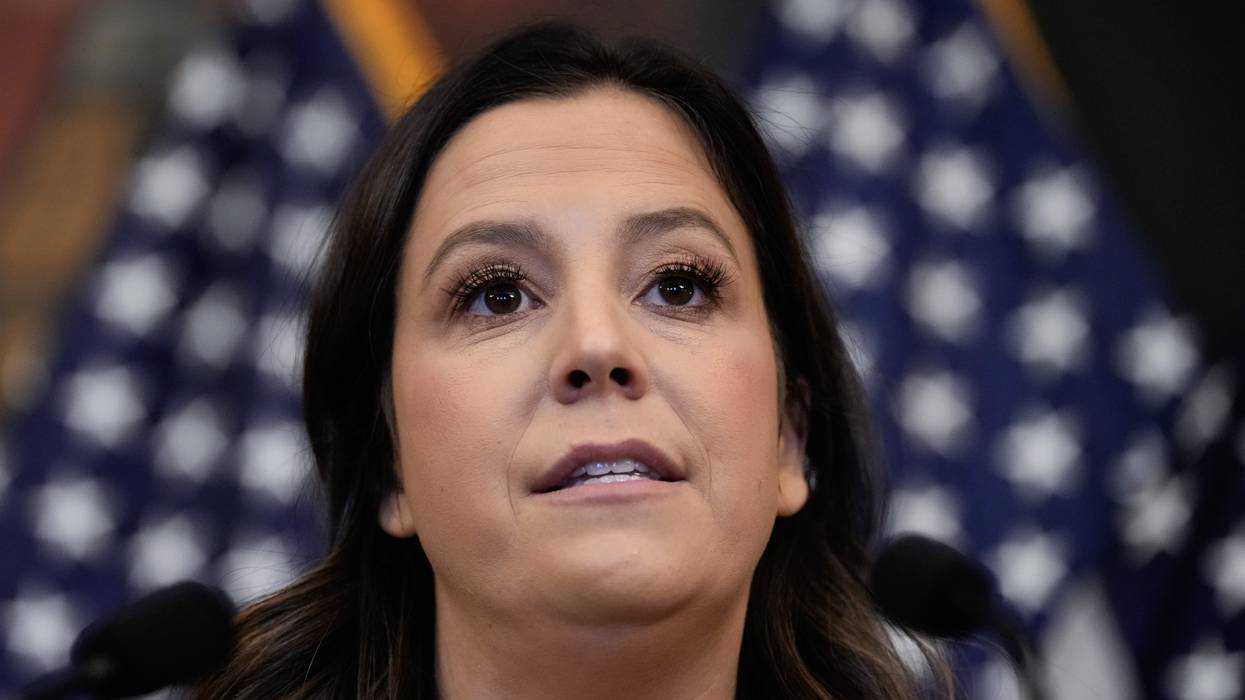
When covering right-wing claims of antisemitism on campus, reporters for an ostensibly liberal paper should be looking at what is actually being said and what is actually happening.
University presidents are under fire from politicians and the media over what is being framed as their waffling over allowing antisemitic speech on their campuses. But it is a concocted outrage that has nothing to do with safeguarding Jewish students, and The New York Times is going along for the ride.
The uproar concerns an appearance by the presidents of Harvard, MIT, and the University of Pennsylvania before the House Education committee, in which Rep. Elise Stefanik (R–N.Y.) grilled them about antisemitism on campus and whether “calling for the genocide of Jews” violates university codes of conduct.
The Times (12/6/23) reported the story under the headline, “College Presidents Under Fire After Dodging Questions About Antisemitism,” with the subhead: “The leaders of Harvard, MIT, and Penn appeared to evade questions about whether students should be disciplined if they call for the genocide of Jews.” Reporters Stephanie Saul and Anemona Hartocollis began:
Support for the presidents of Harvard, the University of Pennsylvania, and MIT eroded quickly on Wednesday, after they seemed to evade what seemed like a rather simple question during a contentious congressional hearing: Would they discipline students calling for the genocide of Jews?
Specifically, the reporters wrote, the presidents’ “lawyerly replies”—that it depends on the context of the speech—drew criticism from Jewish leaders as well as Democratic bigwigs, thus framing the ire not as partisan positioning against liberal academia, but a categorical defense of Jewish students against uncaring administrators.
But there are two big problems with the Times‘ framing: The calls for genocide were imaginary, and the presidents’ answers were not evasive, they were accurate reflections of the constitutional protections of free speech and the scope of university policies on harassment and bullying.
As a subsequent Times report explained (12/7/23), Stefanik
repeatedly tried and failed to get them to agree with her that calls for “intifada” and use of slogans such as “from the river to the sea” were appeals for genocide against Jews that should not be tolerated on campuses.
First, let’s be clear: Calls for “intifada” or a free Palestine “from the river to the sea” are not the same as calls for genocide. Merriam-Webster defines the Arabic word “intifada” in the context of Palestine to mean “an armed uprising of Palestinians against Israeli occupation of the West Bank and Gaza Strip.”
“From the river to the sea, Palestine will be free” is a slogan that’s long been used by Palestinians to “represent the vision of a secular democratic state with equality for all,” as University of Arizona Mideast studies professor Maha Nassar (Conversation, 11/16/23) noted.
The American Jewish Committee describes the phase as “a rallying cry for terrorist groups and their sympathizers,” saying it calls for the “establishment of a state of Palestine from the Jordan River to the Mediterranean Sea, erasing the state of Israel and its people.” But as Nimer Sultany of London’s School of Oriental and African Studies told Al Jazeera (11/2/23), the word “free” in the slogan refers to “the need for equality for all inhabitants of historic Palestine.”
So much for right-wing opposition to “cancel culture.”
As U.S. corporate media outlets seldom remind their audiences, Israel is currently deemed an apartheid state by leading human rights groups like Amnesty International, Human Rights Watch, and Israel’s B’Tselem (FAIR.org, 2/3/22).
Pro-Palestinian protesters on campuses do talk about genocide, however (Ha’aretz, 10/25/23)—to argue that Israel is carrying one out in its assault on Gaza, which has so far killed at least 17,000 people, 70% of them women and children, according to Gazan health officials (Reuters, 12/7/23).
Announcing the “second stage” of the war against Gaza (Common Dreams, 10/30/23), Israeli Prime Minister Benjamin Netanyahu declared, “You must remember what Amalek has done to you, says our Holy Bible”—a reference to 1 Samuel 15:3: “Now go and smite Amalek, and utterly destroy all that they have, and spare them not; but slay both man and woman, infant and suckling.”
But Stefanik—the chair of the Republican Conference, whom Times reporting by Nicholas Confessore (12/31/22) had earlier depicted as a vacuous opportunist with no real ideology beyond her own advancement—wasn’t asking good-faith questions about antisemitism on campus. She was asking a gotcha question to force the presidents to answer “yes” or “no” about legal and policy matters that in fact required more context. The paper quoted at length her exchange with UPenn president Mary Elizabeth Magill, who has since resigned:
Ms. Stefanik asked Ms. Magill, “Does calling for the genocide of Jews violate Penn’s rules or code of conduct, yes or no?”
Ms. Magill replied, “If the speech turns into conduct, it can be harassment.”
Ms. Stefanik pressed the issue: “I am asking, specifically: Calling for the genocide of Jews, does that constitute bullying or harassment?”
Ms. Magill, a lawyer who joined Penn last year with a pledge to promote campus free speech, replied, “If it is directed and severe, pervasive, it is harassment.”
Ms. Stefanik responded: “So the answer is yes.”
Ms. Magill said, “It is a context-dependent decision, congresswoman.”
Ms. Stefanik exclaimed: “That’s your testimony today? Calling for the genocide of Jews is depending upon the context?”
Stefanik was smugly triumphant, and the exchange led to pressure against Magill from the state’s governor (Chronicle ofHigher Education, 12/6/23) and calls to resign from the board of UPenn’s business school (Axios, 12/7/23). The school lost a $100 million donation (BBC, 12/8/23).
After issuing an apology (Wall Street Journal, 12/7/23), Magill resigned (New York Times, 12/9/23). Falling just short of openly declaring a witch hunt against university administrators, Stefanik (Fox News, 12/9/23) replied to the resignation: “One down. Two to go.”
The New York Post (12/10/23) wasn’t so shy, saying that in response to the supposed leftward nature of higher education society should “starve these schools of funds (alumni giving, government largesse, tuition money) until they have boards and administrations dedicated to righting things.” So much for right-wing opposition to “cancel culture.”
But Magill was correct. Speech is protected; Penn’s policies are about bullying and harassment. So if someone simply uses the phrase “from the river to the sea” or “intifada,” it doesn’t fall under Penn’s policies unless it is accompanied by conduct that can be interpreted as bullying or harassment. As the Daily Beast‘s Jay Michaelson (12/6/23) wrote:
What about when someone makes a statement in a classroom or a college lecture? If someone insists, in a classroom discussion, that Israel as a country is an illegitimate colonial outpost and should be “wiped off the map”?
That sounds like a political statement to me, not an act of bullying or intimidation.
But if a mob marches into a Shabbat service and shouts the same slogan, then that’s clearly harassment and in violation of the policy. Context matters.
In the Times‘ letters section (12/7/23), one writer said:
Free speech doesn’t exist only for speech with which you agree, and if it doesn’t cross the bright legal line into literally targeting individuals or inciting violence, punishing it is problematic.
So yes, as Harvard’s president, Claudine Gay, rightly said, context matters as it relates to discipline. But that doesn’t mean there is any ambiguity, any argument, that calls for genocide against Jews aren’t both bigoted and deeply disturbing. They surely are.
It wasn’t until the eighth paragraph that the Times said the university presidents “tried to give lawyerly responses to a tricky question involving free speech, which supporters of academic freedom said were legally correct.”
This is a sneaky way to hide the reality that, yes, free speech means, hypothetically speaking, defending people’s rights to make atrocious and offensive statements. If Republican lawmakers believe that such a reality is unacceptable, then they should come out and say they are against free speech.
But the next paragraph is far worse:
But to many Jewish students, alumni, and donors, who had watched campus pro-Palestinian protests with trepidation and fear, the statements by the university presidents failed to meet the political moment by not speaking clearly and forcefully against antisemitism.
The Times had just noted that all three presidents “said they were appalled by antisemitism and taking action against it on campus. When asked whether they supported the right of Israel to exist, they answered yes, without equivocation.” So the problem is not their clearly stated opposition to antisemitism or support for Israel. It’s their unwillingness to say they’ll discipline those whose speech some find abhorrent.
Just because people don’t like a protest—even with good reason—doesn’t mean that the protesters should be punished for their speech. Many women might find anti-abortion tabling to be sexist; that doesn’t mean it is outside the bounds of free speech. Would the Zionist version of “from the river to sea”—where Israel includes the Occupied Territories (Times of Israel, 9/22/23)—be considered so offensive to Palestinian students that students who make them should be punished? Would the Times also have us believe that it should be illegal for pro-police students to have rallies in defense of cops accused of brutality and murder of unarmed Black people?
After quoting no fewer than six critics of the presidents, the Times finally found someone to offer a defense of their answers—sort of. Saul and Hartocollis turned to Will Creeley, legal director at the Foundation for Individual Rights and Expression, a group more often associated with libertarian pearl-clutching over “cancel culture” (1/31/22). He grudgingly accepted that the administrators were right: “It does depend on context,” he told the Times.
But Creeley added that he was sad “to see them discover free speech scruples while under fire at a congressional hearing,” and hadn’t come out as advocates for his version of free speech more generally, which sees decisions by publishing companies to not publish certain (right-wing) authors as “book banning.”
After Creeley’s brief and half-hearted defense, the Times returned to more critics, one of whom demanded that the presidents “resign in disgrace,” and another who was “appalled by the need to state the obvious: Calls for genocide against Jews do not depend on the context.”
Perhaps the Times could have glanced at Stefanik’s own record; she has come under fire for engaging in white nationalist conspiracy theories like the “great replacement” theory (Washington Post, 5/15/22, 5/16/22; NBC, 5/19/22). In fact, Albany’s Times-Union editorial board (9/17/21) blasted her embrace of the far-right theory:
If there’s anything that needs replacing in this country—and in the Republican party—it’s the hateful rhetoric that Ms. Stefanik and far too many of her colleagues so shamelessly spew.
This was in response to her ads that said, “President Biden and fellow Democrats are seeking a ‘permanent election insurrection’ by expanding pathways to citizenship for undocumented immigrants” (Washington Post, 9/16/21).
In perhaps her weirdest outburst, Stefanik “denounced Democrats who disagreed with her proposals to ease baby formula shortage as ‘usual pedo grifters’” (Daily News, 5/13/22), a nod to the antisemitic QAnon conspiracy theory that fuels the Trumpian right (Guardian, 8/25/20). Once an obscure backbencher, Stefanik has risen in conservative fame while latching onto conspiracy theories about the 2020 presidential election being rigged, to the point the point of aligning herself with an anti-Muslim leader of the “stop the steal” movement (WAMC, 8/23/21).
The Times missed this important context, which would have led a reporter to question if Stefanik’s pointed questioning toward the university presidents was genuinely motivated by a concern for antisemitism or, instead, a kind of projection of her own record.
The whole affair has boosted Stefanik’s currency in right-wing media, especially Fox News (12/6/23, 12/6/23, 12/8/23). In fact, The New York Times (12/7/23) wrote a followup article reporting that the exchange with the three university presidents “went viral, racking up tens of millions of views on social media (the Israeli government even reposted a clip of the hearing).” While Stefanik has had support from the right, Times congressional correspondent Annie Karni wrote that her grilling achieved the “unthinkable” by
prompting many Democrats and detractors of Mr. Trump to concede that an ideological culture warrior with whom they agree on nothing else was, in this case, right.
In yet another follow-up piece, the Times (12/10/23) accepted Republican concern about campus antisemitism as fact, without questioning whether mere criticism of Israel was being wrongly branded as antisemitic, or acknowledging that it has actually been the left that has blown the whistle on the rise of white nationalism, antisemitism, and xenophobia in conjunction with the political rise of Donald Trump (Washington Post, 10/17/22; Haaretz, 11/8/22). The “potency” of the recent Republican inquisition into free speech on campuses, the Times‘ Nicholas Confessore said, “was underscored by how many Democrats joined the attack.” It was lost on the Times that it was its own misframing of the exchange that lent liberal validation to a far-right GOP leader like Stefanik.
Of course, Stefanik took to The Wall Street Journal’s opinion page (12/7/23) to rebroadcast her congressional spectacle, calling the presidents’ testimony “pathetic” and displaying a “lack of moral clarity.” But it makes sense for a conservative opinion space to act as a right-wing PR vehicle.
Reporters for an ostensibly liberal paper, meanwhile, should be looking at what is actually being said and what is actually happening. Instead, the Times is fanning the flames of a fake outrage, and it’s already having a dire impact on free speech.
Correction: This article was updated in order to properly identify the "Foundation for Individual Rights and Expression."

"Keep sharing reports from Gaza," said the author and activist. "Israel is freaking out at the implications, which is why the distraction machine is in overdrive."
This post has been updated with information about the House investigation into antisemitism on college campuses.
Author and rights advocate Naomi Klein warned late Wednesday that supporters of a permanent cease-fire in Gaza must stay focused on one thing—Israel's mass killing of civilians in the blockaded enclave, a violation of international law—and resist efforts to distract the public from the issue at hand.
"The distraction machine is in overdrive," said Klein on social media after more than a day of commentary and outrage directed at the presidents of three top universities after they testified before the U.S. House Education and Workforce Committee at a hearing titled "Holding Campus Leaders Accountable and Confronting Antisemitism."
Republican members including Rep. Elise Stefanik (R-N.Y.) demanded to know whether the presidents of the University of Pennsylvania, Harvard University, and the Massachusetts Institute of Technology (MIT) would discipline students for "calling for the genocide of Jews."
The university leaders suggested that their schools typically do not punish students for speech alone—in accordance with the U.S. Constitution, Penn president Liz Magill said in a video posted later—but said such calls could qualify as harassment if they were "directed and severe, [or] pervasive," and could be punished if it "crosses into conduct."
Sally Kornbluth, president of MIT, said she had "not heard calling for the genocide of Jews on our campus." Stefanik replied that "chants for intifada"—a call for an "uprising" which is not inherently violent—have been heard at the school.
Videos of students holding an anti-war protest at University of California, Los Angeles were widely circulated in October, with some influential pro-Zionist celebrities and commentators asserting that students were proclaiming, "We want Jewish genocide." The protesters were actually addressing Israeli officials and saying, "We charge you with genocide."
"Can someone point me to an example of a student group calling for the genocide of Jewish people?" asked Mari Cohen, associate editor of Jewish Currents. "Why are we having this conversation?
The hearing wasn't the first to confront speech on college campuses since Israel began its U.S.-backed onslaught in Gaza, which has killed at least 17,177 Palestinians in just two months. Last month the House Judiciary Committee invited student leaders of conservative and pro-Zionist groups to testify about "hostility towards certain points of view" on campuses, and the hearing was interrupted by pro-Palestinian rights students who demanded to know whether their speech should also be protected.
Klein said Wednesday that the repeated hearings on the topic "are smoke and mirrors to distract from genocidal violence in Gaza."
Klein suggested that it has not gone unnoticed by Israeli officials that journalists and residents in Gaza have continued to widely share information about the reality on the ground, where dozens of Palestinians were killed Thursday in Israeli air raids on a home in Gaza City. The Israel Defense Forces (IDF) escalated attacks on the city of Khan Younis in the south—previously a relatively safe refuge for people who fled northern Gaza—with "multiple residential buildings and units... flattened," according to Al Jazeera.
"The occupation is trying to destroy all residential buildings in the eastern areas of Khan Younis," reported the outlet on Thursday.
Gastrointestinal and respiratory diseases as well as hepatitis have also begun spreading due to blockades on medical supplies, fuel, and safe drinking water, leading the World Health Organization to warn last month that disease could ultimately kill more civilians in Gaza than the bombs the U.S. has helped to provide for Israel.
"Congress should be working towards a lasting cease-fire to end Israel's deadly assault on Gaza, a hostage exchange, and a path to equality, justice, and safety for all Palestinians and Israelis," said the Jewish-led Palestinian rights group IfNotNow on Wednesday, responding to a House resolution that claimed anti-Zionism and antisemitism are one and the same. "Not wasting precious time using antisemitism as an excuse to shut down free speech."
On Thursday afternoon, Stefanik announced that the committee was launching "an official congressional investigation with the full force of subpoena power" into the three universities and other schools regarding antisemitism on campus and administrators' responses.
"This investigation will include substantial document requests, and the committee will not hesitate to utilize compulsory measures including subpoenas if a full response is not immediately forthcoming," said committee Chair Virginia Foxx (R-N.C.). "Other universities should expect investigations as well, as their litany of similar failures has not gone unnoticed."
The student newspaper of the University of Pennsylvania, The Daily Pennsylvanian, noted that the school's rules governing hate speech state that the university can only discipline students if their "inflammatory speech intentionally and effectively provokes a crowd to immediately carry out violent and unlawful action."
"Universities can invest their efforts and resources in educating their members and in creating spaces and contexts for productive dialogue, but they cannot legitimately punish members—students, staff, and faculty—who choose not to participate in those, or who profess bigoted and other hateful views," the policy states.
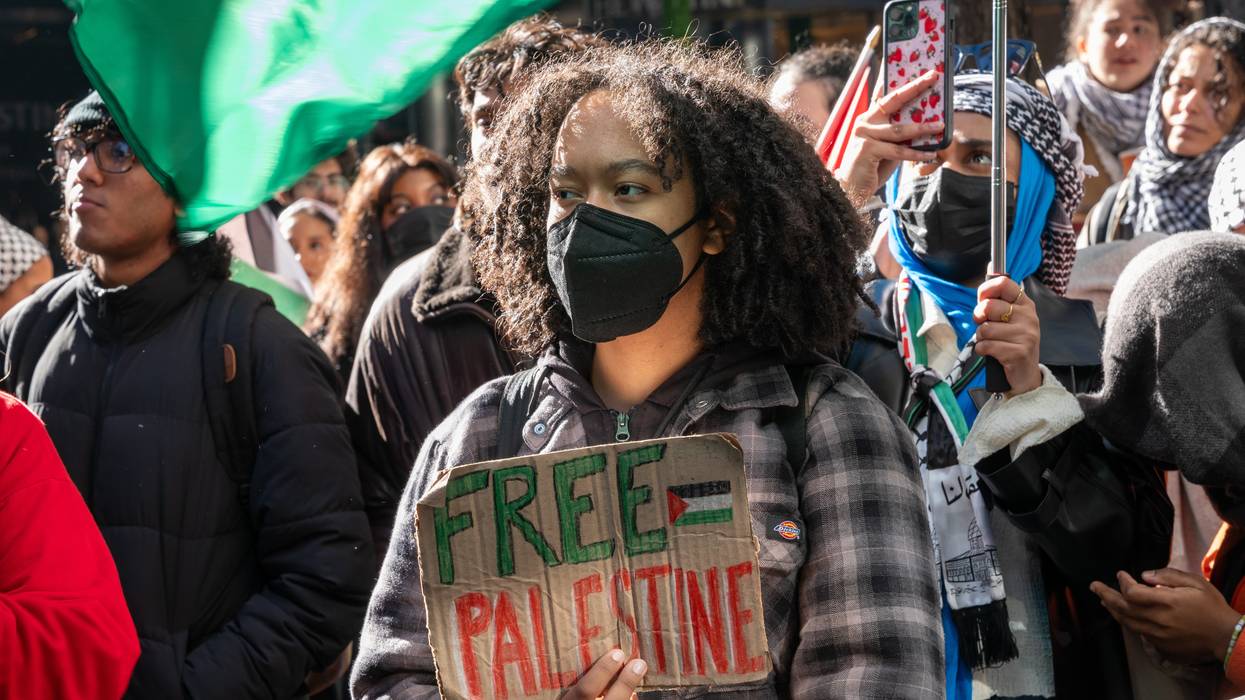
"The suppression of dissenting voices, at this moment, especially those advocating for peace and non-violence, is antithetical to the very foundations upon which our democracy stands."
More than 1,700 lawyers and law students on Tuesday urged the American Bar Association to take action to combat the growing trend of censorship and discrimination against those voicing solidarity with Palestinians amid Israel's devastating bombing campaign, ground invasion, and siege in Gaza.
Since Israel launched its latest military assault on the Gaza Strip following a deadly Hamas-led attack on October 7, there have been "increasing instances of discrimination and censorship faced by Palestinian, Muslim, Arab, South Asian, Black, Indigenous, immigrant, and other communities within law schools, universities, law firms, and other corporate entities, particularly due to their expression of support for the Palestinian people," the lawyers and students wrote in a newly released letter to the ABA.
"These incidents include rescinding job offers, terminating employees, and harassing and doxxing law students, among others," the letter states. "We share our grave concerns that the target of these incidents are law students and legal professionals seeking to uphold international law and Palestinian human rights. Censorship and retaliation cause democratic backsliding, against which our profession is one of the guardrails, and is antithetical to the very foundations of a free society."
The letter, which was also backed by a collective of more than 125 legal institutions, comes after Columbia University suspended two pro-Palestinian groups and the prominent New York-based law firm Davis Polk rescinded job offers for three Harvard and Columbia law students over their purported roles on campus organizations that signed a pair of statements in the wake of the October 7 attack.
One of the statements extended "heartfelt condolences to the individuals and communities at Columbia University affected by the tragic losses experienced by both Palestinians and Israelis" and argued that "the weight of responsibility for the war and casualties undeniably lies with the Israeli extremist government and other Western governments, including the U.S. government, which fund and staunchly support Israeli aggression, apartheid, and settler-colonization."
The other statement, released by the Harvard Palestine Solidarity Committee, argued that the events of October 7 "did not occur in a vacuum" and stated, "The apartheid regime is the only one to blame."
Davis Polk is reconsidering its decision for two of the students after they objected to the rescissions, saying they did not authorize the statements—neither of which named individual signatories.
After former Harvard president Larry Summers condemned the Harvard Palestine Solidarity Committee's statement on social media, Republican members of Congress and business leaders quickly seized on it and demanded retaliation against the signatories.
"I have been asked by a number of CEOs if Harvard would release a list of the members of each of the Harvard organizations that have issued the letter assigning sole responsibility for Hamas' heinous acts to Israel, so as to insure [sic] that none of us inadvertently hire any of their members," hedge fund billionaire Bill Ackman wrote. "If, in fact, their members support the letter they have released, the names of the signatories should be made public so their views are publicly known."
Within days of the Harvard statement's release, Harvard senior Rebecca Cadenhead reported for The Nation, "opponents of the letter began to post the personal information of students in the Palestine Solidarity Committee and other signatories."
"Currently, at least four websites list such personal information, and students have reported that hundreds of strangers have tried to contact their employers and families, targeted their social media accounts, and sent them intimidating messages, including death threats," Cadenhead added. "As a result, a list of the co-signing organizations was removed from the letter on the afternoon of October 10."
In their new letter, the coalition of lawyers and law students wrote that "academic and employment retaliations against individuals based on their beliefs, ethnic backgrounds, nuanced academic opinions, or religious affiliations not only infringe upon their rights to academic freedom but also silence important voices from our communities, which are necessary for a well-functioning pluralistic democratic society."
The letter calls on the ABA to take a number of steps to "aid in the reversal of the pervading atmosphere of fear and unlawful targeting of law students and lawyers," including urging law schools to "take proactive steps to protect their students" from doxxing campaigns and issuing "public guidance signaling its intolerance against any and all forms discriminatory retaliation."
"The suppression of dissenting voices, at this moment, especially those advocating for peace and non-violence, is antithetical to the very foundations upon which our democracy stands and our legal profession is built," the letter reads. "We remain hopeful that with the ABA's guidance, we can continue to create a more inclusive and just profession."