SUBSCRIBE TO OUR FREE NEWSLETTER
Daily news & progressive opinion—funded by the people, not the corporations—delivered straight to your inbox.
5
#000000
#FFFFFF
To donate by check, phone, or other method, see our More Ways to Give page.
Daily news & progressive opinion—funded by the people, not the corporations—delivered straight to your inbox.
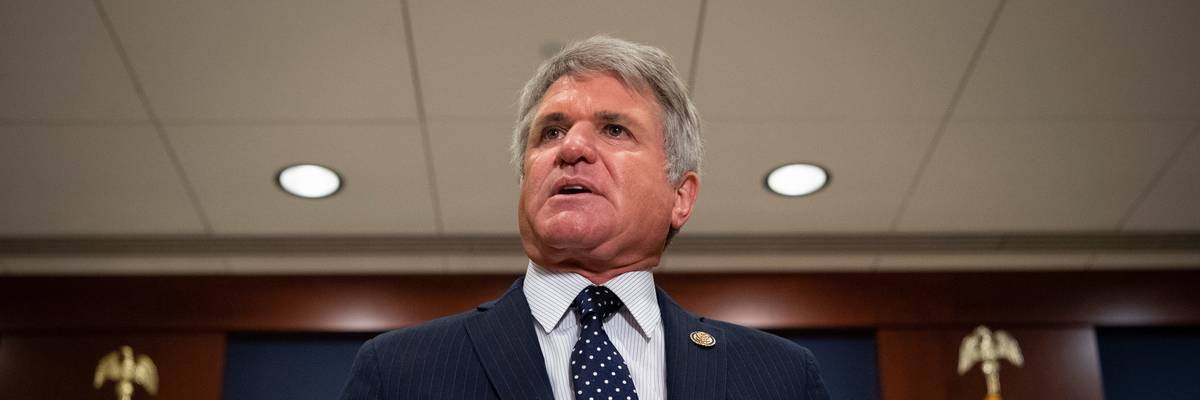
Rep. Michael McCaul (R-Texas) speaks during a press conference on April 14, 2021.
"We are inching toward a regional war in the Middle East, further fueled by Biden's refusal to call for a cease-fire and deescalation," argued one analyst.
The Republican chairman of the U.S. House Foreign Affairs Committee on Monday said his panel is drafting legislation to authorize the use of military force in Iran amid growing fears that ongoing violence in Israel and Gaza could set off a broader regional conflagration.
Rep. Michael McCaul (R-Texas) told CNN that his committee is preparing the bill "in the event it's necessary" for the U.S. military to become directly involved in another Middle East war. McCaul's comments came on the 21st anniversary of the enactment of a measure that authorized the 2003 U.S. invasion of Iraq.
"I hope I never have to mark this bill up," said McCaul, who has repeatedly accused Iran of direct involvement in Hamas' October 7 attack on Israel even though U.S. intelligence sources and other government officials there's no evidence to support that claim.
McCaul added that "we have a situation in the Middle East that's growing day by day with intensity," pointing to the increasing likelihood of a full-blown conflict between Israel and Lebanon's Hezbollah and Iran's recent warning that it could be forced to intervene if Israel invades the Gaza Strip.
Trita Parsi, executive vice president of the Quincy Institute for Responsible Statecraft, wrote on social media Tuesday that McCaul's remarks provide additional evidence that "we are inching toward a regional war in the Middle East, further fueled by [U.S. President Joe] Biden's refusal to call for a cease-fire and deescalation."
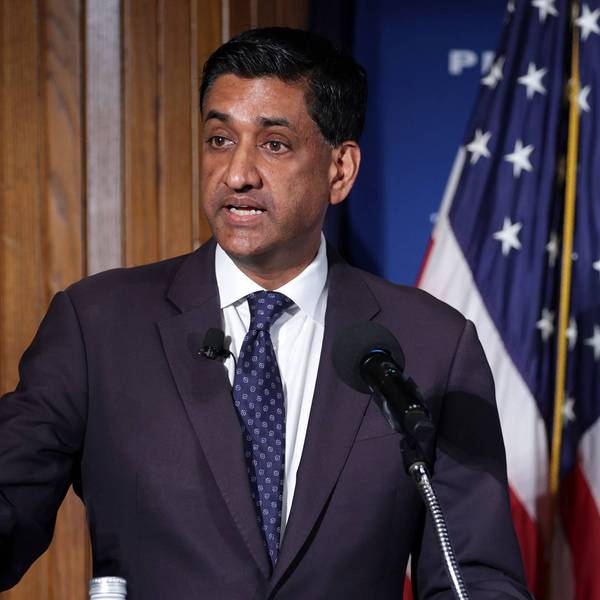
U.S. Rep. Ro Khanna (D-Calif.), for his part, responded dismissively to the nascent push for another war authorization bill.
"How about we first repeal the AUMF that greenlighted the colossal blunder in Iraq before neocons ask Congress to vote for a new blunder and war that will cost us more blood and treasure?" Khanna wrote.
"The possible expansion of the war on other fronts is approaching the inevitable stage."
The Biden administration has reportedly sent back-channel messages to Iran warning it not to get involved in Gaza, and the U.S. has mobilized the world's largest aircraft carrier strike group to the Eastern Mediterranean in what one White House official described as "a strong signal of deterrence should any actor hostile to Israel consider trying to escalate or widen this war."
Hossein Amirabdollahian, Iran's foreign minister, said Monday that Tehran wants "killings and war crimes" in Gaza to stop immediately and cautioned that "the time for political solutions is running out."
"The possible expansion of the war on other fronts is approaching the inevitable stage," Amirabdollahian said, raising the possibility of some form of "preemptive" action against Israel.
Citing an unnamed regional diplomat familiar with Iran's conversations with its allies, The Washington Post's Liz Sly reported Tuesday that "it appears the Iranians do not want an escalation and are keen to find ways to avoid one."
"While making it clear that their allies are prepared to fight, Iran and Hezbollah have not publicly set red lines for what scenario in Gaza would trigger their involvement—which could range from continued attacks on Gaza, the launch of a ground invasion, or only in the event that Hamas is at risk of being completely defeated," Sly noted.
War hawks in the U.S., meanwhile, are going out of their way to connect Iran to Hamas' attack on Israel and demand military action in response. Sen. Lindsey Graham (R-S.C.) suggested in a CNN interview last week that he would support U.S. and Israeli military action against Iran even without specific evidence that Tehran was directly involved in planning the Hamas assault.
In an appearance on NBC's "Meet the Press" on Sunday, Graham said that if Hezbollah—which is backed by Iran—launches a major attack on Israel, he will "introduce a resolution in the United States Senate to allow military action by the United States in conjunction with Israel to knock Iran out of the oil business."
"They're the great evil," Graham said of Iran. "So, if Hezbollah escalates against Israel, it will be because Iran told them to. Then Iran, you're in the crosshairs of the United States and Israel."
Additionally, congressional Republicans are pushing the Biden administration to permanently bar Iran from accessing $6 billion in assets that can only be used for humanitarian purposes. Last week, the Biden administration agreed to temporarily deny Iran access to the funds—a move that the National Iranian American Council (NIAC) decried as "a reckless and unnecessary provocation amidst a tinderbox situation in the Middle East."
"If Biden is indeed following in the footsteps of Donald Trump and reneging on a second Iran diplomatic agreement, he would be confirming that our domestic politics preclude the U.S. from being able to play a responsible leadership role," said NIAC president Jamal Abdi. "Far from quelling the political dramas in Washington, this will only add further fuel to bad-faith political critiques. And it would embolden those calling for even greater and more dangerous provocations, such as those in the Senate now urging the U.S. to bomb Iran."
Israeli Prime Minister Benjamin Netanyahu's rhetoric and brutal actions in Gaza have also helped fuel concerns of a broader regional conflict.
In an address to the Israeli parliament on Monday, Netanyahu described Iran, Hezbollah, and Hamas as an "axis of evil," invoking the infamous phrase that former U.S. President George W. Bush used in the lead-up to the catastrophic invasion of Iraq.
Simon Tisdall, a foreign affairs commentator for The Guardian, argued in a column on Monday that "a confrontation setting Israel and the U.S. directly against Iran has rarely appeared closer."
"As Netanyahu keeps saying, this is just the beginning," Tisdall wrote. "The war with Hamas could be about to go global."
Dear Common Dreams reader, It’s been nearly 30 years since I co-founded Common Dreams with my late wife, Lina Newhouser. We had the radical notion that journalism should serve the public good, not corporate profits. It was clear to us from the outset what it would take to build such a project. No paid advertisements. No corporate sponsors. No millionaire publisher telling us what to think or do. Many people said we wouldn't last a year, but we proved those doubters wrong. Together with a tremendous team of journalists and dedicated staff, we built an independent media outlet free from the constraints of profits and corporate control. Our mission has always been simple: To inform. To inspire. To ignite change for the common good. Building Common Dreams was not easy. Our survival was never guaranteed. When you take on the most powerful forces—Wall Street greed, fossil fuel industry destruction, Big Tech lobbyists, and uber-rich oligarchs who have spent billions upon billions rigging the economy and democracy in their favor—the only bulwark you have is supporters who believe in your work. But here’s the urgent message from me today. It's never been this bad out there. And it's never been this hard to keep us going. At the very moment Common Dreams is most needed, the threats we face are intensifying. We need your support now more than ever. We don't accept corporate advertising and never will. We don't have a paywall because we don't think people should be blocked from critical news based on their ability to pay. Everything we do is funded by the donations of readers like you. When everyone does the little they can afford, we are strong. But if that support retreats or dries up, so do we. Will you donate now to make sure Common Dreams not only survives but thrives? —Craig Brown, Co-founder |
The Republican chairman of the U.S. House Foreign Affairs Committee on Monday said his panel is drafting legislation to authorize the use of military force in Iran amid growing fears that ongoing violence in Israel and Gaza could set off a broader regional conflagration.
Rep. Michael McCaul (R-Texas) told CNN that his committee is preparing the bill "in the event it's necessary" for the U.S. military to become directly involved in another Middle East war. McCaul's comments came on the 21st anniversary of the enactment of a measure that authorized the 2003 U.S. invasion of Iraq.
"I hope I never have to mark this bill up," said McCaul, who has repeatedly accused Iran of direct involvement in Hamas' October 7 attack on Israel even though U.S. intelligence sources and other government officials there's no evidence to support that claim.
McCaul added that "we have a situation in the Middle East that's growing day by day with intensity," pointing to the increasing likelihood of a full-blown conflict between Israel and Lebanon's Hezbollah and Iran's recent warning that it could be forced to intervene if Israel invades the Gaza Strip.
Trita Parsi, executive vice president of the Quincy Institute for Responsible Statecraft, wrote on social media Tuesday that McCaul's remarks provide additional evidence that "we are inching toward a regional war in the Middle East, further fueled by [U.S. President Joe] Biden's refusal to call for a cease-fire and deescalation."
U.S. Rep. Ro Khanna (D-Calif.), for his part, responded dismissively to the nascent push for another war authorization bill.
"How about we first repeal the AUMF that greenlighted the colossal blunder in Iraq before neocons ask Congress to vote for a new blunder and war that will cost us more blood and treasure?" Khanna wrote.
"The possible expansion of the war on other fronts is approaching the inevitable stage."
The Biden administration has reportedly sent back-channel messages to Iran warning it not to get involved in Gaza, and the U.S. has mobilized the world's largest aircraft carrier strike group to the Eastern Mediterranean in what one White House official described as "a strong signal of deterrence should any actor hostile to Israel consider trying to escalate or widen this war."
Hossein Amirabdollahian, Iran's foreign minister, said Monday that Tehran wants "killings and war crimes" in Gaza to stop immediately and cautioned that "the time for political solutions is running out."
"The possible expansion of the war on other fronts is approaching the inevitable stage," Amirabdollahian said, raising the possibility of some form of "preemptive" action against Israel.
Citing an unnamed regional diplomat familiar with Iran's conversations with its allies, The Washington Post's Liz Sly reported Tuesday that "it appears the Iranians do not want an escalation and are keen to find ways to avoid one."
"While making it clear that their allies are prepared to fight, Iran and Hezbollah have not publicly set red lines for what scenario in Gaza would trigger their involvement—which could range from continued attacks on Gaza, the launch of a ground invasion, or only in the event that Hamas is at risk of being completely defeated," Sly noted.
War hawks in the U.S., meanwhile, are going out of their way to connect Iran to Hamas' attack on Israel and demand military action in response. Sen. Lindsey Graham (R-S.C.) suggested in a CNN interview last week that he would support U.S. and Israeli military action against Iran even without specific evidence that Tehran was directly involved in planning the Hamas assault.
In an appearance on NBC's "Meet the Press" on Sunday, Graham said that if Hezbollah—which is backed by Iran—launches a major attack on Israel, he will "introduce a resolution in the United States Senate to allow military action by the United States in conjunction with Israel to knock Iran out of the oil business."
"They're the great evil," Graham said of Iran. "So, if Hezbollah escalates against Israel, it will be because Iran told them to. Then Iran, you're in the crosshairs of the United States and Israel."
Additionally, congressional Republicans are pushing the Biden administration to permanently bar Iran from accessing $6 billion in assets that can only be used for humanitarian purposes. Last week, the Biden administration agreed to temporarily deny Iran access to the funds—a move that the National Iranian American Council (NIAC) decried as "a reckless and unnecessary provocation amidst a tinderbox situation in the Middle East."
"If Biden is indeed following in the footsteps of Donald Trump and reneging on a second Iran diplomatic agreement, he would be confirming that our domestic politics preclude the U.S. from being able to play a responsible leadership role," said NIAC president Jamal Abdi. "Far from quelling the political dramas in Washington, this will only add further fuel to bad-faith political critiques. And it would embolden those calling for even greater and more dangerous provocations, such as those in the Senate now urging the U.S. to bomb Iran."
Israeli Prime Minister Benjamin Netanyahu's rhetoric and brutal actions in Gaza have also helped fuel concerns of a broader regional conflict.
In an address to the Israeli parliament on Monday, Netanyahu described Iran, Hezbollah, and Hamas as an "axis of evil," invoking the infamous phrase that former U.S. President George W. Bush used in the lead-up to the catastrophic invasion of Iraq.
Simon Tisdall, a foreign affairs commentator for The Guardian, argued in a column on Monday that "a confrontation setting Israel and the U.S. directly against Iran has rarely appeared closer."
"As Netanyahu keeps saying, this is just the beginning," Tisdall wrote. "The war with Hamas could be about to go global."
The Republican chairman of the U.S. House Foreign Affairs Committee on Monday said his panel is drafting legislation to authorize the use of military force in Iran amid growing fears that ongoing violence in Israel and Gaza could set off a broader regional conflagration.
Rep. Michael McCaul (R-Texas) told CNN that his committee is preparing the bill "in the event it's necessary" for the U.S. military to become directly involved in another Middle East war. McCaul's comments came on the 21st anniversary of the enactment of a measure that authorized the 2003 U.S. invasion of Iraq.
"I hope I never have to mark this bill up," said McCaul, who has repeatedly accused Iran of direct involvement in Hamas' October 7 attack on Israel even though U.S. intelligence sources and other government officials there's no evidence to support that claim.
McCaul added that "we have a situation in the Middle East that's growing day by day with intensity," pointing to the increasing likelihood of a full-blown conflict between Israel and Lebanon's Hezbollah and Iran's recent warning that it could be forced to intervene if Israel invades the Gaza Strip.
Trita Parsi, executive vice president of the Quincy Institute for Responsible Statecraft, wrote on social media Tuesday that McCaul's remarks provide additional evidence that "we are inching toward a regional war in the Middle East, further fueled by [U.S. President Joe] Biden's refusal to call for a cease-fire and deescalation."
U.S. Rep. Ro Khanna (D-Calif.), for his part, responded dismissively to the nascent push for another war authorization bill.
"How about we first repeal the AUMF that greenlighted the colossal blunder in Iraq before neocons ask Congress to vote for a new blunder and war that will cost us more blood and treasure?" Khanna wrote.
"The possible expansion of the war on other fronts is approaching the inevitable stage."
The Biden administration has reportedly sent back-channel messages to Iran warning it not to get involved in Gaza, and the U.S. has mobilized the world's largest aircraft carrier strike group to the Eastern Mediterranean in what one White House official described as "a strong signal of deterrence should any actor hostile to Israel consider trying to escalate or widen this war."
Hossein Amirabdollahian, Iran's foreign minister, said Monday that Tehran wants "killings and war crimes" in Gaza to stop immediately and cautioned that "the time for political solutions is running out."
"The possible expansion of the war on other fronts is approaching the inevitable stage," Amirabdollahian said, raising the possibility of some form of "preemptive" action against Israel.
Citing an unnamed regional diplomat familiar with Iran's conversations with its allies, The Washington Post's Liz Sly reported Tuesday that "it appears the Iranians do not want an escalation and are keen to find ways to avoid one."
"While making it clear that their allies are prepared to fight, Iran and Hezbollah have not publicly set red lines for what scenario in Gaza would trigger their involvement—which could range from continued attacks on Gaza, the launch of a ground invasion, or only in the event that Hamas is at risk of being completely defeated," Sly noted.
War hawks in the U.S., meanwhile, are going out of their way to connect Iran to Hamas' attack on Israel and demand military action in response. Sen. Lindsey Graham (R-S.C.) suggested in a CNN interview last week that he would support U.S. and Israeli military action against Iran even without specific evidence that Tehran was directly involved in planning the Hamas assault.
In an appearance on NBC's "Meet the Press" on Sunday, Graham said that if Hezbollah—which is backed by Iran—launches a major attack on Israel, he will "introduce a resolution in the United States Senate to allow military action by the United States in conjunction with Israel to knock Iran out of the oil business."
"They're the great evil," Graham said of Iran. "So, if Hezbollah escalates against Israel, it will be because Iran told them to. Then Iran, you're in the crosshairs of the United States and Israel."
Additionally, congressional Republicans are pushing the Biden administration to permanently bar Iran from accessing $6 billion in assets that can only be used for humanitarian purposes. Last week, the Biden administration agreed to temporarily deny Iran access to the funds—a move that the National Iranian American Council (NIAC) decried as "a reckless and unnecessary provocation amidst a tinderbox situation in the Middle East."
"If Biden is indeed following in the footsteps of Donald Trump and reneging on a second Iran diplomatic agreement, he would be confirming that our domestic politics preclude the U.S. from being able to play a responsible leadership role," said NIAC president Jamal Abdi. "Far from quelling the political dramas in Washington, this will only add further fuel to bad-faith political critiques. And it would embolden those calling for even greater and more dangerous provocations, such as those in the Senate now urging the U.S. to bomb Iran."
Israeli Prime Minister Benjamin Netanyahu's rhetoric and brutal actions in Gaza have also helped fuel concerns of a broader regional conflict.
In an address to the Israeli parliament on Monday, Netanyahu described Iran, Hezbollah, and Hamas as an "axis of evil," invoking the infamous phrase that former U.S. President George W. Bush used in the lead-up to the catastrophic invasion of Iraq.
Simon Tisdall, a foreign affairs commentator for The Guardian, argued in a column on Monday that "a confrontation setting Israel and the U.S. directly against Iran has rarely appeared closer."
"As Netanyahu keeps saying, this is just the beginning," Tisdall wrote. "The war with Hamas could be about to go global."