

SUBSCRIBE TO OUR FREE NEWSLETTER
Daily news & progressive opinion—funded by the people, not the corporations—delivered straight to your inbox.
5
#000000
#FFFFFF
To donate by check, phone, or other method, see our More Ways to Give page.
Daily news & progressive opinion—funded by the people, not the corporations—delivered straight to your inbox.
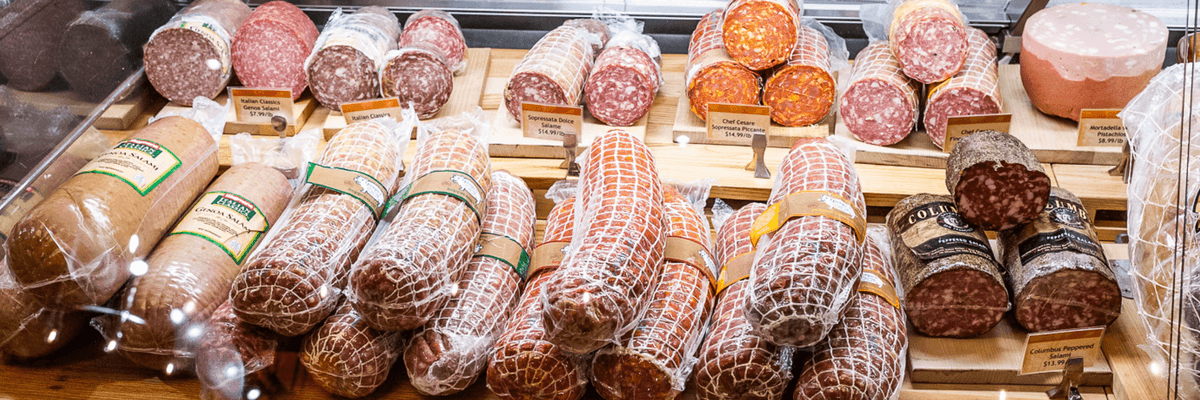
Various processed lunchmeats are seen for sale behind the counter of an Ocean Grove, New Jersey delicatessen on August 31, 2018.
"This is really consistent with a larger body of science that tells us that diets that are lower in fat, lower in sugar, higher in vegetables overall, are what's really better for our brain health," said one expert.
Replacing one serving of processed red meat per day with healthier foods was linked to a 20% drop in dementia risk, preliminary research presented Wednesday at the Alzheimer's Association International Conference in Philadelphia revealed.
The research, which has not yet been peer-reviewed, tracked more than 130,000 participants in a pair of related medical studies for more than 40 years. It found that people who consumed more than two weekly servings of processed red meats—which include bacon, lunch meats, sausages, and other cured, salted, smoked, or preserved meats—had a 14% increased risk of dementia compared with those who ate less than three servings per month.
"We found that eating processed red meat could be a significant risk factor for dementia."
The study also linked each additional daily serving of processed red meat to more than 1.6 years of cognitive aging for overall cognitive function and nearly 1.7 years for verbal memory.
"Study results have been mixed on whether there is a relationship between cognitive decline and meat consumption in general, so we took a closer look at how eating different amounts of both processed and unprocessed meat affects cognitive risk and function," lead researcher Yuhan Li, an assistant professor at the Brigham and Women's Hospital in Boston, said in a statement.
"By studying people over a long period of time, we found that eating processed red meat could be a significant risk factor for dementia," she added.
Heather Snyder, the Alzheimer's Association vice president of medical and scientific relations, told NBC News that "this is really consistent with a larger body of science that tells us that diets that are lower in fat, lower in sugar, higher in vegetables overall, are what's really better for our brain health."
Li recommends including recommendations to limit processed red meat consumption in official dietary guidelines.
"Processed red meat has also been shown to raise the risk of cancer, heart disease, and diabetes," she said. "It may affect the brain because it has high levels of harmful substances such as nitrites and sodium."
The good news is that the researchers found that replacing one daily serving of processed red meat with foods including beans, nuts, and tofu could result in a 20% lower risk of dementia.
Furthermore, some experts said that while the new study showed more people who consumed processed red meat developed dementia, the research does not show cause and effect.
"It's important to remember that this doesn't mean that eating processed red meat is directly related to developing dementia," Richard Oakley of the U.K. Alzheimer's Association told The Guardian. "It may be that people who avoid processed red meat are generally more health conscious and avoid other unhealthy habits that increase dementia risk."
In addition to the health risks of eating both processed and unprocessed meats, animal agriculture also exacerbates the climate emergency. A 2020 study by researchers at the University of Michigan and Tulane University commissioned by the Center for Biological Diversity, a conservation group, found that if Americans halved their consumption of animal products, it could prevent 1.6 billion tons of greenhouse gas emissions within a decade.
Dear Common Dreams reader, It’s been nearly 30 years since I co-founded Common Dreams with my late wife, Lina Newhouser. We had the radical notion that journalism should serve the public good, not corporate profits. It was clear to us from the outset what it would take to build such a project. No paid advertisements. No corporate sponsors. No millionaire publisher telling us what to think or do. Many people said we wouldn't last a year, but we proved those doubters wrong. Together with a tremendous team of journalists and dedicated staff, we built an independent media outlet free from the constraints of profits and corporate control. Our mission has always been simple: To inform. To inspire. To ignite change for the common good. Building Common Dreams was not easy. Our survival was never guaranteed. When you take on the most powerful forces—Wall Street greed, fossil fuel industry destruction, Big Tech lobbyists, and uber-rich oligarchs who have spent billions upon billions rigging the economy and democracy in their favor—the only bulwark you have is supporters who believe in your work. But here’s the urgent message from me today. It's never been this bad out there. And it's never been this hard to keep us going. At the very moment Common Dreams is most needed, the threats we face are intensifying. We need your support now more than ever. We don't accept corporate advertising and never will. We don't have a paywall because we don't think people should be blocked from critical news based on their ability to pay. Everything we do is funded by the donations of readers like you. When everyone does the little they can afford, we are strong. But if that support retreats or dries up, so do we. Will you donate now to make sure Common Dreams not only survives but thrives? —Craig Brown, Co-founder |
Replacing one serving of processed red meat per day with healthier foods was linked to a 20% drop in dementia risk, preliminary research presented Wednesday at the Alzheimer's Association International Conference in Philadelphia revealed.
The research, which has not yet been peer-reviewed, tracked more than 130,000 participants in a pair of related medical studies for more than 40 years. It found that people who consumed more than two weekly servings of processed red meats—which include bacon, lunch meats, sausages, and other cured, salted, smoked, or preserved meats—had a 14% increased risk of dementia compared with those who ate less than three servings per month.
"We found that eating processed red meat could be a significant risk factor for dementia."
The study also linked each additional daily serving of processed red meat to more than 1.6 years of cognitive aging for overall cognitive function and nearly 1.7 years for verbal memory.
"Study results have been mixed on whether there is a relationship between cognitive decline and meat consumption in general, so we took a closer look at how eating different amounts of both processed and unprocessed meat affects cognitive risk and function," lead researcher Yuhan Li, an assistant professor at the Brigham and Women's Hospital in Boston, said in a statement.
"By studying people over a long period of time, we found that eating processed red meat could be a significant risk factor for dementia," she added.
Heather Snyder, the Alzheimer's Association vice president of medical and scientific relations, told NBC News that "this is really consistent with a larger body of science that tells us that diets that are lower in fat, lower in sugar, higher in vegetables overall, are what's really better for our brain health."
Li recommends including recommendations to limit processed red meat consumption in official dietary guidelines.
"Processed red meat has also been shown to raise the risk of cancer, heart disease, and diabetes," she said. "It may affect the brain because it has high levels of harmful substances such as nitrites and sodium."
The good news is that the researchers found that replacing one daily serving of processed red meat with foods including beans, nuts, and tofu could result in a 20% lower risk of dementia.
Furthermore, some experts said that while the new study showed more people who consumed processed red meat developed dementia, the research does not show cause and effect.
"It's important to remember that this doesn't mean that eating processed red meat is directly related to developing dementia," Richard Oakley of the U.K. Alzheimer's Association told The Guardian. "It may be that people who avoid processed red meat are generally more health conscious and avoid other unhealthy habits that increase dementia risk."
In addition to the health risks of eating both processed and unprocessed meats, animal agriculture also exacerbates the climate emergency. A 2020 study by researchers at the University of Michigan and Tulane University commissioned by the Center for Biological Diversity, a conservation group, found that if Americans halved their consumption of animal products, it could prevent 1.6 billion tons of greenhouse gas emissions within a decade.
Replacing one serving of processed red meat per day with healthier foods was linked to a 20% drop in dementia risk, preliminary research presented Wednesday at the Alzheimer's Association International Conference in Philadelphia revealed.
The research, which has not yet been peer-reviewed, tracked more than 130,000 participants in a pair of related medical studies for more than 40 years. It found that people who consumed more than two weekly servings of processed red meats—which include bacon, lunch meats, sausages, and other cured, salted, smoked, or preserved meats—had a 14% increased risk of dementia compared with those who ate less than three servings per month.
"We found that eating processed red meat could be a significant risk factor for dementia."
The study also linked each additional daily serving of processed red meat to more than 1.6 years of cognitive aging for overall cognitive function and nearly 1.7 years for verbal memory.
"Study results have been mixed on whether there is a relationship between cognitive decline and meat consumption in general, so we took a closer look at how eating different amounts of both processed and unprocessed meat affects cognitive risk and function," lead researcher Yuhan Li, an assistant professor at the Brigham and Women's Hospital in Boston, said in a statement.
"By studying people over a long period of time, we found that eating processed red meat could be a significant risk factor for dementia," she added.
Heather Snyder, the Alzheimer's Association vice president of medical and scientific relations, told NBC News that "this is really consistent with a larger body of science that tells us that diets that are lower in fat, lower in sugar, higher in vegetables overall, are what's really better for our brain health."
Li recommends including recommendations to limit processed red meat consumption in official dietary guidelines.
"Processed red meat has also been shown to raise the risk of cancer, heart disease, and diabetes," she said. "It may affect the brain because it has high levels of harmful substances such as nitrites and sodium."
The good news is that the researchers found that replacing one daily serving of processed red meat with foods including beans, nuts, and tofu could result in a 20% lower risk of dementia.
Furthermore, some experts said that while the new study showed more people who consumed processed red meat developed dementia, the research does not show cause and effect.
"It's important to remember that this doesn't mean that eating processed red meat is directly related to developing dementia," Richard Oakley of the U.K. Alzheimer's Association told The Guardian. "It may be that people who avoid processed red meat are generally more health conscious and avoid other unhealthy habits that increase dementia risk."
In addition to the health risks of eating both processed and unprocessed meats, animal agriculture also exacerbates the climate emergency. A 2020 study by researchers at the University of Michigan and Tulane University commissioned by the Center for Biological Diversity, a conservation group, found that if Americans halved their consumption of animal products, it could prevent 1.6 billion tons of greenhouse gas emissions within a decade.

