SUBSCRIBE TO OUR FREE NEWSLETTER
Daily news & progressive opinion—funded by the people, not the corporations—delivered straight to your inbox.
5
#000000
#FFFFFF
To donate by check, phone, or other method, see our More Ways to Give page.
Daily news & progressive opinion—funded by the people, not the corporations—delivered straight to your inbox.
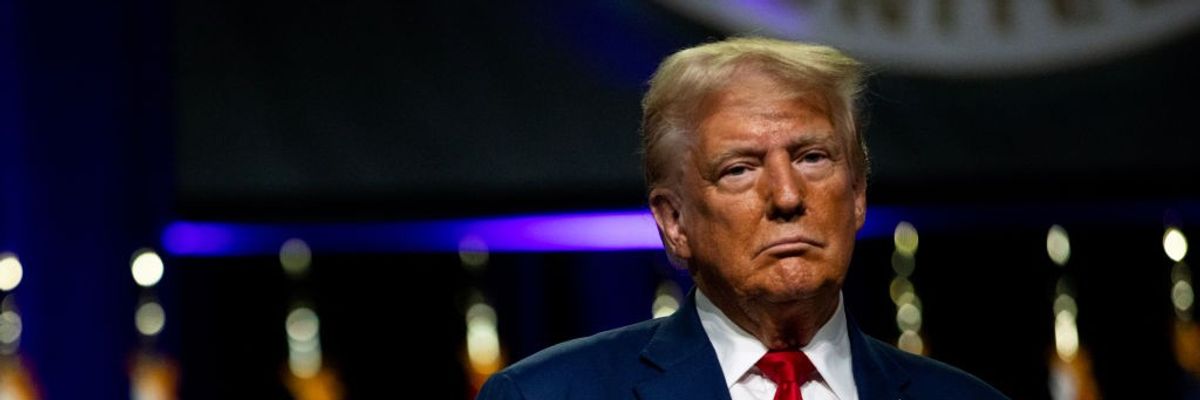
Then-Republican presidential nominee Donald Trump appeared during the National Guard Association of the United States' 146th General Conference and Exhibition at Huntington Place Convention Center in Detroit on August 26, 2024.
"Immunity doesn't apply to the unofficial conduct for which he was convicted in NY," wrote one legal expert.
On Tuesday, an appeals court in New York denied President-elect Donald Trump's bid to delay his January 10 sentencing in his criminal "hush money" case.
Appearing before Judge Ellen Gesmer, Trump's legal team argued that a sitting president's immunity from prosecution extends to a president-elect.
In July, the Supreme Court ruled that former presidents have immunity—in some cases "presumptive" and in others "absolute"—for their "officials acts" taken while in office.
Gesmer allowed sentencing to proceed after a brief hearing during which she appeared skeptical of the argument presented by Trump's lawyer, according to The New York Times. The outlet wrote that the ruling is "a significant setback to Trump's hopes of shutting down the case before returning to the White House."
"Trump will run through the appeals courts looking for one willing to pause his impending sentencing. But his argument is just ridiculous—immunity doesn't apply to the unofficial conduct for which he was convicted in NY," wrote Norman Eisen, a senior fellow at the Brookings Institution, a think tank, on X Tuesday.
Last week, New York Supreme Court Justice Juan Merchan upheld the president-elect's criminal conviction of 34 counts of falsifying business documents. The case pertains to a $130,000 hush-money payment made to adult film actress Stormy Daniels just before Trump's 2016 electoral victory.
Trump's lawyers then filed a request to delay the sentencing with Merchan, which he rejected Monday.
When it comes to sentencing, Merchan has signaled he may issue an unconditional discharge, meaning Trump would not serve jail time, but it would cement his status as the first U.S. president convicted of a felony.
Trump has other legal avenues to try to delay the sentencing scheduled for Friday, according to the Times.
Dear Common Dreams reader, It’s been nearly 30 years since I co-founded Common Dreams with my late wife, Lina Newhouser. We had the radical notion that journalism should serve the public good, not corporate profits. It was clear to us from the outset what it would take to build such a project. No paid advertisements. No corporate sponsors. No millionaire publisher telling us what to think or do. Many people said we wouldn't last a year, but we proved those doubters wrong. Together with a tremendous team of journalists and dedicated staff, we built an independent media outlet free from the constraints of profits and corporate control. Our mission has always been simple: To inform. To inspire. To ignite change for the common good. Building Common Dreams was not easy. Our survival was never guaranteed. When you take on the most powerful forces—Wall Street greed, fossil fuel industry destruction, Big Tech lobbyists, and uber-rich oligarchs who have spent billions upon billions rigging the economy and democracy in their favor—the only bulwark you have is supporters who believe in your work. But here’s the urgent message from me today. It's never been this bad out there. And it's never been this hard to keep us going. At the very moment Common Dreams is most needed, the threats we face are intensifying. We need your support now more than ever. We don't accept corporate advertising and never will. We don't have a paywall because we don't think people should be blocked from critical news based on their ability to pay. Everything we do is funded by the donations of readers like you. When everyone does the little they can afford, we are strong. But if that support retreats or dries up, so do we. Will you donate now to make sure Common Dreams not only survives but thrives? —Craig Brown, Co-founder |
On Tuesday, an appeals court in New York denied President-elect Donald Trump's bid to delay his January 10 sentencing in his criminal "hush money" case.
Appearing before Judge Ellen Gesmer, Trump's legal team argued that a sitting president's immunity from prosecution extends to a president-elect.
In July, the Supreme Court ruled that former presidents have immunity—in some cases "presumptive" and in others "absolute"—for their "officials acts" taken while in office.
Gesmer allowed sentencing to proceed after a brief hearing during which she appeared skeptical of the argument presented by Trump's lawyer, according to The New York Times. The outlet wrote that the ruling is "a significant setback to Trump's hopes of shutting down the case before returning to the White House."
"Trump will run through the appeals courts looking for one willing to pause his impending sentencing. But his argument is just ridiculous—immunity doesn't apply to the unofficial conduct for which he was convicted in NY," wrote Norman Eisen, a senior fellow at the Brookings Institution, a think tank, on X Tuesday.
Last week, New York Supreme Court Justice Juan Merchan upheld the president-elect's criminal conviction of 34 counts of falsifying business documents. The case pertains to a $130,000 hush-money payment made to adult film actress Stormy Daniels just before Trump's 2016 electoral victory.
Trump's lawyers then filed a request to delay the sentencing with Merchan, which he rejected Monday.
When it comes to sentencing, Merchan has signaled he may issue an unconditional discharge, meaning Trump would not serve jail time, but it would cement his status as the first U.S. president convicted of a felony.
Trump has other legal avenues to try to delay the sentencing scheduled for Friday, according to the Times.
On Tuesday, an appeals court in New York denied President-elect Donald Trump's bid to delay his January 10 sentencing in his criminal "hush money" case.
Appearing before Judge Ellen Gesmer, Trump's legal team argued that a sitting president's immunity from prosecution extends to a president-elect.
In July, the Supreme Court ruled that former presidents have immunity—in some cases "presumptive" and in others "absolute"—for their "officials acts" taken while in office.
Gesmer allowed sentencing to proceed after a brief hearing during which she appeared skeptical of the argument presented by Trump's lawyer, according to The New York Times. The outlet wrote that the ruling is "a significant setback to Trump's hopes of shutting down the case before returning to the White House."
"Trump will run through the appeals courts looking for one willing to pause his impending sentencing. But his argument is just ridiculous—immunity doesn't apply to the unofficial conduct for which he was convicted in NY," wrote Norman Eisen, a senior fellow at the Brookings Institution, a think tank, on X Tuesday.
Last week, New York Supreme Court Justice Juan Merchan upheld the president-elect's criminal conviction of 34 counts of falsifying business documents. The case pertains to a $130,000 hush-money payment made to adult film actress Stormy Daniels just before Trump's 2016 electoral victory.
Trump's lawyers then filed a request to delay the sentencing with Merchan, which he rejected Monday.
When it comes to sentencing, Merchan has signaled he may issue an unconditional discharge, meaning Trump would not serve jail time, but it would cement his status as the first U.S. president convicted of a felony.
Trump has other legal avenues to try to delay the sentencing scheduled for Friday, according to the Times.