SUBSCRIBE TO OUR FREE NEWSLETTER
Daily news & progressive opinion—funded by the people, not the corporations—delivered straight to your inbox.
5
#000000
#FFFFFF
To donate by check, phone, or other method, see our More Ways to Give page.
Daily news & progressive opinion—funded by the people, not the corporations—delivered straight to your inbox.
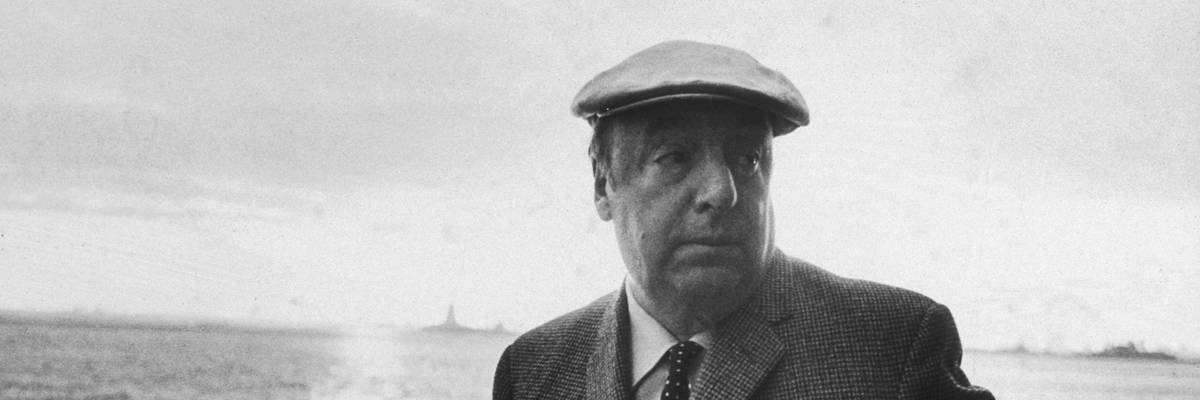
Chilean poet Pablo Neruda is seen here during a June 13, 1966 boat ride during a trip to New York City.
A toxicology report reveals a "great quantity" of the neurotoxin clostridium botulinum was found in the body of the leftist—who claimed he was injected while hospitalized just before his death in September 1973.
Pablo Neruda, the Chilean Nobel poet laureate, diplomat, and leftist politician who died days after Gen. Augusto Pinochet seized power in a 1973 U.S.-backed military coup, was poisoned to death, his nephew said Monday ahead of the expected publication of a new toxicology report later this week.
The revelation by the nephew, Rodolfo Reyes, confirms long-held suspicions that Neruda—an ardent communist—was murdered in the early days of Pinochet's far-right dictatorship. Reyes told Spain's EFE that laboratory testing showed a "great quantity" of clostridium botulinum—a neurotoxic bacteria that is one of the most poisonous known biological substances—in Neruda's body when he died.
Reyes said that clostridium botulinum "would have no reason to have been in Neruda's bones. What does this mean? That Neruda was murdered, there was an action in 1973 by agents of the state."
"What does this mean? That Neruda was murdered, there was an action in 1973 by agents of the state."
When the Pinochet coup occurred on September 11, 1973, 69-year-old Neruda was hospitalized with prostate cancer. While he was being treated, the poet made plans to go into exile in Mexico, where he had served as Chile's consul-general in the 1940s.
A close friend of Salvador Allende—the democratically elected socialist president who was overthrown by Pinochet's forces with the backing of U.S. military, intelligence, and business organs—Neruda would undoubtedly have been a vocal critic of the right-wing dictator and a major thorn in the regime's side.
Driver and bodyguard Manuel Araya has long said that a distressed Neruda called him from the hospital, claiming that someone injected him in the stomach while he was sleeping. Fearing the worst, Neruda left the hospital on September 23 and died hours later. His official cause of death was listed as the wasting effects of prostate cancer.
However, Gonzalo Martínez Corbalá, the Mexican ambassador to Chile at the time of the coup, said he saw Neruda two days before he died, and that although ill, he weighed 220 pounds, belying official claims of a "wasting" death.
A court-ordered exhumation and analysis of Neruda's remains that began in 2013 and involved forensic scientists in four nations led the Chilean government to announce two years later it was "highly probable that a third party" was involved in the poet's death. In 2017, an international team of scientists said they were "100% convinced" Neruda did not die of cancer.
During the early months of Pinochet's rule, other prominent leftists were arrested, tortured, and murdered in a reign of terror whose victims ultimately numbered in the tens of thousands. The renowned folk singer and guitarist Victor Yara, for example, had his hands smashed by torturers who mockingly asked him to play them a song. Instead, he sang the protest song "Venceremos"—"We Shall Win"—before he was shot more than 40 times.
Neruda, who won the 1971 Nobel Prize in Literature for "poetry that with the action of an elemental force brings alive a continent's destiny and dreams," was called "the greatest poet of the 20th century in any language" by Colombian novelist Gabriel García Márquez, another Nobel laureate.
However, Neruda's legacy has been reevaluated in the #MeToo era, as he described raping a Sri Lankan maid in his memoir. He also abandoned his first wife and only daughter when the child was born with a neurological disorder, and sexist themes in some of his work have been noted. Feminist pressure led Chile's congress to cancel plans to rename the country's main international airport after Neruda.
Dear Common Dreams reader, It’s been nearly 30 years since I co-founded Common Dreams with my late wife, Lina Newhouser. We had the radical notion that journalism should serve the public good, not corporate profits. It was clear to us from the outset what it would take to build such a project. No paid advertisements. No corporate sponsors. No millionaire publisher telling us what to think or do. Many people said we wouldn't last a year, but we proved those doubters wrong. Together with a tremendous team of journalists and dedicated staff, we built an independent media outlet free from the constraints of profits and corporate control. Our mission has always been simple: To inform. To inspire. To ignite change for the common good. Building Common Dreams was not easy. Our survival was never guaranteed. When you take on the most powerful forces—Wall Street greed, fossil fuel industry destruction, Big Tech lobbyists, and uber-rich oligarchs who have spent billions upon billions rigging the economy and democracy in their favor—the only bulwark you have is supporters who believe in your work. But here’s the urgent message from me today. It's never been this bad out there. And it's never been this hard to keep us going. At the very moment Common Dreams is most needed, the threats we face are intensifying. We need your support now more than ever. We don't accept corporate advertising and never will. We don't have a paywall because we don't think people should be blocked from critical news based on their ability to pay. Everything we do is funded by the donations of readers like you. When everyone does the little they can afford, we are strong. But if that support retreats or dries up, so do we. Will you donate now to make sure Common Dreams not only survives but thrives? —Craig Brown, Co-founder |
Pablo Neruda, the Chilean Nobel poet laureate, diplomat, and leftist politician who died days after Gen. Augusto Pinochet seized power in a 1973 U.S.-backed military coup, was poisoned to death, his nephew said Monday ahead of the expected publication of a new toxicology report later this week.
The revelation by the nephew, Rodolfo Reyes, confirms long-held suspicions that Neruda—an ardent communist—was murdered in the early days of Pinochet's far-right dictatorship. Reyes told Spain's EFE that laboratory testing showed a "great quantity" of clostridium botulinum—a neurotoxic bacteria that is one of the most poisonous known biological substances—in Neruda's body when he died.
Reyes said that clostridium botulinum "would have no reason to have been in Neruda's bones. What does this mean? That Neruda was murdered, there was an action in 1973 by agents of the state."
"What does this mean? That Neruda was murdered, there was an action in 1973 by agents of the state."
When the Pinochet coup occurred on September 11, 1973, 69-year-old Neruda was hospitalized with prostate cancer. While he was being treated, the poet made plans to go into exile in Mexico, where he had served as Chile's consul-general in the 1940s.
A close friend of Salvador Allende—the democratically elected socialist president who was overthrown by Pinochet's forces with the backing of U.S. military, intelligence, and business organs—Neruda would undoubtedly have been a vocal critic of the right-wing dictator and a major thorn in the regime's side.
Driver and bodyguard Manuel Araya has long said that a distressed Neruda called him from the hospital, claiming that someone injected him in the stomach while he was sleeping. Fearing the worst, Neruda left the hospital on September 23 and died hours later. His official cause of death was listed as the wasting effects of prostate cancer.
However, Gonzalo Martínez Corbalá, the Mexican ambassador to Chile at the time of the coup, said he saw Neruda two days before he died, and that although ill, he weighed 220 pounds, belying official claims of a "wasting" death.
A court-ordered exhumation and analysis of Neruda's remains that began in 2013 and involved forensic scientists in four nations led the Chilean government to announce two years later it was "highly probable that a third party" was involved in the poet's death. In 2017, an international team of scientists said they were "100% convinced" Neruda did not die of cancer.
During the early months of Pinochet's rule, other prominent leftists were arrested, tortured, and murdered in a reign of terror whose victims ultimately numbered in the tens of thousands. The renowned folk singer and guitarist Victor Yara, for example, had his hands smashed by torturers who mockingly asked him to play them a song. Instead, he sang the protest song "Venceremos"—"We Shall Win"—before he was shot more than 40 times.
Neruda, who won the 1971 Nobel Prize in Literature for "poetry that with the action of an elemental force brings alive a continent's destiny and dreams," was called "the greatest poet of the 20th century in any language" by Colombian novelist Gabriel García Márquez, another Nobel laureate.
However, Neruda's legacy has been reevaluated in the #MeToo era, as he described raping a Sri Lankan maid in his memoir. He also abandoned his first wife and only daughter when the child was born with a neurological disorder, and sexist themes in some of his work have been noted. Feminist pressure led Chile's congress to cancel plans to rename the country's main international airport after Neruda.
Pablo Neruda, the Chilean Nobel poet laureate, diplomat, and leftist politician who died days after Gen. Augusto Pinochet seized power in a 1973 U.S.-backed military coup, was poisoned to death, his nephew said Monday ahead of the expected publication of a new toxicology report later this week.
The revelation by the nephew, Rodolfo Reyes, confirms long-held suspicions that Neruda—an ardent communist—was murdered in the early days of Pinochet's far-right dictatorship. Reyes told Spain's EFE that laboratory testing showed a "great quantity" of clostridium botulinum—a neurotoxic bacteria that is one of the most poisonous known biological substances—in Neruda's body when he died.
Reyes said that clostridium botulinum "would have no reason to have been in Neruda's bones. What does this mean? That Neruda was murdered, there was an action in 1973 by agents of the state."
"What does this mean? That Neruda was murdered, there was an action in 1973 by agents of the state."
When the Pinochet coup occurred on September 11, 1973, 69-year-old Neruda was hospitalized with prostate cancer. While he was being treated, the poet made plans to go into exile in Mexico, where he had served as Chile's consul-general in the 1940s.
A close friend of Salvador Allende—the democratically elected socialist president who was overthrown by Pinochet's forces with the backing of U.S. military, intelligence, and business organs—Neruda would undoubtedly have been a vocal critic of the right-wing dictator and a major thorn in the regime's side.
Driver and bodyguard Manuel Araya has long said that a distressed Neruda called him from the hospital, claiming that someone injected him in the stomach while he was sleeping. Fearing the worst, Neruda left the hospital on September 23 and died hours later. His official cause of death was listed as the wasting effects of prostate cancer.
However, Gonzalo Martínez Corbalá, the Mexican ambassador to Chile at the time of the coup, said he saw Neruda two days before he died, and that although ill, he weighed 220 pounds, belying official claims of a "wasting" death.
A court-ordered exhumation and analysis of Neruda's remains that began in 2013 and involved forensic scientists in four nations led the Chilean government to announce two years later it was "highly probable that a third party" was involved in the poet's death. In 2017, an international team of scientists said they were "100% convinced" Neruda did not die of cancer.
During the early months of Pinochet's rule, other prominent leftists were arrested, tortured, and murdered in a reign of terror whose victims ultimately numbered in the tens of thousands. The renowned folk singer and guitarist Victor Yara, for example, had his hands smashed by torturers who mockingly asked him to play them a song. Instead, he sang the protest song "Venceremos"—"We Shall Win"—before he was shot more than 40 times.
Neruda, who won the 1971 Nobel Prize in Literature for "poetry that with the action of an elemental force brings alive a continent's destiny and dreams," was called "the greatest poet of the 20th century in any language" by Colombian novelist Gabriel García Márquez, another Nobel laureate.
However, Neruda's legacy has been reevaluated in the #MeToo era, as he described raping a Sri Lankan maid in his memoir. He also abandoned his first wife and only daughter when the child was born with a neurological disorder, and sexist themes in some of his work have been noted. Feminist pressure led Chile's congress to cancel plans to rename the country's main international airport after Neruda.