SUBSCRIBE TO OUR FREE NEWSLETTER
Daily news & progressive opinion—funded by the people, not the corporations—delivered straight to your inbox.
5
#000000
#FFFFFF
To donate by check, phone, or other method, see our More Ways to Give page.
Daily news & progressive opinion—funded by the people, not the corporations—delivered straight to your inbox.
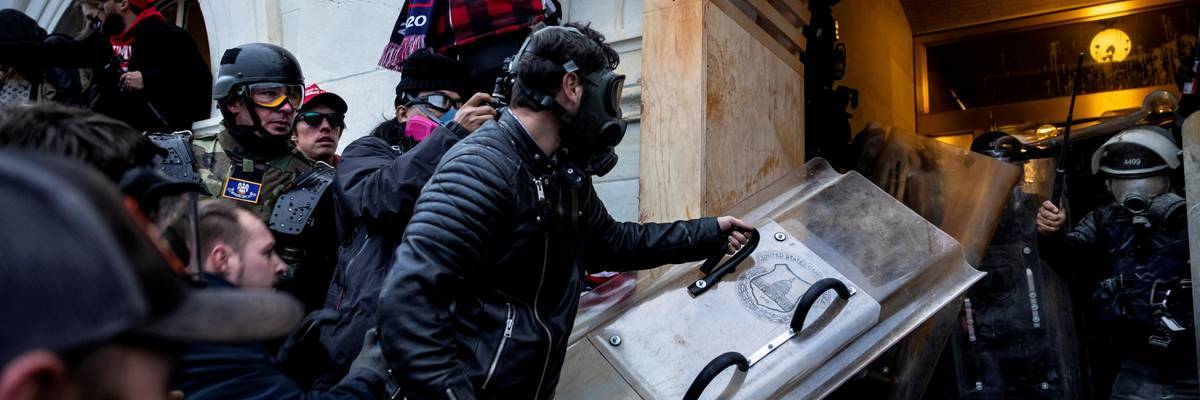
Supporters of former President Donald Trump violently storm the U.S. Capitol in Washington, D.C. on January 6, 2021.
"This is important in its own right but also signals what's to come" in the former president's immunity case, said one analyst.
In a ruling that could have implications for charges brought against former U.S. President Donald Trump, the U.S. Supreme Court decision on Friday put new constraints on how obstruction charges could be brought against individuals who participated in the January 6 insurrection attempt in 2021.
The high court voted along nonideological lines, with Justice Ketanji Brown Jackson joining five conservatives in the majority opinion and Justice Amy Coney Barrett joining liberal Justices Sonia Sotomayor and Elena Kagan in a dissent.
According to the majority, former Pennsylvania police officer Joseph Fischer cannot be charged with obstruction of an official proceeding for joining a mob of Trump supporters who breached the U.S. Capitol to stop lawmakers were certifying the 2020 election.
Chief Justice John Roberts wrote in the majority opinion that to prove January 6 defendants, including Fischer, obstructed an official proceeding, prosecutors must show they "impaired the availability or integrity for use in an official proceeding of records, documents, objects, or... other things used in the proceeding."
The case hinged on a law enacted in 2002 after the Enron financial scandal, which the majority said was intended to apply to limited circumstances involving physical tampering.
Trump is among nearly 250 people whose January 6 cases could potentially be affected by the Fischer ruling, as they have been charged with obstructing an official proceeding.
There are 52 cases in which obstruction was the only felony conviction or charge, and The Washington Post reported that those are the "most likely defendants to be significantly affected by the decision."
Trump faces four charges in his election interference criminal case, including one count of obstructing an official proceeding and one count of conspiring to do so.
Special Counsel Jack Smith, who is overseeing the election interference case, has said a dismissal of the obstruction charges against Fischer and other January 6 defendants would not impact Trump's case, but Trump's legal team "may use [the ruling] to try to whittle down" prosecutors' arguments against the former president, according to the Post.
On social media shortly after the ruling was handed down, Trump posted the message: "BIG WIN!"
The justices are set to rule soon in another case asking whether Trump is immune from prosecution regarding actions he took while in office, like his spreading of the lie that he was the legitimate winner of the 2020 election and the actions he took to foment and support those who stormed the Capitol Building.
The ruling could negate questions about whether the 2002 law applies to Trump's conduct, suggested legal analyst Norm Eisen, a senior fellow at the Brookings Institution.
"This is important in its own right but also signals what's to come in [the] immunity case," said Eisen.
The court sent the Fischer case back to the lower courts to determine whether the U.S. Justice Department could still prosecute January 6 defendants under the more narrow interpretation of the law.
While Jackson sided with the conservative majority, she wrote in a separate opinion that Fischer and other defendants could still be charged with obstruction if it is found that they tampered with electoral vote certificates.
Barrett wrote in the minority opinion that the question of whether Fischer can be prosecuted for an obstruction charge "seems open and shut," since the goal of breaching the U.S. Capitol was to disrupt the joint session of Congress where lawmakers were certifying the election results.
"Joseph Fischer allegedly participated in a riot at the Capitol that forced the delay of Congress's joint session on January 6th," Barrett wrote. "Blocking an official proceeding from moving forward surely qualifies as obstructing or impeding the proceeding by means other than document destruction."
Dear Common Dreams reader, It’s been nearly 30 years since I co-founded Common Dreams with my late wife, Lina Newhouser. We had the radical notion that journalism should serve the public good, not corporate profits. It was clear to us from the outset what it would take to build such a project. No paid advertisements. No corporate sponsors. No millionaire publisher telling us what to think or do. Many people said we wouldn't last a year, but we proved those doubters wrong. Together with a tremendous team of journalists and dedicated staff, we built an independent media outlet free from the constraints of profits and corporate control. Our mission has always been simple: To inform. To inspire. To ignite change for the common good. Building Common Dreams was not easy. Our survival was never guaranteed. When you take on the most powerful forces—Wall Street greed, fossil fuel industry destruction, Big Tech lobbyists, and uber-rich oligarchs who have spent billions upon billions rigging the economy and democracy in their favor—the only bulwark you have is supporters who believe in your work. But here’s the urgent message from me today. It's never been this bad out there. And it's never been this hard to keep us going. At the very moment Common Dreams is most needed, the threats we face are intensifying. We need your support now more than ever. We don't accept corporate advertising and never will. We don't have a paywall because we don't think people should be blocked from critical news based on their ability to pay. Everything we do is funded by the donations of readers like you. When everyone does the little they can afford, we are strong. But if that support retreats or dries up, so do we. Will you donate now to make sure Common Dreams not only survives but thrives? —Craig Brown, Co-founder |
In a ruling that could have implications for charges brought against former U.S. President Donald Trump, the U.S. Supreme Court decision on Friday put new constraints on how obstruction charges could be brought against individuals who participated in the January 6 insurrection attempt in 2021.
The high court voted along nonideological lines, with Justice Ketanji Brown Jackson joining five conservatives in the majority opinion and Justice Amy Coney Barrett joining liberal Justices Sonia Sotomayor and Elena Kagan in a dissent.
According to the majority, former Pennsylvania police officer Joseph Fischer cannot be charged with obstruction of an official proceeding for joining a mob of Trump supporters who breached the U.S. Capitol to stop lawmakers were certifying the 2020 election.
Chief Justice John Roberts wrote in the majority opinion that to prove January 6 defendants, including Fischer, obstructed an official proceeding, prosecutors must show they "impaired the availability or integrity for use in an official proceeding of records, documents, objects, or... other things used in the proceeding."
The case hinged on a law enacted in 2002 after the Enron financial scandal, which the majority said was intended to apply to limited circumstances involving physical tampering.
Trump is among nearly 250 people whose January 6 cases could potentially be affected by the Fischer ruling, as they have been charged with obstructing an official proceeding.
There are 52 cases in which obstruction was the only felony conviction or charge, and The Washington Post reported that those are the "most likely defendants to be significantly affected by the decision."
Trump faces four charges in his election interference criminal case, including one count of obstructing an official proceeding and one count of conspiring to do so.
Special Counsel Jack Smith, who is overseeing the election interference case, has said a dismissal of the obstruction charges against Fischer and other January 6 defendants would not impact Trump's case, but Trump's legal team "may use [the ruling] to try to whittle down" prosecutors' arguments against the former president, according to the Post.
On social media shortly after the ruling was handed down, Trump posted the message: "BIG WIN!"
The justices are set to rule soon in another case asking whether Trump is immune from prosecution regarding actions he took while in office, like his spreading of the lie that he was the legitimate winner of the 2020 election and the actions he took to foment and support those who stormed the Capitol Building.
The ruling could negate questions about whether the 2002 law applies to Trump's conduct, suggested legal analyst Norm Eisen, a senior fellow at the Brookings Institution.
"This is important in its own right but also signals what's to come in [the] immunity case," said Eisen.
The court sent the Fischer case back to the lower courts to determine whether the U.S. Justice Department could still prosecute January 6 defendants under the more narrow interpretation of the law.
While Jackson sided with the conservative majority, she wrote in a separate opinion that Fischer and other defendants could still be charged with obstruction if it is found that they tampered with electoral vote certificates.
Barrett wrote in the minority opinion that the question of whether Fischer can be prosecuted for an obstruction charge "seems open and shut," since the goal of breaching the U.S. Capitol was to disrupt the joint session of Congress where lawmakers were certifying the election results.
"Joseph Fischer allegedly participated in a riot at the Capitol that forced the delay of Congress's joint session on January 6th," Barrett wrote. "Blocking an official proceeding from moving forward surely qualifies as obstructing or impeding the proceeding by means other than document destruction."
In a ruling that could have implications for charges brought against former U.S. President Donald Trump, the U.S. Supreme Court decision on Friday put new constraints on how obstruction charges could be brought against individuals who participated in the January 6 insurrection attempt in 2021.
The high court voted along nonideological lines, with Justice Ketanji Brown Jackson joining five conservatives in the majority opinion and Justice Amy Coney Barrett joining liberal Justices Sonia Sotomayor and Elena Kagan in a dissent.
According to the majority, former Pennsylvania police officer Joseph Fischer cannot be charged with obstruction of an official proceeding for joining a mob of Trump supporters who breached the U.S. Capitol to stop lawmakers were certifying the 2020 election.
Chief Justice John Roberts wrote in the majority opinion that to prove January 6 defendants, including Fischer, obstructed an official proceeding, prosecutors must show they "impaired the availability or integrity for use in an official proceeding of records, documents, objects, or... other things used in the proceeding."
The case hinged on a law enacted in 2002 after the Enron financial scandal, which the majority said was intended to apply to limited circumstances involving physical tampering.
Trump is among nearly 250 people whose January 6 cases could potentially be affected by the Fischer ruling, as they have been charged with obstructing an official proceeding.
There are 52 cases in which obstruction was the only felony conviction or charge, and The Washington Post reported that those are the "most likely defendants to be significantly affected by the decision."
Trump faces four charges in his election interference criminal case, including one count of obstructing an official proceeding and one count of conspiring to do so.
Special Counsel Jack Smith, who is overseeing the election interference case, has said a dismissal of the obstruction charges against Fischer and other January 6 defendants would not impact Trump's case, but Trump's legal team "may use [the ruling] to try to whittle down" prosecutors' arguments against the former president, according to the Post.
On social media shortly after the ruling was handed down, Trump posted the message: "BIG WIN!"
The justices are set to rule soon in another case asking whether Trump is immune from prosecution regarding actions he took while in office, like his spreading of the lie that he was the legitimate winner of the 2020 election and the actions he took to foment and support those who stormed the Capitol Building.
The ruling could negate questions about whether the 2002 law applies to Trump's conduct, suggested legal analyst Norm Eisen, a senior fellow at the Brookings Institution.
"This is important in its own right but also signals what's to come in [the] immunity case," said Eisen.
The court sent the Fischer case back to the lower courts to determine whether the U.S. Justice Department could still prosecute January 6 defendants under the more narrow interpretation of the law.
While Jackson sided with the conservative majority, she wrote in a separate opinion that Fischer and other defendants could still be charged with obstruction if it is found that they tampered with electoral vote certificates.
Barrett wrote in the minority opinion that the question of whether Fischer can be prosecuted for an obstruction charge "seems open and shut," since the goal of breaching the U.S. Capitol was to disrupt the joint session of Congress where lawmakers were certifying the election results.
"Joseph Fischer allegedly participated in a riot at the Capitol that forced the delay of Congress's joint session on January 6th," Barrett wrote. "Blocking an official proceeding from moving forward surely qualifies as obstructing or impeding the proceeding by means other than document destruction."