SUBSCRIBE TO OUR FREE NEWSLETTER
Daily news & progressive opinion—funded by the people, not the corporations—delivered straight to your inbox.
5
#000000
#FFFFFF
To donate by check, phone, or other method, see our More Ways to Give page.
Daily news & progressive opinion—funded by the people, not the corporations—delivered straight to your inbox.
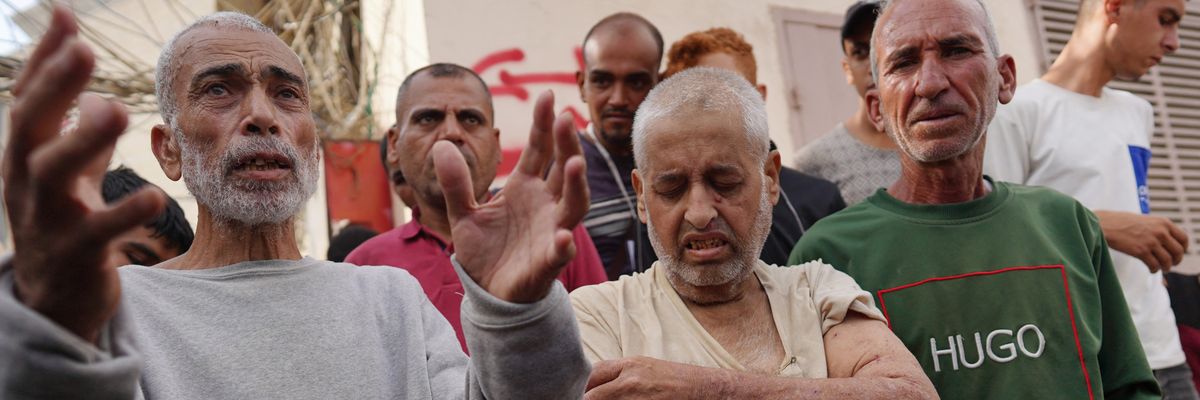
Palestinian men who had been detained by Israeli forces arrive after their release for a check-up at the Al-Aqsa Martyrs Hospital in Deir al-Balah in the central Gaza Strip on July 1, 2024.
"Our eyes were blindfolded, our hands and feet shackled, and they set dogs on us."
Palestinians recently released from detention by Israeli forces alleged in newly released interviews that they were subjected to various forms of torture during their time in prison, including frequent beatings and sleep deprivation.
"I was beaten day and night," 37-year-old Mahmud al-Zaanin, told Agence France-Presse from his bed at Gaza's Kamal Adwan Hospital. "Our eyes were blindfolded, our hands and feet shackled, and they set dogs on us."
Palestinians in Gaza and the West Bank have been detained en masse, often without charge, since Israel launched its latest assault on the Gaza Strip following a deadly Hamas-led attack on October 7. Addameer, a Palestinian human rights organization, estimates that 54 Palestinians—the majority of them from Gaza—have died in Israeli prisons since October "due to torture, inhumane detention conditions, systematic abuse, and deliberate attacks."
AFP spoke to some of the dozens of recently freed Palestinian detainees who were taken to Kamal Adwan Hospital following their release from Israeli prisons on June 11.
One man, identified as Zaanin, said he was denied access to the bathroom and medical treatment and deprived of sleep. Another man told the news agency that his "hands were injured from electric torture" and that he witnessed "more than 30 prisoners with amputated legs, some with both legs missing, and some with both eyes missing."
Whistleblower accounts from Israel's notorious Sde Teiman prison camp in the Negev desert have alleged that Israeli doctors have amputated the limbs of detainees due to injuries caused by handcuffing—"a routine event," according to one doctor's testimony.
"Our detainees have been subjected to all kinds of torture behind bars."
The treatment described by freed Palestinian detainees constitutes a grievous violation of international humanitarian law.
One recently released Palestinian man told AFP that "some young men died from excess beatings and dog attacks." AFP noted that the man showed "scars on his arms which he said were from dog bites." According to the Euro-Mediterranean Human Rights Monitor, the Israeli military has used trained police dogs to "systematically attack Palestinian civilians during military operations in the Gaza Strip."
Earlier this week, as Common Dreams reported, the director of what was once Gaza's main hospital said he was tortured by Israeli forces during his seven months in prison. Muhammad Abu Salmiya said he, like so many other Palestinian detainees, was held without charge.
"Our detainees have been subjected to all kinds of torture behind bars," Abu Salmiya said. "There was almost daily torture."
Alice Jill Edwards, the United Nations' special rapporteur on torture, said in May that she "received allegations of individuals being beaten, kept in cells blindfolded and handcuffed for excessive periods, deprived of sleep, and threatened with physical and sexual violence."
She noted at the time that it appears "no effective measures have been taken by the Israeli authorities to investigate these allegations."
"The Israeli authorities must investigate all complaints and reports of torture or ill-treatment promptly, impartially, effectively, and transparently," said Edwards. "Those responsible at all levels, including commanders, must be held accountable, while victims have a right to reparation and compensation."
Dear Common Dreams reader, It’s been nearly 30 years since I co-founded Common Dreams with my late wife, Lina Newhouser. We had the radical notion that journalism should serve the public good, not corporate profits. It was clear to us from the outset what it would take to build such a project. No paid advertisements. No corporate sponsors. No millionaire publisher telling us what to think or do. Many people said we wouldn't last a year, but we proved those doubters wrong. Together with a tremendous team of journalists and dedicated staff, we built an independent media outlet free from the constraints of profits and corporate control. Our mission has always been simple: To inform. To inspire. To ignite change for the common good. Building Common Dreams was not easy. Our survival was never guaranteed. When you take on the most powerful forces—Wall Street greed, fossil fuel industry destruction, Big Tech lobbyists, and uber-rich oligarchs who have spent billions upon billions rigging the economy and democracy in their favor—the only bulwark you have is supporters who believe in your work. But here’s the urgent message from me today. It's never been this bad out there. And it's never been this hard to keep us going. At the very moment Common Dreams is most needed, the threats we face are intensifying. We need your support now more than ever. We don't accept corporate advertising and never will. We don't have a paywall because we don't think people should be blocked from critical news based on their ability to pay. Everything we do is funded by the donations of readers like you. When everyone does the little they can afford, we are strong. But if that support retreats or dries up, so do we. Will you donate now to make sure Common Dreams not only survives but thrives? —Craig Brown, Co-founder |
Palestinians recently released from detention by Israeli forces alleged in newly released interviews that they were subjected to various forms of torture during their time in prison, including frequent beatings and sleep deprivation.
"I was beaten day and night," 37-year-old Mahmud al-Zaanin, told Agence France-Presse from his bed at Gaza's Kamal Adwan Hospital. "Our eyes were blindfolded, our hands and feet shackled, and they set dogs on us."
Palestinians in Gaza and the West Bank have been detained en masse, often without charge, since Israel launched its latest assault on the Gaza Strip following a deadly Hamas-led attack on October 7. Addameer, a Palestinian human rights organization, estimates that 54 Palestinians—the majority of them from Gaza—have died in Israeli prisons since October "due to torture, inhumane detention conditions, systematic abuse, and deliberate attacks."
AFP spoke to some of the dozens of recently freed Palestinian detainees who were taken to Kamal Adwan Hospital following their release from Israeli prisons on June 11.
One man, identified as Zaanin, said he was denied access to the bathroom and medical treatment and deprived of sleep. Another man told the news agency that his "hands were injured from electric torture" and that he witnessed "more than 30 prisoners with amputated legs, some with both legs missing, and some with both eyes missing."
Whistleblower accounts from Israel's notorious Sde Teiman prison camp in the Negev desert have alleged that Israeli doctors have amputated the limbs of detainees due to injuries caused by handcuffing—"a routine event," according to one doctor's testimony.
"Our detainees have been subjected to all kinds of torture behind bars."
The treatment described by freed Palestinian detainees constitutes a grievous violation of international humanitarian law.
One recently released Palestinian man told AFP that "some young men died from excess beatings and dog attacks." AFP noted that the man showed "scars on his arms which he said were from dog bites." According to the Euro-Mediterranean Human Rights Monitor, the Israeli military has used trained police dogs to "systematically attack Palestinian civilians during military operations in the Gaza Strip."
Earlier this week, as Common Dreams reported, the director of what was once Gaza's main hospital said he was tortured by Israeli forces during his seven months in prison. Muhammad Abu Salmiya said he, like so many other Palestinian detainees, was held without charge.
"Our detainees have been subjected to all kinds of torture behind bars," Abu Salmiya said. "There was almost daily torture."
Alice Jill Edwards, the United Nations' special rapporteur on torture, said in May that she "received allegations of individuals being beaten, kept in cells blindfolded and handcuffed for excessive periods, deprived of sleep, and threatened with physical and sexual violence."
She noted at the time that it appears "no effective measures have been taken by the Israeli authorities to investigate these allegations."
"The Israeli authorities must investigate all complaints and reports of torture or ill-treatment promptly, impartially, effectively, and transparently," said Edwards. "Those responsible at all levels, including commanders, must be held accountable, while victims have a right to reparation and compensation."
Palestinians recently released from detention by Israeli forces alleged in newly released interviews that they were subjected to various forms of torture during their time in prison, including frequent beatings and sleep deprivation.
"I was beaten day and night," 37-year-old Mahmud al-Zaanin, told Agence France-Presse from his bed at Gaza's Kamal Adwan Hospital. "Our eyes were blindfolded, our hands and feet shackled, and they set dogs on us."
Palestinians in Gaza and the West Bank have been detained en masse, often without charge, since Israel launched its latest assault on the Gaza Strip following a deadly Hamas-led attack on October 7. Addameer, a Palestinian human rights organization, estimates that 54 Palestinians—the majority of them from Gaza—have died in Israeli prisons since October "due to torture, inhumane detention conditions, systematic abuse, and deliberate attacks."
AFP spoke to some of the dozens of recently freed Palestinian detainees who were taken to Kamal Adwan Hospital following their release from Israeli prisons on June 11.
One man, identified as Zaanin, said he was denied access to the bathroom and medical treatment and deprived of sleep. Another man told the news agency that his "hands were injured from electric torture" and that he witnessed "more than 30 prisoners with amputated legs, some with both legs missing, and some with both eyes missing."
Whistleblower accounts from Israel's notorious Sde Teiman prison camp in the Negev desert have alleged that Israeli doctors have amputated the limbs of detainees due to injuries caused by handcuffing—"a routine event," according to one doctor's testimony.
"Our detainees have been subjected to all kinds of torture behind bars."
The treatment described by freed Palestinian detainees constitutes a grievous violation of international humanitarian law.
One recently released Palestinian man told AFP that "some young men died from excess beatings and dog attacks." AFP noted that the man showed "scars on his arms which he said were from dog bites." According to the Euro-Mediterranean Human Rights Monitor, the Israeli military has used trained police dogs to "systematically attack Palestinian civilians during military operations in the Gaza Strip."
Earlier this week, as Common Dreams reported, the director of what was once Gaza's main hospital said he was tortured by Israeli forces during his seven months in prison. Muhammad Abu Salmiya said he, like so many other Palestinian detainees, was held without charge.
"Our detainees have been subjected to all kinds of torture behind bars," Abu Salmiya said. "There was almost daily torture."
Alice Jill Edwards, the United Nations' special rapporteur on torture, said in May that she "received allegations of individuals being beaten, kept in cells blindfolded and handcuffed for excessive periods, deprived of sleep, and threatened with physical and sexual violence."
She noted at the time that it appears "no effective measures have been taken by the Israeli authorities to investigate these allegations."
"The Israeli authorities must investigate all complaints and reports of torture or ill-treatment promptly, impartially, effectively, and transparently," said Edwards. "Those responsible at all levels, including commanders, must be held accountable, while victims have a right to reparation and compensation."