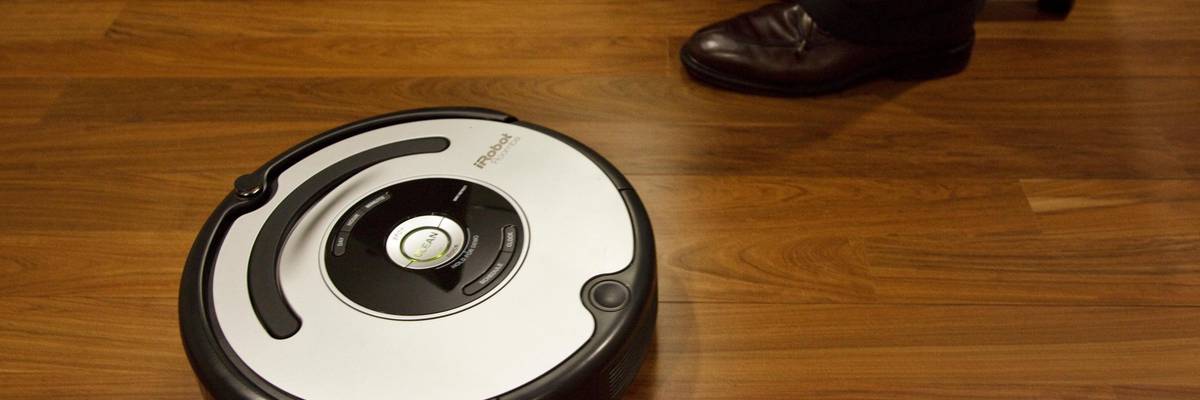
A demonstration of the Roomba vacuum cleaner is held at the headquarters of iRobot in Bedford, Massachusetts on June 1, 2009. (Photo: James Leynse/Corbis via Getty Images)
Consumer Advocates Blast 'Dangerous' Amazon Bid to Buy Maker of Roomba
"From a privacy perspective, this is a nightmare," said one anti-monopoly critic. "From an antitrust perspective, this is one of the most powerful data collection companies on Earth acquiring another vast and intrusive set of data."
Amazon on Friday expanded its capacity to connect to and collect information about consumers' homes and private lives, announcing its plan to purchase of iRobot Corp., the maker of the popular Roomba vacuum.
" Jeff Bezos has said that Amazon wants to buy its way to dominance. By snatching up Roomba and pairing it with its vast monopoly power fueled by its Prime system, it would do just that."
The e-commerce giant announced it will acquire the company for $1.7 billion in an all-cash deal, taking control of one of its competitors following Amazon's release last year of Astro, its own "smart" home assistant, which can move between rooms in a home and recognize faces.
But the purchase, said Robert Weissman, president of consumer advocacy group Public Citizen, "is not just about Amazon selling another device in its marketplace."
"It's about the company gaining still more intimate details of our lives to gain unfair market advantage and sell us more stuff," he said.
Like Amazon's other home products including Alexa and Ring, Roomba can connect to smartphones and WiFi. The vacuum creates a map of users' homes so it can tell where furniture and doors are as it cleans floors.
"With Ring, Alexa, and now Roomba, Amazon tracks EVERYTHING that happens inside your house (even who visits you)," said economist and entrepreneur Raoul Pal.
In 2017, iRobot CEO Colin Angle told Reuters that his company was considering selling data collected from customers' homes by Roombas to companies including Amazon and Google, helping the corporations discern what and how to market products.
"Maps of the inside of your home can tell a lot about a person," Electronic Frontier Foundation attorney Jamie Williams told BuzzFeed at the time. "For instance, how you lay out your living room could disclose whether watching TV is a central part of your life. It could disclose whether you have pets. How often you rearrange furniture. This information wouldn't be worth a lot to advertisers if it didn't reveal highly sensitive information about the inside of the home."
The purchase of iRobot comes two weeks after Amazon announced its acquisition of One Medical, a private healthcare provider, for $3.9 billion. Sen. Bernie Sanders (I-Vt.) was among the critics of the deal, warning Amazon's foray into medical care would not "provide quality care to all in a cost-effective way" but would only serve to make Amazon founder Jeff Bezos "even richer."
Ron Knox, a researcher at the Institute for Local Self-Reliance, said Amazon's purchase of iRobot "may be the most dangerous, threatening acquisition in the company's history," adding that it "is bad EVEN IF you're only worried about whether the deal will hurt competition."
"Jeff Bezos has said that Amazon wants to buy its way to dominance," said Knox. "By snatching up Roomba and pairing it with its vast monopoly power fueled by its Prime system, it would do just that."
"From a privacy perspective, this is a nightmare," he added. "From an antitrust perspective, this is one of the most powerful data collection companies on Earth acquiring another vast and intrusive set of data. This is how privacy concerns and antitrust go hand in hand."
Weissman said federal regulators "should not allow Amazon to suck up iRobot/Roomba."
"The last thing America and the world needs is Amazon vacuuming up even more of our personal information," he said. "Amazon should not be permitted to leverage its retail market power to expand its market share of connected home devices."
We are at a crossroads
This country and this world are at a monumental crossroads. In a few short weeks, US voters will have an opportunity to beat back the forces of fascism and confront the billionaires who are rigging the economy, our media system, and our democracy, making it increasingly impossible for ordinary people to get by. We’re not just talking about the election. We’re talking about what must be done once these fascist elements are vanquished from power. We need a bolder set of solutions than what either major party has so far been willing to offer and a working-class movement ready to fight like hell for it. Trump didn't emerge from nowhere. The conditions that fueled MAGA authoritarianism were created by decades of radical neoliberal economic policies and a corrupt political system dominated by corporate interests. They slashed taxes on the super-rich, promising that the benefits would trickle down. They said giveaways to the corporate titans would make life more affordable for the rest of us. It was all bullshit. And when a bitter, betrayed populace searches for someone to blame, right-wing demagogues have little trouble finding scapegoats. People know when they're being lied to, but you won't hear any of this from the corporate media. Only independent journalism—powered and funded by people who believe in building a better world—can deliver truly trustworthy daily news. Our Fall Campaign is underway, and we need your help. To power our newsroom through the rest of the year, we need to raise $125,000 by midnight on October 31. So if you share our vision, please contribute whatever you can to sustain our work. |
Amazon on Friday expanded its capacity to connect to and collect information about consumers' homes and private lives, announcing its plan to purchase of iRobot Corp., the maker of the popular Roomba vacuum.
" Jeff Bezos has said that Amazon wants to buy its way to dominance. By snatching up Roomba and pairing it with its vast monopoly power fueled by its Prime system, it would do just that."
The e-commerce giant announced it will acquire the company for $1.7 billion in an all-cash deal, taking control of one of its competitors following Amazon's release last year of Astro, its own "smart" home assistant, which can move between rooms in a home and recognize faces.
But the purchase, said Robert Weissman, president of consumer advocacy group Public Citizen, "is not just about Amazon selling another device in its marketplace."
"It's about the company gaining still more intimate details of our lives to gain unfair market advantage and sell us more stuff," he said.
Like Amazon's other home products including Alexa and Ring, Roomba can connect to smartphones and WiFi. The vacuum creates a map of users' homes so it can tell where furniture and doors are as it cleans floors.
"With Ring, Alexa, and now Roomba, Amazon tracks EVERYTHING that happens inside your house (even who visits you)," said economist and entrepreneur Raoul Pal.
In 2017, iRobot CEO Colin Angle told Reuters that his company was considering selling data collected from customers' homes by Roombas to companies including Amazon and Google, helping the corporations discern what and how to market products.
"Maps of the inside of your home can tell a lot about a person," Electronic Frontier Foundation attorney Jamie Williams told BuzzFeed at the time. "For instance, how you lay out your living room could disclose whether watching TV is a central part of your life. It could disclose whether you have pets. How often you rearrange furniture. This information wouldn't be worth a lot to advertisers if it didn't reveal highly sensitive information about the inside of the home."
The purchase of iRobot comes two weeks after Amazon announced its acquisition of One Medical, a private healthcare provider, for $3.9 billion. Sen. Bernie Sanders (I-Vt.) was among the critics of the deal, warning Amazon's foray into medical care would not "provide quality care to all in a cost-effective way" but would only serve to make Amazon founder Jeff Bezos "even richer."
Ron Knox, a researcher at the Institute for Local Self-Reliance, said Amazon's purchase of iRobot "may be the most dangerous, threatening acquisition in the company's history," adding that it "is bad EVEN IF you're only worried about whether the deal will hurt competition."
"Jeff Bezos has said that Amazon wants to buy its way to dominance," said Knox. "By snatching up Roomba and pairing it with its vast monopoly power fueled by its Prime system, it would do just that."
"From a privacy perspective, this is a nightmare," he added. "From an antitrust perspective, this is one of the most powerful data collection companies on Earth acquiring another vast and intrusive set of data. This is how privacy concerns and antitrust go hand in hand."
Weissman said federal regulators "should not allow Amazon to suck up iRobot/Roomba."
"The last thing America and the world needs is Amazon vacuuming up even more of our personal information," he said. "Amazon should not be permitted to leverage its retail market power to expand its market share of connected home devices."
Amazon on Friday expanded its capacity to connect to and collect information about consumers' homes and private lives, announcing its plan to purchase of iRobot Corp., the maker of the popular Roomba vacuum.
" Jeff Bezos has said that Amazon wants to buy its way to dominance. By snatching up Roomba and pairing it with its vast monopoly power fueled by its Prime system, it would do just that."
The e-commerce giant announced it will acquire the company for $1.7 billion in an all-cash deal, taking control of one of its competitors following Amazon's release last year of Astro, its own "smart" home assistant, which can move between rooms in a home and recognize faces.
But the purchase, said Robert Weissman, president of consumer advocacy group Public Citizen, "is not just about Amazon selling another device in its marketplace."
"It's about the company gaining still more intimate details of our lives to gain unfair market advantage and sell us more stuff," he said.
Like Amazon's other home products including Alexa and Ring, Roomba can connect to smartphones and WiFi. The vacuum creates a map of users' homes so it can tell where furniture and doors are as it cleans floors.
"With Ring, Alexa, and now Roomba, Amazon tracks EVERYTHING that happens inside your house (even who visits you)," said economist and entrepreneur Raoul Pal.
In 2017, iRobot CEO Colin Angle told Reuters that his company was considering selling data collected from customers' homes by Roombas to companies including Amazon and Google, helping the corporations discern what and how to market products.
"Maps of the inside of your home can tell a lot about a person," Electronic Frontier Foundation attorney Jamie Williams told BuzzFeed at the time. "For instance, how you lay out your living room could disclose whether watching TV is a central part of your life. It could disclose whether you have pets. How often you rearrange furniture. This information wouldn't be worth a lot to advertisers if it didn't reveal highly sensitive information about the inside of the home."
The purchase of iRobot comes two weeks after Amazon announced its acquisition of One Medical, a private healthcare provider, for $3.9 billion. Sen. Bernie Sanders (I-Vt.) was among the critics of the deal, warning Amazon's foray into medical care would not "provide quality care to all in a cost-effective way" but would only serve to make Amazon founder Jeff Bezos "even richer."
Ron Knox, a researcher at the Institute for Local Self-Reliance, said Amazon's purchase of iRobot "may be the most dangerous, threatening acquisition in the company's history," adding that it "is bad EVEN IF you're only worried about whether the deal will hurt competition."
"Jeff Bezos has said that Amazon wants to buy its way to dominance," said Knox. "By snatching up Roomba and pairing it with its vast monopoly power fueled by its Prime system, it would do just that."
"From a privacy perspective, this is a nightmare," he added. "From an antitrust perspective, this is one of the most powerful data collection companies on Earth acquiring another vast and intrusive set of data. This is how privacy concerns and antitrust go hand in hand."
Weissman said federal regulators "should not allow Amazon to suck up iRobot/Roomba."
"The last thing America and the world needs is Amazon vacuuming up even more of our personal information," he said. "Amazon should not be permitted to leverage its retail market power to expand its market share of connected home devices."