SUBSCRIBE TO OUR FREE NEWSLETTER
Daily news & progressive opinion—funded by the people, not the corporations—delivered straight to your inbox.
5
#000000
#FFFFFF
To donate by check, phone, or other method, see our More Ways to Give page.
Daily news & progressive opinion—funded by the people, not the corporations—delivered straight to your inbox.
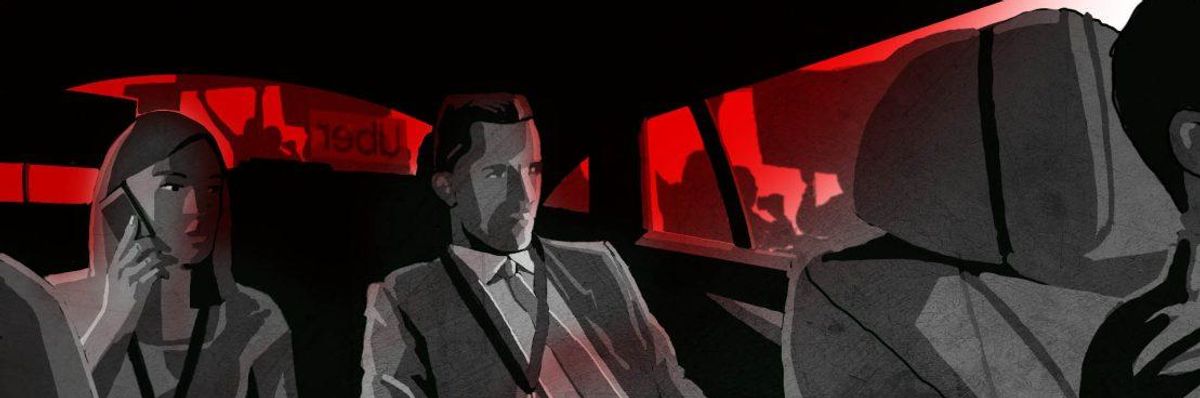
"The Uber Files," according to the ICIJ is the "secret story of how the tech giant won access to world leaders, cozied up to oligarchs and dodged taxes amid chaotic global expansion." Under Sunday, a consortium of journalists published the first batch of reporting based on over 124,000 leaked documents from inside the ride-hailing company. (Photo: Stefano Montesi - Corbis/Corbis via Getty Images)
Over 124,000 internal corporate files and documents, including private communications between top executives, are the basis of new reporting published Sunday dubbed "The Uber Files"--a detailed look at the ride-hailing juggernaut that aggressively lobbied governments around the world to ease regulations and pass legislation friendly to the company's bottom line but often harmful to traditional taxi rivals and its own drivers.
First obtained by The Guardian newspaper in the U.K. and subsequently shared with the International Consortium of Investigative Journalists (ICIJ), the trove of documents offers a damning picture of the U.S.-based tech company that revolutionized ride-hailing with a smartphone app that allowed independent drivers to become instant taxi cab drivers.
According to the ICIJ:
As it grew from scrappy Silicon Valley startup to a world-conquering multi-billion dollar operation, Uber promoted itself as a leader of the digital revolution.
But the tech company pushed its agenda the old-fashioned way. Uber's scandals and missteps in the United States, from its spying on government officials to its leaks of executive misconduct, have been the subject of books, TV series and newspaper investigations.
Now, a new leak of records reveal the inside story of how the ride-hailing giant's executives muscled into new markets, then managed the fallout, spending gobs of cash on a global influence machine deployed to win favors from politicians, regulators and other leaders, who were often eager to lend a hand.
The Guardian reports how the extensive leak of data "lays bare the ethically questionable practices that fueled the company's transformation into one of Silicon Valley's most famous exports."
The newspaper says the files cover the "five-year period when Uber was run by its co-founder Travis Kalanick, who tried to force the cab-hailing service into cities around the world, even if that meant breaching laws and taxi regulations."
Episodes detailed in the reporting include ruthless behavior of Kalanick who appeared less concerned with the well-being of Uber drivers than securing the company's ability to operate in new cities or countries.
Gig Workers Rising, a collective of workers operating in the gig economy, said the leak shows how ruthless Uber was with Kalanick at the helm, but that the company continues to mistreat its drivers:
Responding to the first batch of reporting on the files--with much more expected in the coming days--Sandeep Vaheesan, legal director of the Open Markets Institute, a think tank focused on corporate power and monopolies, called it a "damning report on Uber's predatory methods of competition and growth, which antitrust enforcers here and abroad unfortunately aided and abetted because 'innovation.'"
Dear Common Dreams reader, It’s been nearly 30 years since I co-founded Common Dreams with my late wife, Lina Newhouser. We had the radical notion that journalism should serve the public good, not corporate profits. It was clear to us from the outset what it would take to build such a project. No paid advertisements. No corporate sponsors. No millionaire publisher telling us what to think or do. Many people said we wouldn't last a year, but we proved those doubters wrong. Together with a tremendous team of journalists and dedicated staff, we built an independent media outlet free from the constraints of profits and corporate control. Our mission has always been simple: To inform. To inspire. To ignite change for the common good. Building Common Dreams was not easy. Our survival was never guaranteed. When you take on the most powerful forces—Wall Street greed, fossil fuel industry destruction, Big Tech lobbyists, and uber-rich oligarchs who have spent billions upon billions rigging the economy and democracy in their favor—the only bulwark you have is supporters who believe in your work. But here’s the urgent message from me today. It's never been this bad out there. And it's never been this hard to keep us going. At the very moment Common Dreams is most needed, the threats we face are intensifying. We need your support now more than ever. We don't accept corporate advertising and never will. We don't have a paywall because we don't think people should be blocked from critical news based on their ability to pay. Everything we do is funded by the donations of readers like you. When everyone does the little they can afford, we are strong. But if that support retreats or dries up, so do we. Will you donate now to make sure Common Dreams not only survives but thrives? —Craig Brown, Co-founder |
Over 124,000 internal corporate files and documents, including private communications between top executives, are the basis of new reporting published Sunday dubbed "The Uber Files"--a detailed look at the ride-hailing juggernaut that aggressively lobbied governments around the world to ease regulations and pass legislation friendly to the company's bottom line but often harmful to traditional taxi rivals and its own drivers.
First obtained by The Guardian newspaper in the U.K. and subsequently shared with the International Consortium of Investigative Journalists (ICIJ), the trove of documents offers a damning picture of the U.S.-based tech company that revolutionized ride-hailing with a smartphone app that allowed independent drivers to become instant taxi cab drivers.
According to the ICIJ:
As it grew from scrappy Silicon Valley startup to a world-conquering multi-billion dollar operation, Uber promoted itself as a leader of the digital revolution.
But the tech company pushed its agenda the old-fashioned way. Uber's scandals and missteps in the United States, from its spying on government officials to its leaks of executive misconduct, have been the subject of books, TV series and newspaper investigations.
Now, a new leak of records reveal the inside story of how the ride-hailing giant's executives muscled into new markets, then managed the fallout, spending gobs of cash on a global influence machine deployed to win favors from politicians, regulators and other leaders, who were often eager to lend a hand.
The Guardian reports how the extensive leak of data "lays bare the ethically questionable practices that fueled the company's transformation into one of Silicon Valley's most famous exports."
The newspaper says the files cover the "five-year period when Uber was run by its co-founder Travis Kalanick, who tried to force the cab-hailing service into cities around the world, even if that meant breaching laws and taxi regulations."
Episodes detailed in the reporting include ruthless behavior of Kalanick who appeared less concerned with the well-being of Uber drivers than securing the company's ability to operate in new cities or countries.
Gig Workers Rising, a collective of workers operating in the gig economy, said the leak shows how ruthless Uber was with Kalanick at the helm, but that the company continues to mistreat its drivers:
Responding to the first batch of reporting on the files--with much more expected in the coming days--Sandeep Vaheesan, legal director of the Open Markets Institute, a think tank focused on corporate power and monopolies, called it a "damning report on Uber's predatory methods of competition and growth, which antitrust enforcers here and abroad unfortunately aided and abetted because 'innovation.'"
Over 124,000 internal corporate files and documents, including private communications between top executives, are the basis of new reporting published Sunday dubbed "The Uber Files"--a detailed look at the ride-hailing juggernaut that aggressively lobbied governments around the world to ease regulations and pass legislation friendly to the company's bottom line but often harmful to traditional taxi rivals and its own drivers.
First obtained by The Guardian newspaper in the U.K. and subsequently shared with the International Consortium of Investigative Journalists (ICIJ), the trove of documents offers a damning picture of the U.S.-based tech company that revolutionized ride-hailing with a smartphone app that allowed independent drivers to become instant taxi cab drivers.
According to the ICIJ:
As it grew from scrappy Silicon Valley startup to a world-conquering multi-billion dollar operation, Uber promoted itself as a leader of the digital revolution.
But the tech company pushed its agenda the old-fashioned way. Uber's scandals and missteps in the United States, from its spying on government officials to its leaks of executive misconduct, have been the subject of books, TV series and newspaper investigations.
Now, a new leak of records reveal the inside story of how the ride-hailing giant's executives muscled into new markets, then managed the fallout, spending gobs of cash on a global influence machine deployed to win favors from politicians, regulators and other leaders, who were often eager to lend a hand.
The Guardian reports how the extensive leak of data "lays bare the ethically questionable practices that fueled the company's transformation into one of Silicon Valley's most famous exports."
The newspaper says the files cover the "five-year period when Uber was run by its co-founder Travis Kalanick, who tried to force the cab-hailing service into cities around the world, even if that meant breaching laws and taxi regulations."
Episodes detailed in the reporting include ruthless behavior of Kalanick who appeared less concerned with the well-being of Uber drivers than securing the company's ability to operate in new cities or countries.
Gig Workers Rising, a collective of workers operating in the gig economy, said the leak shows how ruthless Uber was with Kalanick at the helm, but that the company continues to mistreat its drivers:
Responding to the first batch of reporting on the files--with much more expected in the coming days--Sandeep Vaheesan, legal director of the Open Markets Institute, a think tank focused on corporate power and monopolies, called it a "damning report on Uber's predatory methods of competition and growth, which antitrust enforcers here and abroad unfortunately aided and abetted because 'innovation.'"