

SUBSCRIBE TO OUR FREE NEWSLETTER
Daily news & progressive opinion—funded by the people, not the corporations—delivered straight to your inbox.
5
#000000
#FFFFFF
To donate by check, phone, or other method, see our More Ways to Give page.
Key Republican and Democratic senators on Thursday reportedly reached a deal on Covid-19 aid that slashes proposed funding to combat the pandemic outside the United States, a decision that public health advocates condemned as short-sighted and potentially catastrophic for developing nations.
"Such a move would be unconscionable, cruel, and stupid," Public Citizen president Robert Weissman said in a statement. "Not only would it consign poorer countries, especially in Africa, to more death and disease, it would invite a resurgence of the pandemic in the United States. How could this lesson not be learned?"
"It would invite a resurgence of the pandemic in the United States. How could this lesson not be learned?"
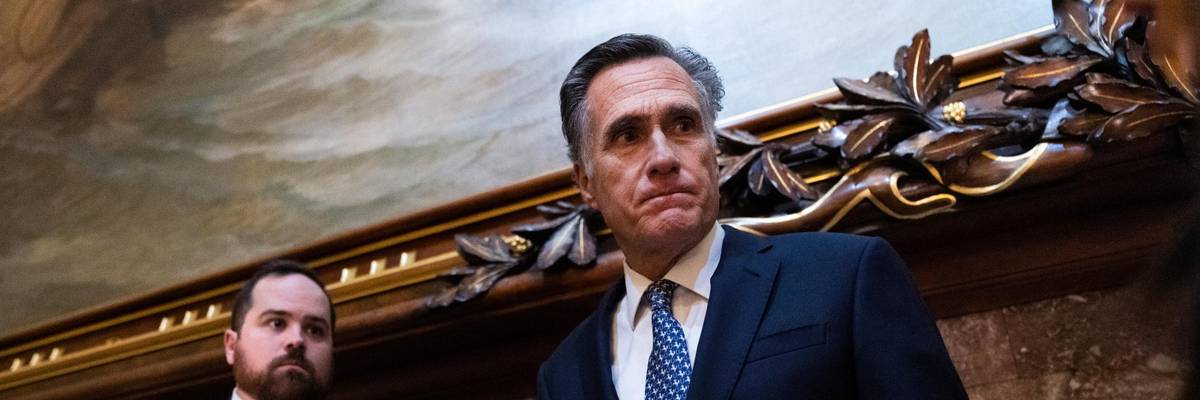
Sen. Mitt Romney (R-Utah), who has led the GOP side of the negotiations, said Thursday that senators "reached an agreement in principle" on coronavirus funding weeks after the Democratic leadership yanked pandemic money from an omnibus spending package due to disagreements over how to finance the aid.
Republicans have questioned the need for any new money to combat the pandemic and demanded that any aid be repurposed from states. The new agreement will need at least 10 Republican votes to advance out of the evenly divided Senate.
According to the Washington Post, the agreed-upon framework includes $10 billion in funding overall, less than half of the $22 billion the Biden White House has requested to keep key coronavirus testing, treatments, and vaccination programs alive. The administration has already been forced to cancel orders for therapeutics and shut down a program covering Covid-19 testing and treatment for the uninsured.
"Several GOP lawmakers said about $1 billion in funding would be set aside to support global vaccinations--down from the White House's $5 billion request for global aid," the Post reported. "But that number appeared to be in flux, with several Democrats on Thursday arguing for considerably more and lawmakers acknowledging that they were still negotiating."
Zain Rizvi, a researcher with Public Citizen's Access to Medicines program, noted on Twitter that "USAID originally said it needed $19 billion for the global Covid response."
"Now, Congress has decided there could be $1 billion available," Rizvi wrote. "Penny-pinching in a pandemic will have devastating consequences for vaccinating the world, for reducing the risk of variants, for all of us."
Public Citizen has estimated that a $25 billion investment by the U.S. Congress--which recently approved a $32 billion increase in military spending--would enable the production of enough doses to vaccinate everyone in low- and middle-income countries.
Related Content

More than two years into the global pandemic, just 14.5% of people in low-income countries have received at least one coronavirus vaccine dose as rich countries and pharmaceutical giants hoard doses and technology, denying developing nations the tools needed to quickly ramp up local manufacturing.
"Failing to secure this funding means people around the world will die."
The World Health Organization (WHO), which is working to facilitate and expand technology transfer efforts, said this week that 83% of the population of Africa has yet to receive a single coronavirus vaccine dose as some rich countries move to roll out fourth doses.
"This is not acceptable to me, and it should not be acceptable to anyone," WHO Director-General Tedros Adhanom Ghebreyesus said during a press conference Wednesday. "If the world's rich are enjoying the benefits of high vaccine coverage, why shouldn't the world's poor? Are some lives worth more than others?"
Some Democratic lawmakers indicated Thursday that they would consider voting against any coronavirus funding package that does not include sufficient money for the global pandemic response.
"Hearing that critical global vax funding may be taken out of the Covid bill in the Senate," Rep. Raja Krishnamoorthi (D-Ill.) tweeted Thursday. "If the Senate does this, I am concerned many others and I may not be able to support the bill. We can't end the pandemic without global vax funding--period."
Rep. Pramila Jayapal (D-Wash.), chair of the Congressional Progressive Caucus, implored the Senate "not to play politics with this important funding."
"This pandemic isn't over until it's over everywhere," Jayapal added. "Failing to secure this funding means people around the world will die--and as more people get infected, more variants will emerge and surges will be more likely in the U.S."
Key Republican and Democratic senators on Thursday reportedly reached a deal on Covid-19 aid that slashes proposed funding to combat the pandemic outside the United States, a decision that public health advocates condemned as short-sighted and potentially catastrophic for developing nations.
"Such a move would be unconscionable, cruel, and stupid," Public Citizen president Robert Weissman said in a statement. "Not only would it consign poorer countries, especially in Africa, to more death and disease, it would invite a resurgence of the pandemic in the United States. How could this lesson not be learned?"
"It would invite a resurgence of the pandemic in the United States. How could this lesson not be learned?"
Sen. Mitt Romney (R-Utah), who has led the GOP side of the negotiations, said Thursday that senators "reached an agreement in principle" on coronavirus funding weeks after the Democratic leadership yanked pandemic money from an omnibus spending package due to disagreements over how to finance the aid.
Republicans have questioned the need for any new money to combat the pandemic and demanded that any aid be repurposed from states. The new agreement will need at least 10 Republican votes to advance out of the evenly divided Senate.
According to the Washington Post, the agreed-upon framework includes $10 billion in funding overall, less than half of the $22 billion the Biden White House has requested to keep key coronavirus testing, treatments, and vaccination programs alive. The administration has already been forced to cancel orders for therapeutics and shut down a program covering Covid-19 testing and treatment for the uninsured.
"Several GOP lawmakers said about $1 billion in funding would be set aside to support global vaccinations--down from the White House's $5 billion request for global aid," the Post reported. "But that number appeared to be in flux, with several Democrats on Thursday arguing for considerably more and lawmakers acknowledging that they were still negotiating."
Zain Rizvi, a researcher with Public Citizen's Access to Medicines program, noted on Twitter that "USAID originally said it needed $19 billion for the global Covid response."
"Now, Congress has decided there could be $1 billion available," Rizvi wrote. "Penny-pinching in a pandemic will have devastating consequences for vaccinating the world, for reducing the risk of variants, for all of us."
Public Citizen has estimated that a $25 billion investment by the U.S. Congress--which recently approved a $32 billion increase in military spending--would enable the production of enough doses to vaccinate everyone in low- and middle-income countries.
Related Content
More than two years into the global pandemic, just 14.5% of people in low-income countries have received at least one coronavirus vaccine dose as rich countries and pharmaceutical giants hoard doses and technology, denying developing nations the tools needed to quickly ramp up local manufacturing.
"Failing to secure this funding means people around the world will die."
The World Health Organization (WHO), which is working to facilitate and expand technology transfer efforts, said this week that 83% of the population of Africa has yet to receive a single coronavirus vaccine dose as some rich countries move to roll out fourth doses.
"This is not acceptable to me, and it should not be acceptable to anyone," WHO Director-General Tedros Adhanom Ghebreyesus said during a press conference Wednesday. "If the world's rich are enjoying the benefits of high vaccine coverage, why shouldn't the world's poor? Are some lives worth more than others?"
Some Democratic lawmakers indicated Thursday that they would consider voting against any coronavirus funding package that does not include sufficient money for the global pandemic response.
"Hearing that critical global vax funding may be taken out of the Covid bill in the Senate," Rep. Raja Krishnamoorthi (D-Ill.) tweeted Thursday. "If the Senate does this, I am concerned many others and I may not be able to support the bill. We can't end the pandemic without global vax funding--period."
Rep. Pramila Jayapal (D-Wash.), chair of the Congressional Progressive Caucus, implored the Senate "not to play politics with this important funding."
"This pandemic isn't over until it's over everywhere," Jayapal added. "Failing to secure this funding means people around the world will die--and as more people get infected, more variants will emerge and surges will be more likely in the U.S."
Key Republican and Democratic senators on Thursday reportedly reached a deal on Covid-19 aid that slashes proposed funding to combat the pandemic outside the United States, a decision that public health advocates condemned as short-sighted and potentially catastrophic for developing nations.
"Such a move would be unconscionable, cruel, and stupid," Public Citizen president Robert Weissman said in a statement. "Not only would it consign poorer countries, especially in Africa, to more death and disease, it would invite a resurgence of the pandemic in the United States. How could this lesson not be learned?"
"It would invite a resurgence of the pandemic in the United States. How could this lesson not be learned?"
Sen. Mitt Romney (R-Utah), who has led the GOP side of the negotiations, said Thursday that senators "reached an agreement in principle" on coronavirus funding weeks after the Democratic leadership yanked pandemic money from an omnibus spending package due to disagreements over how to finance the aid.
Republicans have questioned the need for any new money to combat the pandemic and demanded that any aid be repurposed from states. The new agreement will need at least 10 Republican votes to advance out of the evenly divided Senate.
According to the Washington Post, the agreed-upon framework includes $10 billion in funding overall, less than half of the $22 billion the Biden White House has requested to keep key coronavirus testing, treatments, and vaccination programs alive. The administration has already been forced to cancel orders for therapeutics and shut down a program covering Covid-19 testing and treatment for the uninsured.
"Several GOP lawmakers said about $1 billion in funding would be set aside to support global vaccinations--down from the White House's $5 billion request for global aid," the Post reported. "But that number appeared to be in flux, with several Democrats on Thursday arguing for considerably more and lawmakers acknowledging that they were still negotiating."
Zain Rizvi, a researcher with Public Citizen's Access to Medicines program, noted on Twitter that "USAID originally said it needed $19 billion for the global Covid response."
"Now, Congress has decided there could be $1 billion available," Rizvi wrote. "Penny-pinching in a pandemic will have devastating consequences for vaccinating the world, for reducing the risk of variants, for all of us."
Public Citizen has estimated that a $25 billion investment by the U.S. Congress--which recently approved a $32 billion increase in military spending--would enable the production of enough doses to vaccinate everyone in low- and middle-income countries.
Related Content
More than two years into the global pandemic, just 14.5% of people in low-income countries have received at least one coronavirus vaccine dose as rich countries and pharmaceutical giants hoard doses and technology, denying developing nations the tools needed to quickly ramp up local manufacturing.
"Failing to secure this funding means people around the world will die."
The World Health Organization (WHO), which is working to facilitate and expand technology transfer efforts, said this week that 83% of the population of Africa has yet to receive a single coronavirus vaccine dose as some rich countries move to roll out fourth doses.
"This is not acceptable to me, and it should not be acceptable to anyone," WHO Director-General Tedros Adhanom Ghebreyesus said during a press conference Wednesday. "If the world's rich are enjoying the benefits of high vaccine coverage, why shouldn't the world's poor? Are some lives worth more than others?"
Some Democratic lawmakers indicated Thursday that they would consider voting against any coronavirus funding package that does not include sufficient money for the global pandemic response.
"Hearing that critical global vax funding may be taken out of the Covid bill in the Senate," Rep. Raja Krishnamoorthi (D-Ill.) tweeted Thursday. "If the Senate does this, I am concerned many others and I may not be able to support the bill. We can't end the pandemic without global vax funding--period."
Rep. Pramila Jayapal (D-Wash.), chair of the Congressional Progressive Caucus, implored the Senate "not to play politics with this important funding."
"This pandemic isn't over until it's over everywhere," Jayapal added. "Failing to secure this funding means people around the world will die--and as more people get infected, more variants will emerge and surges will be more likely in the U.S."

