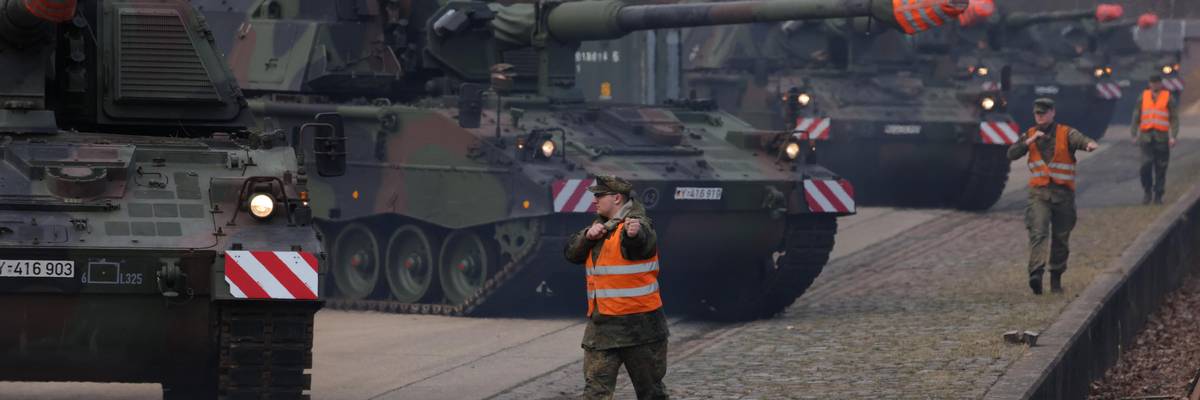
The head of the United Nations on Monday implored Western powers, Russia, and Ukraine to urgently ramp up diplomatic negotiations amid heightened fears of a military conflict and loudening drumbeats of war amplified by U.S. corporate media outlets.
"We simply cannot accept even the possibility of such a disastrous confrontation," U.N. Secretary-General Antonio Guterres told reporters during a press conference. "My message is clear: There is no alternative to diplomacy. All issues--including the most intractable--can and must be addressed and resolved through diplomatic frameworks. It is my firm belief that this principle will prevail."
"Abandoning diplomacy for confrontation is not a step over a line, it is a dive over a cliff," he added. "In short, my appeal is this: Do not fail the cause of peace."
Guterres' remarks came hours before Russia announced Tuesday that it is in the process of returning some of its troops from near Ukraine's border to their bases following the completion of military exercises, a move seen as a potential step toward deescalation.
On Monday, Russian Foreign Minister Sergey Lavrov said he believes paths to a potential diplomatic solution to tensions over Ukraine are "far from exhausted" and recommended "continuing and intensifying" talks, comments that came in the wake of unverified reports that the U.S. intelligence community believes Russia could invade Ukraine within days--possibly on Wednesday.
Russian officials dismissed such reports--which U.S. officials would not publicly confirm--as "hysteria."
"This is very ridiculous and strange," Dmitry Polyansky, Russia's first deputy permanent representative to the U.N., said of the reports.
Ukrainian President Volodymyr Zelensky, meanwhile, suggested Monday that his country could ultimately drop its push to join NATO, a move that would satisfy one of Russia's key security demands.
In a video address posted online Monday, Zelensky also expressed annoyance with intelligence reports predicting an exact date for a Russian attack.
"They frighten us with a great war and once again set the date for a military invasion," Zelensky said. "But our state today is stronger than ever."
Oleksiy Danilov, the secretary of Ukraine's security council, joined Zelensky in rejecting warnings that an invasion is imminent.
"We recognize the risks that exist on the territory of our country," Danilov said Monday. "But the situation is under complete control. Moreover, we, as of today, do not see that a full-scale invasion by the Russian Federation could happen on the 16th or 17th of this month."
Related Content

'I Remember WMDs in Iraq': Reporter Calls Out US Official on Russian Intel Claims
Despite Ukrainian officials' remarks and growing demands for deescalation, U.S. State Department spokesperson Ned Price claimed during a Monday briefing that the possibility of a Russian attack on Ukraine is "perhaps more real than ever before."
Asked what he thought of Lavrov's call for more serious diplomatic engagement, Price said that "we have taken note of his comments" but added, "We have not seen any tangible, any real sign of deescalation."
The U.S., which has deployed thousands of troops to Eastern Europe in recent days, announced Monday that it is temporarily shuttering its embassy in Kyiv and relocating its operations to Lviv, a step that came after the U.S. began evacuating some diplomatic staff from Ukraine.
By contrast, Guterres said Monday that "the United Nations Country Team remains fully operational in Ukraine."
"The time is now to defuse tensions and deescalate actions on the ground," Guterres added. "There is no place for incendiary rhetoric. Public statements should aim to reduce tensions, not inflame them."
"I welcome the recent flurry of diplomatic contacts and engagements, including between heads of state," he continued. "But more needs to be done, and I expect all to intensify their efforts. I have made my good offices available and we will leave no stone unturned in the search for a peaceful solution."
The head of the United Nations on Monday implored Western powers, Russia, and Ukraine to urgently ramp up diplomatic negotiations amid heightened fears of a military conflict and loudening drumbeats of war amplified by U.S. corporate media outlets.
"We simply cannot accept even the possibility of such a disastrous confrontation," U.N. Secretary-General Antonio Guterres told reporters during a press conference. "My message is clear: There is no alternative to diplomacy. All issues--including the most intractable--can and must be addressed and resolved through diplomatic frameworks. It is my firm belief that this principle will prevail."
"Abandoning diplomacy for confrontation is not a step over a line, it is a dive over a cliff," he added. "In short, my appeal is this: Do not fail the cause of peace."
Guterres' remarks came hours before Russia announced Tuesday that it is in the process of returning some of its troops from near Ukraine's border to their bases following the completion of military exercises, a move seen as a potential step toward deescalation.
On Monday, Russian Foreign Minister Sergey Lavrov said he believes paths to a potential diplomatic solution to tensions over Ukraine are "far from exhausted" and recommended "continuing and intensifying" talks, comments that came in the wake of unverified reports that the U.S. intelligence community believes Russia could invade Ukraine within days--possibly on Wednesday.
Russian officials dismissed such reports--which U.S. officials would not publicly confirm--as "hysteria."
"This is very ridiculous and strange," Dmitry Polyansky, Russia's first deputy permanent representative to the U.N., said of the reports.
Ukrainian President Volodymyr Zelensky, meanwhile, suggested Monday that his country could ultimately drop its push to join NATO, a move that would satisfy one of Russia's key security demands.
In a video address posted online Monday, Zelensky also expressed annoyance with intelligence reports predicting an exact date for a Russian attack.
"They frighten us with a great war and once again set the date for a military invasion," Zelensky said. "But our state today is stronger than ever."
Oleksiy Danilov, the secretary of Ukraine's security council, joined Zelensky in rejecting warnings that an invasion is imminent.
"We recognize the risks that exist on the territory of our country," Danilov said Monday. "But the situation is under complete control. Moreover, we, as of today, do not see that a full-scale invasion by the Russian Federation could happen on the 16th or 17th of this month."
Related Content
'I Remember WMDs in Iraq': Reporter Calls Out US Official on Russian Intel Claims
Despite Ukrainian officials' remarks and growing demands for deescalation, U.S. State Department spokesperson Ned Price claimed during a Monday briefing that the possibility of a Russian attack on Ukraine is "perhaps more real than ever before."
Asked what he thought of Lavrov's call for more serious diplomatic engagement, Price said that "we have taken note of his comments" but added, "We have not seen any tangible, any real sign of deescalation."
The U.S., which has deployed thousands of troops to Eastern Europe in recent days, announced Monday that it is temporarily shuttering its embassy in Kyiv and relocating its operations to Lviv, a step that came after the U.S. began evacuating some diplomatic staff from Ukraine.
By contrast, Guterres said Monday that "the United Nations Country Team remains fully operational in Ukraine."
"The time is now to defuse tensions and deescalate actions on the ground," Guterres added. "There is no place for incendiary rhetoric. Public statements should aim to reduce tensions, not inflame them."
"I welcome the recent flurry of diplomatic contacts and engagements, including between heads of state," he continued. "But more needs to be done, and I expect all to intensify their efforts. I have made my good offices available and we will leave no stone unturned in the search for a peaceful solution."
The head of the United Nations on Monday implored Western powers, Russia, and Ukraine to urgently ramp up diplomatic negotiations amid heightened fears of a military conflict and loudening drumbeats of war amplified by U.S. corporate media outlets.
"We simply cannot accept even the possibility of such a disastrous confrontation," U.N. Secretary-General Antonio Guterres told reporters during a press conference. "My message is clear: There is no alternative to diplomacy. All issues--including the most intractable--can and must be addressed and resolved through diplomatic frameworks. It is my firm belief that this principle will prevail."
"Abandoning diplomacy for confrontation is not a step over a line, it is a dive over a cliff," he added. "In short, my appeal is this: Do not fail the cause of peace."
Guterres' remarks came hours before Russia announced Tuesday that it is in the process of returning some of its troops from near Ukraine's border to their bases following the completion of military exercises, a move seen as a potential step toward deescalation.
On Monday, Russian Foreign Minister Sergey Lavrov said he believes paths to a potential diplomatic solution to tensions over Ukraine are "far from exhausted" and recommended "continuing and intensifying" talks, comments that came in the wake of unverified reports that the U.S. intelligence community believes Russia could invade Ukraine within days--possibly on Wednesday.
Russian officials dismissed such reports--which U.S. officials would not publicly confirm--as "hysteria."
"This is very ridiculous and strange," Dmitry Polyansky, Russia's first deputy permanent representative to the U.N., said of the reports.
Ukrainian President Volodymyr Zelensky, meanwhile, suggested Monday that his country could ultimately drop its push to join NATO, a move that would satisfy one of Russia's key security demands.
In a video address posted online Monday, Zelensky also expressed annoyance with intelligence reports predicting an exact date for a Russian attack.
"They frighten us with a great war and once again set the date for a military invasion," Zelensky said. "But our state today is stronger than ever."
Oleksiy Danilov, the secretary of Ukraine's security council, joined Zelensky in rejecting warnings that an invasion is imminent.
"We recognize the risks that exist on the territory of our country," Danilov said Monday. "But the situation is under complete control. Moreover, we, as of today, do not see that a full-scale invasion by the Russian Federation could happen on the 16th or 17th of this month."
Related Content
'I Remember WMDs in Iraq': Reporter Calls Out US Official on Russian Intel Claims
Despite Ukrainian officials' remarks and growing demands for deescalation, U.S. State Department spokesperson Ned Price claimed during a Monday briefing that the possibility of a Russian attack on Ukraine is "perhaps more real than ever before."
Asked what he thought of Lavrov's call for more serious diplomatic engagement, Price said that "we have taken note of his comments" but added, "We have not seen any tangible, any real sign of deescalation."
The U.S., which has deployed thousands of troops to Eastern Europe in recent days, announced Monday that it is temporarily shuttering its embassy in Kyiv and relocating its operations to Lviv, a step that came after the U.S. began evacuating some diplomatic staff from Ukraine.
By contrast, Guterres said Monday that "the United Nations Country Team remains fully operational in Ukraine."
"The time is now to defuse tensions and deescalate actions on the ground," Guterres added. "There is no place for incendiary rhetoric. Public statements should aim to reduce tensions, not inflame them."
"I welcome the recent flurry of diplomatic contacts and engagements, including between heads of state," he continued. "But more needs to be done, and I expect all to intensify their efforts. I have made my good offices available and we will leave no stone unturned in the search for a peaceful solution."