

SUBSCRIBE TO OUR FREE NEWSLETTER
Daily news & progressive opinion—funded by the people, not the corporations—delivered straight to your inbox.
5
#000000
#FFFFFF
To donate by check, phone, or other method, see our More Ways to Give page.
Daily news & progressive opinion—funded by the people, not the corporations—delivered straight to your inbox.
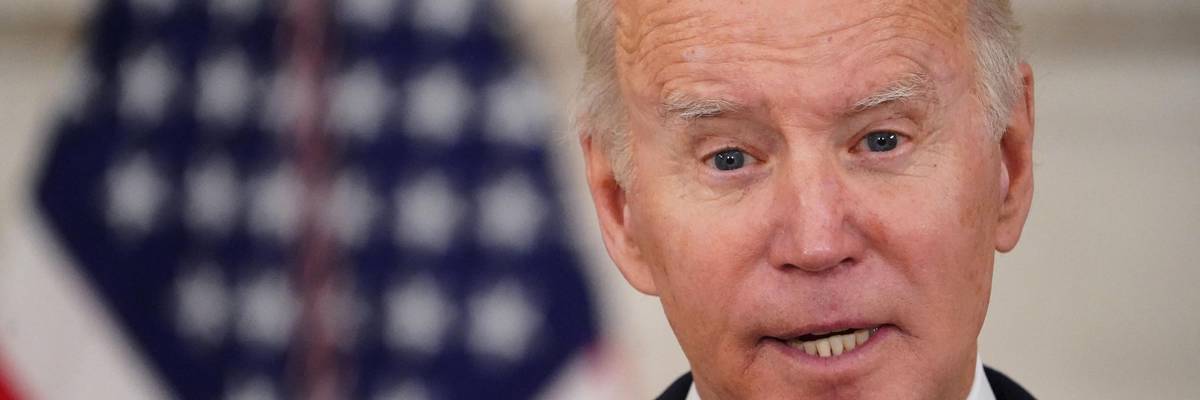
U.S. President Joe Biden speaks at the State Dining Room of the White House in Washington, D.C. on January 7, 2022. (Photo by Mandel Ngan/AFP via Getty Images)
Ahead of highly anticipated talks scheduled to begin Monday, a diverse coalition of organizations sent a letter to the White House urging U.S. President Joe Biden to "engage diplomatically" with Russia to prevent an armed confrontation resulting from rising tensions involving Ukraine.
"We urge you to continue to pursue diplomatic progress, to promote de-escalation, and to seek negotiated solutions to disputes that avoid war."
"Continuing engagement is necessary to avert a military conflict that will harm the interests of the United States, harm innocent civilians in Ukraine, and risk spiraling into a potentially catastrophic war between the world's two leading nuclear powers," says the Saturday letter from the Quincy Institute for Responsible Statecraft, Just Foreign Policy, and 13 other groups.
"We greatly appreciate your decision to respond to the substantial Russian military deployment near Ukraine by engaging in direct talks with Russian President Vladimir Putin and arranging broader talks next week," adds the letter. "We urge you to continue to pursue diplomatic progress, to promote de-escalation, and to seek negotiated solutions to disputes that avoid war."
Top U.S. and Russian diplomats plan to sit down together Monday in Geneva, followed by a North Atlantic Treaty Organization (NATO)-Russia Council meeting Wednesday in Brussels and an Organization for Security and Cooperation in Europe (OSCE) event Thursday in Vienna.
Appearing on CNN's "State of the Union" on Sunday, U.S. Secretary of State Antony Blinken told host Jake Tapper that he doesn't foresee any major breakthroughs in the upcoming meetings.
"It's hard to see making actual progress, as opposed to talking, in an atmosphere of escalation with a gun to Ukraine's head," Blinken said. "So, if we're actually gonna make progress, we're gonna have to see de-escalation, Russia pulling back from the threat that it currently poses to Ukraine."
While U.S. intelligence has recently suggested Russia is plotting a potential offensive against Ukraine involving up to 175,000 troops, Moscow has denied any planned invasion. As Tapper noted, Moscow has also advocated for pulling back some U.S. forces in Eastern Europe and ruling out expanding NATO--an alliance dating back to 1949--to include Ukraine.
"Neither of those is on the table," Blinken said of those demands, adding that "there are two paths before us: There's a path of dialogue and diplomacy... The other path is confrontation."
As the Associated Press noted:
U.S. officials on Saturday unveiled some details of the administration's stance, which seem to fall well short of Russian demands. The officials said the U.S. is open to discussions on curtailing possible future deployments of offensive missiles in Ukraine and putting limits on American and NATO military exercises in Eastern Europe if Russia is willing to back off on Ukraine.
But they also said Russia will be hit hard with economic sanctions should it intervene in Ukraine. In addition to direct sanctions on Russian entities, those penalties could include significant restrictions on products exported from the U.S. to Russia and potentially foreign-made products subject to U.S. jurisdiction.
Moscow on Sunday made clear "it would not make concessions under U.S. pressure and warned that this week's talks on the Ukraine crisis might end early," Reuters reported.
Russian Deputy Foreign Minister Sergei Ryabkov, who will lead his nation's delegation in Geneva, supposedly suggested the negotiations could end after just one meeting.
"I can't rule out anything, this is an entirely possible scenario and the Americans... should have no illusions about this," Ryabkov said, according to the state-owned RIA news agency.
In their letter to Biden, the 15 groups emphasized that "diplomacy is the only reasonable path forward" and echoed a recent call from over 100 former American officials and scholars, "who stated that, in addition to addressing urgent security challenges, we must engage in a serious and sustained strategic dialogue with Russia 'that addresses the deeper sources of mistrust and hostility' while deterring Russian military aggression."
"These dialogues must engage with President Putin's explicit pursuit of 'reliable and long-term security guarantees' that would 'exclude any further NATO moves eastward and the deployment of weapons systems that threaten us in close vicinity to Russian territory," the letter says.
"Russia perceives NATO expansion as a threat," the groups note. "It is in the interests of the United States, the region, and the world to address these and other root causes of tension with Russia as part of an ongoing strategic dialogue. Such a dialogue does not necessarily preclude the use of other mechanisms to deter Russia aggression that are appropriately scaled, do not harm innocent civilians, and do not risk a disastrous escalation into war."
Noting that Biden faces "a stark and profoundly consequential choice," the coalition concludes that "it is in the interests of the United States, our allies, the people of Ukraine themselves, and the world community that the disputes between our nations be settled peacefully."
Dear Common Dreams reader, It’s been nearly 30 years since I co-founded Common Dreams with my late wife, Lina Newhouser. We had the radical notion that journalism should serve the public good, not corporate profits. It was clear to us from the outset what it would take to build such a project. No paid advertisements. No corporate sponsors. No millionaire publisher telling us what to think or do. Many people said we wouldn't last a year, but we proved those doubters wrong. Together with a tremendous team of journalists and dedicated staff, we built an independent media outlet free from the constraints of profits and corporate control. Our mission has always been simple: To inform. To inspire. To ignite change for the common good. Building Common Dreams was not easy. Our survival was never guaranteed. When you take on the most powerful forces—Wall Street greed, fossil fuel industry destruction, Big Tech lobbyists, and uber-rich oligarchs who have spent billions upon billions rigging the economy and democracy in their favor—the only bulwark you have is supporters who believe in your work. But here’s the urgent message from me today. It's never been this bad out there. And it's never been this hard to keep us going. At the very moment Common Dreams is most needed, the threats we face are intensifying. We need your support now more than ever. We don't accept corporate advertising and never will. We don't have a paywall because we don't think people should be blocked from critical news based on their ability to pay. Everything we do is funded by the donations of readers like you. When everyone does the little they can afford, we are strong. But if that support retreats or dries up, so do we. Will you donate now to make sure Common Dreams not only survives but thrives? —Craig Brown, Co-founder |
Ahead of highly anticipated talks scheduled to begin Monday, a diverse coalition of organizations sent a letter to the White House urging U.S. President Joe Biden to "engage diplomatically" with Russia to prevent an armed confrontation resulting from rising tensions involving Ukraine.
"We urge you to continue to pursue diplomatic progress, to promote de-escalation, and to seek negotiated solutions to disputes that avoid war."
"Continuing engagement is necessary to avert a military conflict that will harm the interests of the United States, harm innocent civilians in Ukraine, and risk spiraling into a potentially catastrophic war between the world's two leading nuclear powers," says the Saturday letter from the Quincy Institute for Responsible Statecraft, Just Foreign Policy, and 13 other groups.
"We greatly appreciate your decision to respond to the substantial Russian military deployment near Ukraine by engaging in direct talks with Russian President Vladimir Putin and arranging broader talks next week," adds the letter. "We urge you to continue to pursue diplomatic progress, to promote de-escalation, and to seek negotiated solutions to disputes that avoid war."
Top U.S. and Russian diplomats plan to sit down together Monday in Geneva, followed by a North Atlantic Treaty Organization (NATO)-Russia Council meeting Wednesday in Brussels and an Organization for Security and Cooperation in Europe (OSCE) event Thursday in Vienna.
Appearing on CNN's "State of the Union" on Sunday, U.S. Secretary of State Antony Blinken told host Jake Tapper that he doesn't foresee any major breakthroughs in the upcoming meetings.
"It's hard to see making actual progress, as opposed to talking, in an atmosphere of escalation with a gun to Ukraine's head," Blinken said. "So, if we're actually gonna make progress, we're gonna have to see de-escalation, Russia pulling back from the threat that it currently poses to Ukraine."
While U.S. intelligence has recently suggested Russia is plotting a potential offensive against Ukraine involving up to 175,000 troops, Moscow has denied any planned invasion. As Tapper noted, Moscow has also advocated for pulling back some U.S. forces in Eastern Europe and ruling out expanding NATO--an alliance dating back to 1949--to include Ukraine.
"Neither of those is on the table," Blinken said of those demands, adding that "there are two paths before us: There's a path of dialogue and diplomacy... The other path is confrontation."
As the Associated Press noted:
U.S. officials on Saturday unveiled some details of the administration's stance, which seem to fall well short of Russian demands. The officials said the U.S. is open to discussions on curtailing possible future deployments of offensive missiles in Ukraine and putting limits on American and NATO military exercises in Eastern Europe if Russia is willing to back off on Ukraine.
But they also said Russia will be hit hard with economic sanctions should it intervene in Ukraine. In addition to direct sanctions on Russian entities, those penalties could include significant restrictions on products exported from the U.S. to Russia and potentially foreign-made products subject to U.S. jurisdiction.
Moscow on Sunday made clear "it would not make concessions under U.S. pressure and warned that this week's talks on the Ukraine crisis might end early," Reuters reported.
Russian Deputy Foreign Minister Sergei Ryabkov, who will lead his nation's delegation in Geneva, supposedly suggested the negotiations could end after just one meeting.
"I can't rule out anything, this is an entirely possible scenario and the Americans... should have no illusions about this," Ryabkov said, according to the state-owned RIA news agency.
In their letter to Biden, the 15 groups emphasized that "diplomacy is the only reasonable path forward" and echoed a recent call from over 100 former American officials and scholars, "who stated that, in addition to addressing urgent security challenges, we must engage in a serious and sustained strategic dialogue with Russia 'that addresses the deeper sources of mistrust and hostility' while deterring Russian military aggression."
"These dialogues must engage with President Putin's explicit pursuit of 'reliable and long-term security guarantees' that would 'exclude any further NATO moves eastward and the deployment of weapons systems that threaten us in close vicinity to Russian territory," the letter says.
"Russia perceives NATO expansion as a threat," the groups note. "It is in the interests of the United States, the region, and the world to address these and other root causes of tension with Russia as part of an ongoing strategic dialogue. Such a dialogue does not necessarily preclude the use of other mechanisms to deter Russia aggression that are appropriately scaled, do not harm innocent civilians, and do not risk a disastrous escalation into war."
Noting that Biden faces "a stark and profoundly consequential choice," the coalition concludes that "it is in the interests of the United States, our allies, the people of Ukraine themselves, and the world community that the disputes between our nations be settled peacefully."
Ahead of highly anticipated talks scheduled to begin Monday, a diverse coalition of organizations sent a letter to the White House urging U.S. President Joe Biden to "engage diplomatically" with Russia to prevent an armed confrontation resulting from rising tensions involving Ukraine.
"We urge you to continue to pursue diplomatic progress, to promote de-escalation, and to seek negotiated solutions to disputes that avoid war."
"Continuing engagement is necessary to avert a military conflict that will harm the interests of the United States, harm innocent civilians in Ukraine, and risk spiraling into a potentially catastrophic war between the world's two leading nuclear powers," says the Saturday letter from the Quincy Institute for Responsible Statecraft, Just Foreign Policy, and 13 other groups.
"We greatly appreciate your decision to respond to the substantial Russian military deployment near Ukraine by engaging in direct talks with Russian President Vladimir Putin and arranging broader talks next week," adds the letter. "We urge you to continue to pursue diplomatic progress, to promote de-escalation, and to seek negotiated solutions to disputes that avoid war."
Top U.S. and Russian diplomats plan to sit down together Monday in Geneva, followed by a North Atlantic Treaty Organization (NATO)-Russia Council meeting Wednesday in Brussels and an Organization for Security and Cooperation in Europe (OSCE) event Thursday in Vienna.
Appearing on CNN's "State of the Union" on Sunday, U.S. Secretary of State Antony Blinken told host Jake Tapper that he doesn't foresee any major breakthroughs in the upcoming meetings.
"It's hard to see making actual progress, as opposed to talking, in an atmosphere of escalation with a gun to Ukraine's head," Blinken said. "So, if we're actually gonna make progress, we're gonna have to see de-escalation, Russia pulling back from the threat that it currently poses to Ukraine."
While U.S. intelligence has recently suggested Russia is plotting a potential offensive against Ukraine involving up to 175,000 troops, Moscow has denied any planned invasion. As Tapper noted, Moscow has also advocated for pulling back some U.S. forces in Eastern Europe and ruling out expanding NATO--an alliance dating back to 1949--to include Ukraine.
"Neither of those is on the table," Blinken said of those demands, adding that "there are two paths before us: There's a path of dialogue and diplomacy... The other path is confrontation."
As the Associated Press noted:
U.S. officials on Saturday unveiled some details of the administration's stance, which seem to fall well short of Russian demands. The officials said the U.S. is open to discussions on curtailing possible future deployments of offensive missiles in Ukraine and putting limits on American and NATO military exercises in Eastern Europe if Russia is willing to back off on Ukraine.
But they also said Russia will be hit hard with economic sanctions should it intervene in Ukraine. In addition to direct sanctions on Russian entities, those penalties could include significant restrictions on products exported from the U.S. to Russia and potentially foreign-made products subject to U.S. jurisdiction.
Moscow on Sunday made clear "it would not make concessions under U.S. pressure and warned that this week's talks on the Ukraine crisis might end early," Reuters reported.
Russian Deputy Foreign Minister Sergei Ryabkov, who will lead his nation's delegation in Geneva, supposedly suggested the negotiations could end after just one meeting.
"I can't rule out anything, this is an entirely possible scenario and the Americans... should have no illusions about this," Ryabkov said, according to the state-owned RIA news agency.
In their letter to Biden, the 15 groups emphasized that "diplomacy is the only reasonable path forward" and echoed a recent call from over 100 former American officials and scholars, "who stated that, in addition to addressing urgent security challenges, we must engage in a serious and sustained strategic dialogue with Russia 'that addresses the deeper sources of mistrust and hostility' while deterring Russian military aggression."
"These dialogues must engage with President Putin's explicit pursuit of 'reliable and long-term security guarantees' that would 'exclude any further NATO moves eastward and the deployment of weapons systems that threaten us in close vicinity to Russian territory," the letter says.
"Russia perceives NATO expansion as a threat," the groups note. "It is in the interests of the United States, the region, and the world to address these and other root causes of tension with Russia as part of an ongoing strategic dialogue. Such a dialogue does not necessarily preclude the use of other mechanisms to deter Russia aggression that are appropriately scaled, do not harm innocent civilians, and do not risk a disastrous escalation into war."
Noting that Biden faces "a stark and profoundly consequential choice," the coalition concludes that "it is in the interests of the United States, our allies, the people of Ukraine themselves, and the world community that the disputes between our nations be settled peacefully."

