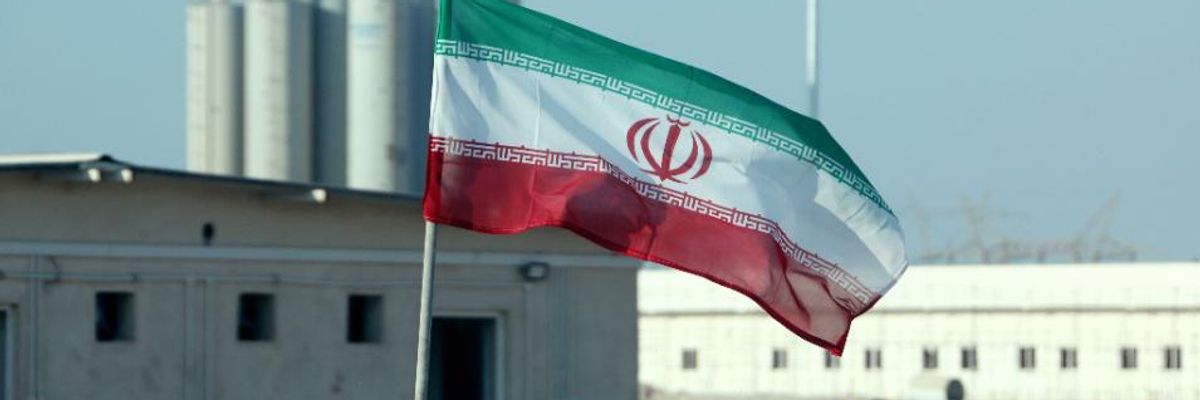
U.S. President Joe Biden faced criticism Friday for imposing fresh sanctions on Iran as he heads into weekend talks with European leaders prior to potential direct negotiations with Tehran over the nuclear deal ditched by his predecessor over three years ago.
The U.S. Treasury Department announced the new sanctions--which target individuals and companies tied to Iran's drone program--while the president was in Rome for a Group of 20 summit, during which he's expected to discuss the Iranian nuclear program with European attendees, according to Jake Sullivan, Biden's national security adviser.
"This sends the wrong message about U.S. intentions," warned Sina Toossi, a senior research analyst at the National Iranian American Council (NIAC). "We need to build goodwill not impose more sanctions."
NIAC senior research fellow Assal Rad highlighted the hypocrisy of the administration's action, particularly after imprisoning whistleblower Daniel Hale for exposing classified information about the U.S. military's drone assassination program and killing Afghanistan civilians, including children, in an American drone strike the Pentagon later called a "horrible mistake."
"If you think this makes sense [because] our bombs are benevolent," Rad said, "you've internalized empire."
The Joint Comprehensive Plan of Action (JCPOA) was finalized under former President Barack Obama. In May 2018, then-President Donald Trump unilaterally sabotaged the nuclear deal as part of a so-called "maximum pressure" campaign that involved devastating economic sanctions on Iran.
During his 2020 presidential run, Biden, Obama's vice president, campaigned on returning to the agreement.
The other JCPOA signatories are China, France, Germany, Russia, the United Kingdom, and the European Union. After an April meeting in Vienna, negotiations on the deal halted in June due to the Iranian election won by hard-line President Ebrahim Raisi.
Ali Bagheri Kani, Iran's new nuclear negotiator, said earlier this week that he "had a very serious and constructive dialogue" with a European Union diplomat and they agreed to resume negotiations on the 2015 deal "before the end of November."
Related Content

'Very Welcome' Progress as Iran Agrees to Restart Talks on Nuclear Deal Sabotaged by Trump
Following the new negotiator's remarks about resuming talks, NIAC policy director Ryan Costello urged Iranian leaders to not discard the work at the prior negotiations "while also showing flexibility in format and willingness to communicate directly with American diplomats."
Costello also called on the Biden administration to "provide assurance and commitment that the U.S. will not once again renege on the agreement and that Iran will actually receive the sanctions relief promised."
E.U. spokesperson Peter Stano told reporters on Friday that "we are working together with other partners, including Iran and other signatories, to fix a concrete date as early as possible to reconvene in Vienna."
U.S. President Joe Biden faced criticism Friday for imposing fresh sanctions on Iran as he heads into weekend talks with European leaders prior to potential direct negotiations with Tehran over the nuclear deal ditched by his predecessor over three years ago.
The U.S. Treasury Department announced the new sanctions--which target individuals and companies tied to Iran's drone program--while the president was in Rome for a Group of 20 summit, during which he's expected to discuss the Iranian nuclear program with European attendees, according to Jake Sullivan, Biden's national security adviser.
"This sends the wrong message about U.S. intentions," warned Sina Toossi, a senior research analyst at the National Iranian American Council (NIAC). "We need to build goodwill not impose more sanctions."
NIAC senior research fellow Assal Rad highlighted the hypocrisy of the administration's action, particularly after imprisoning whistleblower Daniel Hale for exposing classified information about the U.S. military's drone assassination program and killing Afghanistan civilians, including children, in an American drone strike the Pentagon later called a "horrible mistake."
"If you think this makes sense [because] our bombs are benevolent," Rad said, "you've internalized empire."
The Joint Comprehensive Plan of Action (JCPOA) was finalized under former President Barack Obama. In May 2018, then-President Donald Trump unilaterally sabotaged the nuclear deal as part of a so-called "maximum pressure" campaign that involved devastating economic sanctions on Iran.
During his 2020 presidential run, Biden, Obama's vice president, campaigned on returning to the agreement.
The other JCPOA signatories are China, France, Germany, Russia, the United Kingdom, and the European Union. After an April meeting in Vienna, negotiations on the deal halted in June due to the Iranian election won by hard-line President Ebrahim Raisi.
Ali Bagheri Kani, Iran's new nuclear negotiator, said earlier this week that he "had a very serious and constructive dialogue" with a European Union diplomat and they agreed to resume negotiations on the 2015 deal "before the end of November."
Related Content
'Very Welcome' Progress as Iran Agrees to Restart Talks on Nuclear Deal Sabotaged by Trump
Following the new negotiator's remarks about resuming talks, NIAC policy director Ryan Costello urged Iranian leaders to not discard the work at the prior negotiations "while also showing flexibility in format and willingness to communicate directly with American diplomats."
Costello also called on the Biden administration to "provide assurance and commitment that the U.S. will not once again renege on the agreement and that Iran will actually receive the sanctions relief promised."
E.U. spokesperson Peter Stano told reporters on Friday that "we are working together with other partners, including Iran and other signatories, to fix a concrete date as early as possible to reconvene in Vienna."
U.S. President Joe Biden faced criticism Friday for imposing fresh sanctions on Iran as he heads into weekend talks with European leaders prior to potential direct negotiations with Tehran over the nuclear deal ditched by his predecessor over three years ago.
The U.S. Treasury Department announced the new sanctions--which target individuals and companies tied to Iran's drone program--while the president was in Rome for a Group of 20 summit, during which he's expected to discuss the Iranian nuclear program with European attendees, according to Jake Sullivan, Biden's national security adviser.
"This sends the wrong message about U.S. intentions," warned Sina Toossi, a senior research analyst at the National Iranian American Council (NIAC). "We need to build goodwill not impose more sanctions."
NIAC senior research fellow Assal Rad highlighted the hypocrisy of the administration's action, particularly after imprisoning whistleblower Daniel Hale for exposing classified information about the U.S. military's drone assassination program and killing Afghanistan civilians, including children, in an American drone strike the Pentagon later called a "horrible mistake."
"If you think this makes sense [because] our bombs are benevolent," Rad said, "you've internalized empire."
The Joint Comprehensive Plan of Action (JCPOA) was finalized under former President Barack Obama. In May 2018, then-President Donald Trump unilaterally sabotaged the nuclear deal as part of a so-called "maximum pressure" campaign that involved devastating economic sanctions on Iran.
During his 2020 presidential run, Biden, Obama's vice president, campaigned on returning to the agreement.
The other JCPOA signatories are China, France, Germany, Russia, the United Kingdom, and the European Union. After an April meeting in Vienna, negotiations on the deal halted in June due to the Iranian election won by hard-line President Ebrahim Raisi.
Ali Bagheri Kani, Iran's new nuclear negotiator, said earlier this week that he "had a very serious and constructive dialogue" with a European Union diplomat and they agreed to resume negotiations on the 2015 deal "before the end of November."
Related Content
'Very Welcome' Progress as Iran Agrees to Restart Talks on Nuclear Deal Sabotaged by Trump
Following the new negotiator's remarks about resuming talks, NIAC policy director Ryan Costello urged Iranian leaders to not discard the work at the prior negotiations "while also showing flexibility in format and willingness to communicate directly with American diplomats."
Costello also called on the Biden administration to "provide assurance and commitment that the U.S. will not once again renege on the agreement and that Iran will actually receive the sanctions relief promised."
E.U. spokesperson Peter Stano told reporters on Friday that "we are working together with other partners, including Iran and other signatories, to fix a concrete date as early as possible to reconvene in Vienna."