SUBSCRIBE TO OUR FREE NEWSLETTER
Daily news & progressive opinion—funded by the people, not the corporations—delivered straight to your inbox.
5
#000000
#FFFFFF
To donate by check, phone, or other method, see our More Ways to Give page.
Daily news & progressive opinion—funded by the people, not the corporations—delivered straight to your inbox.
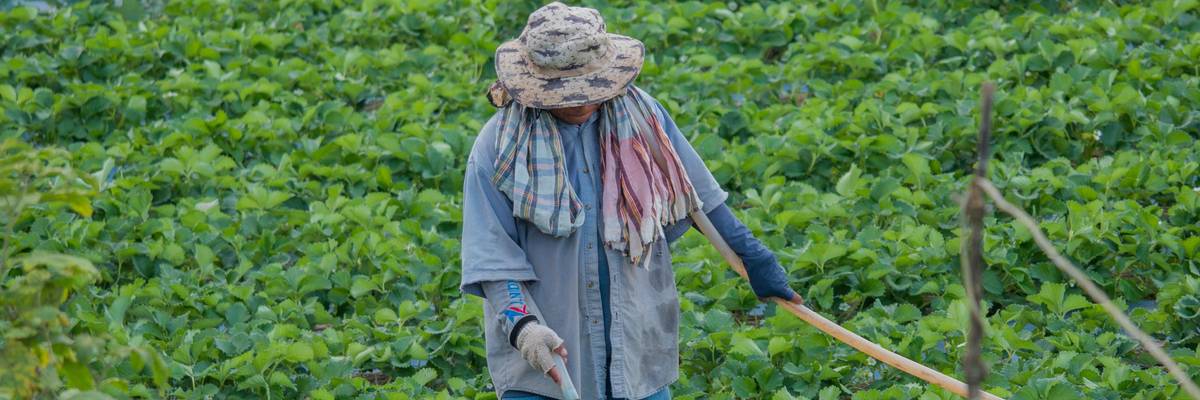
A new lawsuit from groups including farmworker protection organizations was filed Friday over the Environmental Protection Agency's decision to renew approval for the toxic herbicide paraquat. (Photo: Shutterstock)
A coalition of groups filed a lawsuit on Friday over the Environmental Protection Agency's recent decision to renew approval for the toxic herbicide paraquat.
"This paraquat registration puts EPA on the wrong side of science, history, and the law," said Jonathan Kalmuss-Katz, a senior attorney at Earthjustice, in a statement.
Earthjustice is representing the petitioners--which include the Michael J. Fox Foundation for Parkinson's Research, the Center for Biological Diversity, and the Farmworker Association of Florida--in the case, filed (pdf) in the U.S. Court of Appeals for the Ninth Circuit.
Studies have linked paraquat to Parkinson's disease, and the EPA itself warns that the weed killer is "highly toxic" and that "one small sip can be fatal and there is no antidote."
Known formally as paraquat dichloride and banned in over 30 countries, it's a widely used weed killer in the U.S. for agricultural purposes.
The EPA drew criticism from environmental groups in August when it announced continued approval for paraquat.
In fact, E&E News reported last month, that renewal was "an unusual example of Biden administration regulatory agencies taking a softer approach than the Trump administration, which built a reputation for easing environmental rules."
The Center for Biological Diversity said at the time that the EPA decision meant the product could stay on the market for 15 years and further explained:
[The] decision reverses protections proposed last year by the Trump administration that would have banned aerial application of the pesticide in most cases. This decision allows the aerial spraying of paraquat on all approved crops, including within 50 feet of houses for some applications. The EPA cited data provided by a pesticide industry consortium called The Agricultural Handler Exposure Task Force as leading to today's reversal.
Kalmuss-Katz added in his Friday statement that "with dozens of countries banning paraquat because of its severe health effects, there is no excuse for leaving farmworkers and agricultural communities exposed to extreme risks."
Connor Kippe, policy advocate at Toxic Free North Carolina, another plaintiff in the new lawsuit, warned of the consequences to communities if the EPA's approval is allowed to stand.
"Farmworkers--children and elders--will be irreparably harmed for the rest of their lives by the re-registration of paraquat," he said in a statement.
"The science is clear," Kippe added, "paraquat is highly toxic, and even small doses by any method of transmission can affect health, especially for child farmworkers. Our flawed pesticide registration system enables this type of glancing regulatory approval, despite known harms to people in all parts of the food system."
Earthjustice's legal filing came as pesticide manufacturer Syngenta is facing a wave of lawsuits from workers claiming their exposure to paraquat caused their Parkinson's disease.
While just "a handful of lawsuits over Paraquat were making their way through state and federal courts in the U.S." at the start of the year, Bloomberg reported last week, "since February, there have been more than 400 new complaints filed in federal courts alone."
"Thousands more are possible after a court panel in June consolidated all federal cases under a judge in Illinois," the outlet added.
Dear Common Dreams reader, It’s been nearly 30 years since I co-founded Common Dreams with my late wife, Lina Newhouser. We had the radical notion that journalism should serve the public good, not corporate profits. It was clear to us from the outset what it would take to build such a project. No paid advertisements. No corporate sponsors. No millionaire publisher telling us what to think or do. Many people said we wouldn't last a year, but we proved those doubters wrong. Together with a tremendous team of journalists and dedicated staff, we built an independent media outlet free from the constraints of profits and corporate control. Our mission has always been simple: To inform. To inspire. To ignite change for the common good. Building Common Dreams was not easy. Our survival was never guaranteed. When you take on the most powerful forces—Wall Street greed, fossil fuel industry destruction, Big Tech lobbyists, and uber-rich oligarchs who have spent billions upon billions rigging the economy and democracy in their favor—the only bulwark you have is supporters who believe in your work. But here’s the urgent message from me today. It's never been this bad out there. And it's never been this hard to keep us going. At the very moment Common Dreams is most needed, the threats we face are intensifying. We need your support now more than ever. We don't accept corporate advertising and never will. We don't have a paywall because we don't think people should be blocked from critical news based on their ability to pay. Everything we do is funded by the donations of readers like you. When everyone does the little they can afford, we are strong. But if that support retreats or dries up, so do we. Will you donate now to make sure Common Dreams not only survives but thrives? —Craig Brown, Co-founder |
A coalition of groups filed a lawsuit on Friday over the Environmental Protection Agency's recent decision to renew approval for the toxic herbicide paraquat.
"This paraquat registration puts EPA on the wrong side of science, history, and the law," said Jonathan Kalmuss-Katz, a senior attorney at Earthjustice, in a statement.
Earthjustice is representing the petitioners--which include the Michael J. Fox Foundation for Parkinson's Research, the Center for Biological Diversity, and the Farmworker Association of Florida--in the case, filed (pdf) in the U.S. Court of Appeals for the Ninth Circuit.
Studies have linked paraquat to Parkinson's disease, and the EPA itself warns that the weed killer is "highly toxic" and that "one small sip can be fatal and there is no antidote."
Known formally as paraquat dichloride and banned in over 30 countries, it's a widely used weed killer in the U.S. for agricultural purposes.
The EPA drew criticism from environmental groups in August when it announced continued approval for paraquat.
In fact, E&E News reported last month, that renewal was "an unusual example of Biden administration regulatory agencies taking a softer approach than the Trump administration, which built a reputation for easing environmental rules."
The Center for Biological Diversity said at the time that the EPA decision meant the product could stay on the market for 15 years and further explained:
[The] decision reverses protections proposed last year by the Trump administration that would have banned aerial application of the pesticide in most cases. This decision allows the aerial spraying of paraquat on all approved crops, including within 50 feet of houses for some applications. The EPA cited data provided by a pesticide industry consortium called The Agricultural Handler Exposure Task Force as leading to today's reversal.
Kalmuss-Katz added in his Friday statement that "with dozens of countries banning paraquat because of its severe health effects, there is no excuse for leaving farmworkers and agricultural communities exposed to extreme risks."
Connor Kippe, policy advocate at Toxic Free North Carolina, another plaintiff in the new lawsuit, warned of the consequences to communities if the EPA's approval is allowed to stand.
"Farmworkers--children and elders--will be irreparably harmed for the rest of their lives by the re-registration of paraquat," he said in a statement.
"The science is clear," Kippe added, "paraquat is highly toxic, and even small doses by any method of transmission can affect health, especially for child farmworkers. Our flawed pesticide registration system enables this type of glancing regulatory approval, despite known harms to people in all parts of the food system."
Earthjustice's legal filing came as pesticide manufacturer Syngenta is facing a wave of lawsuits from workers claiming their exposure to paraquat caused their Parkinson's disease.
While just "a handful of lawsuits over Paraquat were making their way through state and federal courts in the U.S." at the start of the year, Bloomberg reported last week, "since February, there have been more than 400 new complaints filed in federal courts alone."
"Thousands more are possible after a court panel in June consolidated all federal cases under a judge in Illinois," the outlet added.
A coalition of groups filed a lawsuit on Friday over the Environmental Protection Agency's recent decision to renew approval for the toxic herbicide paraquat.
"This paraquat registration puts EPA on the wrong side of science, history, and the law," said Jonathan Kalmuss-Katz, a senior attorney at Earthjustice, in a statement.
Earthjustice is representing the petitioners--which include the Michael J. Fox Foundation for Parkinson's Research, the Center for Biological Diversity, and the Farmworker Association of Florida--in the case, filed (pdf) in the U.S. Court of Appeals for the Ninth Circuit.
Studies have linked paraquat to Parkinson's disease, and the EPA itself warns that the weed killer is "highly toxic" and that "one small sip can be fatal and there is no antidote."
Known formally as paraquat dichloride and banned in over 30 countries, it's a widely used weed killer in the U.S. for agricultural purposes.
The EPA drew criticism from environmental groups in August when it announced continued approval for paraquat.
In fact, E&E News reported last month, that renewal was "an unusual example of Biden administration regulatory agencies taking a softer approach than the Trump administration, which built a reputation for easing environmental rules."
The Center for Biological Diversity said at the time that the EPA decision meant the product could stay on the market for 15 years and further explained:
[The] decision reverses protections proposed last year by the Trump administration that would have banned aerial application of the pesticide in most cases. This decision allows the aerial spraying of paraquat on all approved crops, including within 50 feet of houses for some applications. The EPA cited data provided by a pesticide industry consortium called The Agricultural Handler Exposure Task Force as leading to today's reversal.
Kalmuss-Katz added in his Friday statement that "with dozens of countries banning paraquat because of its severe health effects, there is no excuse for leaving farmworkers and agricultural communities exposed to extreme risks."
Connor Kippe, policy advocate at Toxic Free North Carolina, another plaintiff in the new lawsuit, warned of the consequences to communities if the EPA's approval is allowed to stand.
"Farmworkers--children and elders--will be irreparably harmed for the rest of their lives by the re-registration of paraquat," he said in a statement.
"The science is clear," Kippe added, "paraquat is highly toxic, and even small doses by any method of transmission can affect health, especially for child farmworkers. Our flawed pesticide registration system enables this type of glancing regulatory approval, despite known harms to people in all parts of the food system."
Earthjustice's legal filing came as pesticide manufacturer Syngenta is facing a wave of lawsuits from workers claiming their exposure to paraquat caused their Parkinson's disease.
While just "a handful of lawsuits over Paraquat were making their way through state and federal courts in the U.S." at the start of the year, Bloomberg reported last week, "since February, there have been more than 400 new complaints filed in federal courts alone."
"Thousands more are possible after a court panel in June consolidated all federal cases under a judge in Illinois," the outlet added.