

SUBSCRIBE TO OUR FREE NEWSLETTER
Daily news & progressive opinion—funded by the people, not the corporations—delivered straight to your inbox.
5
#000000
#FFFFFF
To donate by check, phone, or other method, see our More Ways to Give page.
Daily news & progressive opinion—funded by the people, not the corporations—delivered straight to your inbox.
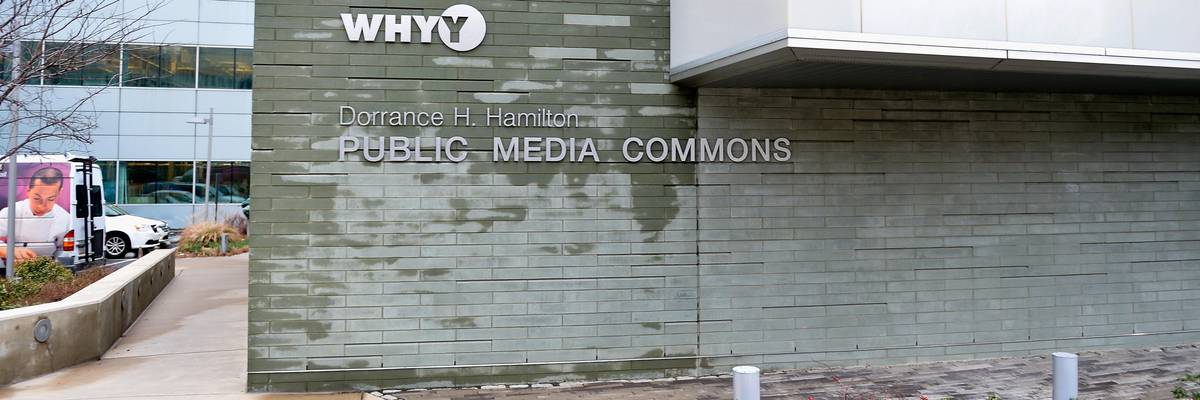
A general view of the Philadelphia-based WHYY is seen on December 30, 2015. (Photo: Paul Marotta/Getty Images)
Defenders of local media expressed concern Friday following new reporting highlighting how Pennsylvania's recently signed state budget fully eliminates funding for state broadcasters.
The budget decision was "precisely the opposite of what we should be doing," tweeted Victor Pickard, professor of media molicy and political economy at the University of Pennsylvania's Annenberg School for Communication, where he co-directs the Media, Inequality and Change Center (MIC).
The Pennsylvania Capital-Star reported Friday that seven public TV and radio stations, "such as WHYY in Philadelphia, WQED in Pittsburgh, and WITF in Harrisburg, saw their funding eliminated" when Gov. Tom Wolf, a Democrat, signed the state budget at the end of June.
The stations had been allotted a combined $750,000 annually since 2019.
Bill Marrazzo, CEO of WHYY, told Current earlier this year that the state funding was critical. "These sorts of unrestricted funds are the hardest kinds of dollars to come by these days," he said.
The Capital-Star noted that the "dollars at stake are a small slice--just under 1%--of the seven broadcasters' revenues." Still, Pickard, who framed public broadcasters as "public goods," told the outlet the zeroing out of funding was a move in the absolute wrong direction. "It's glaringly obvious the market cannot support the levels of news and information that democracy requires," said Pickard.
Another media expert drew attention to a possible connection between the funding and an editorial decision by one of the impacted stations, Harrisburg's WITF, regarding how it treats federal and state lawmakers who backed former President Donald Trump's lie the 2020 election was "stolen."
"WITF believes elected officials who supported the election-fraud lie through their actions should be held accountable, and we believe consistently presenting the facts that reveal the lie will play a part in diminishing its power over those who believed and supported it," WITF announced in January. "In stories on-air and online we will identify those U.S. representatives or state legislators to hold them accountable for their actions."
The decision, and the fact that the state Legislature is controlled by Republicans, may have been a factor in the funding decision, said Tim Karr, senior director of strategy and communications at advocacy group Free Press.
In a Friday Twitter thread responding to the Capital-Star's reporting, Karr wrote that "the reasons behind PA defunding appear to be highly controversial."
"The zeroing out of state funds comes as WITF's NPR-affliliated journalists pursue a lengthy investigation to hold Pennsylvania's Republican legislators accountable for undermining the 2020 election," he wrote.
"The defunding of WITF seems not to be a coincidence," Karr wrote. "Rather GOP legislators are seeking to punish a reliable local outlet for doing its job of exposing their part in the 'Big Lie.'"
In an op-ed last month at Columbia Journalism Review, Pickard and Timothy Neff, a postdoctoral research fellow at Annenberg's MIC, discussed how the U.S. stands out from other democratic nations in its low funding of public media and argued that boosted, long-term funding is needed to counter the crisis driving "local journalism into the ground" and to strengthen the nation's democracy.
"Despite being the wealthiest nation on the planet," the pair wrote, "the U.S. impoverishes its public media infrastructures, forcing public radio and television (NPR and PBS) to rely on additional tax-based outlays at the state and local level while receiving the bulk of their funding in the form of private capital from individual contributors, foundations, and corporations."
"While no silver bullet can solve the journalism crisis or heal the many ailments facing society," Pickard and Neff said "one part of the solution must be a robust public media system that ensures all Americans--especially those long excluded from news and information systems such as BIPOC communities and poor households--are able to fully participate in our democratic society."
"If we're serious about strengthening our democratic institutions, one place to start is by rebuilding local journalism," they continued. "It's past time to finally fund our public media in accordance with global democratic norms."
Dear Common Dreams reader, It’s been nearly 30 years since I co-founded Common Dreams with my late wife, Lina Newhouser. We had the radical notion that journalism should serve the public good, not corporate profits. It was clear to us from the outset what it would take to build such a project. No paid advertisements. No corporate sponsors. No millionaire publisher telling us what to think or do. Many people said we wouldn't last a year, but we proved those doubters wrong. Together with a tremendous team of journalists and dedicated staff, we built an independent media outlet free from the constraints of profits and corporate control. Our mission has always been simple: To inform. To inspire. To ignite change for the common good. Building Common Dreams was not easy. Our survival was never guaranteed. When you take on the most powerful forces—Wall Street greed, fossil fuel industry destruction, Big Tech lobbyists, and uber-rich oligarchs who have spent billions upon billions rigging the economy and democracy in their favor—the only bulwark you have is supporters who believe in your work. But here’s the urgent message from me today. It's never been this bad out there. And it's never been this hard to keep us going. At the very moment Common Dreams is most needed, the threats we face are intensifying. We need your support now more than ever. We don't accept corporate advertising and never will. We don't have a paywall because we don't think people should be blocked from critical news based on their ability to pay. Everything we do is funded by the donations of readers like you. When everyone does the little they can afford, we are strong. But if that support retreats or dries up, so do we. Will you donate now to make sure Common Dreams not only survives but thrives? —Craig Brown, Co-founder |
Defenders of local media expressed concern Friday following new reporting highlighting how Pennsylvania's recently signed state budget fully eliminates funding for state broadcasters.
The budget decision was "precisely the opposite of what we should be doing," tweeted Victor Pickard, professor of media molicy and political economy at the University of Pennsylvania's Annenberg School for Communication, where he co-directs the Media, Inequality and Change Center (MIC).
The Pennsylvania Capital-Star reported Friday that seven public TV and radio stations, "such as WHYY in Philadelphia, WQED in Pittsburgh, and WITF in Harrisburg, saw their funding eliminated" when Gov. Tom Wolf, a Democrat, signed the state budget at the end of June.
The stations had been allotted a combined $750,000 annually since 2019.
Bill Marrazzo, CEO of WHYY, told Current earlier this year that the state funding was critical. "These sorts of unrestricted funds are the hardest kinds of dollars to come by these days," he said.
The Capital-Star noted that the "dollars at stake are a small slice--just under 1%--of the seven broadcasters' revenues." Still, Pickard, who framed public broadcasters as "public goods," told the outlet the zeroing out of funding was a move in the absolute wrong direction. "It's glaringly obvious the market cannot support the levels of news and information that democracy requires," said Pickard.
Another media expert drew attention to a possible connection between the funding and an editorial decision by one of the impacted stations, Harrisburg's WITF, regarding how it treats federal and state lawmakers who backed former President Donald Trump's lie the 2020 election was "stolen."
"WITF believes elected officials who supported the election-fraud lie through their actions should be held accountable, and we believe consistently presenting the facts that reveal the lie will play a part in diminishing its power over those who believed and supported it," WITF announced in January. "In stories on-air and online we will identify those U.S. representatives or state legislators to hold them accountable for their actions."
The decision, and the fact that the state Legislature is controlled by Republicans, may have been a factor in the funding decision, said Tim Karr, senior director of strategy and communications at advocacy group Free Press.
In a Friday Twitter thread responding to the Capital-Star's reporting, Karr wrote that "the reasons behind PA defunding appear to be highly controversial."
"The zeroing out of state funds comes as WITF's NPR-affliliated journalists pursue a lengthy investigation to hold Pennsylvania's Republican legislators accountable for undermining the 2020 election," he wrote.
"The defunding of WITF seems not to be a coincidence," Karr wrote. "Rather GOP legislators are seeking to punish a reliable local outlet for doing its job of exposing their part in the 'Big Lie.'"
In an op-ed last month at Columbia Journalism Review, Pickard and Timothy Neff, a postdoctoral research fellow at Annenberg's MIC, discussed how the U.S. stands out from other democratic nations in its low funding of public media and argued that boosted, long-term funding is needed to counter the crisis driving "local journalism into the ground" and to strengthen the nation's democracy.
"Despite being the wealthiest nation on the planet," the pair wrote, "the U.S. impoverishes its public media infrastructures, forcing public radio and television (NPR and PBS) to rely on additional tax-based outlays at the state and local level while receiving the bulk of their funding in the form of private capital from individual contributors, foundations, and corporations."
"While no silver bullet can solve the journalism crisis or heal the many ailments facing society," Pickard and Neff said "one part of the solution must be a robust public media system that ensures all Americans--especially those long excluded from news and information systems such as BIPOC communities and poor households--are able to fully participate in our democratic society."
"If we're serious about strengthening our democratic institutions, one place to start is by rebuilding local journalism," they continued. "It's past time to finally fund our public media in accordance with global democratic norms."
Defenders of local media expressed concern Friday following new reporting highlighting how Pennsylvania's recently signed state budget fully eliminates funding for state broadcasters.
The budget decision was "precisely the opposite of what we should be doing," tweeted Victor Pickard, professor of media molicy and political economy at the University of Pennsylvania's Annenberg School for Communication, where he co-directs the Media, Inequality and Change Center (MIC).
The Pennsylvania Capital-Star reported Friday that seven public TV and radio stations, "such as WHYY in Philadelphia, WQED in Pittsburgh, and WITF in Harrisburg, saw their funding eliminated" when Gov. Tom Wolf, a Democrat, signed the state budget at the end of June.
The stations had been allotted a combined $750,000 annually since 2019.
Bill Marrazzo, CEO of WHYY, told Current earlier this year that the state funding was critical. "These sorts of unrestricted funds are the hardest kinds of dollars to come by these days," he said.
The Capital-Star noted that the "dollars at stake are a small slice--just under 1%--of the seven broadcasters' revenues." Still, Pickard, who framed public broadcasters as "public goods," told the outlet the zeroing out of funding was a move in the absolute wrong direction. "It's glaringly obvious the market cannot support the levels of news and information that democracy requires," said Pickard.
Another media expert drew attention to a possible connection between the funding and an editorial decision by one of the impacted stations, Harrisburg's WITF, regarding how it treats federal and state lawmakers who backed former President Donald Trump's lie the 2020 election was "stolen."
"WITF believes elected officials who supported the election-fraud lie through their actions should be held accountable, and we believe consistently presenting the facts that reveal the lie will play a part in diminishing its power over those who believed and supported it," WITF announced in January. "In stories on-air and online we will identify those U.S. representatives or state legislators to hold them accountable for their actions."
The decision, and the fact that the state Legislature is controlled by Republicans, may have been a factor in the funding decision, said Tim Karr, senior director of strategy and communications at advocacy group Free Press.
In a Friday Twitter thread responding to the Capital-Star's reporting, Karr wrote that "the reasons behind PA defunding appear to be highly controversial."
"The zeroing out of state funds comes as WITF's NPR-affliliated journalists pursue a lengthy investigation to hold Pennsylvania's Republican legislators accountable for undermining the 2020 election," he wrote.
"The defunding of WITF seems not to be a coincidence," Karr wrote. "Rather GOP legislators are seeking to punish a reliable local outlet for doing its job of exposing their part in the 'Big Lie.'"
In an op-ed last month at Columbia Journalism Review, Pickard and Timothy Neff, a postdoctoral research fellow at Annenberg's MIC, discussed how the U.S. stands out from other democratic nations in its low funding of public media and argued that boosted, long-term funding is needed to counter the crisis driving "local journalism into the ground" and to strengthen the nation's democracy.
"Despite being the wealthiest nation on the planet," the pair wrote, "the U.S. impoverishes its public media infrastructures, forcing public radio and television (NPR and PBS) to rely on additional tax-based outlays at the state and local level while receiving the bulk of their funding in the form of private capital from individual contributors, foundations, and corporations."
"While no silver bullet can solve the journalism crisis or heal the many ailments facing society," Pickard and Neff said "one part of the solution must be a robust public media system that ensures all Americans--especially those long excluded from news and information systems such as BIPOC communities and poor households--are able to fully participate in our democratic society."
"If we're serious about strengthening our democratic institutions, one place to start is by rebuilding local journalism," they continued. "It's past time to finally fund our public media in accordance with global democratic norms."

