

SUBSCRIBE TO OUR FREE NEWSLETTER
Daily news & progressive opinion—funded by the people, not the corporations—delivered straight to your inbox.
5
#000000
#FFFFFF
To donate by check, phone, or other method, see our More Ways to Give page.
Daily news & progressive opinion—funded by the people, not the corporations—delivered straight to your inbox.
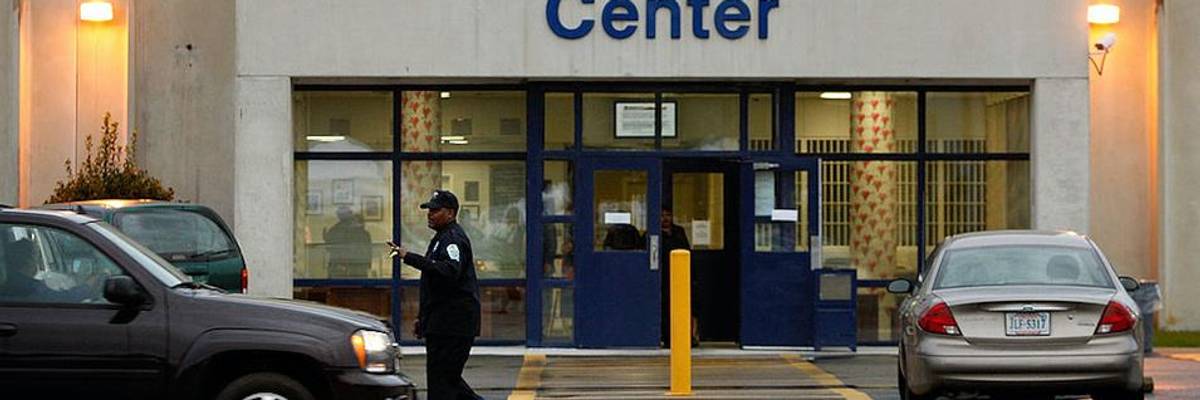
Greensville Correctional Center in Jarratt, Virginia is home to the state's death row and execution chamber. (Photo: Alex Wong/Getty Images)
Death penalty abolitionists on Wednesday applauded the passage of a bill by the Virginia Senate that--if passed by the Democrat-controlled House and signed by the Democratic governor as expected--will end capital punishment in the commonwealth after a more than 400-year history.
"Virginia has executed more people than any other state. The practice is fundamentally inequitable. It is inhumane. It is ineffective. And we know that in some cases, people on death row have been found innocent."
--Gov. Ralph Northam
The Norfolk Virginian-Pilot reports the Senate voted 21-17 along party lines to approve S.B. 1165, introduced by Sen. Scott A. Surovell (D-Mount Vernon), after a prolonged and charged floor debate.
"We're going to look back 50 years from now, and that electric chair and that lethal injection table, they're going be sitting in a museum," Surovell predicted. "They're gonna be sitting next to the stocks in Jamestown and Williamsburg. They're going to be sitting next to the slave auctioneer block."
"This thing is going to be a museum piece, and people are going to look back and wonder how it was that we ever used these things," he added.
During the floor debate, Sen. Mamie Locke (D-Hampton) spoke of the days of Black people were lynched while white spectators picnicked nearby.
"Lynchings were the precursor of the death penalty," said Locke. "In the 1940s and 1950s, they simply moved from outside to the inside--legal violence instead of vigilante justice. It is not lost on anyone--it's those states that have a high number of lynchings correlate with their support of the death penalty, including here in Virginia."
In fact, the very first execution to occur in the English colonies that became the United States happened in Jamestown Colony, Virginia in 1608 when Capt. George Kendall was killed by a firing squad for treason. Four years later, colonial Gov. Sir Thomas Dale enacted the Divine, Moral, and Martial Laws, under which execution was the punishment for crimes including such minor offenses such as stealing grapes, killing chickens, and trading with Indigenous people.
According to the Death Penalty Information Center, Virginia has executed nearly 1,400 people since then--more than any other state in the union. As in other states, there are troubling racial disparities in the application of capital punishment. While Virginia's population is about 20% Black, Black people make up nearly half of the people executed there since 1976.
That was the year when the U.S. Supreme Court, in Gregg v. Georgia, reinstated the death penalty four years after it was deemed a violation of the Constitution's prohibition of "cruel and unusual punishment" in Furman v. Georgia.
Since resinstatement, Virginia has trailed only Texas, which has put 567 people to death.
Today, there are only two people on Virginia's death row, and the state has not executed anyone in nearly four years. If the House of Delegates--the state legislature's lower chamber--passes its version of the S.B. 1165 as expected, and if Gov. Ralph Northam signs the measure into law as he has promised, there will be no more executions in Virginia and the two death sentences will be commuted to life in prison without the possibility of parole.
Virginia will then become the first Southern state and the 23rd in the nation to end capital punishment.
Northam led abolitionists in Virginia and across the nation in hailing S.B. 1165's passage.
"Today's vote in the Virginia Senate is a tremendous step toward ending the death penalty in our commonwealth," he said in a statement. "Virginia has executed more people than any other state. The practice is fundamentally inequitable. It is inhumane. It is ineffective. And we know that in some cases, people on death row have been found innocent."
"It's time for Virginia to join 22 other states and abolish the death penalty," Northam asserted. "I applaud every senator who cast a courageous vote today, and I look forward to signing this bill into law."
Dear Common Dreams reader, It’s been nearly 30 years since I co-founded Common Dreams with my late wife, Lina Newhouser. We had the radical notion that journalism should serve the public good, not corporate profits. It was clear to us from the outset what it would take to build such a project. No paid advertisements. No corporate sponsors. No millionaire publisher telling us what to think or do. Many people said we wouldn't last a year, but we proved those doubters wrong. Together with a tremendous team of journalists and dedicated staff, we built an independent media outlet free from the constraints of profits and corporate control. Our mission has always been simple: To inform. To inspire. To ignite change for the common good. Building Common Dreams was not easy. Our survival was never guaranteed. When you take on the most powerful forces—Wall Street greed, fossil fuel industry destruction, Big Tech lobbyists, and uber-rich oligarchs who have spent billions upon billions rigging the economy and democracy in their favor—the only bulwark you have is supporters who believe in your work. But here’s the urgent message from me today. It's never been this bad out there. And it's never been this hard to keep us going. At the very moment Common Dreams is most needed, the threats we face are intensifying. We need your support now more than ever. We don't accept corporate advertising and never will. We don't have a paywall because we don't think people should be blocked from critical news based on their ability to pay. Everything we do is funded by the donations of readers like you. When everyone does the little they can afford, we are strong. But if that support retreats or dries up, so do we. Will you donate now to make sure Common Dreams not only survives but thrives? —Craig Brown, Co-founder |
Death penalty abolitionists on Wednesday applauded the passage of a bill by the Virginia Senate that--if passed by the Democrat-controlled House and signed by the Democratic governor as expected--will end capital punishment in the commonwealth after a more than 400-year history.
"Virginia has executed more people than any other state. The practice is fundamentally inequitable. It is inhumane. It is ineffective. And we know that in some cases, people on death row have been found innocent."
--Gov. Ralph Northam
The Norfolk Virginian-Pilot reports the Senate voted 21-17 along party lines to approve S.B. 1165, introduced by Sen. Scott A. Surovell (D-Mount Vernon), after a prolonged and charged floor debate.
"We're going to look back 50 years from now, and that electric chair and that lethal injection table, they're going be sitting in a museum," Surovell predicted. "They're gonna be sitting next to the stocks in Jamestown and Williamsburg. They're going to be sitting next to the slave auctioneer block."
"This thing is going to be a museum piece, and people are going to look back and wonder how it was that we ever used these things," he added.
During the floor debate, Sen. Mamie Locke (D-Hampton) spoke of the days of Black people were lynched while white spectators picnicked nearby.
"Lynchings were the precursor of the death penalty," said Locke. "In the 1940s and 1950s, they simply moved from outside to the inside--legal violence instead of vigilante justice. It is not lost on anyone--it's those states that have a high number of lynchings correlate with their support of the death penalty, including here in Virginia."
In fact, the very first execution to occur in the English colonies that became the United States happened in Jamestown Colony, Virginia in 1608 when Capt. George Kendall was killed by a firing squad for treason. Four years later, colonial Gov. Sir Thomas Dale enacted the Divine, Moral, and Martial Laws, under which execution was the punishment for crimes including such minor offenses such as stealing grapes, killing chickens, and trading with Indigenous people.
According to the Death Penalty Information Center, Virginia has executed nearly 1,400 people since then--more than any other state in the union. As in other states, there are troubling racial disparities in the application of capital punishment. While Virginia's population is about 20% Black, Black people make up nearly half of the people executed there since 1976.
That was the year when the U.S. Supreme Court, in Gregg v. Georgia, reinstated the death penalty four years after it was deemed a violation of the Constitution's prohibition of "cruel and unusual punishment" in Furman v. Georgia.
Since resinstatement, Virginia has trailed only Texas, which has put 567 people to death.
Today, there are only two people on Virginia's death row, and the state has not executed anyone in nearly four years. If the House of Delegates--the state legislature's lower chamber--passes its version of the S.B. 1165 as expected, and if Gov. Ralph Northam signs the measure into law as he has promised, there will be no more executions in Virginia and the two death sentences will be commuted to life in prison without the possibility of parole.
Virginia will then become the first Southern state and the 23rd in the nation to end capital punishment.
Northam led abolitionists in Virginia and across the nation in hailing S.B. 1165's passage.
"Today's vote in the Virginia Senate is a tremendous step toward ending the death penalty in our commonwealth," he said in a statement. "Virginia has executed more people than any other state. The practice is fundamentally inequitable. It is inhumane. It is ineffective. And we know that in some cases, people on death row have been found innocent."
"It's time for Virginia to join 22 other states and abolish the death penalty," Northam asserted. "I applaud every senator who cast a courageous vote today, and I look forward to signing this bill into law."
Death penalty abolitionists on Wednesday applauded the passage of a bill by the Virginia Senate that--if passed by the Democrat-controlled House and signed by the Democratic governor as expected--will end capital punishment in the commonwealth after a more than 400-year history.
"Virginia has executed more people than any other state. The practice is fundamentally inequitable. It is inhumane. It is ineffective. And we know that in some cases, people on death row have been found innocent."
--Gov. Ralph Northam
The Norfolk Virginian-Pilot reports the Senate voted 21-17 along party lines to approve S.B. 1165, introduced by Sen. Scott A. Surovell (D-Mount Vernon), after a prolonged and charged floor debate.
"We're going to look back 50 years from now, and that electric chair and that lethal injection table, they're going be sitting in a museum," Surovell predicted. "They're gonna be sitting next to the stocks in Jamestown and Williamsburg. They're going to be sitting next to the slave auctioneer block."
"This thing is going to be a museum piece, and people are going to look back and wonder how it was that we ever used these things," he added.
During the floor debate, Sen. Mamie Locke (D-Hampton) spoke of the days of Black people were lynched while white spectators picnicked nearby.
"Lynchings were the precursor of the death penalty," said Locke. "In the 1940s and 1950s, they simply moved from outside to the inside--legal violence instead of vigilante justice. It is not lost on anyone--it's those states that have a high number of lynchings correlate with their support of the death penalty, including here in Virginia."
In fact, the very first execution to occur in the English colonies that became the United States happened in Jamestown Colony, Virginia in 1608 when Capt. George Kendall was killed by a firing squad for treason. Four years later, colonial Gov. Sir Thomas Dale enacted the Divine, Moral, and Martial Laws, under which execution was the punishment for crimes including such minor offenses such as stealing grapes, killing chickens, and trading with Indigenous people.
According to the Death Penalty Information Center, Virginia has executed nearly 1,400 people since then--more than any other state in the union. As in other states, there are troubling racial disparities in the application of capital punishment. While Virginia's population is about 20% Black, Black people make up nearly half of the people executed there since 1976.
That was the year when the U.S. Supreme Court, in Gregg v. Georgia, reinstated the death penalty four years after it was deemed a violation of the Constitution's prohibition of "cruel and unusual punishment" in Furman v. Georgia.
Since resinstatement, Virginia has trailed only Texas, which has put 567 people to death.
Today, there are only two people on Virginia's death row, and the state has not executed anyone in nearly four years. If the House of Delegates--the state legislature's lower chamber--passes its version of the S.B. 1165 as expected, and if Gov. Ralph Northam signs the measure into law as he has promised, there will be no more executions in Virginia and the two death sentences will be commuted to life in prison without the possibility of parole.
Virginia will then become the first Southern state and the 23rd in the nation to end capital punishment.
Northam led abolitionists in Virginia and across the nation in hailing S.B. 1165's passage.
"Today's vote in the Virginia Senate is a tremendous step toward ending the death penalty in our commonwealth," he said in a statement. "Virginia has executed more people than any other state. The practice is fundamentally inequitable. It is inhumane. It is ineffective. And we know that in some cases, people on death row have been found innocent."
"It's time for Virginia to join 22 other states and abolish the death penalty," Northam asserted. "I applaud every senator who cast a courageous vote today, and I look forward to signing this bill into law."

