SUBSCRIBE TO OUR FREE NEWSLETTER
Daily news & progressive opinion—funded by the people, not the corporations—delivered straight to your inbox.
5
#000000
#FFFFFF
To donate by check, phone, or other method, see our More Ways to Give page.
Daily news & progressive opinion—funded by the people, not the corporations—delivered straight to your inbox.
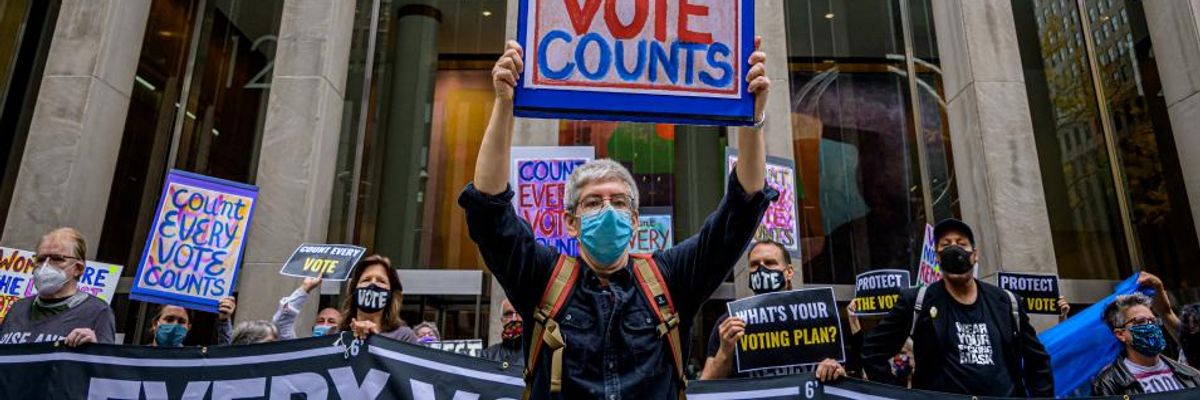
Members of the activist group Rise and Resist gathered for a press conference and demonstration outside NBC News and Fox News in Manhattan on October 22, 2020. (Photo: Erik McGregor/LightRocket via Getty Images)
Countering President Donald Trump's false suggestion Tuesday that tallying votes after Election Day is unlawful, a top official at the U.S. Federal Election Commission said that in fact "counting ballots--all of 'em--is the appropriate, proper, and very legal way to determine who won."
"An election is not a reality show with a big reveal at the end," Ellen Weintraub, an election attorney and a Democratic commissioner at the FEC, tweeted in response to Trump's insistence that a winner be officially declared on the night of November 3.
"All we get on Election Night are projections from TV networks," Weintraub noted. "We never have official results on Election Night."
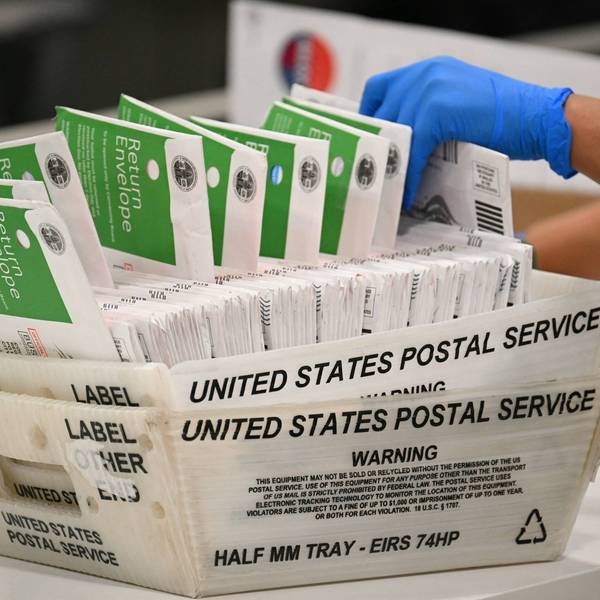
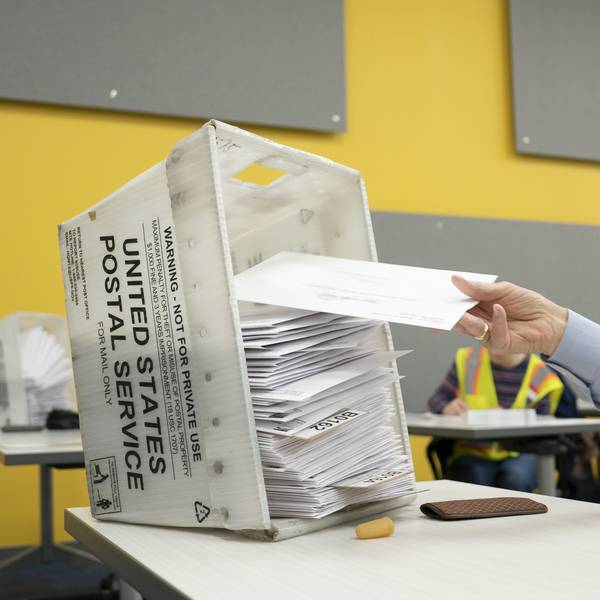
Trump's comments Tuesday came amid growing fears that the president could attempt to take advantage of slower-than-usual vote counting--which is expected due to the unprecedented surge in mail-in voting amid the pandemic--to falsely declare victory on Election Night and dismiss as illegitimate legally submitted ballots counted after November 3.
Those concerns were intensified by Trump-nominated Justice Brett Kavanaugh's falsehood-riddled concurring opinion in the Supreme Court's late Monday ruling that barred the battleground state of Wisconsin from extending its absentee ballot deadline. The decision means that ballots received by Wisconsin officials after Election Day cannot be counted, even if they are postmarked by November 3.
In his opinion, Kavanaugh declared that absentee ballots arriving after Election Day--which is allowed in more than a dozen states--could "flip the results of the election." But as Justice Elena Kagan noted in her dissent (pdf), "there are no results to 'flip' until all valid votes are counted."
"And nothing could be more 'suspicio[us]' or 'improp[er]' than refusing to tally votes once the clock strikes 12 on Election Night," Kagan added. "To suggest otherwise, especially in these fractious times, is to disserve the electoral process."
Slate's Mark Joseph Stern warned late Tuesday that "by deploying so many falsehoods in his 18-page opinion, Kavanaugh sent a signal to lower court judges: Uphold voter suppression at all costs, even if you have to ignore or contort the factual record to do it."
"Trump's dozens of hackish judicial nominees will hear this message loud and clear," Stern wrote. "At least one member of the Supreme Court is willing to construct a fantasy world that is utterly detached from our grim reality of mass disenfranchisement. If we cannot trust the justices to tell the truth now, why should we believe them if they decide the election next week?"
Dear Common Dreams reader, It’s been nearly 30 years since I co-founded Common Dreams with my late wife, Lina Newhouser. We had the radical notion that journalism should serve the public good, not corporate profits. It was clear to us from the outset what it would take to build such a project. No paid advertisements. No corporate sponsors. No millionaire publisher telling us what to think or do. Many people said we wouldn't last a year, but we proved those doubters wrong. Together with a tremendous team of journalists and dedicated staff, we built an independent media outlet free from the constraints of profits and corporate control. Our mission has always been simple: To inform. To inspire. To ignite change for the common good. Building Common Dreams was not easy. Our survival was never guaranteed. When you take on the most powerful forces—Wall Street greed, fossil fuel industry destruction, Big Tech lobbyists, and uber-rich oligarchs who have spent billions upon billions rigging the economy and democracy in their favor—the only bulwark you have is supporters who believe in your work. But here’s the urgent message from me today. It's never been this bad out there. And it's never been this hard to keep us going. At the very moment Common Dreams is most needed, the threats we face are intensifying. We need your support now more than ever. We don't accept corporate advertising and never will. We don't have a paywall because we don't think people should be blocked from critical news based on their ability to pay. Everything we do is funded by the donations of readers like you. When everyone does the little they can afford, we are strong. But if that support retreats or dries up, so do we. Will you donate now to make sure Common Dreams not only survives but thrives? —Craig Brown, Co-founder |
Countering President Donald Trump's false suggestion Tuesday that tallying votes after Election Day is unlawful, a top official at the U.S. Federal Election Commission said that in fact "counting ballots--all of 'em--is the appropriate, proper, and very legal way to determine who won."
"An election is not a reality show with a big reveal at the end," Ellen Weintraub, an election attorney and a Democratic commissioner at the FEC, tweeted in response to Trump's insistence that a winner be officially declared on the night of November 3.
"All we get on Election Night are projections from TV networks," Weintraub noted. "We never have official results on Election Night."
Trump's comments Tuesday came amid growing fears that the president could attempt to take advantage of slower-than-usual vote counting--which is expected due to the unprecedented surge in mail-in voting amid the pandemic--to falsely declare victory on Election Night and dismiss as illegitimate legally submitted ballots counted after November 3.
Those concerns were intensified by Trump-nominated Justice Brett Kavanaugh's falsehood-riddled concurring opinion in the Supreme Court's late Monday ruling that barred the battleground state of Wisconsin from extending its absentee ballot deadline. The decision means that ballots received by Wisconsin officials after Election Day cannot be counted, even if they are postmarked by November 3.
In his opinion, Kavanaugh declared that absentee ballots arriving after Election Day--which is allowed in more than a dozen states--could "flip the results of the election." But as Justice Elena Kagan noted in her dissent (pdf), "there are no results to 'flip' until all valid votes are counted."
"And nothing could be more 'suspicio[us]' or 'improp[er]' than refusing to tally votes once the clock strikes 12 on Election Night," Kagan added. "To suggest otherwise, especially in these fractious times, is to disserve the electoral process."
Slate's Mark Joseph Stern warned late Tuesday that "by deploying so many falsehoods in his 18-page opinion, Kavanaugh sent a signal to lower court judges: Uphold voter suppression at all costs, even if you have to ignore or contort the factual record to do it."
"Trump's dozens of hackish judicial nominees will hear this message loud and clear," Stern wrote. "At least one member of the Supreme Court is willing to construct a fantasy world that is utterly detached from our grim reality of mass disenfranchisement. If we cannot trust the justices to tell the truth now, why should we believe them if they decide the election next week?"
Countering President Donald Trump's false suggestion Tuesday that tallying votes after Election Day is unlawful, a top official at the U.S. Federal Election Commission said that in fact "counting ballots--all of 'em--is the appropriate, proper, and very legal way to determine who won."
"An election is not a reality show with a big reveal at the end," Ellen Weintraub, an election attorney and a Democratic commissioner at the FEC, tweeted in response to Trump's insistence that a winner be officially declared on the night of November 3.
"All we get on Election Night are projections from TV networks," Weintraub noted. "We never have official results on Election Night."
Trump's comments Tuesday came amid growing fears that the president could attempt to take advantage of slower-than-usual vote counting--which is expected due to the unprecedented surge in mail-in voting amid the pandemic--to falsely declare victory on Election Night and dismiss as illegitimate legally submitted ballots counted after November 3.
Those concerns were intensified by Trump-nominated Justice Brett Kavanaugh's falsehood-riddled concurring opinion in the Supreme Court's late Monday ruling that barred the battleground state of Wisconsin from extending its absentee ballot deadline. The decision means that ballots received by Wisconsin officials after Election Day cannot be counted, even if they are postmarked by November 3.
In his opinion, Kavanaugh declared that absentee ballots arriving after Election Day--which is allowed in more than a dozen states--could "flip the results of the election." But as Justice Elena Kagan noted in her dissent (pdf), "there are no results to 'flip' until all valid votes are counted."
"And nothing could be more 'suspicio[us]' or 'improp[er]' than refusing to tally votes once the clock strikes 12 on Election Night," Kagan added. "To suggest otherwise, especially in these fractious times, is to disserve the electoral process."
Slate's Mark Joseph Stern warned late Tuesday that "by deploying so many falsehoods in his 18-page opinion, Kavanaugh sent a signal to lower court judges: Uphold voter suppression at all costs, even if you have to ignore or contort the factual record to do it."
"Trump's dozens of hackish judicial nominees will hear this message loud and clear," Stern wrote. "At least one member of the Supreme Court is willing to construct a fantasy world that is utterly detached from our grim reality of mass disenfranchisement. If we cannot trust the justices to tell the truth now, why should we believe them if they decide the election next week?"