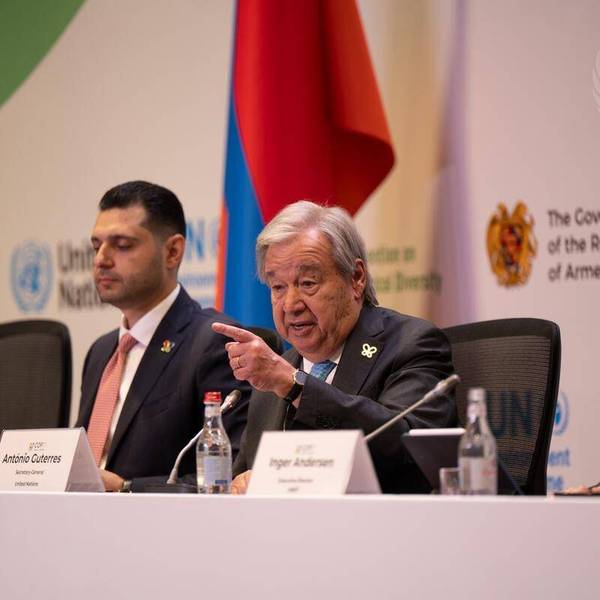

Australian Prime Minister Scott Morrison, middle, watered down a climate crisis resolution this week at the Pacific Islands Forum. (Image: screenshot)
Behavior of Australia's Prime Minister at Pacific Islands Forum Makes Clear Climate Crisis Not A Priority
"Watered-down climate language has real consequences—like water-logged homes, schools, communities, and ancestral burial grounds."
The inability of the leaders of Pacific island nations to pass a resolution with strong language on the climate crisis reportedly reduced the prime minister of the archipelago nation of Tonga to tears.
After a week of negotiations, Australia's Prime Minister Scott Morrison used his influence and power to water down a climate resolution, the Tuvalu Declaration, at the Pacific Islands Forum, which wrapped in Tuvalu on Friday. The resolution was drafted by the Smaller Island States (SIS) group earlier in the week.
Tongan Prime Minister Akilisi Pohiva cried during a presentation to the forum from youth climate activists showing the cost to the Pacific from insufficient action, said Tuvalu's Prime Minister Enele Sopoaga.
"The leader of Tonga actually shed tears in front of the leaders, because of the passion referring to the presentation from the two young warriors of climate change the other day," said Sopoaga during a press conference at the forum's conclusion.
Sopoaga criticized Morrison for Morrison's intransigence in the face of the crisis and refusal to cooperate with the smaller island nations at the conference. The two clashed repeatedly at the forum, The Guardian reported.
Chief among Morrison's complaints was the declaration's call for a reduction in coal consumption. Australia relies on the dirty energy source. Language referring to a climate "crisis" was also removed, reportedly at Morrison's behest.
"We tried our best," said Sopoaga, who delivered his remarks Friday while seated beside the Australian leader.
For his part, Morrison said that while he understood the concerns of the smaller nations, his allegiance was to the Australian people and their economic interests.
"I am accountable to the Australian people," said Morrison. "That's who I'm accountable for."
Morrison added that he was not completely desensitized to the way the issue affected his peers at the forum.
"I understand the deep sensitivities," said Morrison.
That didn't fly for Greenpeace Pacific head Joseph Moeono-Kolio.
"How does Morrison reconcile calling the Pacific family while he persistently ignores our demands for Australia to reduce its emissions?" said Moeono-Kolio.
But Morrison's comments and behavior drew criticism from other Pacific leaders and environmental groups.
"I think we can say we should've done more work for our people," said Sopoaga.
Fiji's Prime Minister Frank Bainimarama was similarly critical of the declaration's stymied content.
"Watered-down climate language has real consequences," said Bainimarama, "like water-logged homes, schools, communities, and ancestral burial grounds."
In a column on the forum for Pedestrian TV, writer Lavender Baj didn't hold back.
"The Pacific Island Forum is over," wrote Baj. "That means ScoMo can't wear Hawaiian shirts anymore and can continue to not give half a shit about climate change."
We are at a crossroads
This country and this world are at a monumental crossroads. In a few short weeks, US voters will have an opportunity to beat back the forces of fascism and confront the billionaires who are rigging the economy, our media system, and our democracy, making it increasingly impossible for ordinary people to get by. We’re not just talking about the election. We’re talking about what must be done once these fascist elements are vanquished from power. We need a bolder set of solutions than what either major party has so far been willing to offer and a working-class movement ready to fight like hell for it. Trump didn't emerge from nowhere. The conditions that fueled MAGA authoritarianism were created by decades of radical neoliberal economic policies and a corrupt political system dominated by corporate interests. They slashed taxes on the super-rich, promising that the benefits would trickle down. They said giveaways to the corporate titans would make life more affordable for the rest of us. It was all bullshit. And when a bitter, betrayed populace searches for someone to blame, right-wing demagogues have little trouble finding scapegoats. People know when they're being lied to, but you won't hear any of this from the corporate media. Only independent journalism—powered and funded by people who believe in building a better world—can deliver truly trustworthy daily news. Our Fall Campaign is underway, and we need your help. To power our newsroom through the rest of the year, we need to raise $125,000 by midnight on October 31. So if you share our vision, please contribute whatever you can to sustain our work. |
The inability of the leaders of Pacific island nations to pass a resolution with strong language on the climate crisis reportedly reduced the prime minister of the archipelago nation of Tonga to tears.
After a week of negotiations, Australia's Prime Minister Scott Morrison used his influence and power to water down a climate resolution, the Tuvalu Declaration, at the Pacific Islands Forum, which wrapped in Tuvalu on Friday. The resolution was drafted by the Smaller Island States (SIS) group earlier in the week.
Tongan Prime Minister Akilisi Pohiva cried during a presentation to the forum from youth climate activists showing the cost to the Pacific from insufficient action, said Tuvalu's Prime Minister Enele Sopoaga.
"The leader of Tonga actually shed tears in front of the leaders, because of the passion referring to the presentation from the two young warriors of climate change the other day," said Sopoaga during a press conference at the forum's conclusion.
Sopoaga criticized Morrison for Morrison's intransigence in the face of the crisis and refusal to cooperate with the smaller island nations at the conference. The two clashed repeatedly at the forum, The Guardian reported.
Chief among Morrison's complaints was the declaration's call for a reduction in coal consumption. Australia relies on the dirty energy source. Language referring to a climate "crisis" was also removed, reportedly at Morrison's behest.
"We tried our best," said Sopoaga, who delivered his remarks Friday while seated beside the Australian leader.
For his part, Morrison said that while he understood the concerns of the smaller nations, his allegiance was to the Australian people and their economic interests.
"I am accountable to the Australian people," said Morrison. "That's who I'm accountable for."
Morrison added that he was not completely desensitized to the way the issue affected his peers at the forum.
"I understand the deep sensitivities," said Morrison.
That didn't fly for Greenpeace Pacific head Joseph Moeono-Kolio.
"How does Morrison reconcile calling the Pacific family while he persistently ignores our demands for Australia to reduce its emissions?" said Moeono-Kolio.
But Morrison's comments and behavior drew criticism from other Pacific leaders and environmental groups.
"I think we can say we should've done more work for our people," said Sopoaga.
Fiji's Prime Minister Frank Bainimarama was similarly critical of the declaration's stymied content.
"Watered-down climate language has real consequences," said Bainimarama, "like water-logged homes, schools, communities, and ancestral burial grounds."
In a column on the forum for Pedestrian TV, writer Lavender Baj didn't hold back.
"The Pacific Island Forum is over," wrote Baj. "That means ScoMo can't wear Hawaiian shirts anymore and can continue to not give half a shit about climate change."