

SUBSCRIBE TO OUR FREE NEWSLETTER
Daily news & progressive opinion—funded by the people, not the corporations—delivered straight to your inbox.
5
#000000
#FFFFFF
To donate by check, phone, or other method, see our More Ways to Give page.
Daily news & progressive opinion—funded by the people, not the corporations—delivered straight to your inbox.
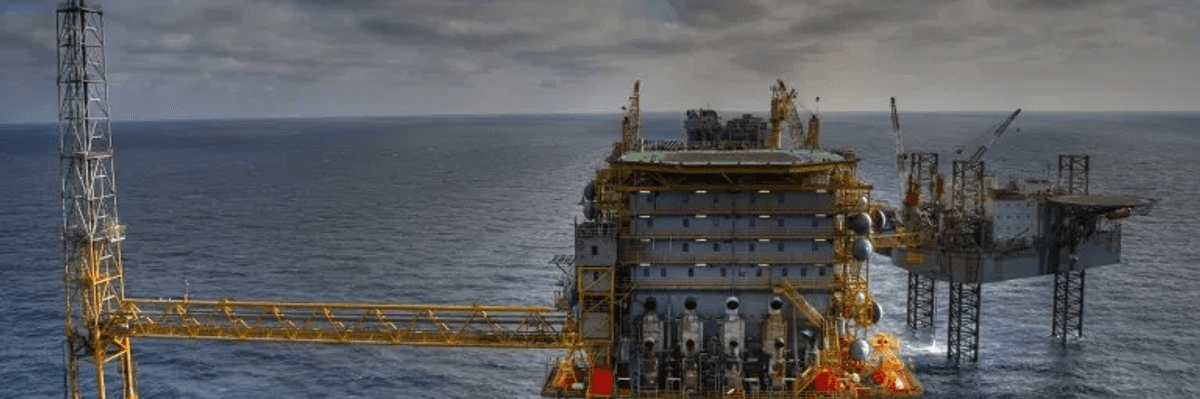
The Norwegian government announced Friday a bold recommendation for the Norwegian Sovereign Wealth Fund to divest all its holdings, worth nearly $40 billion, from oil and gas industries. The proposal, if approved by the nation's parliament, would see the world's largest sovereign wealth fund worth $1 trillion, divest from all fossil fuels. (Photo: Pixabay.com)
In a move that climate campaigners say should send a "shockwave" through the global oil and gas industry, the Norwegian Sovereign Wealth Fund--the largest of its kind in the world--has recommended the Norway government divest the entirety of the fund's $40 billion holdings from the fossil fuel industry.
"If [proposal passes through parliament it will produce a shockwave in the market, dealing the largest blow to date to the illusion that the fossil fuel industry still has decades of business as usual ahead of it."
--Yossi Cadan, 350.org
In a statement on Friday, Minister of Finance Siv Jensen explained the decision is meant to "reduce the vulnerability" of the Norwegian fund "to permanent oil price decline." With an estimated $1 trillion in total holdings, Norway's Sovereign Wealth Fund is the largest publicly held investment in the world. According to a spokesperson for the finance ministry, the fund currently has roughly 66 billion Norwegian krone ($7.5 billion) invested in energy exploration and production stocks--approximately 1.2% of the fund's stock portfolio.
The recommendation from the Norwegian fund will now be sent to the nation's parliament for approval.
Climate groups that have pushed aggressively for divestment from the fossil fuel industry in recent years as a key way to decrease the threat of greenhouse gases and runaway global warming celebrated the announcement as a possible crucial turning point.
"We welcome and support this proposal," said Yossi Cadan, senior divestment campaigner at 350.org, "if it passes through parliament it will produce a shockwave in the market, dealing the largest blow to date to the illusion that the fossil fuel industry still has decades of business as usual ahead of it. The decision should sound like a red alert for private banks and investors whose oil and gas assets are becoming increasingly risky and morally untenable."
Bill McKibben, one of the group's co-founders, called it a "huge, huge, huge win."
In a statement, 350 added:
In order to avoid the most catastrophic impacts of climate change and keep global warming below 1.5degC we have to keep fossil fuels in the ground and shift finance towards sustainable energy solutions for all. Climate impacts are already hitting home and we have no time left to lose. Last year Nordic heatwaves, wildfires in the Arctic Circle and alarming news of the thickest Arctic sea ice starting to break up, showed how climate change is close to home for Norway. It seems unthinkable for Norwegian financiers to continue to invest in companies that are causing this chaos.
Catherine Howarth, chief executive of ShareAction, which provides analysis for investors focused on creating a more sustainable society, said the Norwegian fund's announcement "is further evidence that investors are growing increasingly dissatisfied with oil exploration and production companies."
Institutional investors that manage sovereign wealth funds and pensions funds, she added, "are withdrawing their capital from oil and gas companies on the grounds that quicker-than-expected growth in clean energy and associated regulation is making oil and gas business models highly vulnerable. This announcement will put pressure on investors to ramp up their engagement with integrated oil majors ahead of [annual general meeting] season" when stock holders gather to assess and review company performance and strategies.
While the financial reality of the climate crisis comes into increasing view for global investors and markets, 350.org says that credit belongs to the campaigners from around the world who have bravely stood up to demand an end to the financial and energy hegemony of the fossil fuel industry.
At the heart of the global divestment campaign, the group said, "is a people-powered grassroots movement--it's ordinary people pushing their local institutions to take a stand against the fossil fuel industry --the industry most responsible for the current climate crisis."
Dear Common Dreams reader, It’s been nearly 30 years since I co-founded Common Dreams with my late wife, Lina Newhouser. We had the radical notion that journalism should serve the public good, not corporate profits. It was clear to us from the outset what it would take to build such a project. No paid advertisements. No corporate sponsors. No millionaire publisher telling us what to think or do. Many people said we wouldn't last a year, but we proved those doubters wrong. Together with a tremendous team of journalists and dedicated staff, we built an independent media outlet free from the constraints of profits and corporate control. Our mission has always been simple: To inform. To inspire. To ignite change for the common good. Building Common Dreams was not easy. Our survival was never guaranteed. When you take on the most powerful forces—Wall Street greed, fossil fuel industry destruction, Big Tech lobbyists, and uber-rich oligarchs who have spent billions upon billions rigging the economy and democracy in their favor—the only bulwark you have is supporters who believe in your work. But here’s the urgent message from me today. It's never been this bad out there. And it's never been this hard to keep us going. At the very moment Common Dreams is most needed, the threats we face are intensifying. We need your support now more than ever. We don't accept corporate advertising and never will. We don't have a paywall because we don't think people should be blocked from critical news based on their ability to pay. Everything we do is funded by the donations of readers like you. When everyone does the little they can afford, we are strong. But if that support retreats or dries up, so do we. Will you donate now to make sure Common Dreams not only survives but thrives? —Craig Brown, Co-founder |
In a move that climate campaigners say should send a "shockwave" through the global oil and gas industry, the Norwegian Sovereign Wealth Fund--the largest of its kind in the world--has recommended the Norway government divest the entirety of the fund's $40 billion holdings from the fossil fuel industry.
"If [proposal passes through parliament it will produce a shockwave in the market, dealing the largest blow to date to the illusion that the fossil fuel industry still has decades of business as usual ahead of it."
--Yossi Cadan, 350.org
In a statement on Friday, Minister of Finance Siv Jensen explained the decision is meant to "reduce the vulnerability" of the Norwegian fund "to permanent oil price decline." With an estimated $1 trillion in total holdings, Norway's Sovereign Wealth Fund is the largest publicly held investment in the world. According to a spokesperson for the finance ministry, the fund currently has roughly 66 billion Norwegian krone ($7.5 billion) invested in energy exploration and production stocks--approximately 1.2% of the fund's stock portfolio.
The recommendation from the Norwegian fund will now be sent to the nation's parliament for approval.
Climate groups that have pushed aggressively for divestment from the fossil fuel industry in recent years as a key way to decrease the threat of greenhouse gases and runaway global warming celebrated the announcement as a possible crucial turning point.
"We welcome and support this proposal," said Yossi Cadan, senior divestment campaigner at 350.org, "if it passes through parliament it will produce a shockwave in the market, dealing the largest blow to date to the illusion that the fossil fuel industry still has decades of business as usual ahead of it. The decision should sound like a red alert for private banks and investors whose oil and gas assets are becoming increasingly risky and morally untenable."
Bill McKibben, one of the group's co-founders, called it a "huge, huge, huge win."
In a statement, 350 added:
In order to avoid the most catastrophic impacts of climate change and keep global warming below 1.5degC we have to keep fossil fuels in the ground and shift finance towards sustainable energy solutions for all. Climate impacts are already hitting home and we have no time left to lose. Last year Nordic heatwaves, wildfires in the Arctic Circle and alarming news of the thickest Arctic sea ice starting to break up, showed how climate change is close to home for Norway. It seems unthinkable for Norwegian financiers to continue to invest in companies that are causing this chaos.
Catherine Howarth, chief executive of ShareAction, which provides analysis for investors focused on creating a more sustainable society, said the Norwegian fund's announcement "is further evidence that investors are growing increasingly dissatisfied with oil exploration and production companies."
Institutional investors that manage sovereign wealth funds and pensions funds, she added, "are withdrawing their capital from oil and gas companies on the grounds that quicker-than-expected growth in clean energy and associated regulation is making oil and gas business models highly vulnerable. This announcement will put pressure on investors to ramp up their engagement with integrated oil majors ahead of [annual general meeting] season" when stock holders gather to assess and review company performance and strategies.
While the financial reality of the climate crisis comes into increasing view for global investors and markets, 350.org says that credit belongs to the campaigners from around the world who have bravely stood up to demand an end to the financial and energy hegemony of the fossil fuel industry.
At the heart of the global divestment campaign, the group said, "is a people-powered grassroots movement--it's ordinary people pushing their local institutions to take a stand against the fossil fuel industry --the industry most responsible for the current climate crisis."
In a move that climate campaigners say should send a "shockwave" through the global oil and gas industry, the Norwegian Sovereign Wealth Fund--the largest of its kind in the world--has recommended the Norway government divest the entirety of the fund's $40 billion holdings from the fossil fuel industry.
"If [proposal passes through parliament it will produce a shockwave in the market, dealing the largest blow to date to the illusion that the fossil fuel industry still has decades of business as usual ahead of it."
--Yossi Cadan, 350.org
In a statement on Friday, Minister of Finance Siv Jensen explained the decision is meant to "reduce the vulnerability" of the Norwegian fund "to permanent oil price decline." With an estimated $1 trillion in total holdings, Norway's Sovereign Wealth Fund is the largest publicly held investment in the world. According to a spokesperson for the finance ministry, the fund currently has roughly 66 billion Norwegian krone ($7.5 billion) invested in energy exploration and production stocks--approximately 1.2% of the fund's stock portfolio.
The recommendation from the Norwegian fund will now be sent to the nation's parliament for approval.
Climate groups that have pushed aggressively for divestment from the fossil fuel industry in recent years as a key way to decrease the threat of greenhouse gases and runaway global warming celebrated the announcement as a possible crucial turning point.
"We welcome and support this proposal," said Yossi Cadan, senior divestment campaigner at 350.org, "if it passes through parliament it will produce a shockwave in the market, dealing the largest blow to date to the illusion that the fossil fuel industry still has decades of business as usual ahead of it. The decision should sound like a red alert for private banks and investors whose oil and gas assets are becoming increasingly risky and morally untenable."
Bill McKibben, one of the group's co-founders, called it a "huge, huge, huge win."
In a statement, 350 added:
In order to avoid the most catastrophic impacts of climate change and keep global warming below 1.5degC we have to keep fossil fuels in the ground and shift finance towards sustainable energy solutions for all. Climate impacts are already hitting home and we have no time left to lose. Last year Nordic heatwaves, wildfires in the Arctic Circle and alarming news of the thickest Arctic sea ice starting to break up, showed how climate change is close to home for Norway. It seems unthinkable for Norwegian financiers to continue to invest in companies that are causing this chaos.
Catherine Howarth, chief executive of ShareAction, which provides analysis for investors focused on creating a more sustainable society, said the Norwegian fund's announcement "is further evidence that investors are growing increasingly dissatisfied with oil exploration and production companies."
Institutional investors that manage sovereign wealth funds and pensions funds, she added, "are withdrawing their capital from oil and gas companies on the grounds that quicker-than-expected growth in clean energy and associated regulation is making oil and gas business models highly vulnerable. This announcement will put pressure on investors to ramp up their engagement with integrated oil majors ahead of [annual general meeting] season" when stock holders gather to assess and review company performance and strategies.
While the financial reality of the climate crisis comes into increasing view for global investors and markets, 350.org says that credit belongs to the campaigners from around the world who have bravely stood up to demand an end to the financial and energy hegemony of the fossil fuel industry.
At the heart of the global divestment campaign, the group said, "is a people-powered grassroots movement--it's ordinary people pushing their local institutions to take a stand against the fossil fuel industry --the industry most responsible for the current climate crisis."

