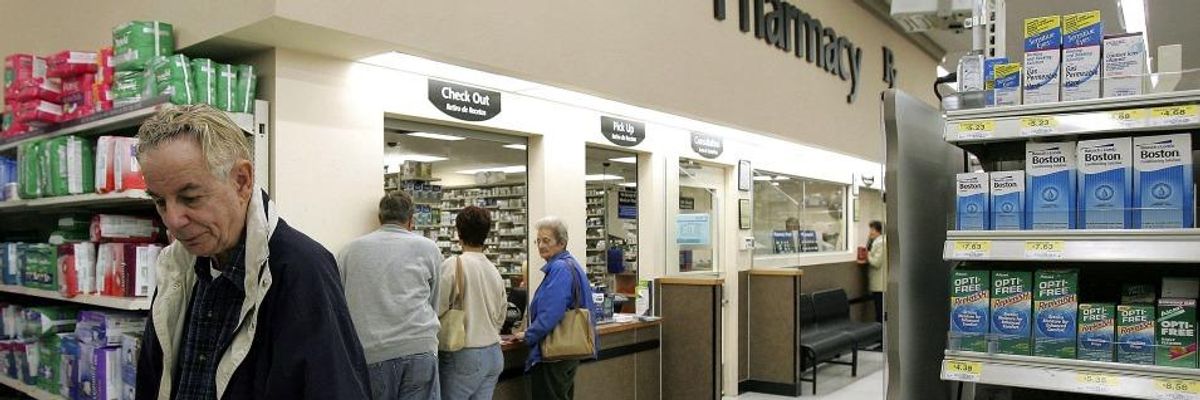
Patients purchase prescriptions at a Walmart in Mount Prospect, Illinois. (Photo: Tim Boyle/Getty Images)
Calling for New Laws Over 'Trump Photo-Ops,' Warren Unveils Bill to Take 'Real Action' to Lower Prescription Drug Costs
"This is one of many steps that needs to be taken to stop soaring drug prices, especially while the Trump administration offers only their 'hope' that drug companies will lower them on their own."

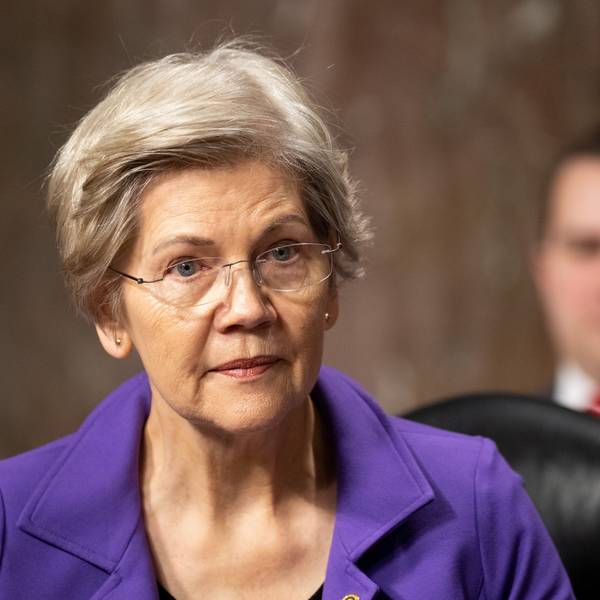
A new bill introduced by Democratic members of both houses of Congress will take "real action to protect families" from high prescription drug costs instead of providing a "photo op" for President Donald Trump, said co-sponsor Sen. Elizabeth Warren (D-Mass.).
The Capping Prescription Costs Act of 2018 bill was introduced Wednesday by Warren as well as Sens. Ron Wyden (D-Ore.), Bill Nelson (D-Fla.), Patty Murray (D-Wash.), and Rep. Jacky Rosen (D-Nev.), to combat one of the fastest-rising healthcare costs faced by American families.
More than a quarter of Americans face struggle to pay for the medications they need, while a Harvard Medical School study found in 2015 that millions of people skip taking their prescriptions to save money.
The Democratic bill would be applied to group health insurance plans and individual market plans, and would cap prescription costs at $250 per month for individuals and at $500 per month for families.
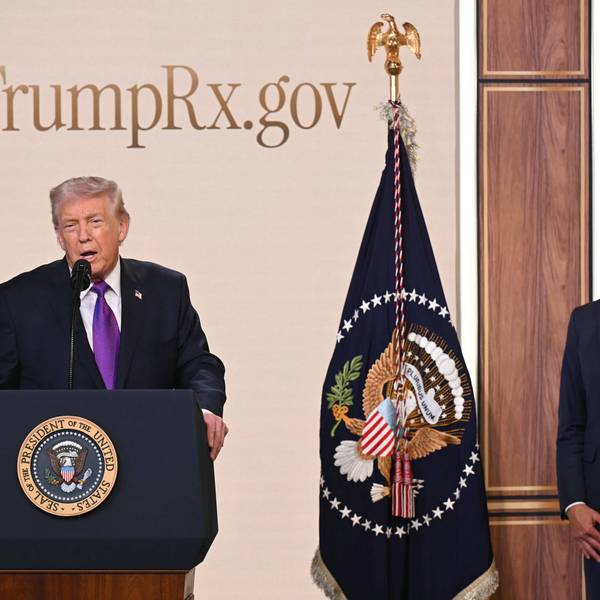
President Donald Trump introduced a plan to lower prescription drug prices in May, but experts found that his proposal could increase costs for people on Medicare who need treatment for serious illnesses like cancer.
He also criticized the pharma giant Pfizer in a tweet this week, for its skyrocketing drug prices--a tactic Warren dismissed as a failure to provide real leadership for Americans struggling to pay medical bills.
After Pfizer said it would put price increases on hold for the month of July, Trump tweeted, "We applaud Pfizer for this decision and hope other companies do the same."
"More and more families are facing sky-high out-of-pocket costs for their prescription drugs, and they can't keep waiting for the president to follow through on his promises," Wyden said. "This bill ensures that families continue to have their health without risking financial hardship. This is one of many steps that needs to be taken to stop soaring drug prices, especially while the Trump administration offers only their 'hope' that drug companies will lower them on their own."
Urgent. It's never been this bad.
Dear Common Dreams reader, It’s been nearly 30 years since I co-founded Common Dreams with my late wife, Lina Newhouser. We had the radical notion that journalism should serve the public good, not corporate profits. It was clear to us from the outset what it would take to build such a project. No paid advertisements. No corporate sponsors. No millionaire publisher telling us what to think or do. Many people said we wouldn't last a year, but we proved those doubters wrong. Together with a tremendous team of journalists and dedicated staff, we built an independent media outlet free from the constraints of profits and corporate control. Our mission from the outset was simple. To inform. To inspire. To ignite change for the common good. Building Common Dreams was not easy. Our survival was never guaranteed. When you take on the most powerful forces—Wall Street greed, fossil fuel industry destruction, Big Tech lobbyists, and uber-rich oligarchs who have spent billions upon billions rigging the economy and democracy in their favor—the only bulwark you have is supporters who believe in your work. But here’s the urgent message from me today. It’s never been this bad out there. And it’s never been this hard to keep us going. At the very moment Common Dreams is most needed and doing some of its best and most important work, the threats we face are intensifying. Right now, with just three days to go in our Spring Campaign, we're falling short of our make-or-break goal. When everyone does the little they can afford, we are strong. But if that support retreats or dries up, so do we. Can you make a gift right now to make sure Common Dreams not only survives but thrives? There is no backup plan or rainy day fund. There is only you. —Craig Brown, Co-founder |
A new bill introduced by Democratic members of both houses of Congress will take "real action to protect families" from high prescription drug costs instead of providing a "photo op" for President Donald Trump, said co-sponsor Sen. Elizabeth Warren (D-Mass.).
The Capping Prescription Costs Act of 2018 bill was introduced Wednesday by Warren as well as Sens. Ron Wyden (D-Ore.), Bill Nelson (D-Fla.), Patty Murray (D-Wash.), and Rep. Jacky Rosen (D-Nev.), to combat one of the fastest-rising healthcare costs faced by American families.
More than a quarter of Americans face struggle to pay for the medications they need, while a Harvard Medical School study found in 2015 that millions of people skip taking their prescriptions to save money.
The Democratic bill would be applied to group health insurance plans and individual market plans, and would cap prescription costs at $250 per month for individuals and at $500 per month for families.
President Donald Trump introduced a plan to lower prescription drug prices in May, but experts found that his proposal could increase costs for people on Medicare who need treatment for serious illnesses like cancer.
He also criticized the pharma giant Pfizer in a tweet this week, for its skyrocketing drug prices--a tactic Warren dismissed as a failure to provide real leadership for Americans struggling to pay medical bills.
After Pfizer said it would put price increases on hold for the month of July, Trump tweeted, "We applaud Pfizer for this decision and hope other companies do the same."
"More and more families are facing sky-high out-of-pocket costs for their prescription drugs, and they can't keep waiting for the president to follow through on his promises," Wyden said. "This bill ensures that families continue to have their health without risking financial hardship. This is one of many steps that needs to be taken to stop soaring drug prices, especially while the Trump administration offers only their 'hope' that drug companies will lower them on their own."
A new bill introduced by Democratic members of both houses of Congress will take "real action to protect families" from high prescription drug costs instead of providing a "photo op" for President Donald Trump, said co-sponsor Sen. Elizabeth Warren (D-Mass.).
The Capping Prescription Costs Act of 2018 bill was introduced Wednesday by Warren as well as Sens. Ron Wyden (D-Ore.), Bill Nelson (D-Fla.), Patty Murray (D-Wash.), and Rep. Jacky Rosen (D-Nev.), to combat one of the fastest-rising healthcare costs faced by American families.
More than a quarter of Americans face struggle to pay for the medications they need, while a Harvard Medical School study found in 2015 that millions of people skip taking their prescriptions to save money.
The Democratic bill would be applied to group health insurance plans and individual market plans, and would cap prescription costs at $250 per month for individuals and at $500 per month for families.
President Donald Trump introduced a plan to lower prescription drug prices in May, but experts found that his proposal could increase costs for people on Medicare who need treatment for serious illnesses like cancer.
He also criticized the pharma giant Pfizer in a tweet this week, for its skyrocketing drug prices--a tactic Warren dismissed as a failure to provide real leadership for Americans struggling to pay medical bills.
After Pfizer said it would put price increases on hold for the month of July, Trump tweeted, "We applaud Pfizer for this decision and hope other companies do the same."
"More and more families are facing sky-high out-of-pocket costs for their prescription drugs, and they can't keep waiting for the president to follow through on his promises," Wyden said. "This bill ensures that families continue to have their health without risking financial hardship. This is one of many steps that needs to be taken to stop soaring drug prices, especially while the Trump administration offers only their 'hope' that drug companies will lower them on their own."