SUBSCRIBE TO OUR FREE NEWSLETTER
Daily news & progressive opinion—funded by the people, not the corporations—delivered straight to your inbox.
5
#000000
#FFFFFF
To donate by check, phone, or other method, see our More Ways to Give page.
Daily news & progressive opinion—funded by the people, not the corporations—delivered straight to your inbox.
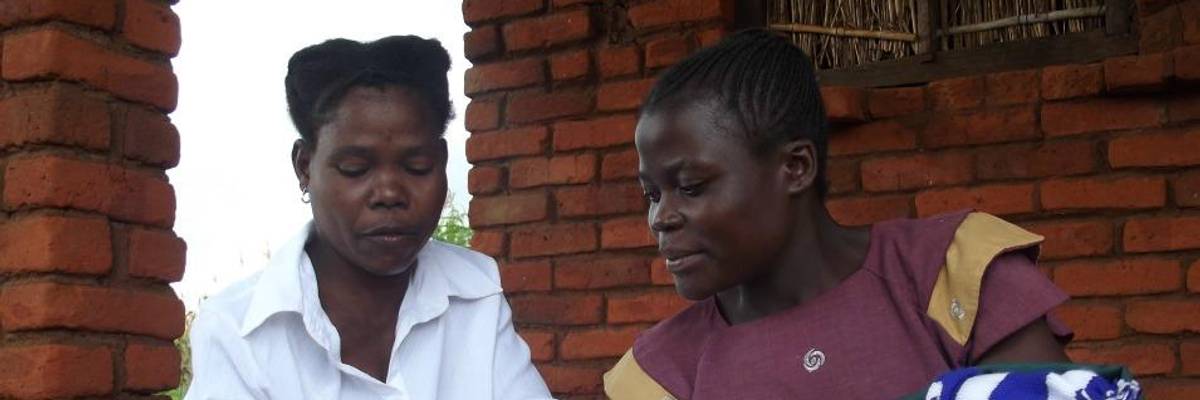
As baby formula sales have gone down in welathy countries in recent years, the baby food industry has targeted developing countries with marketing campaigns. A UN resolution passed this spring--despite pushback from the U.S.--aimed to promote breastfeeding around the world. (Photo: USAID/Flickr/cc)
International delegates to the United Nation's World Health Assembly looked on at the group's recent meeting, as U.S. representatives appeared to put the interests of the $70 billion baby food industry ahead of those of parents and children--and pressured other countries to do the same.
The New York Times reported Sunday that American officials, led by Health and Human Services Secretary Alex Azar, attempted to strongarm Ecuadorean delegates out of introducing a resolution to encourage and support breastfeeding and urge governments to restrict misleading marketing claims about baby formula.
While not all women are able to or choose to breastfeed, decades of research have shown that breastfeeding carries health benefits for babies and mothers, as well as saving money for families.
Ecuador was set to introduce a resolution based on that research, but as more than a dozen international representatives confirmed to the Times, American delegates threatened the smaller nation with cuts to military aid and reduced trade deals if they went forward with the proposal. The U.S. also threatened the Assembly with cuts to funding for the World Health Organization.
"We were astonished, appalled, and also saddened," Patti Rundall, the policy director of the British advocacy group Baby Milk Action, told the Times. "What happened was tantamount to blackmail, with the U.S. holding the world hostage and trying to overturn nearly 40 years of consensus on best way to protect infant and young child health."
Though international officials did not see representatives of the baby formula industry prompt the U.S. delegation's actions, lobbyists for the industry were present at the meeting. Formula makers have turned their attention to marketing their products in developing countries in recent years, as breastfeeding has grown more popular in wealthy nations.
A spokesperson for the Health and Human Services Department (HHS) told the Times that U.S. delegates objected to the resolution because it placed "unnecessary hurdles" in front of women who choose not to breastfeed, and "stigmatizes" formula-feeding--a claim physicians rejected on social media.
After several other Latin American and African countries declined to introduce the measure, fearing retaliation, Russia successfully proposed the measure without facing threats from the U.S.
At the same World Health Assembly meeting, according to the Times, U.S. officials also removed suggestions of introducing a soda tax from a document advising countries on fighting high rates of obesity.
On social media, some pointed to the report as the latest evidence of the Trump administration's top priority--serving corporate interests, even at the expense of public health.
Dear Common Dreams reader, It’s been nearly 30 years since I co-founded Common Dreams with my late wife, Lina Newhouser. We had the radical notion that journalism should serve the public good, not corporate profits. It was clear to us from the outset what it would take to build such a project. No paid advertisements. No corporate sponsors. No millionaire publisher telling us what to think or do. Many people said we wouldn't last a year, but we proved those doubters wrong. Together with a tremendous team of journalists and dedicated staff, we built an independent media outlet free from the constraints of profits and corporate control. Our mission has always been simple: To inform. To inspire. To ignite change for the common good. Building Common Dreams was not easy. Our survival was never guaranteed. When you take on the most powerful forces—Wall Street greed, fossil fuel industry destruction, Big Tech lobbyists, and uber-rich oligarchs who have spent billions upon billions rigging the economy and democracy in their favor—the only bulwark you have is supporters who believe in your work. But here’s the urgent message from me today. It's never been this bad out there. And it's never been this hard to keep us going. At the very moment Common Dreams is most needed, the threats we face are intensifying. We need your support now more than ever. We don't accept corporate advertising and never will. We don't have a paywall because we don't think people should be blocked from critical news based on their ability to pay. Everything we do is funded by the donations of readers like you. When everyone does the little they can afford, we are strong. But if that support retreats or dries up, so do we. Will you donate now to make sure Common Dreams not only survives but thrives? —Craig Brown, Co-founder |
International delegates to the United Nation's World Health Assembly looked on at the group's recent meeting, as U.S. representatives appeared to put the interests of the $70 billion baby food industry ahead of those of parents and children--and pressured other countries to do the same.
The New York Times reported Sunday that American officials, led by Health and Human Services Secretary Alex Azar, attempted to strongarm Ecuadorean delegates out of introducing a resolution to encourage and support breastfeeding and urge governments to restrict misleading marketing claims about baby formula.
While not all women are able to or choose to breastfeed, decades of research have shown that breastfeeding carries health benefits for babies and mothers, as well as saving money for families.
Ecuador was set to introduce a resolution based on that research, but as more than a dozen international representatives confirmed to the Times, American delegates threatened the smaller nation with cuts to military aid and reduced trade deals if they went forward with the proposal. The U.S. also threatened the Assembly with cuts to funding for the World Health Organization.
"We were astonished, appalled, and also saddened," Patti Rundall, the policy director of the British advocacy group Baby Milk Action, told the Times. "What happened was tantamount to blackmail, with the U.S. holding the world hostage and trying to overturn nearly 40 years of consensus on best way to protect infant and young child health."
Though international officials did not see representatives of the baby formula industry prompt the U.S. delegation's actions, lobbyists for the industry were present at the meeting. Formula makers have turned their attention to marketing their products in developing countries in recent years, as breastfeeding has grown more popular in wealthy nations.
A spokesperson for the Health and Human Services Department (HHS) told the Times that U.S. delegates objected to the resolution because it placed "unnecessary hurdles" in front of women who choose not to breastfeed, and "stigmatizes" formula-feeding--a claim physicians rejected on social media.
After several other Latin American and African countries declined to introduce the measure, fearing retaliation, Russia successfully proposed the measure without facing threats from the U.S.
At the same World Health Assembly meeting, according to the Times, U.S. officials also removed suggestions of introducing a soda tax from a document advising countries on fighting high rates of obesity.
On social media, some pointed to the report as the latest evidence of the Trump administration's top priority--serving corporate interests, even at the expense of public health.
International delegates to the United Nation's World Health Assembly looked on at the group's recent meeting, as U.S. representatives appeared to put the interests of the $70 billion baby food industry ahead of those of parents and children--and pressured other countries to do the same.
The New York Times reported Sunday that American officials, led by Health and Human Services Secretary Alex Azar, attempted to strongarm Ecuadorean delegates out of introducing a resolution to encourage and support breastfeeding and urge governments to restrict misleading marketing claims about baby formula.
While not all women are able to or choose to breastfeed, decades of research have shown that breastfeeding carries health benefits for babies and mothers, as well as saving money for families.
Ecuador was set to introduce a resolution based on that research, but as more than a dozen international representatives confirmed to the Times, American delegates threatened the smaller nation with cuts to military aid and reduced trade deals if they went forward with the proposal. The U.S. also threatened the Assembly with cuts to funding for the World Health Organization.
"We were astonished, appalled, and also saddened," Patti Rundall, the policy director of the British advocacy group Baby Milk Action, told the Times. "What happened was tantamount to blackmail, with the U.S. holding the world hostage and trying to overturn nearly 40 years of consensus on best way to protect infant and young child health."
Though international officials did not see representatives of the baby formula industry prompt the U.S. delegation's actions, lobbyists for the industry were present at the meeting. Formula makers have turned their attention to marketing their products in developing countries in recent years, as breastfeeding has grown more popular in wealthy nations.
A spokesperson for the Health and Human Services Department (HHS) told the Times that U.S. delegates objected to the resolution because it placed "unnecessary hurdles" in front of women who choose not to breastfeed, and "stigmatizes" formula-feeding--a claim physicians rejected on social media.
After several other Latin American and African countries declined to introduce the measure, fearing retaliation, Russia successfully proposed the measure without facing threats from the U.S.
At the same World Health Assembly meeting, according to the Times, U.S. officials also removed suggestions of introducing a soda tax from a document advising countries on fighting high rates of obesity.
On social media, some pointed to the report as the latest evidence of the Trump administration's top priority--serving corporate interests, even at the expense of public health.