SUBSCRIBE TO OUR FREE NEWSLETTER
Daily news & progressive opinion—funded by the people, not the corporations—delivered straight to your inbox.
5
#000000
#FFFFFF
To donate by check, phone, or other method, see our More Ways to Give page.
Daily news & progressive opinion—funded by the people, not the corporations—delivered straight to your inbox.
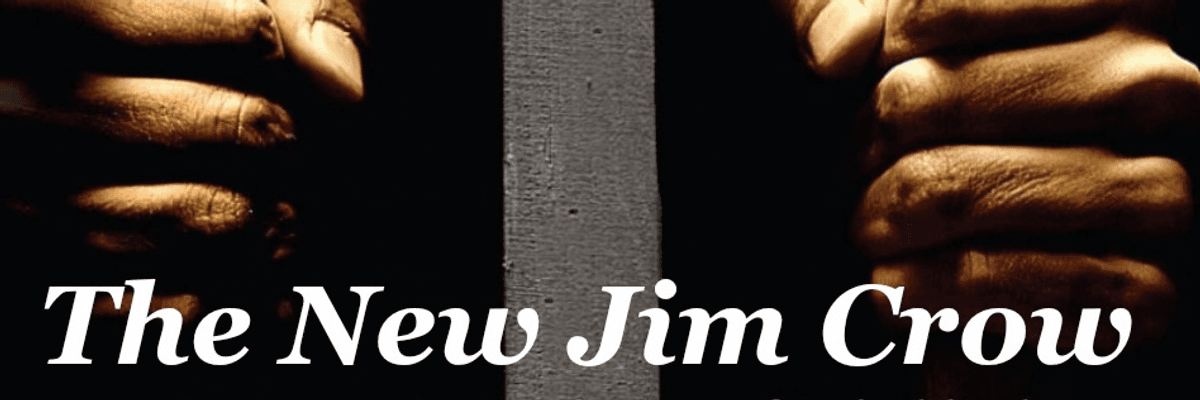
The book The New Jim Crow by Michelle Alexander was added to New Jersey's list of books banned from some of the state's correctional facilities. (Photo: Handout)
Civil rights advocates denounced New Jersey's prison system on Monday after learning that the book The New Jim Crow, about race and mass incarceration in the U.S., has been banned from some of the state's prisons.
"The DOC--and every player in the criminal justice system, from police officers and prosecutors to judges and legislators--must take affirmative steps to reduce our state's shameful racial disparities," wrote Tess Borden and Alexander Shalom, attorneys with the state's American Civil Liberties Union (ACLU) chapter, in a letter to the New Jersey Department of Corrections. "The ban on The New Jim Crow does precisely the opposite and is a step backwards instead."
"In its worst light, it looks like an attempt to keep impacted people uninformed about the history of the very injustice that defines their daily lives."--ACLU-New Jersey
The ACLU accused the prison system of violating the First Amendment by withholding the book, written by Michelle Alexander and subtitled "Mass Incarceration in the Age of Colorblindness," and argued that there is no legitimate reason to ban the award-winning work.
Under New Jersey's own regulations, prisons are allowed to ban material that has been shown to hinder the security of facilities--including writings on lock-picking, weapon-making, and materials that could "incite violence"--but The New Jim Crow is far from fitting this description, said the attorneys.
The book details the history of the U.S. prison system and how it came to house a disproportionate number of black men, growing out of the slavery system and discriminatory Jim Crow laws. New Jersey's correctional facilities offer an especially egregious example of this, incarcerating black people more than 12 times as often as white residents--compared with the national ratio of five-to-one.
"It is one thing to prevent incarcerated people from reading how-to manuals on lock-picking," wrote Borden and Shalom. "It is something altogether different to deny people access to a book that 'offers a timely and original framework for understanding mass incarceration.'"
They added, "For the state burdened with this systemic injustice to prohibit prisoners from reading a book about race and mass incarceration is grossly ironic, misguided, and harmful...In its worst light, it looks like an attempt to keep impacted people uninformed about the history of the very injustice that defines their daily lives."
Dear Common Dreams reader, It’s been nearly 30 years since I co-founded Common Dreams with my late wife, Lina Newhouser. We had the radical notion that journalism should serve the public good, not corporate profits. It was clear to us from the outset what it would take to build such a project. No paid advertisements. No corporate sponsors. No millionaire publisher telling us what to think or do. Many people said we wouldn't last a year, but we proved those doubters wrong. Together with a tremendous team of journalists and dedicated staff, we built an independent media outlet free from the constraints of profits and corporate control. Our mission has always been simple: To inform. To inspire. To ignite change for the common good. Building Common Dreams was not easy. Our survival was never guaranteed. When you take on the most powerful forces—Wall Street greed, fossil fuel industry destruction, Big Tech lobbyists, and uber-rich oligarchs who have spent billions upon billions rigging the economy and democracy in their favor—the only bulwark you have is supporters who believe in your work. But here’s the urgent message from me today. It's never been this bad out there. And it's never been this hard to keep us going. At the very moment Common Dreams is most needed, the threats we face are intensifying. We need your support now more than ever. We don't accept corporate advertising and never will. We don't have a paywall because we don't think people should be blocked from critical news based on their ability to pay. Everything we do is funded by the donations of readers like you. When everyone does the little they can afford, we are strong. But if that support retreats or dries up, so do we. Will you donate now to make sure Common Dreams not only survives but thrives? —Craig Brown, Co-founder |
Civil rights advocates denounced New Jersey's prison system on Monday after learning that the book The New Jim Crow, about race and mass incarceration in the U.S., has been banned from some of the state's prisons.
"The DOC--and every player in the criminal justice system, from police officers and prosecutors to judges and legislators--must take affirmative steps to reduce our state's shameful racial disparities," wrote Tess Borden and Alexander Shalom, attorneys with the state's American Civil Liberties Union (ACLU) chapter, in a letter to the New Jersey Department of Corrections. "The ban on The New Jim Crow does precisely the opposite and is a step backwards instead."
"In its worst light, it looks like an attempt to keep impacted people uninformed about the history of the very injustice that defines their daily lives."--ACLU-New Jersey
The ACLU accused the prison system of violating the First Amendment by withholding the book, written by Michelle Alexander and subtitled "Mass Incarceration in the Age of Colorblindness," and argued that there is no legitimate reason to ban the award-winning work.
Under New Jersey's own regulations, prisons are allowed to ban material that has been shown to hinder the security of facilities--including writings on lock-picking, weapon-making, and materials that could "incite violence"--but The New Jim Crow is far from fitting this description, said the attorneys.
The book details the history of the U.S. prison system and how it came to house a disproportionate number of black men, growing out of the slavery system and discriminatory Jim Crow laws. New Jersey's correctional facilities offer an especially egregious example of this, incarcerating black people more than 12 times as often as white residents--compared with the national ratio of five-to-one.
"It is one thing to prevent incarcerated people from reading how-to manuals on lock-picking," wrote Borden and Shalom. "It is something altogether different to deny people access to a book that 'offers a timely and original framework for understanding mass incarceration.'"
They added, "For the state burdened with this systemic injustice to prohibit prisoners from reading a book about race and mass incarceration is grossly ironic, misguided, and harmful...In its worst light, it looks like an attempt to keep impacted people uninformed about the history of the very injustice that defines their daily lives."
Civil rights advocates denounced New Jersey's prison system on Monday after learning that the book The New Jim Crow, about race and mass incarceration in the U.S., has been banned from some of the state's prisons.
"The DOC--and every player in the criminal justice system, from police officers and prosecutors to judges and legislators--must take affirmative steps to reduce our state's shameful racial disparities," wrote Tess Borden and Alexander Shalom, attorneys with the state's American Civil Liberties Union (ACLU) chapter, in a letter to the New Jersey Department of Corrections. "The ban on The New Jim Crow does precisely the opposite and is a step backwards instead."
"In its worst light, it looks like an attempt to keep impacted people uninformed about the history of the very injustice that defines their daily lives."--ACLU-New Jersey
The ACLU accused the prison system of violating the First Amendment by withholding the book, written by Michelle Alexander and subtitled "Mass Incarceration in the Age of Colorblindness," and argued that there is no legitimate reason to ban the award-winning work.
Under New Jersey's own regulations, prisons are allowed to ban material that has been shown to hinder the security of facilities--including writings on lock-picking, weapon-making, and materials that could "incite violence"--but The New Jim Crow is far from fitting this description, said the attorneys.
The book details the history of the U.S. prison system and how it came to house a disproportionate number of black men, growing out of the slavery system and discriminatory Jim Crow laws. New Jersey's correctional facilities offer an especially egregious example of this, incarcerating black people more than 12 times as often as white residents--compared with the national ratio of five-to-one.
"It is one thing to prevent incarcerated people from reading how-to manuals on lock-picking," wrote Borden and Shalom. "It is something altogether different to deny people access to a book that 'offers a timely and original framework for understanding mass incarceration.'"
They added, "For the state burdened with this systemic injustice to prohibit prisoners from reading a book about race and mass incarceration is grossly ironic, misguided, and harmful...In its worst light, it looks like an attempt to keep impacted people uninformed about the history of the very injustice that defines their daily lives."