SUBSCRIBE TO OUR FREE NEWSLETTER
Daily news & progressive opinion—funded by the people, not the corporations—delivered straight to your inbox.
5
#000000
#FFFFFF
To donate by check, phone, or other method, see our More Ways to Give page.
Daily news & progressive opinion—funded by the people, not the corporations—delivered straight to your inbox.
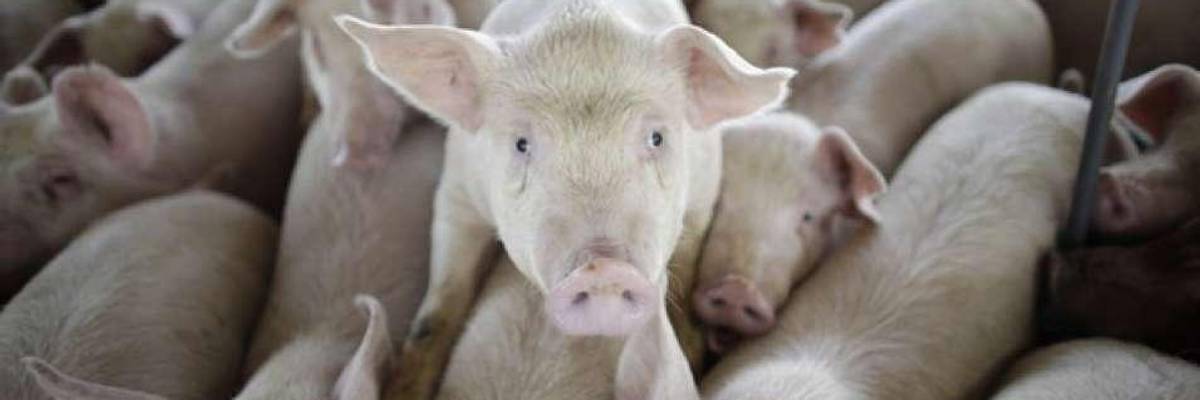
"Idaho is singling out for suppression one mode of speech--audio and video recordings of agricultural operations--to keep controversy and suspect practices out of the public eye," the new ruling said. (Photo: Geshu34/flickr/cc)
A federal appeals court on Thursday struck down key provisions of Idaho's ag-gag law--which criminalizes those who secretly document abuse of animals at agricultural facilities--saying they violate the First Amendment.
The ruling, the result of a lawsuit led by Animal Legal Defense Fund (ALDF), was hailed as a victory for animal rights, workers, and free speech.
Regarding the section of the law criminalizing "misrepresentation" to gain access to a facility, the U.S. Court of Appeals for the Ninth Circuit found "the overbreadth ... staggering," adding "that the purpose of the statute was, in large part, targeted at speech and investigative journalists."
Further, the court said "Idaho is singling out for suppression one mode of speech--audio and video recordings of agricultural operations--to keep controversy and suspect practices out of the public eye."
"We are sensitive to journalists' constitutional right to investigate and publish exposes on the agricultural industry. Matters related to food safety and animal cruelty are of significant public importance," the ruling states.
The court upheld the part of the law that "criminalizes obtaining records of an agricultural production facility by misrepresentation" as well as the section that "criminalizes obtaining employment by misrepresentation with the intent to cause economic or other injury."
According to ALDF, the ruling is a "precedent-setting victory."
Stephen Wells, executive director of the organization, said it "sends a strong message to Idaho and other states with ag-gag laws that they cannot trample civil liberties for the benefit of an industry."
The Center for Food Safety, which was also party to the suit, welcomed the ruling on Twitter:
The law--drafted by dairy industry lobbyists--was passed in 2014 and overturned in 2015 by a federal court. The state then challenged that decision.
As ALDF's Wells stated, similar law exist in other states across the country, and a recent report by Center for Constitutional Rights (CCR) and Defending Rights & Dissent spotlighted how they "are part of a sweeping crackdown on dissent."
Dear Common Dreams reader, It’s been nearly 30 years since I co-founded Common Dreams with my late wife, Lina Newhouser. We had the radical notion that journalism should serve the public good, not corporate profits. It was clear to us from the outset what it would take to build such a project. No paid advertisements. No corporate sponsors. No millionaire publisher telling us what to think or do. Many people said we wouldn't last a year, but we proved those doubters wrong. Together with a tremendous team of journalists and dedicated staff, we built an independent media outlet free from the constraints of profits and corporate control. Our mission has always been simple: To inform. To inspire. To ignite change for the common good. Building Common Dreams was not easy. Our survival was never guaranteed. When you take on the most powerful forces—Wall Street greed, fossil fuel industry destruction, Big Tech lobbyists, and uber-rich oligarchs who have spent billions upon billions rigging the economy and democracy in their favor—the only bulwark you have is supporters who believe in your work. But here’s the urgent message from me today. It's never been this bad out there. And it's never been this hard to keep us going. At the very moment Common Dreams is most needed, the threats we face are intensifying. We need your support now more than ever. We don't accept corporate advertising and never will. We don't have a paywall because we don't think people should be blocked from critical news based on their ability to pay. Everything we do is funded by the donations of readers like you. When everyone does the little they can afford, we are strong. But if that support retreats or dries up, so do we. Will you donate now to make sure Common Dreams not only survives but thrives? —Craig Brown, Co-founder |
A federal appeals court on Thursday struck down key provisions of Idaho's ag-gag law--which criminalizes those who secretly document abuse of animals at agricultural facilities--saying they violate the First Amendment.
The ruling, the result of a lawsuit led by Animal Legal Defense Fund (ALDF), was hailed as a victory for animal rights, workers, and free speech.
Regarding the section of the law criminalizing "misrepresentation" to gain access to a facility, the U.S. Court of Appeals for the Ninth Circuit found "the overbreadth ... staggering," adding "that the purpose of the statute was, in large part, targeted at speech and investigative journalists."
Further, the court said "Idaho is singling out for suppression one mode of speech--audio and video recordings of agricultural operations--to keep controversy and suspect practices out of the public eye."
"We are sensitive to journalists' constitutional right to investigate and publish exposes on the agricultural industry. Matters related to food safety and animal cruelty are of significant public importance," the ruling states.
The court upheld the part of the law that "criminalizes obtaining records of an agricultural production facility by misrepresentation" as well as the section that "criminalizes obtaining employment by misrepresentation with the intent to cause economic or other injury."
According to ALDF, the ruling is a "precedent-setting victory."
Stephen Wells, executive director of the organization, said it "sends a strong message to Idaho and other states with ag-gag laws that they cannot trample civil liberties for the benefit of an industry."
The Center for Food Safety, which was also party to the suit, welcomed the ruling on Twitter:
The law--drafted by dairy industry lobbyists--was passed in 2014 and overturned in 2015 by a federal court. The state then challenged that decision.
As ALDF's Wells stated, similar law exist in other states across the country, and a recent report by Center for Constitutional Rights (CCR) and Defending Rights & Dissent spotlighted how they "are part of a sweeping crackdown on dissent."
A federal appeals court on Thursday struck down key provisions of Idaho's ag-gag law--which criminalizes those who secretly document abuse of animals at agricultural facilities--saying they violate the First Amendment.
The ruling, the result of a lawsuit led by Animal Legal Defense Fund (ALDF), was hailed as a victory for animal rights, workers, and free speech.
Regarding the section of the law criminalizing "misrepresentation" to gain access to a facility, the U.S. Court of Appeals for the Ninth Circuit found "the overbreadth ... staggering," adding "that the purpose of the statute was, in large part, targeted at speech and investigative journalists."
Further, the court said "Idaho is singling out for suppression one mode of speech--audio and video recordings of agricultural operations--to keep controversy and suspect practices out of the public eye."
"We are sensitive to journalists' constitutional right to investigate and publish exposes on the agricultural industry. Matters related to food safety and animal cruelty are of significant public importance," the ruling states.
The court upheld the part of the law that "criminalizes obtaining records of an agricultural production facility by misrepresentation" as well as the section that "criminalizes obtaining employment by misrepresentation with the intent to cause economic or other injury."
According to ALDF, the ruling is a "precedent-setting victory."
Stephen Wells, executive director of the organization, said it "sends a strong message to Idaho and other states with ag-gag laws that they cannot trample civil liberties for the benefit of an industry."
The Center for Food Safety, which was also party to the suit, welcomed the ruling on Twitter:
The law--drafted by dairy industry lobbyists--was passed in 2014 and overturned in 2015 by a federal court. The state then challenged that decision.
As ALDF's Wells stated, similar law exist in other states across the country, and a recent report by Center for Constitutional Rights (CCR) and Defending Rights & Dissent spotlighted how they "are part of a sweeping crackdown on dissent."