SUBSCRIBE TO OUR FREE NEWSLETTER
Daily news & progressive opinion—funded by the people, not the corporations—delivered straight to your inbox.
5
#000000
#FFFFFF
To donate by check, phone, or other method, see our More Ways to Give page.
Daily news & progressive opinion—funded by the people, not the corporations—delivered straight to your inbox.
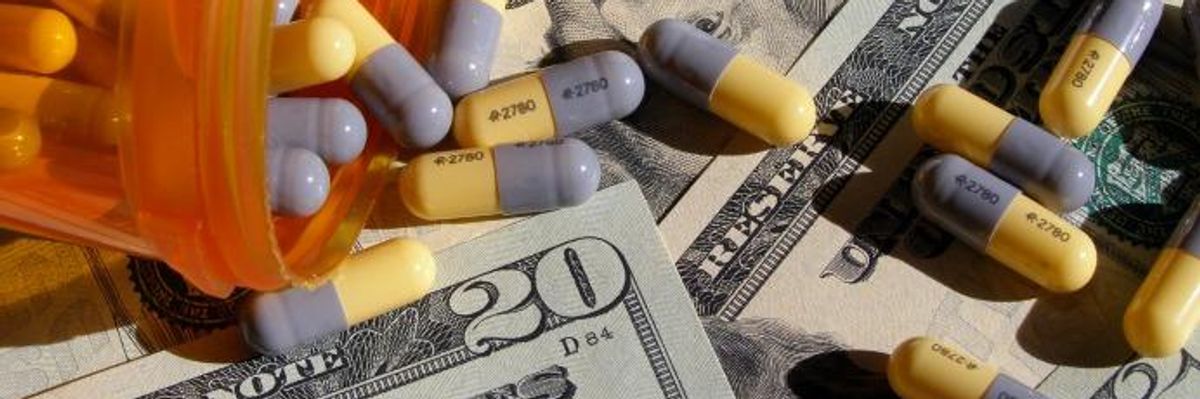
Raids by federal agents in Florida suggest a policy shift that will make it more difficult for Americans to access low-cost prescription medications. (Photo: Chris Potter/ccPix.com/Flickr/cc)
The U.S. Food and Drug Administration (FDA) raided nine stores in Central Florida that assist customers with placing orders for low-cost prescription drugs from Canada and other countries, Kaiser Health News reported Monday, suggesting a shift away from a long-standing policy that benefited consumers but was strongly condemned by the pharmaceutical industry.
"The storefronts primarily serve seniors who prefer in-person assistance with buying medicines from Canada and other countries, rather than using an internet site," Kaiser reports. Bill Hepscher, co-owner of six of the stores raided last month, estimates his business serves about 10,000 people a year, and that Florida has about 20 stores similar to his. His stores are located around Tampa Bay and Orlando.
According to Kaiser, Hepscher's and "most other storefronts use only foreign pharmacies certified by the nonprofit company pharmacychecker.com or the Canadian International Pharmacy Association, which verifies the pharmacies as safe," and "the drugs from foreign pharmacies often are made in the same manufacturing plants around the world as drugs sold in U.S. pharmacies."
The late October raids indicate an apparent reversal of a long-standing "non-enforcement" policy; although importing medication from foreign countries is illegal, rather than filling prescriptions, these stores simply help customers place orders that ship directly to their homes. Some of Hepscher's stores that were raided have been operating for more than 15 years.
The FDA agents told Hepscher that anyone who helps "administer" illegally imported drugs could face fines or prison. They served him with a search warrant for computers, paperwork related to sales, and any medications found on site. Although they left the computers, they took copies of customers' paper files as well as the stores' financial and bank records. Agents also left him with a letter--which he refused to sign--to acknowledge his company's practices as illegal.
FDA spokeswoman Lyndsay Meyer would not confirm to Kaiser whether an investigation was occurring, or whether the policy had changed. She only would say that the agency "is concerned about the safety risks associated with the importation of unapproved prescription drugs from foreign countries," because they "may be unregulated or subject to less oversight than U.S. requirements," which can "put patients' health at risk."
Hepscher told Kaiser he found the timing interesting considering that U.S. president Donald Trump had campaigned on the promise to lower prescription drug prices--and even accused major pharmaceutical companies of "getting away with murder" shortly before he took office. But despite Trump's recent claims that he wants to help bring drug costs "way down," the president came under fire last week for nominating Alex Azar, a former Big Pharma executive, to head the U.S. Department of Health and Human Services.
As Common Dreams reported last Monday, "While Trump insisted in a tweet on Monday that Azar 'will be a star for better healthcare and lower drug prices,' many argued that the president's choice of an industry insider will only be a further boost for the bottom lines of drug companies--and a disaster for public health"--with Public Citizen warning that "if Alex Azar is confirmed as HHS secretary, Big Pharma's coup of the healthcare sphere will be virtually complete."
For years, bipartisan efforts in Congress to lower drug costs and allow Americans to import drugs from Canada and overseas have been thwarted by lobbying by drug companies and Pharmaceutical Research and Manufacturers of America (PhRMA), a top drug industry trade organization. In February, Sen. Bernie Sanders (I-Vt.) and group of lawmakers introduced a bill that would allow those with valid prescriptions to import cheaper drugs from Canada. However, the legislation has not garnered enough support to move forward.
When Sanders introduced the bill, as Common Dreams reported at the time, he demanded that Trump make good on his campaign promises, declaring: "I say to President Trump: Talk is cheap. If you really have the guts to take on the pharmaceutical industry, tell your Republican friends in the House and the Senate to pass this legislation. Do it tonight in your address to Congress. Or admit to the American people that you were lying to them during the campaign."
Dear Common Dreams reader, It’s been nearly 30 years since I co-founded Common Dreams with my late wife, Lina Newhouser. We had the radical notion that journalism should serve the public good, not corporate profits. It was clear to us from the outset what it would take to build such a project. No paid advertisements. No corporate sponsors. No millionaire publisher telling us what to think or do. Many people said we wouldn't last a year, but we proved those doubters wrong. Together with a tremendous team of journalists and dedicated staff, we built an independent media outlet free from the constraints of profits and corporate control. Our mission has always been simple: To inform. To inspire. To ignite change for the common good. Building Common Dreams was not easy. Our survival was never guaranteed. When you take on the most powerful forces—Wall Street greed, fossil fuel industry destruction, Big Tech lobbyists, and uber-rich oligarchs who have spent billions upon billions rigging the economy and democracy in their favor—the only bulwark you have is supporters who believe in your work. But here’s the urgent message from me today. It's never been this bad out there. And it's never been this hard to keep us going. At the very moment Common Dreams is most needed, the threats we face are intensifying. We need your support now more than ever. We don't accept corporate advertising and never will. We don't have a paywall because we don't think people should be blocked from critical news based on their ability to pay. Everything we do is funded by the donations of readers like you. When everyone does the little they can afford, we are strong. But if that support retreats or dries up, so do we. Will you donate now to make sure Common Dreams not only survives but thrives? —Craig Brown, Co-founder |
The U.S. Food and Drug Administration (FDA) raided nine stores in Central Florida that assist customers with placing orders for low-cost prescription drugs from Canada and other countries, Kaiser Health News reported Monday, suggesting a shift away from a long-standing policy that benefited consumers but was strongly condemned by the pharmaceutical industry.
"The storefronts primarily serve seniors who prefer in-person assistance with buying medicines from Canada and other countries, rather than using an internet site," Kaiser reports. Bill Hepscher, co-owner of six of the stores raided last month, estimates his business serves about 10,000 people a year, and that Florida has about 20 stores similar to his. His stores are located around Tampa Bay and Orlando.
According to Kaiser, Hepscher's and "most other storefronts use only foreign pharmacies certified by the nonprofit company pharmacychecker.com or the Canadian International Pharmacy Association, which verifies the pharmacies as safe," and "the drugs from foreign pharmacies often are made in the same manufacturing plants around the world as drugs sold in U.S. pharmacies."
The late October raids indicate an apparent reversal of a long-standing "non-enforcement" policy; although importing medication from foreign countries is illegal, rather than filling prescriptions, these stores simply help customers place orders that ship directly to their homes. Some of Hepscher's stores that were raided have been operating for more than 15 years.
The FDA agents told Hepscher that anyone who helps "administer" illegally imported drugs could face fines or prison. They served him with a search warrant for computers, paperwork related to sales, and any medications found on site. Although they left the computers, they took copies of customers' paper files as well as the stores' financial and bank records. Agents also left him with a letter--which he refused to sign--to acknowledge his company's practices as illegal.
FDA spokeswoman Lyndsay Meyer would not confirm to Kaiser whether an investigation was occurring, or whether the policy had changed. She only would say that the agency "is concerned about the safety risks associated with the importation of unapproved prescription drugs from foreign countries," because they "may be unregulated or subject to less oversight than U.S. requirements," which can "put patients' health at risk."
Hepscher told Kaiser he found the timing interesting considering that U.S. president Donald Trump had campaigned on the promise to lower prescription drug prices--and even accused major pharmaceutical companies of "getting away with murder" shortly before he took office. But despite Trump's recent claims that he wants to help bring drug costs "way down," the president came under fire last week for nominating Alex Azar, a former Big Pharma executive, to head the U.S. Department of Health and Human Services.
As Common Dreams reported last Monday, "While Trump insisted in a tweet on Monday that Azar 'will be a star for better healthcare and lower drug prices,' many argued that the president's choice of an industry insider will only be a further boost for the bottom lines of drug companies--and a disaster for public health"--with Public Citizen warning that "if Alex Azar is confirmed as HHS secretary, Big Pharma's coup of the healthcare sphere will be virtually complete."
For years, bipartisan efforts in Congress to lower drug costs and allow Americans to import drugs from Canada and overseas have been thwarted by lobbying by drug companies and Pharmaceutical Research and Manufacturers of America (PhRMA), a top drug industry trade organization. In February, Sen. Bernie Sanders (I-Vt.) and group of lawmakers introduced a bill that would allow those with valid prescriptions to import cheaper drugs from Canada. However, the legislation has not garnered enough support to move forward.
When Sanders introduced the bill, as Common Dreams reported at the time, he demanded that Trump make good on his campaign promises, declaring: "I say to President Trump: Talk is cheap. If you really have the guts to take on the pharmaceutical industry, tell your Republican friends in the House and the Senate to pass this legislation. Do it tonight in your address to Congress. Or admit to the American people that you were lying to them during the campaign."
The U.S. Food and Drug Administration (FDA) raided nine stores in Central Florida that assist customers with placing orders for low-cost prescription drugs from Canada and other countries, Kaiser Health News reported Monday, suggesting a shift away from a long-standing policy that benefited consumers but was strongly condemned by the pharmaceutical industry.
"The storefronts primarily serve seniors who prefer in-person assistance with buying medicines from Canada and other countries, rather than using an internet site," Kaiser reports. Bill Hepscher, co-owner of six of the stores raided last month, estimates his business serves about 10,000 people a year, and that Florida has about 20 stores similar to his. His stores are located around Tampa Bay and Orlando.
According to Kaiser, Hepscher's and "most other storefronts use only foreign pharmacies certified by the nonprofit company pharmacychecker.com or the Canadian International Pharmacy Association, which verifies the pharmacies as safe," and "the drugs from foreign pharmacies often are made in the same manufacturing plants around the world as drugs sold in U.S. pharmacies."
The late October raids indicate an apparent reversal of a long-standing "non-enforcement" policy; although importing medication from foreign countries is illegal, rather than filling prescriptions, these stores simply help customers place orders that ship directly to their homes. Some of Hepscher's stores that were raided have been operating for more than 15 years.
The FDA agents told Hepscher that anyone who helps "administer" illegally imported drugs could face fines or prison. They served him with a search warrant for computers, paperwork related to sales, and any medications found on site. Although they left the computers, they took copies of customers' paper files as well as the stores' financial and bank records. Agents also left him with a letter--which he refused to sign--to acknowledge his company's practices as illegal.
FDA spokeswoman Lyndsay Meyer would not confirm to Kaiser whether an investigation was occurring, or whether the policy had changed. She only would say that the agency "is concerned about the safety risks associated with the importation of unapproved prescription drugs from foreign countries," because they "may be unregulated or subject to less oversight than U.S. requirements," which can "put patients' health at risk."
Hepscher told Kaiser he found the timing interesting considering that U.S. president Donald Trump had campaigned on the promise to lower prescription drug prices--and even accused major pharmaceutical companies of "getting away with murder" shortly before he took office. But despite Trump's recent claims that he wants to help bring drug costs "way down," the president came under fire last week for nominating Alex Azar, a former Big Pharma executive, to head the U.S. Department of Health and Human Services.
As Common Dreams reported last Monday, "While Trump insisted in a tweet on Monday that Azar 'will be a star for better healthcare and lower drug prices,' many argued that the president's choice of an industry insider will only be a further boost for the bottom lines of drug companies--and a disaster for public health"--with Public Citizen warning that "if Alex Azar is confirmed as HHS secretary, Big Pharma's coup of the healthcare sphere will be virtually complete."
For years, bipartisan efforts in Congress to lower drug costs and allow Americans to import drugs from Canada and overseas have been thwarted by lobbying by drug companies and Pharmaceutical Research and Manufacturers of America (PhRMA), a top drug industry trade organization. In February, Sen. Bernie Sanders (I-Vt.) and group of lawmakers introduced a bill that would allow those with valid prescriptions to import cheaper drugs from Canada. However, the legislation has not garnered enough support to move forward.
When Sanders introduced the bill, as Common Dreams reported at the time, he demanded that Trump make good on his campaign promises, declaring: "I say to President Trump: Talk is cheap. If you really have the guts to take on the pharmaceutical industry, tell your Republican friends in the House and the Senate to pass this legislation. Do it tonight in your address to Congress. Or admit to the American people that you were lying to them during the campaign."