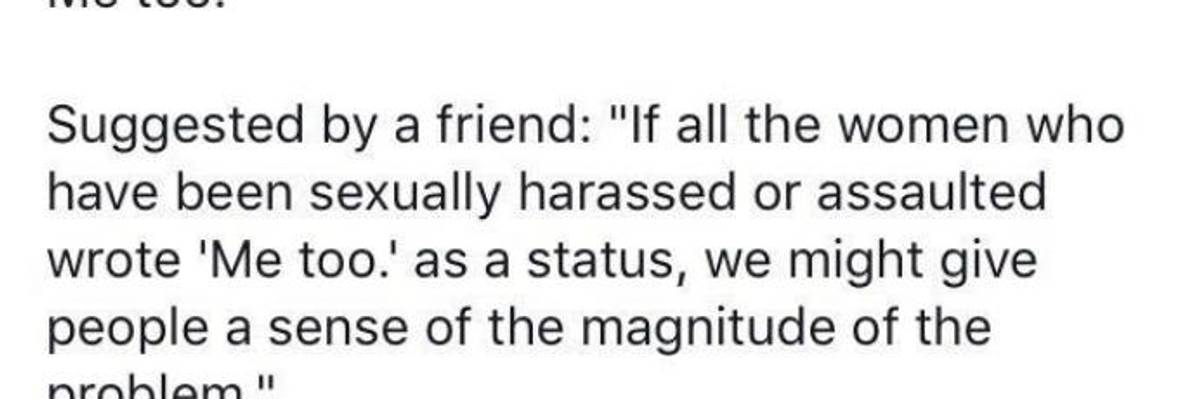
Actress Alyssa Milano posted this explanation of the "Me too" campaign to her Twitter profile on Sunday, Oct. 15. (Photo: @Alyssa_Milano/Twitter)
Sexual Assault Survivors Break Collective Silence With Viral #MeToo Hashtag
In the wake of reports about Harvey Weinstein's alleged misconduct, victims of sexual harassment and assault are posting the two-word message
In the wake of bombshell reports revealing rampant allegations of sexual misconduct by Hollywood producer Harvey Weinstein, survivors of sexual harassment and assault have taken to social media with the #MeToo hashtag as a way to raise awareness about "the magnitude of the problem."
The campaign was popularized by actress Alyssa Milano, whose Charmed co-star Rose McGowan is one of Weinstein's accusers. McGowan's suspension from Twitter last week provoked #WomenBoycottTwitter, and subsequent promises from Twitter CEO Jack Dorsey that company leaders are focused "on making some critical decisions" and have "decided to take a more aggressive stance in our rules and how we enforce them."
Many #MeToo posts included an explanation of the campaign that Milano tweeted on Sunday: "If all the women who have been sexually harassed or assaulted wrote 'Me too.' as a status, we might give people a sense of the magnitude of the problem."
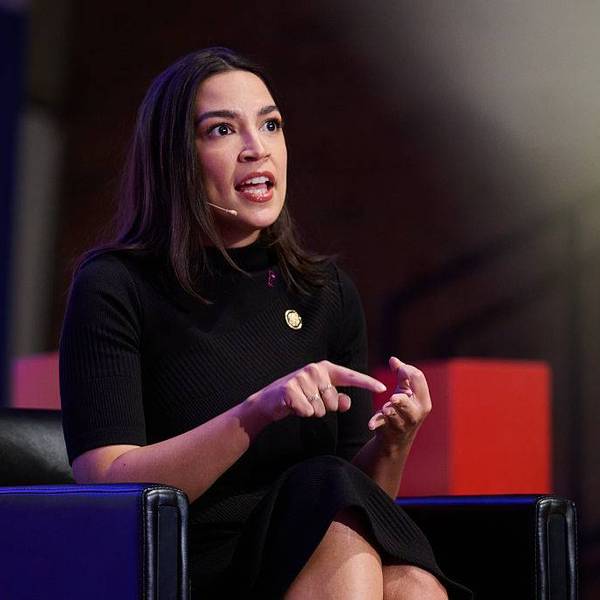
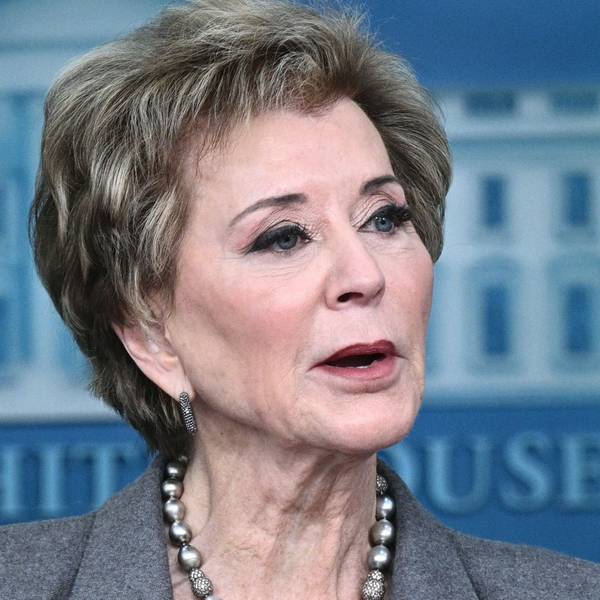
Posters included public figures such as other actresses and politicians.
Me too https://t.co/ScX67Kmmiy
-- Debra Messing (@DebraMessing) October 15, 2017
Some were quick to point out that those sharing their stories--or simply the "me too" message--on social media did not account for every survivor of sexual misconduct.
The campaign triggered expressions of solidarity, including from the Women's March account, which thanked survivors for their "bravery to speak up."
Multiple advocacy groups posted messages of support, and shared relevant statistics and links to resources.
It even spurred a response hashtag: #IWill, a public declaration that the user will participate in actions to eradicate sexual harassment and assault.
We are at a crossroads
This country and this world are at a monumental crossroads. In a few short weeks, US voters will have an opportunity to beat back the forces of fascism and confront the billionaires who are rigging the economy, our media system, and our democracy, making it increasingly impossible for ordinary people to get by. We’re not just talking about the election. We’re talking about what must be done once these fascist elements are vanquished from power. We need a bolder set of solutions than what either major party has so far been willing to offer and a working-class movement ready to fight like hell for it. Trump didn't emerge from nowhere. The conditions that fueled MAGA authoritarianism were created by decades of radical neoliberal economic policies and a corrupt political system dominated by corporate interests. They slashed taxes on the super-rich, promising that the benefits would trickle down. They said giveaways to the corporate titans would make life more affordable for the rest of us. It was all bullshit. And when a bitter, betrayed populace searches for someone to blame, right-wing demagogues have little trouble finding scapegoats. People know when they're being lied to, but you won't hear any of this from the corporate media. Only independent journalism—powered and funded by people who believe in building a better world—can deliver truly trustworthy daily news. Our Fall Campaign is underway, and we need your help. To power our newsroom through the rest of the year, we need to raise $125,000 by midnight on October 31. So if you share our vision, please contribute whatever you can to sustain our work. |
In the wake of bombshell reports revealing rampant allegations of sexual misconduct by Hollywood producer Harvey Weinstein, survivors of sexual harassment and assault have taken to social media with the #MeToo hashtag as a way to raise awareness about "the magnitude of the problem."
The campaign was popularized by actress Alyssa Milano, whose Charmed co-star Rose McGowan is one of Weinstein's accusers. McGowan's suspension from Twitter last week provoked #WomenBoycottTwitter, and subsequent promises from Twitter CEO Jack Dorsey that company leaders are focused "on making some critical decisions" and have "decided to take a more aggressive stance in our rules and how we enforce them."
Many #MeToo posts included an explanation of the campaign that Milano tweeted on Sunday: "If all the women who have been sexually harassed or assaulted wrote 'Me too.' as a status, we might give people a sense of the magnitude of the problem."
Posters included public figures such as other actresses and politicians.
Me too https://t.co/ScX67Kmmiy
-- Debra Messing (@DebraMessing) October 15, 2017
Some were quick to point out that those sharing their stories--or simply the "me too" message--on social media did not account for every survivor of sexual misconduct.
The campaign triggered expressions of solidarity, including from the Women's March account, which thanked survivors for their "bravery to speak up."
Multiple advocacy groups posted messages of support, and shared relevant statistics and links to resources.
It even spurred a response hashtag: #IWill, a public declaration that the user will participate in actions to eradicate sexual harassment and assault.
In the wake of bombshell reports revealing rampant allegations of sexual misconduct by Hollywood producer Harvey Weinstein, survivors of sexual harassment and assault have taken to social media with the #MeToo hashtag as a way to raise awareness about "the magnitude of the problem."
The campaign was popularized by actress Alyssa Milano, whose Charmed co-star Rose McGowan is one of Weinstein's accusers. McGowan's suspension from Twitter last week provoked #WomenBoycottTwitter, and subsequent promises from Twitter CEO Jack Dorsey that company leaders are focused "on making some critical decisions" and have "decided to take a more aggressive stance in our rules and how we enforce them."
Many #MeToo posts included an explanation of the campaign that Milano tweeted on Sunday: "If all the women who have been sexually harassed or assaulted wrote 'Me too.' as a status, we might give people a sense of the magnitude of the problem."
Posters included public figures such as other actresses and politicians.
Me too https://t.co/ScX67Kmmiy
-- Debra Messing (@DebraMessing) October 15, 2017
Some were quick to point out that those sharing their stories--or simply the "me too" message--on social media did not account for every survivor of sexual misconduct.
The campaign triggered expressions of solidarity, including from the Women's March account, which thanked survivors for their "bravery to speak up."
Multiple advocacy groups posted messages of support, and shared relevant statistics and links to resources.
It even spurred a response hashtag: #IWill, a public declaration that the user will participate in actions to eradicate sexual harassment and assault.