

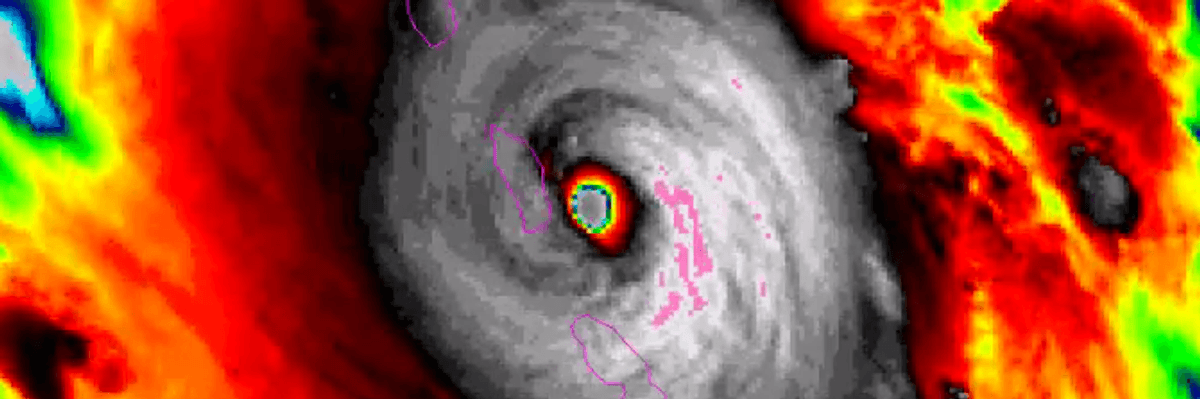
Hurricane Maria became a Category 5 storm on Monday night just before it hit the island of Dominica. (Photo: NASA/Screenshot)
'Heaven Help Those in Dominica Tonight': Category 5 Maria Makes Landfall
With sustained winds of over 160mph, monster storm makes landfall as it carves path toward Virgin Islands, Puerto Rico, and other islands still recovering from Irma
Hurricane Maria was ugraded to a powerful Category 5 and "potentially catastrophic" storm Monday evening, with sustained winds over 160 mph, just before it slammed into the independent Caribbean island of Dominica as it carved a terrifying path similar (though not exact) to Hurricane Irma less than ten days ago.
"Hurricane conditions should be spreading across Dominica, Guadeloupe, and Martinique during the next few hours," the National Hurricane Center stated in a Monday evening update, "with tropical storm conditions already occurring over portions of the Leeward Islands. Hurricane conditions should spread through the remainder of the hurricane warning area tonight through Wednesday."
On social media, dramatic posts from Dominica's Prime Minister Roosevelt Skerrit, who said his roof was gone and that his home was flooding, spoke to the intensity of the storm and the frightening scenes as the winds and water pounded the island:
Commenting on how quickly the storm built strength from earlier in the day, meteorologist and journalist Eric Holthaus called it "one of the fastest intensifying hurricanes in history" and said, "Wow. Heaven help those in Dominica tonight."
According to the National Hurricane Center's Monday evening update, the following islands--many if not all which received blows from Irma--could be next and are now under active hurricane warning:
- Guadeloupe
- Montserrat
- St Kitts and Nevis
- US Virgin Islands
- British Virgin Islands
- Puerto Rico, Culebra and Vieques
With much of the Caribbean still recovering from Irma and the devastation that Harvey left in Houston, Texas still freshly felt by its victims there, the most punishing hurricane season in recent memory has continued to generate warnings from the climate experts and the environmental community that has been steadfast in its concerns that a hotter planet would produce increasingly more and intense storms:
An Urgent Message From Our Co-Founder
Dear Common Dreams reader, It’s been nearly 30 years since I co-founded Common Dreams with my late wife, Lina Newhouser. We had the radical notion that journalism should serve the public good, not corporate profits. It was clear to us from the outset what it would take to build such a project. No paid advertisements. No corporate sponsors. No millionaire publisher telling us what to think or do. Many people said we wouldn't last a year, but we proved those doubters wrong. Together with a tremendous team of journalists and dedicated staff, we built an independent media outlet free from the constraints of profits and corporate control. Our mission has always been simple: To inform. To inspire. To ignite change for the common good. Building Common Dreams was not easy. Our survival was never guaranteed. When you take on the most powerful forces—Wall Street greed, fossil fuel industry destruction, Big Tech lobbyists, and uber-rich oligarchs who have spent billions upon billions rigging the economy and democracy in their favor—the only bulwark you have is supporters who believe in your work. But here’s the urgent message from me today. It's never been this bad out there. And it's never been this hard to keep us going. At the very moment Common Dreams is most needed, the threats we face are intensifying. We need your support now more than ever. We don't accept corporate advertising and never will. We don't have a paywall because we don't think people should be blocked from critical news based on their ability to pay. Everything we do is funded by the donations of readers like you. When everyone does the little they can afford, we are strong. But if that support retreats or dries up, so do we. Will you donate now to make sure Common Dreams not only survives but thrives? —Craig Brown, Co-founder |
Hurricane Maria was ugraded to a powerful Category 5 and "potentially catastrophic" storm Monday evening, with sustained winds over 160 mph, just before it slammed into the independent Caribbean island of Dominica as it carved a terrifying path similar (though not exact) to Hurricane Irma less than ten days ago.
"Hurricane conditions should be spreading across Dominica, Guadeloupe, and Martinique during the next few hours," the National Hurricane Center stated in a Monday evening update, "with tropical storm conditions already occurring over portions of the Leeward Islands. Hurricane conditions should spread through the remainder of the hurricane warning area tonight through Wednesday."
On social media, dramatic posts from Dominica's Prime Minister Roosevelt Skerrit, who said his roof was gone and that his home was flooding, spoke to the intensity of the storm and the frightening scenes as the winds and water pounded the island:
Commenting on how quickly the storm built strength from earlier in the day, meteorologist and journalist Eric Holthaus called it "one of the fastest intensifying hurricanes in history" and said, "Wow. Heaven help those in Dominica tonight."
According to the National Hurricane Center's Monday evening update, the following islands--many if not all which received blows from Irma--could be next and are now under active hurricane warning:
- Guadeloupe
- Montserrat
- St Kitts and Nevis
- US Virgin Islands
- British Virgin Islands
- Puerto Rico, Culebra and Vieques
With much of the Caribbean still recovering from Irma and the devastation that Harvey left in Houston, Texas still freshly felt by its victims there, the most punishing hurricane season in recent memory has continued to generate warnings from the climate experts and the environmental community that has been steadfast in its concerns that a hotter planet would produce increasingly more and intense storms:
Hurricane Maria was ugraded to a powerful Category 5 and "potentially catastrophic" storm Monday evening, with sustained winds over 160 mph, just before it slammed into the independent Caribbean island of Dominica as it carved a terrifying path similar (though not exact) to Hurricane Irma less than ten days ago.
"Hurricane conditions should be spreading across Dominica, Guadeloupe, and Martinique during the next few hours," the National Hurricane Center stated in a Monday evening update, "with tropical storm conditions already occurring over portions of the Leeward Islands. Hurricane conditions should spread through the remainder of the hurricane warning area tonight through Wednesday."
On social media, dramatic posts from Dominica's Prime Minister Roosevelt Skerrit, who said his roof was gone and that his home was flooding, spoke to the intensity of the storm and the frightening scenes as the winds and water pounded the island:
Commenting on how quickly the storm built strength from earlier in the day, meteorologist and journalist Eric Holthaus called it "one of the fastest intensifying hurricanes in history" and said, "Wow. Heaven help those in Dominica tonight."
According to the National Hurricane Center's Monday evening update, the following islands--many if not all which received blows from Irma--could be next and are now under active hurricane warning:
- Guadeloupe
- Montserrat
- St Kitts and Nevis
- US Virgin Islands
- British Virgin Islands
- Puerto Rico, Culebra and Vieques
With much of the Caribbean still recovering from Irma and the devastation that Harvey left in Houston, Texas still freshly felt by its victims there, the most punishing hurricane season in recent memory has continued to generate warnings from the climate experts and the environmental community that has been steadfast in its concerns that a hotter planet would produce increasingly more and intense storms: