SUBSCRIBE TO OUR FREE NEWSLETTER
Daily news & progressive opinion—funded by the people, not the corporations—delivered straight to your inbox.
5
#000000
#FFFFFF
To donate by check, phone, or other method, see our More Ways to Give page.
Daily news & progressive opinion—funded by the people, not the corporations—delivered straight to your inbox.
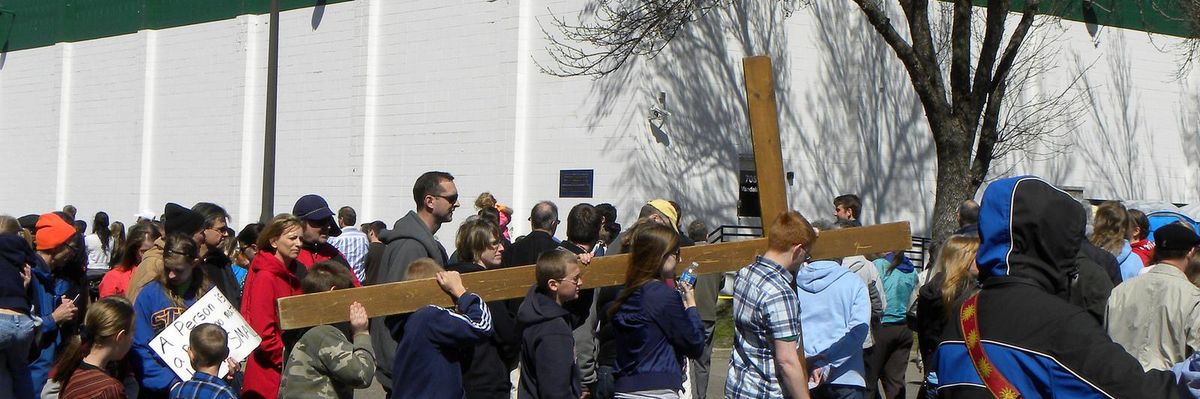
An article in a Vatican-approved publication offers harsh words for conservative American Catholics. (Photo: Fibonacci Blue/Flickr/cc)
An article written by two associates of Pope Francis in the Catholic journal La Civilta Cattolica illustrates vast disagreements between the Pope and conservative American Catholics--a rift which has been growing since Pope Francis was elected in 2013.
The journal is published in Rome and receives Vatican approval before going to press, suggesting that the Pope does not take issue with the thesis of the article, which was published in July and was the subject of an interview with one of its authors in the New York Times Wednesday: that Catholicism in the U.S. has "fallen into the hands of the religious right" with an intention to "impose its own law and logic on the political arena."
The article takes aim at Steve Bannon, one of Trump's top strategists, in particular. Bannon is called "a supporter of apocalyptic geopolitics" for his role in the Trump administration's rolling back of greenhouse gas regulations, and his promotion of anti-immigration policies and rhetoric.
But conservative Catholic voters are also subject to criticism by the piece's authors, Rev. Antonio Spadaro and Marcelo Figueroa, both confidants of the Pope. The authors accuse ultraconservative "values voters" who place abortion rights above other domestic issues, of attempting to transform the U.S. into "a theocratic type of state," and compare the worldview of conservative American Catholics and evangelical Christians to that of extremist Muslims.
The article has received a backlash by some conservatives and Catholic leaders who call it "anti-American."
But co-author Rev. Spadaro took to Twitter as well, saying his observations had been badly needed in the U.S.
The gap between Pope Francis and American conservative Catholics widened during the 2016 presidential campaign and following the election of President Donald Trump, whose policies the Pope has criticized. Pope Francis referred to Trump in 2016 as "a person who thinks only about building walls, wherever they may be, and not building bridges" and said Trump's anti-immigrant stance was "not Christian," angering Trump's Catholic supporters.
Meanwhile, though the Pope has maintained traditional Catholic stances on social issues, he has been warmly embraced by liberal American Catholics as well as many other progressives for his insistence that the Church move beyond its "obsession" with and punitive views on issues like abortion and same-sex marriage, focusing instead on being "a home for all."
In the Times, Rev. Spadaro said the piece's main point "was the pope's argument that religion in the service of politics or power is ideology," and his objection to "the manipulation of anxiety for political ends."
Dear Common Dreams reader, It’s been nearly 30 years since I co-founded Common Dreams with my late wife, Lina Newhouser. We had the radical notion that journalism should serve the public good, not corporate profits. It was clear to us from the outset what it would take to build such a project. No paid advertisements. No corporate sponsors. No millionaire publisher telling us what to think or do. Many people said we wouldn't last a year, but we proved those doubters wrong. Together with a tremendous team of journalists and dedicated staff, we built an independent media outlet free from the constraints of profits and corporate control. Our mission has always been simple: To inform. To inspire. To ignite change for the common good. Building Common Dreams was not easy. Our survival was never guaranteed. When you take on the most powerful forces—Wall Street greed, fossil fuel industry destruction, Big Tech lobbyists, and uber-rich oligarchs who have spent billions upon billions rigging the economy and democracy in their favor—the only bulwark you have is supporters who believe in your work. But here’s the urgent message from me today. It's never been this bad out there. And it's never been this hard to keep us going. At the very moment Common Dreams is most needed, the threats we face are intensifying. We need your support now more than ever. We don't accept corporate advertising and never will. We don't have a paywall because we don't think people should be blocked from critical news based on their ability to pay. Everything we do is funded by the donations of readers like you. When everyone does the little they can afford, we are strong. But if that support retreats or dries up, so do we. Will you donate now to make sure Common Dreams not only survives but thrives? —Craig Brown, Co-founder |
An article written by two associates of Pope Francis in the Catholic journal La Civilta Cattolica illustrates vast disagreements between the Pope and conservative American Catholics--a rift which has been growing since Pope Francis was elected in 2013.
The journal is published in Rome and receives Vatican approval before going to press, suggesting that the Pope does not take issue with the thesis of the article, which was published in July and was the subject of an interview with one of its authors in the New York Times Wednesday: that Catholicism in the U.S. has "fallen into the hands of the religious right" with an intention to "impose its own law and logic on the political arena."
The article takes aim at Steve Bannon, one of Trump's top strategists, in particular. Bannon is called "a supporter of apocalyptic geopolitics" for his role in the Trump administration's rolling back of greenhouse gas regulations, and his promotion of anti-immigration policies and rhetoric.
But conservative Catholic voters are also subject to criticism by the piece's authors, Rev. Antonio Spadaro and Marcelo Figueroa, both confidants of the Pope. The authors accuse ultraconservative "values voters" who place abortion rights above other domestic issues, of attempting to transform the U.S. into "a theocratic type of state," and compare the worldview of conservative American Catholics and evangelical Christians to that of extremist Muslims.
The article has received a backlash by some conservatives and Catholic leaders who call it "anti-American."
But co-author Rev. Spadaro took to Twitter as well, saying his observations had been badly needed in the U.S.
The gap between Pope Francis and American conservative Catholics widened during the 2016 presidential campaign and following the election of President Donald Trump, whose policies the Pope has criticized. Pope Francis referred to Trump in 2016 as "a person who thinks only about building walls, wherever they may be, and not building bridges" and said Trump's anti-immigrant stance was "not Christian," angering Trump's Catholic supporters.
Meanwhile, though the Pope has maintained traditional Catholic stances on social issues, he has been warmly embraced by liberal American Catholics as well as many other progressives for his insistence that the Church move beyond its "obsession" with and punitive views on issues like abortion and same-sex marriage, focusing instead on being "a home for all."
In the Times, Rev. Spadaro said the piece's main point "was the pope's argument that religion in the service of politics or power is ideology," and his objection to "the manipulation of anxiety for political ends."
An article written by two associates of Pope Francis in the Catholic journal La Civilta Cattolica illustrates vast disagreements between the Pope and conservative American Catholics--a rift which has been growing since Pope Francis was elected in 2013.
The journal is published in Rome and receives Vatican approval before going to press, suggesting that the Pope does not take issue with the thesis of the article, which was published in July and was the subject of an interview with one of its authors in the New York Times Wednesday: that Catholicism in the U.S. has "fallen into the hands of the religious right" with an intention to "impose its own law and logic on the political arena."
The article takes aim at Steve Bannon, one of Trump's top strategists, in particular. Bannon is called "a supporter of apocalyptic geopolitics" for his role in the Trump administration's rolling back of greenhouse gas regulations, and his promotion of anti-immigration policies and rhetoric.
But conservative Catholic voters are also subject to criticism by the piece's authors, Rev. Antonio Spadaro and Marcelo Figueroa, both confidants of the Pope. The authors accuse ultraconservative "values voters" who place abortion rights above other domestic issues, of attempting to transform the U.S. into "a theocratic type of state," and compare the worldview of conservative American Catholics and evangelical Christians to that of extremist Muslims.
The article has received a backlash by some conservatives and Catholic leaders who call it "anti-American."
But co-author Rev. Spadaro took to Twitter as well, saying his observations had been badly needed in the U.S.
The gap between Pope Francis and American conservative Catholics widened during the 2016 presidential campaign and following the election of President Donald Trump, whose policies the Pope has criticized. Pope Francis referred to Trump in 2016 as "a person who thinks only about building walls, wherever they may be, and not building bridges" and said Trump's anti-immigrant stance was "not Christian," angering Trump's Catholic supporters.
Meanwhile, though the Pope has maintained traditional Catholic stances on social issues, he has been warmly embraced by liberal American Catholics as well as many other progressives for his insistence that the Church move beyond its "obsession" with and punitive views on issues like abortion and same-sex marriage, focusing instead on being "a home for all."
In the Times, Rev. Spadaro said the piece's main point "was the pope's argument that religion in the service of politics or power is ideology," and his objection to "the manipulation of anxiety for political ends."