SUBSCRIBE TO OUR FREE NEWSLETTER
Daily news & progressive opinion—funded by the people, not the corporations—delivered straight to your inbox.
5
#000000
#FFFFFF
To donate by check, phone, or other method, see our More Ways to Give page.
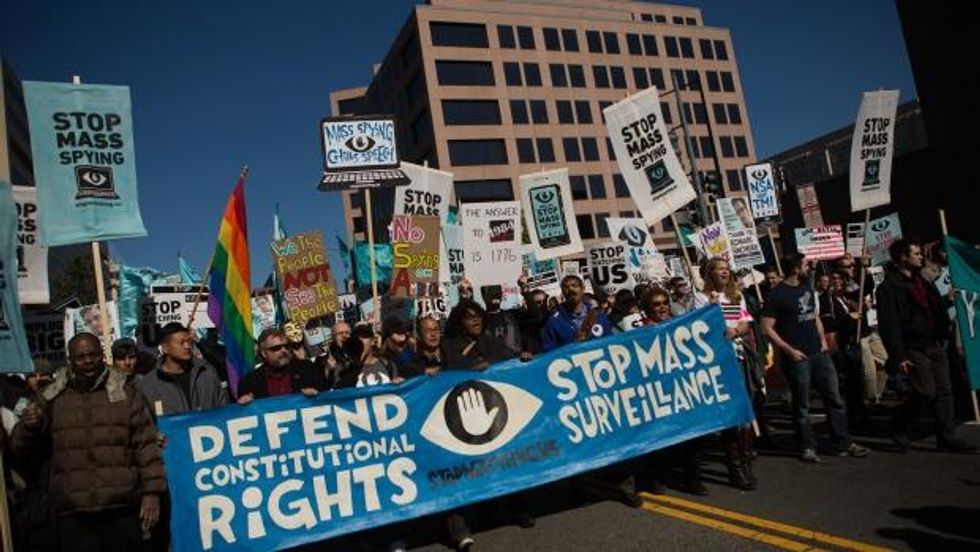
This is according to a national survey by the Pew Research Center and USA TODAY, conducted in the days immediately following Obama's speech and published Monday.
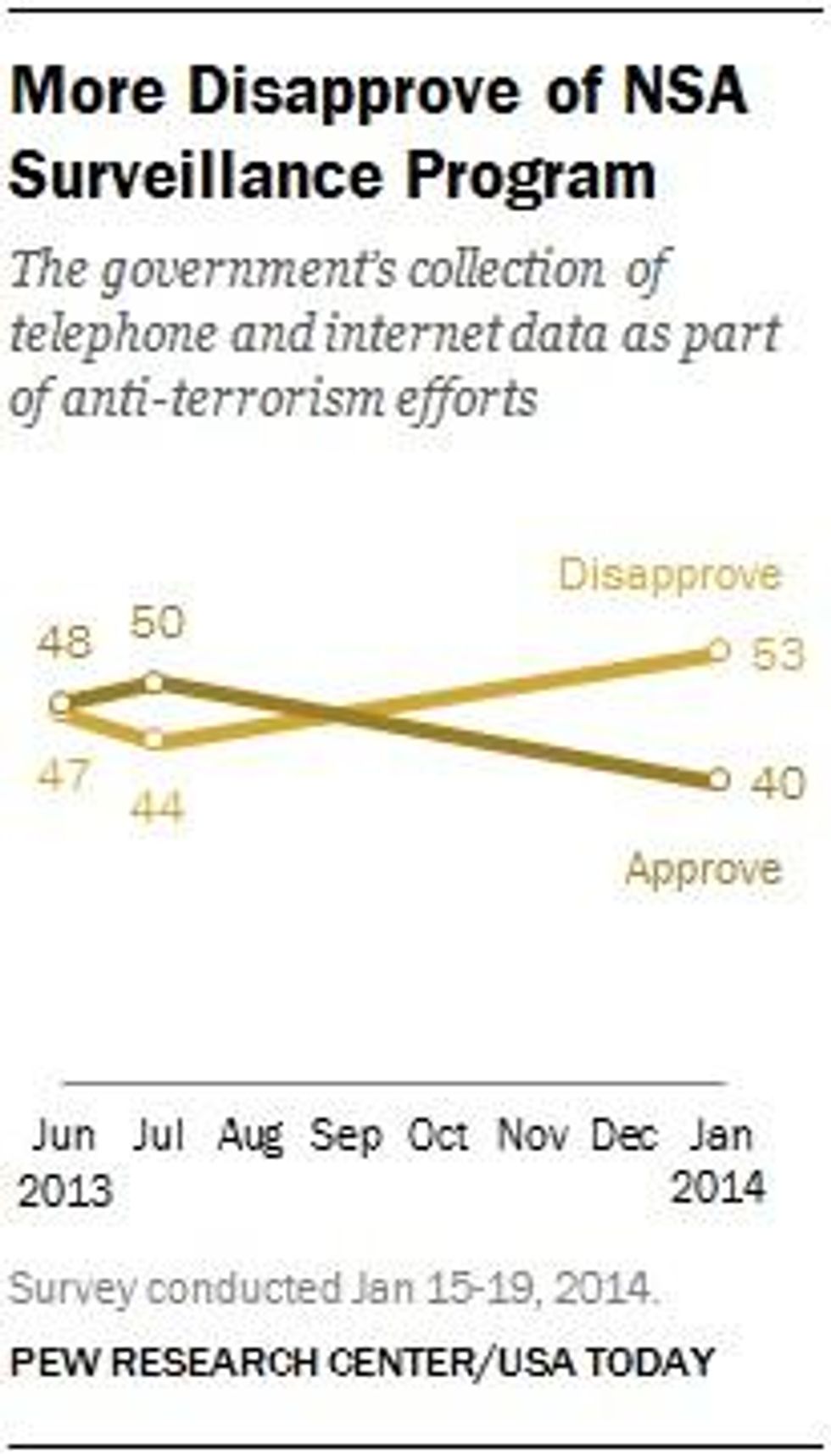
The poll, which surveyed 1,504 adults, found that 53% disapprove of the U.S. government's surveillance of telephone and internet data, while just 40% approve. This is a marked shift from July, when more than 50% said they approved and only 44% said they disapprove.
While approval rates among Democrats are slightly higher than those of Republicans, overall disapproval has increased across party lines.
The fall in support is most steep with respondents identified as African-American and Hispanic.
Almost half of those surveyed said the limits on the government's ability to collect telephone and internet data are inadequate.
Obama's much-vaunted speech on NSA reforms last Friday failed to buck this trend.
Half of those surveyed said they didn't even know about his proposed reforms, and of those who had, 73% said the proposed reforms will make "no difference" to "protections on people's privacy."
Of people aged 18-29, 57% say Snowdens revelations "served public interest" while just 35% said they caused harm. Yet, the overall public showed a near-even split on this question, with a slight majority among those who believe the revelations had a positive effect.
Meanwhile, 56% support government pursuit of a criminal case against Snowden, while 32% oppose it, with support for prosecution lowest among young respondents.
Yet, many charge that the poll shows the importance of Snowden's whistleblowing. "The poll is a very strong vindication of Edward Snowden," writes John Walker for Firedoglake. He believed the American people wouldn't approve if they knew the truth about the NSA and now that they do know they don't approve."
_____________________
This is according to a national survey by the Pew Research Center and USA TODAY, conducted in the days immediately following Obama's speech and published Monday.
The poll, which surveyed 1,504 adults, found that 53% disapprove of the U.S. government's surveillance of telephone and internet data, while just 40% approve. This is a marked shift from July, when more than 50% said they approved and only 44% said they disapprove.
While approval rates among Democrats are slightly higher than those of Republicans, overall disapproval has increased across party lines.
The fall in support is most steep with respondents identified as African-American and Hispanic.
Almost half of those surveyed said the limits on the government's ability to collect telephone and internet data are inadequate.
Obama's much-vaunted speech on NSA reforms last Friday failed to buck this trend.
Half of those surveyed said they didn't even know about his proposed reforms, and of those who had, 73% said the proposed reforms will make "no difference" to "protections on people's privacy."
Of people aged 18-29, 57% say Snowdens revelations "served public interest" while just 35% said they caused harm. Yet, the overall public showed a near-even split on this question, with a slight majority among those who believe the revelations had a positive effect.
Meanwhile, 56% support government pursuit of a criminal case against Snowden, while 32% oppose it, with support for prosecution lowest among young respondents.
Yet, many charge that the poll shows the importance of Snowden's whistleblowing. "The poll is a very strong vindication of Edward Snowden," writes John Walker for Firedoglake. He believed the American people wouldn't approve if they knew the truth about the NSA and now that they do know they don't approve."
_____________________
This is according to a national survey by the Pew Research Center and USA TODAY, conducted in the days immediately following Obama's speech and published Monday.
The poll, which surveyed 1,504 adults, found that 53% disapprove of the U.S. government's surveillance of telephone and internet data, while just 40% approve. This is a marked shift from July, when more than 50% said they approved and only 44% said they disapprove.
While approval rates among Democrats are slightly higher than those of Republicans, overall disapproval has increased across party lines.
The fall in support is most steep with respondents identified as African-American and Hispanic.
Almost half of those surveyed said the limits on the government's ability to collect telephone and internet data are inadequate.
Obama's much-vaunted speech on NSA reforms last Friday failed to buck this trend.
Half of those surveyed said they didn't even know about his proposed reforms, and of those who had, 73% said the proposed reforms will make "no difference" to "protections on people's privacy."
Of people aged 18-29, 57% say Snowdens revelations "served public interest" while just 35% said they caused harm. Yet, the overall public showed a near-even split on this question, with a slight majority among those who believe the revelations had a positive effect.
Meanwhile, 56% support government pursuit of a criminal case against Snowden, while 32% oppose it, with support for prosecution lowest among young respondents.
Yet, many charge that the poll shows the importance of Snowden's whistleblowing. "The poll is a very strong vindication of Edward Snowden," writes John Walker for Firedoglake. He believed the American people wouldn't approve if they knew the truth about the NSA and now that they do know they don't approve."
_____________________