SUBSCRIBE TO OUR FREE NEWSLETTER
Daily news & progressive opinion—funded by the people, not the corporations—delivered straight to your inbox.
5
#000000
#FFFFFF
To donate by check, phone, or other method, see our More Ways to Give page.
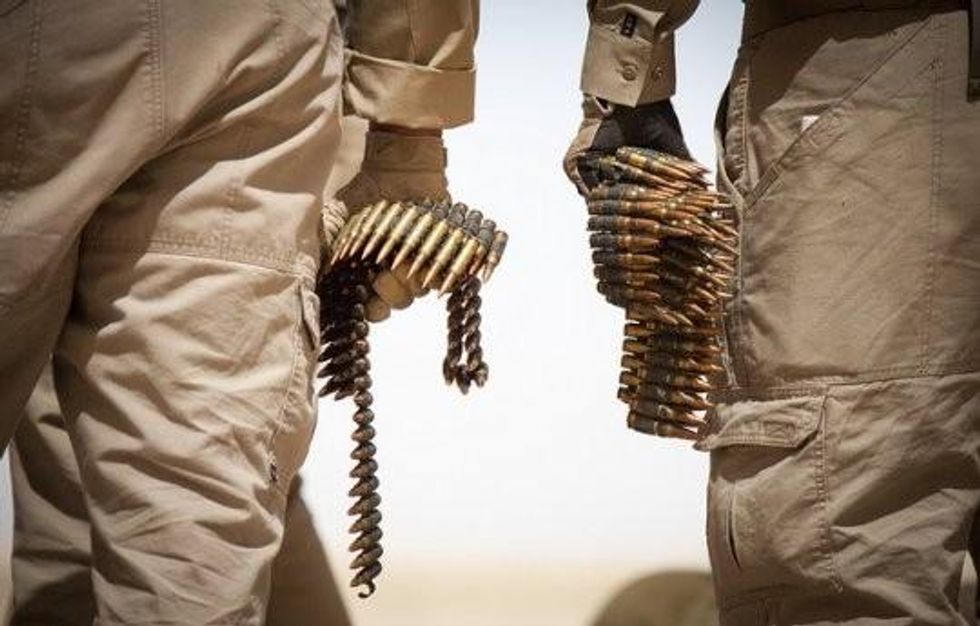
McClatchy reports on how the "U.S.-led coalition is failing to clear unexploded munitions from the Afghan bases" as it withdraws its troops, leaving grenades and shells that are killing Afghan civilians at an increasing number every month.
"The international military is supposed to be here protecting civilians and basically as a result of their presence, civilians are getting killed," charges Abigail Hartley, program manager for the U.N.'s Mine Action Service Office, and says that leaving these "explosive remnants of war" is in violation of the 1980 Convention on Certain Conventional Weapons.
The exposions often happen when civilians rush to the bases after troops leave to search for scrap metal, or when tending livestock.
McClatchy reports:
Broadly, in 2012 there were 363 civilian casualties in Afghanistan - or about 30 per month - that were attributed primarily to unexploded ordnance, though in some cases also to mines, [Mohammad Sediq Rashid, director of the Mine Action Coordination Centre of Afghanistan] said. For the first half of this year, there have been 241 such casualties, an increase of about 10 per month, he said.
The U.N. mine office has been unsuccessful in trying to get details from the international occupying forces, who do "little more than dodge blame and offer excuses when confronted with the U.N. findings."
_______________________
McClatchy reports on how the "U.S.-led coalition is failing to clear unexploded munitions from the Afghan bases" as it withdraws its troops, leaving grenades and shells that are killing Afghan civilians at an increasing number every month.
"The international military is supposed to be here protecting civilians and basically as a result of their presence, civilians are getting killed," charges Abigail Hartley, program manager for the U.N.'s Mine Action Service Office, and says that leaving these "explosive remnants of war" is in violation of the 1980 Convention on Certain Conventional Weapons.
The exposions often happen when civilians rush to the bases after troops leave to search for scrap metal, or when tending livestock.
McClatchy reports:
Broadly, in 2012 there were 363 civilian casualties in Afghanistan - or about 30 per month - that were attributed primarily to unexploded ordnance, though in some cases also to mines, [Mohammad Sediq Rashid, director of the Mine Action Coordination Centre of Afghanistan] said. For the first half of this year, there have been 241 such casualties, an increase of about 10 per month, he said.
The U.N. mine office has been unsuccessful in trying to get details from the international occupying forces, who do "little more than dodge blame and offer excuses when confronted with the U.N. findings."
_______________________
McClatchy reports on how the "U.S.-led coalition is failing to clear unexploded munitions from the Afghan bases" as it withdraws its troops, leaving grenades and shells that are killing Afghan civilians at an increasing number every month.
"The international military is supposed to be here protecting civilians and basically as a result of their presence, civilians are getting killed," charges Abigail Hartley, program manager for the U.N.'s Mine Action Service Office, and says that leaving these "explosive remnants of war" is in violation of the 1980 Convention on Certain Conventional Weapons.
The exposions often happen when civilians rush to the bases after troops leave to search for scrap metal, or when tending livestock.
McClatchy reports:
Broadly, in 2012 there were 363 civilian casualties in Afghanistan - or about 30 per month - that were attributed primarily to unexploded ordnance, though in some cases also to mines, [Mohammad Sediq Rashid, director of the Mine Action Coordination Centre of Afghanistan] said. For the first half of this year, there have been 241 such casualties, an increase of about 10 per month, he said.
The U.N. mine office has been unsuccessful in trying to get details from the international occupying forces, who do "little more than dodge blame and offer excuses when confronted with the U.N. findings."
_______________________