




SUBSCRIBE TO OUR FREE NEWSLETTER
Daily news & progressive opinion—funded by the people, not the corporations—delivered straight to your inbox.
5
#000000
#FFFFFF
To donate by check, phone, or other method, see our More Ways to Give page.
Daily news & progressive opinion—funded by the people, not the corporations—delivered straight to your inbox.
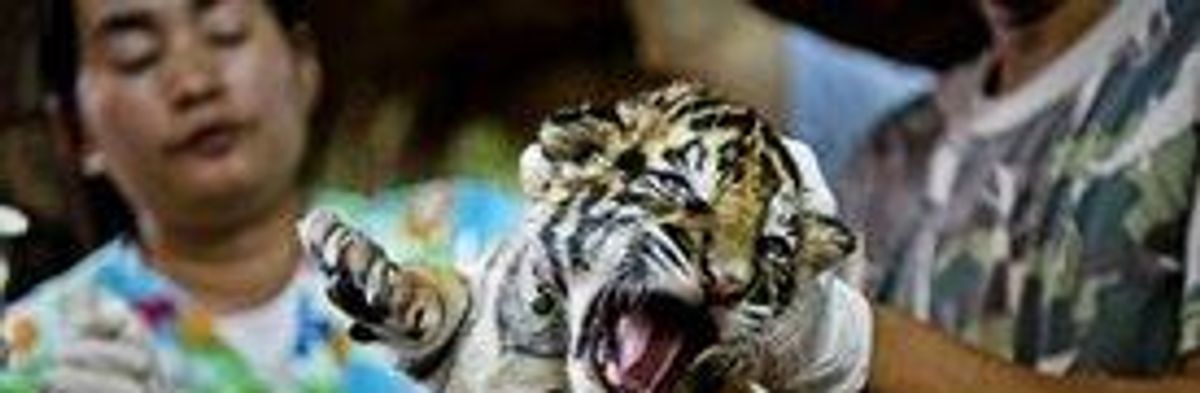
One of 16 tiger cubs seized from smugglers as they attempted to bring the animals across the border from Thailand into Laos. (Photo courtesy World Wildlife Fund)
Efforts to stop what has grown into a $19 billion trade in illegal ivory, rhino horn and other endangered species have failed, according to a report from the World Wildlife Fund to the United Nations, with record levels of poaching occurring in 2011 and a number of endangered species being slaughtered "on a massive scale."
"We are losing these populations in front of our eyes," WWF US President and CEO Carter Roberts said in an interview with The Guardian.
According to the study, "Fighting Illicit Wildlife Trafficking: A Consultation with Governments," conducted by the multinational group Dalberg Global Development Advisors, 2011 was the highest year on record for elephant poaching and between 2007 and 2011, the numbers of rhinos poached in South Africa increased by 3,000 percent.
The WWF reports:
The world is dealing with an unprecedented spike in illegal wildlife trade, threatening to overturn decades of conservation gains. Ivory estimated to weigh more than 23 metric tons--a figure that represents 2,500 elephants--was seized in the 13 largest seizures of illegal ivory in 2011. Poaching threatens the last of our wild tigers that number as few as 3,200.
[...]
In February 2012, hundreds of elephants were slaughtered in a single incident in Bouba N'Djida National Park, Cameroon, by poaching gangs on horseback armed with military-issue machine guns. The gangs are believed to have originated from Chad and Sudan and to have entered Cameroon through neighboring countries.5 Similar mass elephant poaching events have since occurred throughout Central Africa.
While most governments see the illegal trade as simply an environmental problem, Roberts warned UN representatives on Wednesday that "illicit wildlife trafficking compromises the security of countries. Much of the trade in illegal wildlife products is run by criminal groups with broad international reach, and the profits can be used to finance civil conflicts and terrorist-related activities. Illicit wildlife trafficking is also linked to other forms of illegal trafficking and money-laundering."
The Guardian reports:
Within the past year alone, organized crime syndicates armed with military-issue machine guns have slaughtered hundreds of elephants at a time in places like Cameroon's Bouba Ndjida national park, the report said. WWF says the wildlife trade appears to fund terrorist cells in unstable African countries - threatening national security - and that the industry often uses the same networks and routes as other illegal trades, such as drug trafficking.
[...]
The explosion of the trade - and the involvement of organized crime and violent rebel groups - this year captured the attention of the Pentagon and the state department. The secretary of state, Hillary Clinton, last month upgraded trafficking from a conservation issue into a national security threat. Wildlife trafficking now threatened government control and national borders, she said.
"It is one thing to be worried about the traditional poachers who come in and kill and take a few animals, a few tusks, a few horns, or other animal parts," The Guardian quotes Clinton as saying. "It's something else when you've got helicopters, night vision goggles, automatic weapons, which pose a threat to human life as well as wildlife."
Robert Hormats, Undersecretary for Economic Growth, Energy and the Environment at the US Department of State, said:
"Drug and human traffic are getting a lot more attention than illicit wildlife trafficking. And just as we need to intensify our efforts to combat drug trade and human trafficking, we also need to intensify our efforts to combat illicit wildlife trafficking...They all need to be addressed through bold and consistent actions by the international community."
One tool in that fight may be aerial drones: Last week, Google awarded WWF a $5 million grant to purchase the drones to track poachers and endangered wildlife.
The WWF urges governments to address the problem by, among other efforts, identifying and prosecuting illegal wildlife traders as harshly as they do those charged with other forms of illegal trafficking, corruption and money laundering; and collaborating to change incentives "to consume endangered species."
The World Wildlife Fund offers these videos:
_____________________
Donald Trump’s attacks on democracy, justice, and a free press are escalating — putting everything we stand for at risk. We believe a better world is possible, but we can’t get there without your support. Common Dreams stands apart. We answer only to you — our readers, activists, and changemakers — not to billionaires or corporations. Our independence allows us to cover the vital stories that others won’t, spotlighting movements for peace, equality, and human rights. Right now, our work faces unprecedented challenges. Misinformation is spreading, journalists are under attack, and financial pressures are mounting. As a reader-supported, nonprofit newsroom, your support is crucial to keep this journalism alive. Whatever you can give — $10, $25, or $100 — helps us stay strong and responsive when the world needs us most. Together, we’ll continue to build the independent, courageous journalism our movement relies on. Thank you for being part of this community. |
Efforts to stop what has grown into a $19 billion trade in illegal ivory, rhino horn and other endangered species have failed, according to a report from the World Wildlife Fund to the United Nations, with record levels of poaching occurring in 2011 and a number of endangered species being slaughtered "on a massive scale."
"We are losing these populations in front of our eyes," WWF US President and CEO Carter Roberts said in an interview with The Guardian.
According to the study, "Fighting Illicit Wildlife Trafficking: A Consultation with Governments," conducted by the multinational group Dalberg Global Development Advisors, 2011 was the highest year on record for elephant poaching and between 2007 and 2011, the numbers of rhinos poached in South Africa increased by 3,000 percent.
The WWF reports:
The world is dealing with an unprecedented spike in illegal wildlife trade, threatening to overturn decades of conservation gains. Ivory estimated to weigh more than 23 metric tons--a figure that represents 2,500 elephants--was seized in the 13 largest seizures of illegal ivory in 2011. Poaching threatens the last of our wild tigers that number as few as 3,200.
[...]
In February 2012, hundreds of elephants were slaughtered in a single incident in Bouba N'Djida National Park, Cameroon, by poaching gangs on horseback armed with military-issue machine guns. The gangs are believed to have originated from Chad and Sudan and to have entered Cameroon through neighboring countries.5 Similar mass elephant poaching events have since occurred throughout Central Africa.
While most governments see the illegal trade as simply an environmental problem, Roberts warned UN representatives on Wednesday that "illicit wildlife trafficking compromises the security of countries. Much of the trade in illegal wildlife products is run by criminal groups with broad international reach, and the profits can be used to finance civil conflicts and terrorist-related activities. Illicit wildlife trafficking is also linked to other forms of illegal trafficking and money-laundering."
The Guardian reports:
Within the past year alone, organized crime syndicates armed with military-issue machine guns have slaughtered hundreds of elephants at a time in places like Cameroon's Bouba Ndjida national park, the report said. WWF says the wildlife trade appears to fund terrorist cells in unstable African countries - threatening national security - and that the industry often uses the same networks and routes as other illegal trades, such as drug trafficking.
[...]
The explosion of the trade - and the involvement of organized crime and violent rebel groups - this year captured the attention of the Pentagon and the state department. The secretary of state, Hillary Clinton, last month upgraded trafficking from a conservation issue into a national security threat. Wildlife trafficking now threatened government control and national borders, she said.
"It is one thing to be worried about the traditional poachers who come in and kill and take a few animals, a few tusks, a few horns, or other animal parts," The Guardian quotes Clinton as saying. "It's something else when you've got helicopters, night vision goggles, automatic weapons, which pose a threat to human life as well as wildlife."
Robert Hormats, Undersecretary for Economic Growth, Energy and the Environment at the US Department of State, said:
"Drug and human traffic are getting a lot more attention than illicit wildlife trafficking. And just as we need to intensify our efforts to combat drug trade and human trafficking, we also need to intensify our efforts to combat illicit wildlife trafficking...They all need to be addressed through bold and consistent actions by the international community."
One tool in that fight may be aerial drones: Last week, Google awarded WWF a $5 million grant to purchase the drones to track poachers and endangered wildlife.
The WWF urges governments to address the problem by, among other efforts, identifying and prosecuting illegal wildlife traders as harshly as they do those charged with other forms of illegal trafficking, corruption and money laundering; and collaborating to change incentives "to consume endangered species."
The World Wildlife Fund offers these videos:
_____________________
Efforts to stop what has grown into a $19 billion trade in illegal ivory, rhino horn and other endangered species have failed, according to a report from the World Wildlife Fund to the United Nations, with record levels of poaching occurring in 2011 and a number of endangered species being slaughtered "on a massive scale."
"We are losing these populations in front of our eyes," WWF US President and CEO Carter Roberts said in an interview with The Guardian.
According to the study, "Fighting Illicit Wildlife Trafficking: A Consultation with Governments," conducted by the multinational group Dalberg Global Development Advisors, 2011 was the highest year on record for elephant poaching and between 2007 and 2011, the numbers of rhinos poached in South Africa increased by 3,000 percent.
The WWF reports:
The world is dealing with an unprecedented spike in illegal wildlife trade, threatening to overturn decades of conservation gains. Ivory estimated to weigh more than 23 metric tons--a figure that represents 2,500 elephants--was seized in the 13 largest seizures of illegal ivory in 2011. Poaching threatens the last of our wild tigers that number as few as 3,200.
[...]
In February 2012, hundreds of elephants were slaughtered in a single incident in Bouba N'Djida National Park, Cameroon, by poaching gangs on horseback armed with military-issue machine guns. The gangs are believed to have originated from Chad and Sudan and to have entered Cameroon through neighboring countries.5 Similar mass elephant poaching events have since occurred throughout Central Africa.
While most governments see the illegal trade as simply an environmental problem, Roberts warned UN representatives on Wednesday that "illicit wildlife trafficking compromises the security of countries. Much of the trade in illegal wildlife products is run by criminal groups with broad international reach, and the profits can be used to finance civil conflicts and terrorist-related activities. Illicit wildlife trafficking is also linked to other forms of illegal trafficking and money-laundering."
The Guardian reports:
Within the past year alone, organized crime syndicates armed with military-issue machine guns have slaughtered hundreds of elephants at a time in places like Cameroon's Bouba Ndjida national park, the report said. WWF says the wildlife trade appears to fund terrorist cells in unstable African countries - threatening national security - and that the industry often uses the same networks and routes as other illegal trades, such as drug trafficking.
[...]
The explosion of the trade - and the involvement of organized crime and violent rebel groups - this year captured the attention of the Pentagon and the state department. The secretary of state, Hillary Clinton, last month upgraded trafficking from a conservation issue into a national security threat. Wildlife trafficking now threatened government control and national borders, she said.
"It is one thing to be worried about the traditional poachers who come in and kill and take a few animals, a few tusks, a few horns, or other animal parts," The Guardian quotes Clinton as saying. "It's something else when you've got helicopters, night vision goggles, automatic weapons, which pose a threat to human life as well as wildlife."
Robert Hormats, Undersecretary for Economic Growth, Energy and the Environment at the US Department of State, said:
"Drug and human traffic are getting a lot more attention than illicit wildlife trafficking. And just as we need to intensify our efforts to combat drug trade and human trafficking, we also need to intensify our efforts to combat illicit wildlife trafficking...They all need to be addressed through bold and consistent actions by the international community."
One tool in that fight may be aerial drones: Last week, Google awarded WWF a $5 million grant to purchase the drones to track poachers and endangered wildlife.
The WWF urges governments to address the problem by, among other efforts, identifying and prosecuting illegal wildlife traders as harshly as they do those charged with other forms of illegal trafficking, corruption and money laundering; and collaborating to change incentives "to consume endangered species."
The World Wildlife Fund offers these videos:
_____________________