SUBSCRIBE TO OUR FREE NEWSLETTER
Daily news & progressive opinion—funded by the people, not the corporations—delivered straight to your inbox.
5
#000000
#FFFFFF
To donate by check, phone, or other method, see our More Ways to Give page.

Urban farmers markets across the US have become increasingly popular over the past few years and are now surging and expanding at unseen levels, according the the US Department of Agriculture (USDA). The USDA will announce Friday that the number of direct-sales markets has increased 9.6 per cent over the past year.
"Farmers markets are a critical ingredient to our nation's food system," USDA Deputy Secretary Kathleen Merrigan told the Associated Press. "These outlets provide benefits not only to the farmers looking for important income opportunities, but also to the communities looking for fresh, healthy foods."
After 18 years of steady growth, the number of farmers markets across the country now registered with the USDA is up to 7,864 -- compared to the 1,744 registered in 1994. California and New York currently have the greatest amount of farmers markets per state.
The USDA recently made markets more accessible to low income families by outfitting many markets with the ability to accept payments from the Supplemental Nutrition Assistance Program, which have allowed markets to reach broader communities with sustainable foods.
The mid-Atlantic, Northeast and Southeast saw the biggest percentage growth in markets, reporting 15.8, 14.4 and 13.1 per cent increases.
The USDA currently provides an online searchable database of farmers markets across the country with links to market websites: https://search.ams.usda.gov/farmersmarkets/
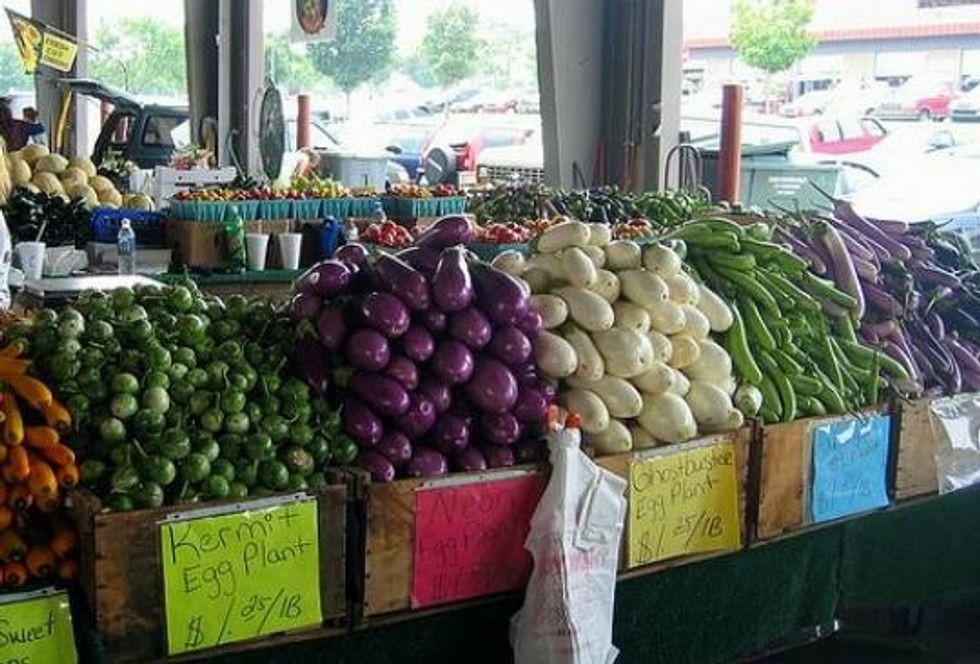
Urban farmers markets across the US have become increasingly popular over the past few years and are now surging and expanding at unseen levels, according the the US Department of Agriculture (USDA). The USDA will announce Friday that the number of direct-sales markets has increased 9.6 per cent over the past year.
"Farmers markets are a critical ingredient to our nation's food system," USDA Deputy Secretary Kathleen Merrigan told the Associated Press. "These outlets provide benefits not only to the farmers looking for important income opportunities, but also to the communities looking for fresh, healthy foods."
After 18 years of steady growth, the number of farmers markets across the country now registered with the USDA is up to 7,864 -- compared to the 1,744 registered in 1994. California and New York currently have the greatest amount of farmers markets per state.
The USDA recently made markets more accessible to low income families by outfitting many markets with the ability to accept payments from the Supplemental Nutrition Assistance Program, which have allowed markets to reach broader communities with sustainable foods.
The mid-Atlantic, Northeast and Southeast saw the biggest percentage growth in markets, reporting 15.8, 14.4 and 13.1 per cent increases.
The USDA currently provides an online searchable database of farmers markets across the country with links to market websites: https://search.ams.usda.gov/farmersmarkets/
Urban farmers markets across the US have become increasingly popular over the past few years and are now surging and expanding at unseen levels, according the the US Department of Agriculture (USDA). The USDA will announce Friday that the number of direct-sales markets has increased 9.6 per cent over the past year.
"Farmers markets are a critical ingredient to our nation's food system," USDA Deputy Secretary Kathleen Merrigan told the Associated Press. "These outlets provide benefits not only to the farmers looking for important income opportunities, but also to the communities looking for fresh, healthy foods."
After 18 years of steady growth, the number of farmers markets across the country now registered with the USDA is up to 7,864 -- compared to the 1,744 registered in 1994. California and New York currently have the greatest amount of farmers markets per state.
The USDA recently made markets more accessible to low income families by outfitting many markets with the ability to accept payments from the Supplemental Nutrition Assistance Program, which have allowed markets to reach broader communities with sustainable foods.
The mid-Atlantic, Northeast and Southeast saw the biggest percentage growth in markets, reporting 15.8, 14.4 and 13.1 per cent increases.
The USDA currently provides an online searchable database of farmers markets across the country with links to market websites: https://search.ams.usda.gov/farmersmarkets/