To donate by check, phone, or other method, see our More Ways to Give page.

×
  • Home
  • Politics
  • Climate
  • Economy
  • Rights & Justice
  • War & Peace
  • Breaking News
  • Opinion
  • News
  • Newswire
  • Further
  • Planned Parenthood Action Fund
  • Trade Justice Education Fund
  • Profile Organization Test
  • ProsperUS
  • Repairers of the Breach
  • Fix Our Senate
  • ACLU Florida
  • Alliance for Retired Americans
  • Green New Deal Network
  • Concerted Action
  • Costs of War
  • Fossil Free Media
  • Center for Democratic and Environmental Rights
  • Independent Jewish Voices Canada
  • Cascadia Wildlands
  • Congressman Jamaal Bowman
  • Environmental Defense
  • National Coalition for the Homeless
  • U.S. Campaign to Ban Landmines
  • Riverkeeper
  • Free Gaza Movement
  • Friends of the Earth Europe
  • Bulletin of the Atomic Scientists
  • Basel Action Network
  • Healthy California Now
  • Groundwork Collaborative
  • One Fair Wage
  • Progressive International
  • Data for Progress
  • Congressman Ro Khanna
  • Fight Corporate Monopolies
  • Mijente
  • Congresswoman Pramila Jayapal
  • Repair Our Democracy
  • Oxfam America
  • Accountable.Senate
  • Farm Action
  • The Sentencing Project
  • Hunger Free America
  • Fridays for Future
  • Family Farm Action
  • National Family Farm Coalition
  • Protect the Results
  • AFSCME
  • Color Of Change PAC
  • MPower Change
  • Western Watersheds Project
  • WildEarth Guardians
  • The Elders
  • Gwich'in Steering Committee
  • Stop the Money Pipeline
  • United Nations Human Rights - Special Procedures
  • Quaker United Nations Office (QUNO)
  • Communications Workers of America
  • The Endangered Species Coalition
  • Center for Climate Integrity
  • Climate Power
  • Lower Drug Prices Now
  • NORML
  • National Education Association (NEA)
  • Democracy Initiative
  • Small Business for Paid Leave
  • Campaign Legal Center
  • Muslim Advocates
  • Congresswoman Ilhan Omar
  • Accountable.US
  • Climate Mobilization
  • GLAD
  • Out & Equal
  • American Federation of State, County and Municipal Employees
  • The Sunrise Project
  • American Economic Liberties Project
  • Poor People's Campaign
  • Bend the Arc
  • The Revolving Door Project
  • Jewish Voice for Peace Action
  • Congresswoman Alexandria Ocasio-Cortez
  • TIME'S UP Now
  • Oil Change U.S.
  • Vote Climate U.S. PAC
  • Community Change Action
  • Democracy 21
  • Environmental Justice Foundation
  • Center for Popular Democracy Action
  • Climate Justice Alliance
  • Free Press Action
  • International Rivers
  • JVP Action
  • Open Markets Institute
  • Center for Popular Democracy
  • Stand Up America
  • Demand Justice
  • By the People
  • Stand.earth
  • The Sanders Institute
  • Tax March
  • Friends of the Earth Scotland
  • Justice Democrats
  • Sunrise Movement
  • Western Values Project
  • Good Jobs First
  • Climate Works for All
  • Democratic Socialists of America
  • Freedom From Facebook & Google
  • National Center for Transgender Equality
  • As You Sow
  • Rootstrikers
  • Every Voice
  • Direct Action Everywhere
  • Global Witness
  • Earthworks
  • National Abortion Federation
  • Representative Keith Ellison
  • Transgender Law Center (TLC)
  • Sea Shepherd
  • American Promise
  • Americans For Tax Fairness Action Fund
  • Biofuelwatch
  • Grassroots International
  • End Rape On Campus (EROC)
  • Climate Justice Programme
  • Stop the Wall
  • Organization for Competitive Markets
  • Balestra Media
  • The LGBT Network
  • Pacifica Foundation
  • Compassion in World Farming
  • UNHCR
  • Community Alliance for Global Justice
  • Elders Rising
  • Moms Demand Action For Gun Sense in America
  • The Right Livelihood Award
  • Women's Earth & Climate Action Network (WECAN)
  • The International Rescue Committee
  • Women Cross DMZ
  • Acadia Center
  • American Sustainable Business Council (ASBC)
  • The New York Immigration Coalition
  • GAIA
  • The Culinary Union
  • The American Immigration Council
  • Citizens Against Monopoly
  • Our Revolution
  • United We Dream
  • National Women's Law Center
  • SumofUs
  • Global Zero
  • The Immigrant Legal Resource Center (ILRC)
  • NAACP Legal Defense Fund
  • Network Lobby
  • NIAC Action
  • Asian Americans Advancing Justice
  • Freedom of the Press Foundation
  • Progressive Congress Action Fund
  • The Main Street Alliance
  • Millions Marching For Medicare For All
  • The World Health Organization
  • Senator Elizabeth Warren
  • Rep. Barbara Lee
  • John Conyers, Jr., Congressman
  • The Commonwealth Fund
  • Social Security Works
  • Mercy for Animals
  • American Federation of Teachers
  • Nuclear Age Peace Foundation
  • Climate Disobedience Center
  • Open Media
  • Community Environmental Legal Defense Fund
  • Campaign for Nuclear Disarmament
  • Bold Alliance
  • The Greenlining Institute
  • Physicians for Reproductive Health
  • Americans for Tax Fairness
  • Climate Action Tracker
  • American Federation of Government Employees
  • Patriotic Millionaires
  • Congresswoman Barbara Lee
  • Progressive Change Campaign Committee
  • Indivisible
  • Stop the War Coalition
  • Friends of the Earth Action
  • Earthrights International
  • Free Speech for People
  • National Employment Law Project
  • Open Debate Coalition
  • Navdanya International
  • Shut It Down - Climate Direct Action
  • Grassroots Global Justice Alliance
  • SOA Watch
  • Green Party of the US
  • Live Share Grow
  • Advancement Project
  • Chicago Teachers Union
  • Indigenous Environmental Network
  • Financial Accountability and Corporate Transparency (FACT) Coalition
  • Coalition to Stop Gun Violence
  • The Leadership Conference on Civil and Human Rights
  • Stop Mass Incarceration Network - Chicago
  • International Campaign to Abolish Nuclear Weapons (ICAN)
  • Progress Michigan
  • 350 Action
  • Climate Action Network International
  • Climate Tracker
  • Regeneration International
  • Ecojustice
  • Together for Global Justice (CIDSE)
  • Carbon Underground
  • Fight for $15
  • sHELLNO
  • Pembina Institute
  • Global Justice Now
  • La Via Campesina
  • Grassroots Leadership
  • New York Civil Liberties Union
  • Privacy International
  • National Iranian American Council (NIAC)
  • Restaurant Opportunities Centers United
  • U.S. Right to Know
  • Share the World's Resources
  • National Latina Institute for Reproductive Health
  • Don't Shoot Coalition
  • Environmental Action
  • Fight for the Future
  • Oceana
  • UltraViolet
  • Huu-ay-aht First Nations
  • Latino Advocacy
  • Western Environmental Law Center
  • Rolling Jubilee
  • Coalition for Peace Action
  • Rodale Institute
  • Food Research and Action Center
  • Reject and Protect
  • The Upstate Coalition to Ground the Drones and End the Wars
  • Center for Reproductive Rights
  • People's Action
  • Jewish Voice for Peace
  • Iraq Veterans Against the War
  • US Robin Hood Tax Campaign
  • Chesapeake Climate Action Network
  • Council of Canadians
  • Haiti: Make Births Safe
  • Center for Corporate Policy
  • Our Children's Trust
  • The Partnership for Civil Justice Fund
  • Friends of the Earth International
    A better world is possible.

    A better world is possible.

    We vow—with your help—to keep fighting like hell for it.

    Our journalists are working overtime to cover the onslaught of horrors and the growing resistance—fighting for peace, democracy, and an economy that serves the working class, not the billionaires.

    We can only do this with your support. We refuse corporate ads and keep our site free for everyone because access to critical news should never depend on ability to pay. That means our survival depends on readers like you. Please donate today and help us reach our goal of raising $125,000 by August 31.

    True

    A better world is possible.

    Our journalists are working overtime to cover the onslaught of horrors and the growing resistance—fighting for peace, democracy, and an economy that serves the working class, not the billionaires.

    We can only do this with your support. We refuse corporate ads and keep our site free for everyone because access to critical news should never depend on ability to pay. That means our survival depends on readers like you. Please donate today and help us reach our goal of raising $125,000 by August 31.

    Common Dreams. To inform. To inspire. To ignite change for the common good.
    Common Dreams Globe
    LATEST NEWSOPINIONCLIMATEECONOMY POLITICS RIGHTS & JUSTICEWAR & PEACE
    NEWSLETTER SIGNUP
    LATEST NEWS
    OPINION
    NEWSLETTER SIGNUP
    Common DreamsTo inform. To inspire. To ignite change for the common good.

    saddam hussein

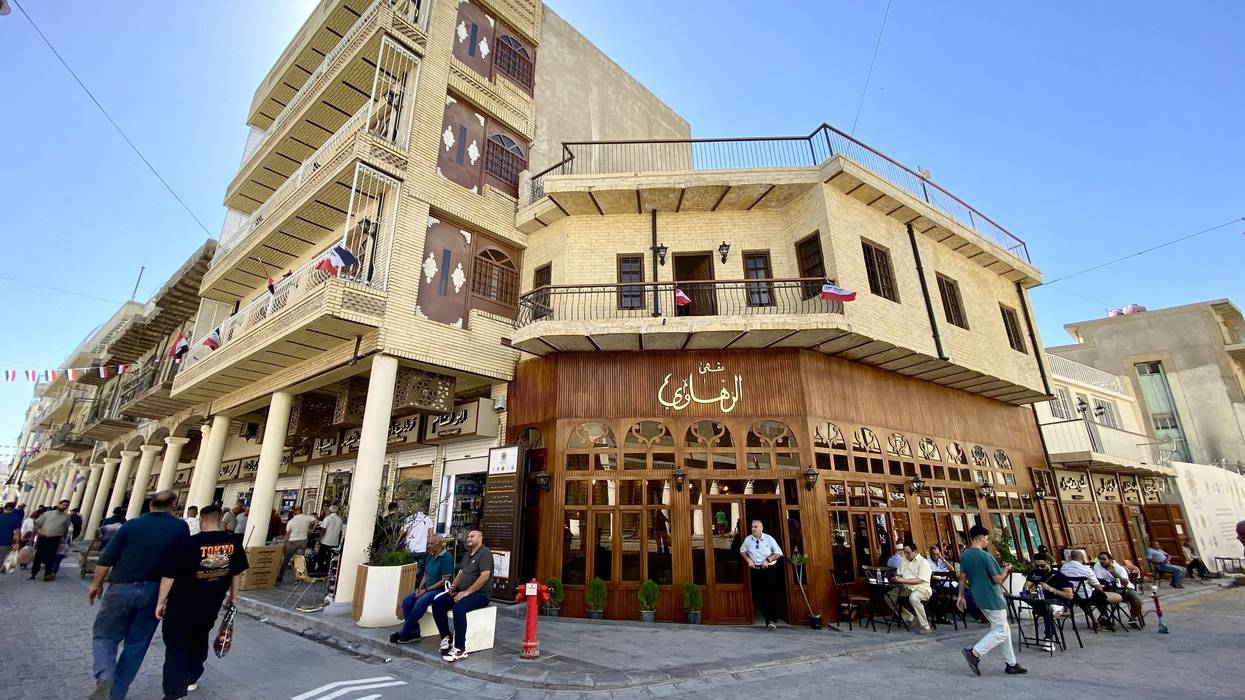
    Rehabilitation Work On Baghdad's Historic Rashid Street Continues Amid Public Interest And Field Monitoring.

    The Last Thing Iraq Needs: US Sanctions Threaten a Nation Trying to Heal

    As I leave Baghdad, I carry a sense of Iraq’s resilience, the palpable scars of war, the warmth of its people, the hope for a better future, and the ongoing story of a nation rebuilding itself.

    Nancy Mancias
    Dec 14, 2025

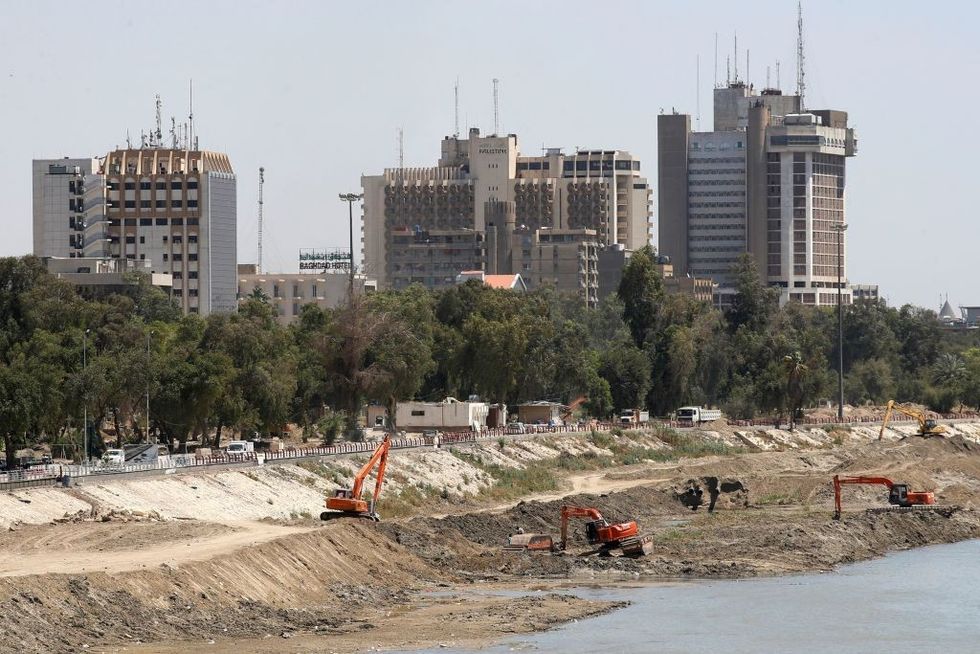
    I arrived at the Taj Hotel in Baghdad's Jadriyah neighborhood at 6:00 am, worn thin by the long flight from Los Angeles. After sleeping until mid-afternoon, I stepped out into the 90°F heat on a simple mission: find falafel, fries, and a place to exchange money. A local bus picked me up and dropped me right across from a falafel shop—a small act of hospitality. Full and settled, I walked beside the Tigris River, watching construction cranes against the sky. Life was visibly moving forward. Yet the mental newsreel kept playing: bombs falling on these same banks 20 years earlier. I was a tourist now in a country I had once protested my own nation for invading. Needing to escape both the heat and the weight of those memories, I returned to the hotel for Nutella cake and Iraqi tea, yet deeply conscious of the complex layers beneath the surface.

    The next day settled heavily. We started at Tahrir Monument and the roundabout where Saddam’s statue once stood—toppled in 2003 by US Marines in an image seen around the world. Today, no plaque marks the spot. Only election banners fluttered in the wind. From there, we traveled to the Arch of Ctesiphon, a soaring Persian vault from 540 AD. Nearby lay the relics of a different era: a derelict tourist complex and a museum designed by North Koreans, its walls scarred with bullet marks. Al-Mada’in, our guide remarked, had been a final stronghold against the invasion. It’s one thing to read about war and occupation, another to stand where it happened and touch the pockmarked concrete.

    Keep ReadingShow Less
    Opinion
    iraq
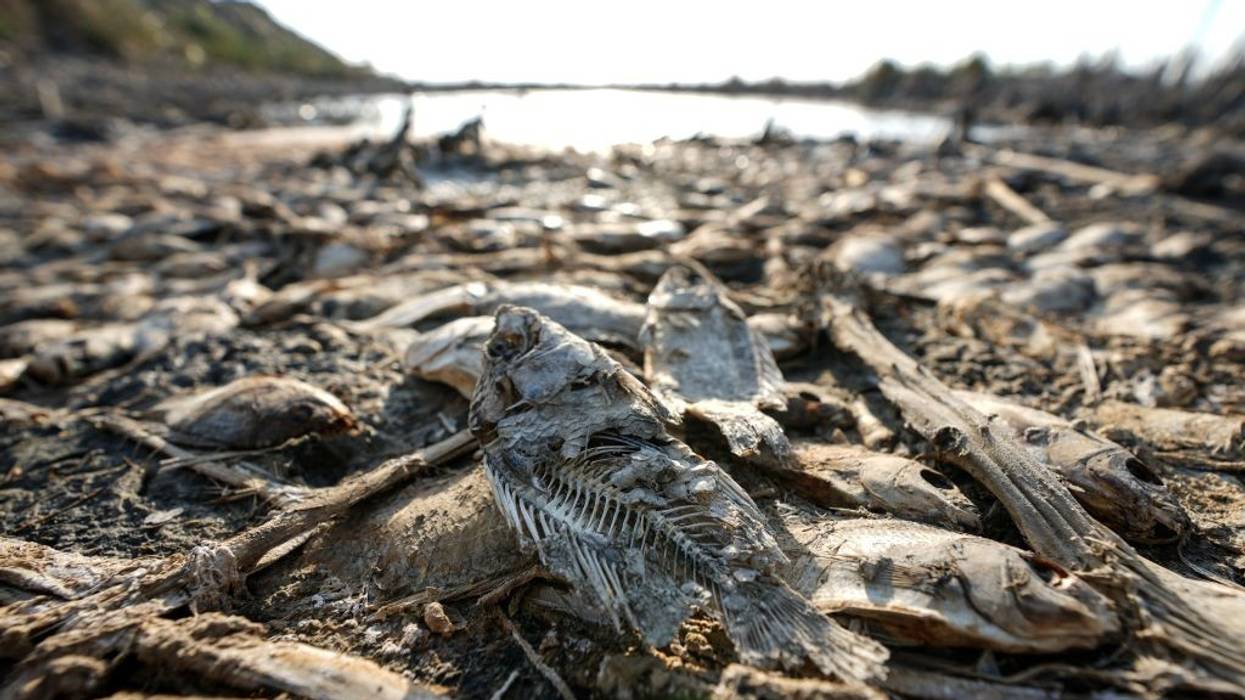
    Dead fish on the banks of an Iraqi marsh.

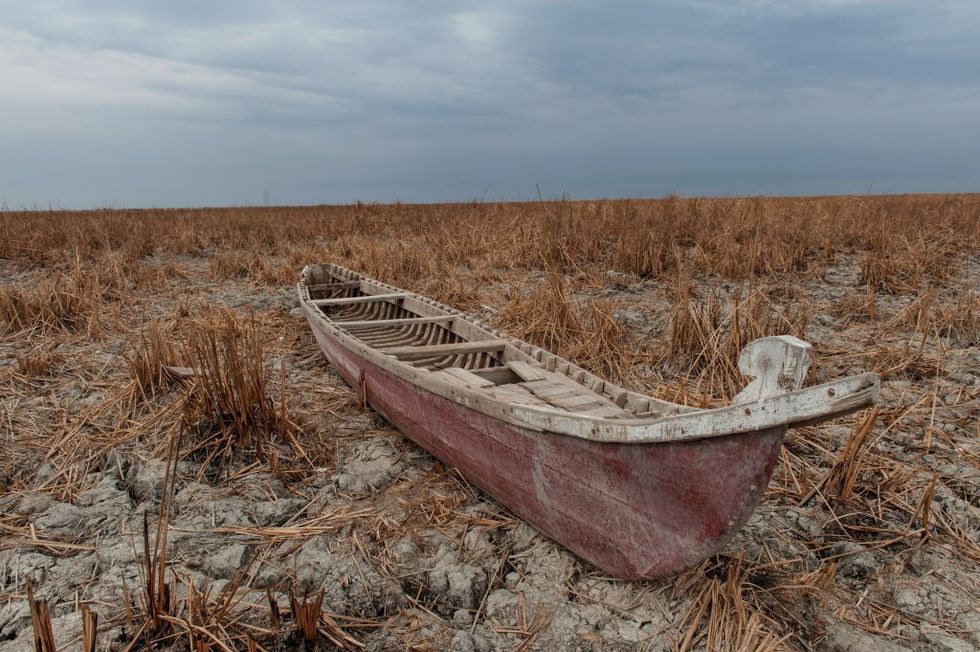
    After War, Iraq Now Faces the Climate Emergency

    The United Nations has now declared oil-rich Iraq, the land on which the Bush administration bet the future of our own country, to be the fifth most vulnerable to climate breakdown among its 193 member states.

    Juan Cole
    Jul 10, 2023

    It was one of the fabled rivers of history and the Marines needed to cross it.

    In early April 2003, as American forces sought to wrap up their conquest of the Iraqi capital, Baghdad, and take strongholds to its north, the Marine Corps formed “Task Force Tripoli.” It was commanded by General John F. Kelly (who would later serve as Donald Trump’s White House chief of staff). His force was charged with capturing the city of Tikrit, the birthplace of dictator Saddam Hussein. The obvious eastern approach to it was blocked because a bridge over the Tigris River had been damaged. Since the Marines assembled the Task Force in northeastern Baghdad, its personnel needed to cross the treacherous, hard-flowing Tigris twice to advance on their target. Near Tikrit, while traversing the Swash Bridge, they came under fire from military remnants of Saddam’s regime.

    Keep ReadingShow Less
    Opinion
    climate emergency
    Media complicity in Iraq War

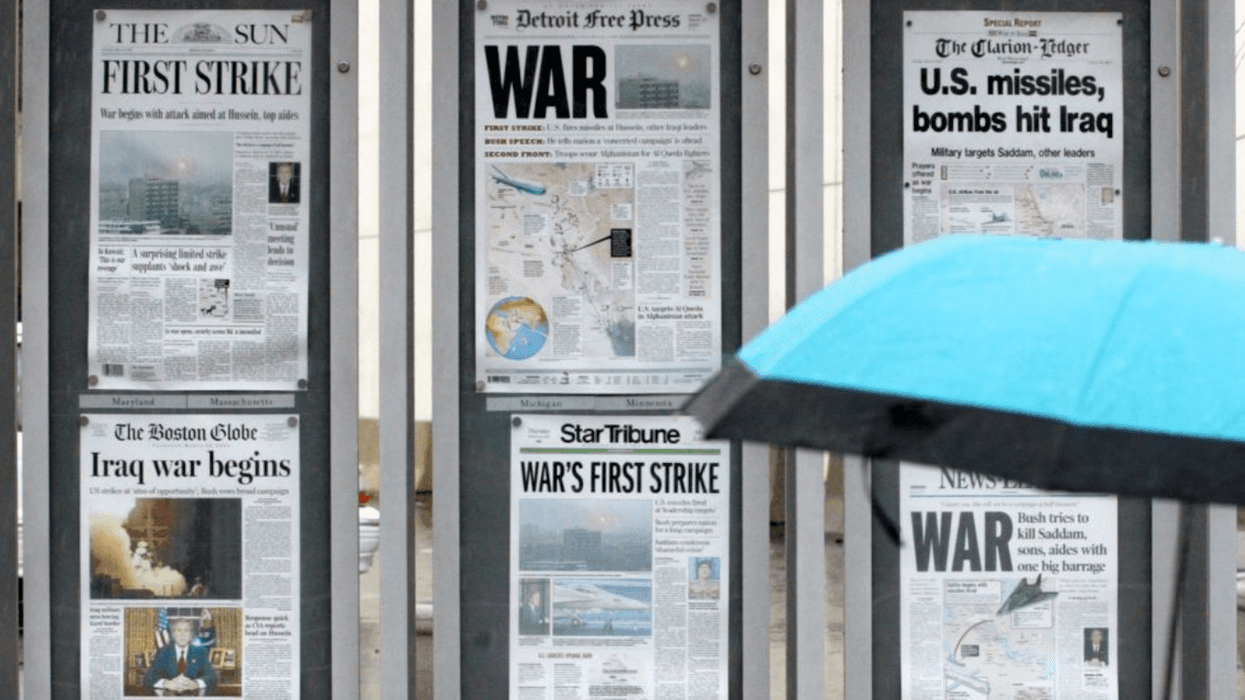
    20 Years Later, the Stain of Corporate Media's Role in Promoting Iraq War Remains

    "It should not be forgotten that this debacle of death and destruction was not only a profound error of policymaking; it was the result of a carefully executed crusade of disinformation and lies," said one prominent critic.

    Brett Wilkins
    Mar 20, 2023

    As the world this week mark the 20th anniversary of the U.S.-led invasion of Iraq, journalism experts weighed in on the corporate media's complicity in amplifying the Bush administration's lies, including ones about former Iraqi dictator Saddam Hussein's nonexistent nuclear, chemical, and biological weapons upon which the war was waged.

    "Twenty years ago, this country's mainstream media—with one notable exception—bought into phony Bush administration claims about Hussein's stockpiles of weapons of mass destruction, helping cheerlead our nation into a conflict that ended the lives of thousands of Americans and hundreds of thousands of Iraqis," Los Angeles Times columnist Robin Abcarian wrote Sunday.

    Keep ReadingShow Less
    News
    Donald Rumsfeld

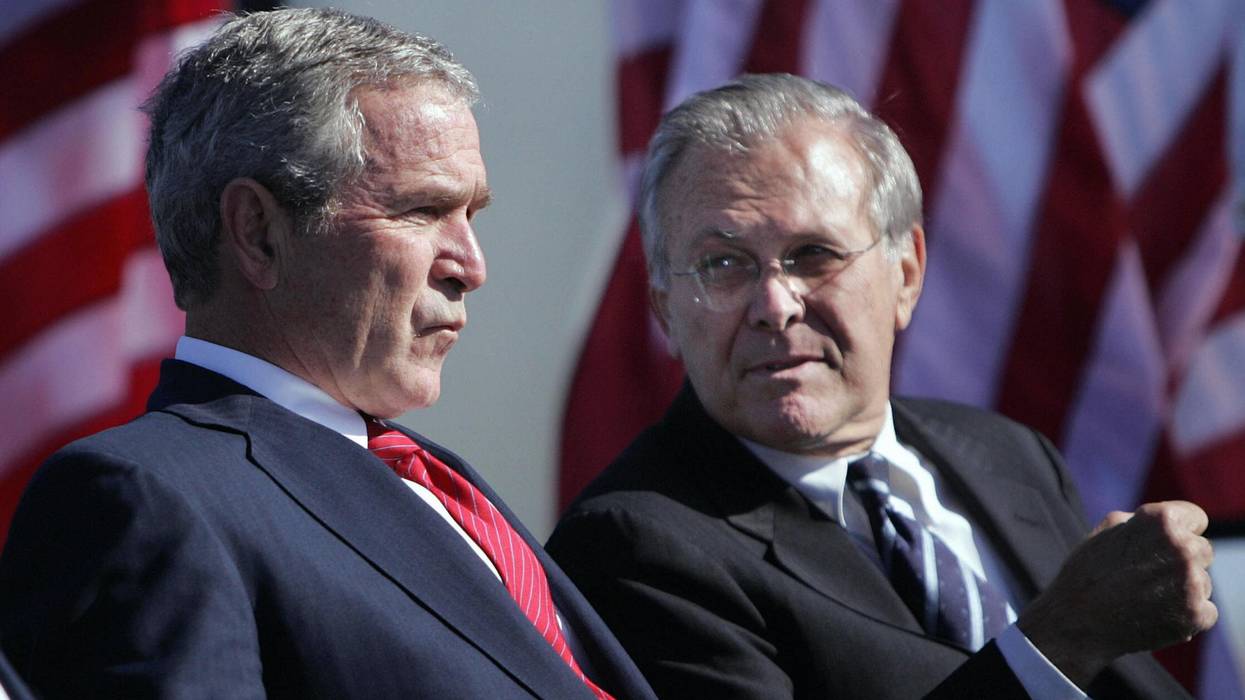
    'Merciless War Criminal' and Ex-Defense Secretary Donald Rumsfeld Dead at 88

    "The only thing tragic about the death of Donald Rumsfeld is that it didn't occur in an Iraqi prison."

    Brett Wilkins
    Jun 30, 2021

    Donald Rumsfeld, the former U.S. congressman, aide to several Republican presidents, and two-time defense secretary whose torture-laden tenure and ruinous legacy were defined by his lies in service of an unending war that's killed at least hundreds of thousands of people, died Tuesday at age 88.

    "Donald Rumsfeld is responsible for thousands and thousands of deaths and enriching himself in the process. The least we can do is to forever link his name with 'war criminal.'"
    --Veterans for Peace

    Keep ReadingShow Less
    News
    donald rumsfeld
    Iraqis the presence of US troops in Iraq

    After 30 Years of War Against Iraq, Americans Must Make Reparations

    Americans owe a debt to the people of Iraq that can never be repaid in full. However, it is incumbent and imperative that we try.

    Jared Keyel
    Mar 19, 2021

    This Saturday--March 20th, 2021--is the 18th anniversary of the United States invasion of Iraq. However, the American war against that country did not begin in 2003. The U.S. has been fighting a war against Iraq since 1991.

    Thirty years of conflict has killed hundreds of thousands of Iraqis and injured many times more.

    Keep ReadingShow Less
    Opinion
    iraq war
    What Will It Take to Defeat Trumpism?

    What Will It Take to Defeat Trumpism?

    Learning lessons from the end of the Confederacy, Nazi Germany, and Saddam’s Iraq.

    John Feffer
    Jun 26, 2020

    Let's assume that Donald Trump loses the election in November.

    Yes, that's a mighty big assumption, despite all the polls currently favoring the Democrats. If the economy begins to recover and the first wave of Covid-19 subsides (without a second wave striking), Donald Trump's reelection prospects could improve greatly. The Republican Party has a huge war chest ready to fund ads galore, massive targeted outreach, and widespread voter suppression. And if all that isn't enough, the president could borrow a tactic from the dictators he so admires and cancel the election outright out of concern over the coronavirus or some fabricated emergency.

    Keep ReadingShow Less
    Opinion
    Killing Them Softly With Sanctions

    Killing Them Softly With Sanctions

    Economic sanctions killed more Iraqis than Saddam Hussein's dictatorship.

    Tom Gallagher
    Jun 25, 2020

    Dig deep into the June issue of National Geographic magazine and you might just find something that will cast a major aspect of American foreign policy--our economic sanctions regimes--in a new light. The issue's cover story, "The Last Voices of World War II," includes a graphic showing the death tolls of the various nations in that war's European and Pacific Theaters. Unfold that graphic and you'll find an even more interesting one within--"Peaks of Brutality," which displays the "100 deadliest events of the past 2,500 years." World War II's 66 million deaths (an estimate, as all the numbers are) lead the list. The events are not limited to wars, so in second place we find Genghis Khan, deemed responsible for the death of 40 million--over 10 percent of the 13th century world population. But the most interesting and relevant listings are found down at the bottom--"Saddam Hussein" in 100th place and "Sanctions against Iraq" in 95th.

    You read that right. By this list's reckoning, the 1979-2003 reign of Iraq's Saddam Hussein constituted the 100th deadliest event in world history, responsible for an estimated 300,000 deaths. It was surpassed in deadliness, however--and in a considerably shorter time period (1990-2003)--by the economic sanctions which killed an estimated 350,000 Iraqis following their country's invasion of Kuwait. In other words, in the matter of Saddam Hussein, the supposed cure proved deadlier than the disease.

    Keep ReadingShow Less
    Opinion
    The U.S. Military Should Take the Iraqi Parliament's Advice and Leave

    The U.S. Military Should Take the Iraqi Parliament's Advice and Leave

    The on-going presence of American troops in the region does not enhance U.S. or regional security; it makes Americans more vulnerable to attack and further mired in endless wars in the region.

    Annelle Sheline
    Jan 07, 2020

    Following the assassination of Qassem Soleimani, war with Iran appears more likely than ever. Whether the conflict remains contained to proxies or escalates into full-on confrontation between U.S. and Iranian forces, Americans are likely to die as a result of Trump's decision to kill Soleimani.

    The best way to reduce the risk of war is to get U.S. troops out of Iraq. Those currently stationed in Iraq are most vulnerable to attack from Iran and Iran-allied groups. Soleimani's assassination significantly elevated the risk to Americans in Iraq, (as acknowledged by the Trump administration when it instructed Americans to leave).

    Keep ReadingShow Less
    Opinion
    iraq
    O-I-L: The Missing Three-Letter Word in the Iran Crisis

    O-I-L: The Missing Three-Letter Word in the Iran Crisis

    The fossil fuel's enduring sway in U.S. policy in the Middle East

    Michael T. Klare
    Jul 11, 2019

    It's always the oil. While President Trump was hobnobbing with Saudi Crown Prince Mohammed bin Salman at the G-20 summit in Japan, brushing off a recent U.N. report about the prince's role in the murder of Washington Post columnist Jamal Khashoggi, Secretary of State Mike Pompeo was in Asia and the Middle East, pleading with foreign leaders to support "Sentinel." The aim of that administration plan: to protect shipping in the Strait of Hormuz and the Persian Gulf. Both Trump and Pompeo insisted that their efforts were driven by concern over Iranian misbehavior in the region and the need to ensure the safety of maritime commerce. Neither, however, mentioned one inconvenient three-letter word -- O-I-L -- that lay behind their Iranian maneuvering (as it has impelled every other American incursion in the Middle East since World War II).

    Now, it's true that the United States no longer relies on imported petroleum for a large share of its energy needs. Thanks to the fracking revolution, the country now gets the bulk of its oil -- approximately 75% -- from domestic sources. (In 2008, that share had been closer to 35%.) Key allies in NATO and rivals like China, however, continue to depend on Middle Eastern oil for a significant proportion of their energy needs. As it happens, the world economy -- of which the U.S. is the leading beneficiary (despite President Trump's self-destructive trade wars) -- relies on an uninterrupted flow of oil from the Persian Gulf to keep energy prices low. By continuing to serve as the principal overseer of that flow, Washington enjoys striking geopolitical advantages that its foreign policy elites would no more abandon than they would their country's nuclear supremacy.

    Keep ReadingShow Less
    Opinion
    Joe Biden Didn't Just Vote for the Iraq Invasion--He Helped Lead the March to War

    Joe Biden Didn't Just Vote for the Iraq Invasion--He Helped Lead the March to War

    Biden may run from it today, but he played a critical role in ensuring America’s involvement in the most disastrous foreign policy venture of the 21st century. Here’s how.

    Branko Marcetic
    Jul 09, 2019

    As the Trump administration's saber-rattling toward Iran threatens another disastrous war in the Middle East, foreign policy has gained newfound focus in the 2020 presidential race. And former Vice President Joe Biden's 2002 vote in favor of the Iraq War leaves him with a particularly glaring vulnerability.

    Biden's vote had already become a sticking point in the race before President Trump began his provocations toward Iran in earnest. Bernie Sanders has used Biden's record to draw a contrast with his own opposition to the Iraq War. Rep. Seth Moulton, another 2020 candidate, has called for Biden to admit he was wrong for casting the vote. And a recent POLITICO/Morning Consult poll showed more than 40 percent of respondents between 18 and 29 were less likely to back Biden because of it.

    From dove to hawk

    Biden hadn't always been a hawk on Iraq. He had voted against the first Gulf War in 1991, though even his opposition to that war had been tepid at best, focused mainly on badgering George H.W. Bush into having Congress rubber stamp a war Bush had already made clear he was intent on waging with or without its approval.

    In 1996 Biden criticized Republican claims that then-President Bill Clinton wasn't being tough enough on Iraq amid calls to remove Saddam Hussein from power, labeling an ouster "not a doable policy." Before the War on Terror drove U.S. foreign policy, Biden criticized Bush during his first year in office for the then-president's hawkish position on missile defense.

    September 11th changed all this. Only one day before the attacks, at a speech in front of the National Press Club, Biden had called Bush's foreign policy ideas "absolute lunacy" and charged that his missile defense system proposal would "begin a news arms race." But the nearly 3,000 Americans who were killed on U.S. soil that day upended the political consensus. Bush's approval rating shot up to a historic 90 percent, and any elected officials who failed to match the president's zeal for military retribution became vulnerable to accusations of being "soft on terror."

    "Count me in the 90 percent," Biden said in the weeks after the attack. There was "total cohesion," he said, between Democrats and Republicans in the challenges ahead. "There is no daylight between us."

    In November 2002, just a little over a year following the World Trade Center attacks, Biden faced re-election amidst a political climate in which the Bush administration had incited nationalist sentiment over the issue of terrorism. In October 2001, Biden had been criticized in Delaware newspapers for comments that were perceived as potentially weak, warning that the United States could be seen as a "high-tech bully" if it failed to put boots on the ground in Afghanistan and instead relied on a protracted bombing campaign to oust the Taliban.

    Consequently, Biden, then deemed by the New Republic to be the Democratic Party's "de facto spokesman on the war against terrorism," quickly became a close ally of the Bush administration in its prosecution of that war. The White House installed a special secure phone line to Biden's home, and he and three other members of Congress met privately with Bush in October 2001 to come up with a positive public relations message for the war in Afghanistan.

    Biden's stance on Iraq soon began to change, too. In November 2001, Biden had batted away suggestions of regime change, saying the United States should defeat al-Qaeda and Osama bin Laden before thinking about other targets. By February 2002, he appeared to have creaked opened the door to the possibility of an invasion.

    "If Saddam Hussein is still there five years from now, we are in big trouble," he told a crowd of 400 Delaware National Guard officers that month at the annual Officers Call event.

    "It would be unrealistic, if not downright foolish, to believe we can claim victory in the war on terrorism if Saddam is still in power," he said around the same time, echoing the language of hawks like Connecticut Sen. Joe Lieberman.

    Biden soon developed the position he would hold for the following 13 months leading into Bush's March 2003 invasion of Iraq: While the Bush administration was entirely justified in its plans to remove Hussein from power in Iraq, it had to do a better job of selling the inevitable war to the U.S. public and the international community.

    "There is overwhelming support for the proposition that Saddam Hussein should be removed from power," he said in March 2002, while noting that divisions remained about how exactly that would be done. If the administration wanted his support, Biden continued, they would have to make "a complete and thorough case" that Iraq possessed weapons of mass destruction (WMDs) and to outline what they envisioned a post-Hussein Iraq would look like.

    It was a stance well-calibrated for the political climate. Biden could continue to point to disagreements with the administration for liberal audiences, even if they were merely procedural, while putting his weight behind the ultimate goal of war with Iraq. At the same time, Biden's apparent criticisms doubled as advice for the administration: If you want buy-in from liberals for your war, this is what you'll have to do.

    "I don't know a single informed person who is suggesting you can take down Saddam and not be prepared to stay for two, four, five years to give the country a chance to be held together," Biden recounted telling Bush privately in June 2002. It was a talking point he would repeat often over the next year, that regime change in Iraq was the correct thing to do, but would require a long-term commitment from the United States after Hussein's removal.

    Setting the ground rules

    During frequent television appearances, Biden didn't just insist on the necessity of removing Hussein from power, but appeared to signal to the Bush administration on what grounds it could safely seek military action against Iraq.

    When Bush's directive to the CIA to step up support for Iraqi opposition groups and even possibly capture and kill Hussein was leaked to the Washington Post in June, Biden gave it his approval. Asked on CBS's "Face the Nation" if the plan gave him any pause, Biden replied: "Only if it doesn't work."

    "If the covert action doesn't work, we'd better be prepared to move forward with another action, an overt action, and it seems to me that we can't afford to miss," he added.

    "Prominent Democrats endorse administration plan to remove Iraqi leader from power," ran the subsequent Associated Press headline.

    A month later in July, Biden affirmed that Congress would back Bush in a pre-emptive strike on Iraq in the event of a "clear and present danger" and if "the president can make the case that we're about to be attacked."

    Asked on "Fox News Sunday" the same month if a discovery that Hussein was in league with al-Qaeda would justify an invasion, Biden replied: "If he can prove that, yes, he would have the authority in my view."

    "And this will be the first time ever in the history of the United States of America that we have essentially invaded another country preemptively to take out a leadership, I think justifiably given the case being made."

    These themes would be used by the Bush administration in the months ahead to sell the war to the American public. The non-existent ties between Hussein and al-Qaeda became one of the most high-profile talking points for the war's proponents. And the Bush administration would publicize the supposedly imminent threat Hussein posed to the United States, including then-National Security Advisor Condoleezza Rice's infamous September declaration that "we don't want the smoking gun to be a mushroom cloud."

    By July Biden appeared to rule out a diplomatic solution to the conflict. "Dialogue with Saddam is useless," he said.

    Not a skeptic to be heard

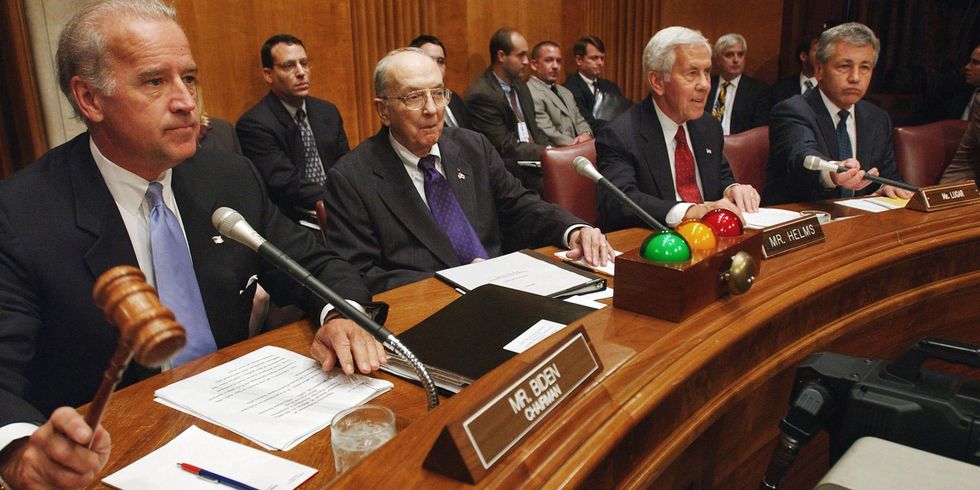
    It was also in July 2002 that Biden carried out one of his most consequential actions in the lead-up to the Iraq War, when he held several days of congressional hearings about the then-potential invasion.

    Biden stressed the hearings weren't meant to antagonize the White House. Rather, as he explained, they would inform the American people about the stakes of the conflict and the logistical issues involved in waging it.

    At the time, the pro-war stance shared by the administration, much of the press, and Democrats like Biden was by no means unanimous. Many of the United States' closest allies in Europe (apart from Tony Blair's British government) were wary of the war drums beating from Washington, as were many Arab states. In July, King Abdullah II of Jordan, a U.S. ally in the Middle East, called the idea of an invasion "somewhat ludicrous."

    The same month, the Houston Chronicle reported, based on interviews with anonymous officials, that a number of senior military officials, including members of the joint chiefs of staff, were in disagreement with the White House's drive for war with Iraq, and believed that Hussein posed no immediate threat to the United States. The day before the hearings, Scott Ritter, the former chief weapons inspector at the UN, cautioned that it was far from "inevitable" that Iraq had restarted its weapons program, and warned that "Biden's open embrace of regime removal in Baghdad" threatened to make the hearings "devolve into a political cover" for Congress to authorize Bush's war.

    Yet as Stephen Zunes reported for The Progressive in April 2019, none of these views were aired at Biden's hearings, which opened with Biden stating that WMDs "must be dislodged from Saddam, or Saddam must be dislodged from power," and that "if we wait for the danger from Saddam to become clear, it could be too late." Ritter himself was never invited to testify.

    Neither were other experts critical of the Bush narrative on Iraq, including Rolf Ekeus, the former executive chairman of the United Nations Special Commission, the inspection regime set up after the Gulf War to deal with WMDs, and former UN Assistant Secretary General Hans Von Sponeck, who complained that he was "very agitated by the deliberate distortions and misrepresentations" that made it "look to the average person in the U.S. as if Iraq is a threat to their security." According to Biden, Bush later thanked him for the hearings.

    By Zunes' count, none of the 18 witnesses who were called objected to the idea that Hussein had WMDs, and all three witnesses who testified on the subject of al-Qaeda claimed the organization received direct support from Iraq--the very red line Biden had said would give Bush the authority to invade the country. Out of the 12 witnesses who discussed an invasion, half were in favor and only two opposed. Biden himself said throughout the hearings that Iraq was a national security threat.

    It was largely up to Republicans on the committee--namely Lincoln Chafee and Chuck Hagel--to voice skepticism about a war effort. Ritter accused Biden and other members of congress of having "preordained a conclusion that seeks to remove Saddam Hussein from power regardless of the facts." Indeed, on the day of the hearings, Biden had co-authored a New York Times op-ed suggesting that continued "containment" of Hussein "raises the risk that Mr. Hussein will play cat-and-mouse with inspectors while building more weapons," and that "if we wait for the danger to become clear and present, it may be too late."

    Having given a platform to pro-war talking points, Biden then hit the talk show circuit to cite the lopsided testimony he himself had arranged in order to argue for war. Determining Hussein's intentions was "like reading the entrails of goats," Biden told NBC's "Meet the Press," and what mattered more was Hussein's ability to use WMDs, whatever those intentions might be. He pointed to testimony in the July hearings to argue it was clear that Iraq had such weapons.

    "We have no choice but to eliminate the threat," he said. "This is a guy who's an extreme danger to the world."

    While the mainstream press featured few skeptical and anti-war voices at the time, a number of them assailed Biden for going along with the Bush administration.

    "Biden apparently believes that he fulfills the constitutional function of advise and consent by merely being the cheerleader for the administration's rising chorus demanding war with Iraq," wrote Stanley Kutler in the Milwaukee Journal Sentinel. "When and how are the only questions in his repertoire."

    "A course of moderation and deliberation"

    By fall 2002, Bush appeared to have heeded Biden's frequent exhortations for how to sell the war.

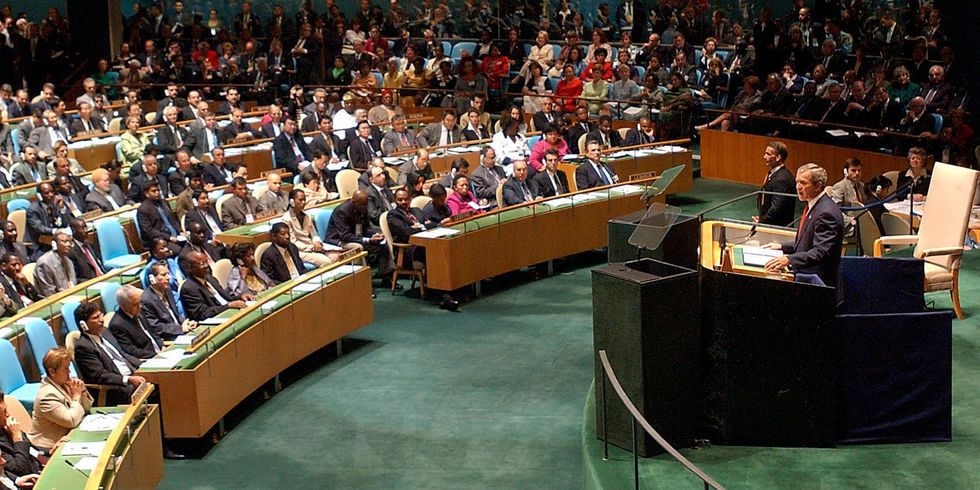
    On September 12, almost a year to the day of the terrorist attacks that had sparked the march to war, Bush went before the UN to make a case for an invasion directly to the international community. Biden praised him for doing "a very good job" in making that case with a "brilliant" speech, and again stressed that "this is the world's fight," though cautioning that "the worst option is going it alone, but it is an option."

    That September, Bush also finally asked Congress for a war authorization. While the president backed an expansive resolution in the House, Biden and fellow Foreign Relations Committee member Richard Lugar (R-Ind.) put forward their own rival resolution in the Senate that scaled back some of the House version's more alarming language and stressed the themes Biden had been articulating for the better part of a year. The Senate resolution limited the use of force to Iraq, made dismantling WMDs the primary justification for war, and stressed the importance of international support (though reserving the right to act unilaterally if the UN Security Council moved too slowly).

    "We are trying to give the president the power that he needs and get a large vote," Biden explained.

    Bush quickly routed Biden by making a compromise with Democratic House Minority Leader Dick Gephardt that swung momentum behind the House resolution. Deciding it was too late, and that there was no way of stopping its passage, Biden simply resigned himself to the compromise House resolution.

    "In this place, everybody's pretty practical at the end of the day," he said.

    Bush ultimately won over Biden by incorporating several of his suggestions into the final resolution and a speech he gave on October 7, 2002, in which he painted Iraq as a "grave threat to peace" creating an "arsenal of terror." He had "made a compelling case," said Biden, who was "very pleased with his rationale that he laid out."

    While Biden reportedly wavered at the last moment on his promise to cast his vote, he ultimately fell in line, arguing the resolution would "give the president the kind of momentum he needs" to get Security Council backing. On October 11, Biden was one of 77 senators who voted to give Bush the authorization to wage war on Iraq, joining fellow Democrats such as Hillary Clinton, Chuck Schumer, Harry Reid and Dianne Feinstein. Twenty-one Democratic senators, including Dick Durbin, Ron Wyden and Patrick Leahy, voted against it.

    "At each pivotal moment, [President Bush] has chosen a course of moderation and deliberation," Biden said on the Senate floor. "I believe he will continue to do so ... the president has made it clear that war is neither imminent nor inevitable."

    A month later, Biden sailed to a sixth term to the Senate with 58 percent of the vote.

    "Powerful and irrefutable"

    Biden wasn't as eager to tout his leading role in the lead-up to the Iraq War in front of all audiences.

    On November 11, 2002, Biden gave a speech at a meeting of the Trotter Group, an organization of African-American columnists. Perhaps owing to strong black opposition to the war, including the NAACP board's October 28, 2002, adoption of a resolution opposing the invasion, Biden sounded very different notes in front of the audience. He denied there was a direct link between Hussein and al-Qaeda ("I don't consider the war on Iraq the war on terror") and struck a less hawkish note ("My hope is that we don't need to go into Iraq").

    After chairing hearings filled with pro-war testimony, Biden told the Trotter Group crowd that "the guys who have to fight this war don't think it's a good idea," and that doing so would be "the dumbest thing in the world." Discussing the war authorization he had voted for, he claimed that Republicans had taken "something that nobody, including the president, believes is an imminent danger and moved it up in the election cycle," and that he reluctantly supported the final resolution in order to give then-Secretary of State Colin Powell leverage to get a resolution out of the UN that would slow the administration's march to war.

    Yet even as he painted himself as a war opponent, Biden's role in making the war happen wasn't finished.

    In December 2002, Biden embarked on a trip to Germany and the Middle East with Republican Sen. Chuck Hagel to cobble together a coalition for the impending war. He first flew to Germany to meet with an Iraqi resistance leader, then headed to Jordan to meet with its monarch, before stopping in Israel and Qatar. The Delaware Republican Party sent him its best wishes.

    "We wish the senator good luck and hope he continues to support the president on foreign-policy matters," its chairman said.

    At one point, Biden spoke to the Kurd Parliament in Kurdish-controlled northern Iraq, carved out in the wake of the first Gulf War. Biden made clear to the Kurds, longtime opponents of Hussein's regime, that the United States had their back.

    "We will stand with you in your effort to build a united Iraq," he told them, adding that "the mountains are not your only friends," playing off a local saying.

    As Colin Powell prepared to present supposed evidence of Iraq's WMD program to the UN in February--a factually flawed address that Powell two years later would call a "blot" on his record--Biden hyped the presentation to the press, saying the administration "has evidence now that can change people's minds."

    "I know there's enough circumstantial evidence that if this were a jury trial, I could convict you," he said. After Powell's address, Biden called his case "very powerful and I think irrefutable," and told him, "I am proud to be associated with you."

    At the same time, Biden spent much of the rest of the month leading up to invasion painting himself as its opponent. He criticized Bush for everything but the actual decision to remove Hussein: for failing to make a sufficiently strong case to the public, for not securing more international buy-in for the invasion, for keeping Congress out of the loop and for grossly lackluster planning for postwar Iraq.

    "As every hour goes by, I think the chance of war is increasing," he said in early March, five months after voting to give Bush the power to invade Iraq. "I was hoping it wasn't, hoping there was a shot at doing this peacefully, but that looks slimmer and slimmer."

    Yet even after Bush failed to secure the international cooperation Biden had spent months insisting was necessary, the lack of support wasn't enough to convince Biden to abandon his support. As Bush issued an ultimatum to Hussein on March 17--leave or be invaded--Biden was behind him.

    "I support the president," he said after meeting with Bush and other officials before the ultimatum. "Diplomacy over avoiding war is dead. ... I do not see any alternative. It is not as if we can back away now."

    Biden portrayed himself as someone who had been powerless to stop the conflict.

    "A lot of Americans, myself included, are really concerned about how we got to this stage and about all the lost opportunities for diplomacy," he said. "But we are where we are. ... Let loose the dogs of war. I'm confident we will win." He and the rest of the Democrats voted to pass a Senate resolution 99-0 supporting Bush and commending the troops.

    Months after the war was launched and Hussein was deposed, any reservations Biden claimed to have had about the war appeared to melt away.

    "I, for one, thought we should have gone in Iraq," he told CNN in June 2003, while noting that not all Democrats had been as enthusiastic about invading the country.

    With the much-ballyhooed WMDs failing to materialize, Biden cast himself as a skeptic about the administration's claims about their existence.

    "I also said at the time, as far back as August, that I thought the administration was exaggerating the threat of weapons of mass destruction," he told CNN

    During an appearance on "Fox News Sunday" later that month, he told host Tony Snow that he had never believed the Bush administration's rhetoric on the issue, and that it had erred in exaggerating the threat, as there was sufficient grounds to invade Iraq based on the weapons it was reported to have in 1998.

    "So you think, looking back on it, still, that it was a just war, in your opinion?" asked Snow.

    "Oh, I do think it was a just war," said Biden.

    After playing a clip of then-presidential candidate Howard Dean boasting of his opposition to the war even at the height of its popularity, Snow asked Biden if Dean's position should be the consensus view of the Democratic Party.

    "No," Biden flatly replied.

    Even as the war effort rapidly went awry in the months that followed, with U.S. soldier deaths continuing to climb after major combat operations were declared over on May 1 and terrorist attacks becoming a regular feature of Iraqi life, Biden continued to insist that war had been the right course of action.

    "I voted to go into Iraq, and I'd vote to do it again," he said at a July 2003 hearing.

    As growing numbers of Democrats, and even members of the general public, turned against the war, Biden rebuked them, implicitly and explicitly.

    "In my view, anyone who can't acknowledge that the world is better off without [Hussein] is out of touch," he said two days later.

    "Contrary to what some in my party might think, Iraq was a problem that had to be dealt with sooner rather than later," he insisted.

    An increasingly lonely voice in a party that would soon make common cause with the growing anti-war movement, Biden continued to back Bush.

    "The president made [the case against Saddam] well," he concluded on July 31. "I commend the president."

    No regrets

    In the eyes of the public, a vote for the resolution that gave Bush the authority to wage war on Iraq is enough to cast serious doubt on a candidate's judgment, as Hillary Clinton learned in 2016. But the fact is, Joe Biden did a lot more than cast a vote.

    As an experienced and respected voice on foreign policy, a powerful Democrat, and someone widely perceived as a dove due to his opposition to the Vietnam war, Biden's backing of regime change in Iraq was crucial to Bush's effort of selling the public on the war. Biden's insistence that Hussein posed a serious threat to the United States, possessed WMDs and needed to be removed from power helped create momentum for the rising pro-war campaign. And as chair of the Senate Foreign Relations Committee, rather than question the prominent voices of doubt, including senior members of the U.S. military, Biden stacked his Iraq hearings with voices in agreement with Bush's fallacious case for war.

    Hillary Clinton's hawkishness--including her vote for the Iraq war--was one of several factors that likely contributed to her 2016 loss to Donald Trump in key traditional Democratic states. But beyond arguments about electability, the next president will inherit a volatile world on the brink of several different conflicts, including a possible showdown with Iran. When voters choose the next Democratic nominee, they'll have to decide whether someone who helped lead the march to war in Iraq is really the best person to take on Trump--and guide U.S. foreign policy as president.

    Keep ReadingShow Less
    Opinion
    See More

    SUBSCRIBE TO OUR FREE NEWSLETTER

    Daily news & progressive opinion—funded by the people, not the corporations—delivered straight to your inbox.

    subscribe
    above
    * indicates required
    True
    True
    Follow Us
    Most Popular

    John Roberts Is the Biggest Con Man in US Politics

    'Pathetic Stuff': Jeffries Rebuked Over Secret Meeting With Kushner

    'The Red States, We're Going to Hit Hard': Canadian Politicians Vow to Make MAGA Pay for Trump's Trade War

    Trump-Backed Darline Graham Bashes 'Government-Run Healthcare,' Glorifies Working While Sick

    'Have Your Friend Elon Build One at Mar-a-Lago,' Says Sanders After Trump Comments on Data Centers

    Diarrhea Summer: Brought to You by Trump, Big Ag, and the Climate Crisis

    'Appalling and Fundamentally Dishonest': Ruffalo Rejects Antisemitism Charges by Paramount Amid Merger Warning

    The Most Dangerous Person to the Michigan Senate Race Lives in Ohio

    'Vance Is a Dirtbag': Troy Jackson Responds to VP Downplaying ICE Killing in Maine

    Bessent Suggests Economic Warfare Against Iran Could 'Blow Up the Global Financial System'

    We cover the issues the corporate media never will.
    Please support our journalism.
    To inform. To inspire. To ignite change for the common good.

    News & Opinion

    Latest News
    Latest Opinion
    Climate
    Economy
    Education
    Environment
    Healthcare
    Politics
    Rights & Justice
    War & Peace

    Trending

    Oligarchy
    Immigration
    Inequality
    Big Pharma
    Gaza
    Reproductive Rights
    Iran War
    Billionaires
    Election 2026

    About

    About Us
    Our Team
    Editorial Policies
    Manage Your Donation
    More Ways to Donate
    Contact Us

    Connect

    BlueSky
    Facebook
    Flipboard
    Instagram
    RSS
    Common Dreams, Inc. Founded 1997. Registered 501(c3) Non-Profit Privacy Policy
    Follow us: