

SUBSCRIBE TO OUR FREE NEWSLETTER
Daily news & progressive opinion—funded by the people, not the corporations—delivered straight to your inbox.
5
#000000
#FFFFFF
To donate by check, phone, or other method, see our More Ways to Give page.
Daily news & progressive opinion—funded by the people, not the corporations—delivered straight to your inbox.
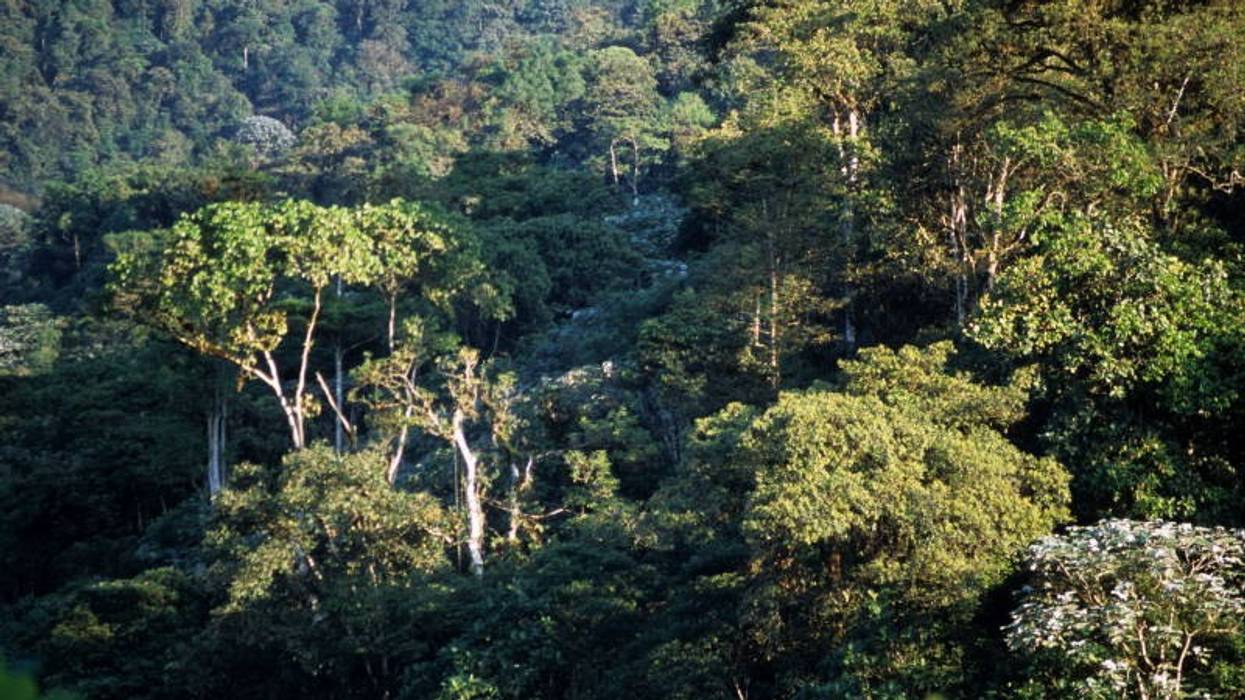
This revolutionary legal framework moves beyond traditional environmental laws and acknowledges that Nature itself has inherent rights, much like human beings and corporations.
For centuries, legal systems around the world have treated Nature as property—something to be owned, exploited, and managed for human benefit. This anthropocentric perspective has led to widespread environmental degradation, climate change, and biodiversity loss.
However, a revolutionary legal framework is emerging: the recognition of the Rights of Nature. This paradigm shift moves beyond traditional environmental laws and acknowledges that Nature itself has inherent rights, much like human beings and corporations.
The Rights of Nature concept is based on the idea that ecosystems and species are not mere objects but living entities with their own inherent rights to exist, thrive, and evolve. This legal framework challenges the prevailing notion that Nature is merely a resource for human use and instead recognizes its intrinsic value. By granting legal personhood to rivers, forests, and other natural entities, governments and courts can ensure that these ecosystems have standing in legal proceedings.
By shifting from an exploitative to a respectful relationship with the natural world, humanity can ensure a healthier planet for future generations.
The movement gained global attention when Ecuador became the first country to enshrine the Rights of Nature in its Constitution in 2008. The document states that Nature, or "Pachamama," has the right to exist and regenerate. Similarly, Bolivia passed the Law of Mother Earth in 2010, reinforcing Indigenous worldviews that see Nature as a living system with rights. Since then, countries such as New Zealand, Panama, India, and Colombia have also granted legal rights to specific ecosystems, setting legal precedents that continue to inspire the global community.
Why should we grant rights to Nature, you might ask? Traditional environmental laws often fail to prevent ecological destruction because they are based on regulation rather than protection. Corporations and governments can exploit loopholes, pay fines, or simply weigh the financial cost of pollution against profit margins. The Rights of Nature framework, however, fundamentally shifts the legal system from one of ownership to one of stewardship.
One of the most compelling cases for this approach is the Whanganui River in New Zealand. In 2017, the New Zealand government recognized the river as a legal entity, granting it the same rights and responsibilities as a person. This decision was made in collaboration with the Whanganui iwi, the Indigenous Māori people who have long regarded the river as an ancestor. Now, legal guardians, including representatives from both the government and the Māori community, speak on behalf of the river in legal matters. This recognition has already influenced policy decisions related to conservation and sustainable water management. Similarly, in 2017, the High Court of Uttarakhand in India granted legal rights to the Ganges and Yamuna rivers, acknowledging their sacred and ecological importance. Although this ruling faced legal challenges, it sparked important discussions about environmental governance and the need for stronger protections for vital ecosystems.
Despite these victories, the implementation of the Rights of Nature faces legal, political, and economic challenges. Many governments and corporations resist this shift, fearing restrictions on industrial activities. Additionally, enforcement mechanisms vary widely, and some legal rulings remain symbolic without proper institutional backing. However, the movement continues to gain momentum. Local communities, Indigenous groups, and environmental activists are advocating for the recognition of Nature's rights as a crucial tool for fighting climate change and biodiversity loss. In the United States, cities such as Pittsburgh and Toledo have passed local ordinances recognizing the rights of ecosystems, empowering communities to challenge environmental destruction more effectively.
Ecuador has witnessed several groundbreaking legal victories that affirm Nature's rights. Among these, the 2021 Constitutional Court ruling on Los Cedros Reserve was historic: The court halted mining exploration in this biodiversity hotspot, recognizing that the rights of the forest and its species, including endangered monkeys and orchids, outweighed extractive interests. Similarly, in Intag, a region long defended by local communities, legal actions based on behalf of endangered frogs and the Rights of Nature have helped suspend mining operations that threatened primary cloud forests and rivers vital to both people and ecosystems.
Another notable case is Estrellita, a woolly monkey rescued from illegal trafficking. When authorities attempted to relocate her to a zoo, a judge ruled in favor of her individual rights as part of Nature—marking the first time an animal in Ecuador was granted such recognition. These cases underscore the growing power of constitutional rights when applied to real-life conflicts between conservation and exploitation. They also reflect the tireless advocacy of Indigenous peoples, environmental defenders, and legal experts who are reshaping the legal landscape to center ecological integrity and the interconnectedness of all life.
The Rights of Nature framework is more than just a legal concept—it is a cultural and ethical transformation. By shifting from an exploitative to a respectful relationship with the natural world, humanity can ensure a healthier planet for future generations. As this movement grows, it is essential for policymakers, legal scholars, and citizens alike to support and advance this revolutionary approach to environmental protection.
The Global Alliance for the Rights of Nature (GARN) is a global network that has been at the forefront of the Earth Jurisprudence and Rights of Nature movement for the last 15 years, educating, upholding, and supporting its growth. With over 6,000 allies worldwide, GARN serves as a movement hub, connecting Indigenous leaders, civil society, lawyers, and advocates reshaping environmental governance.
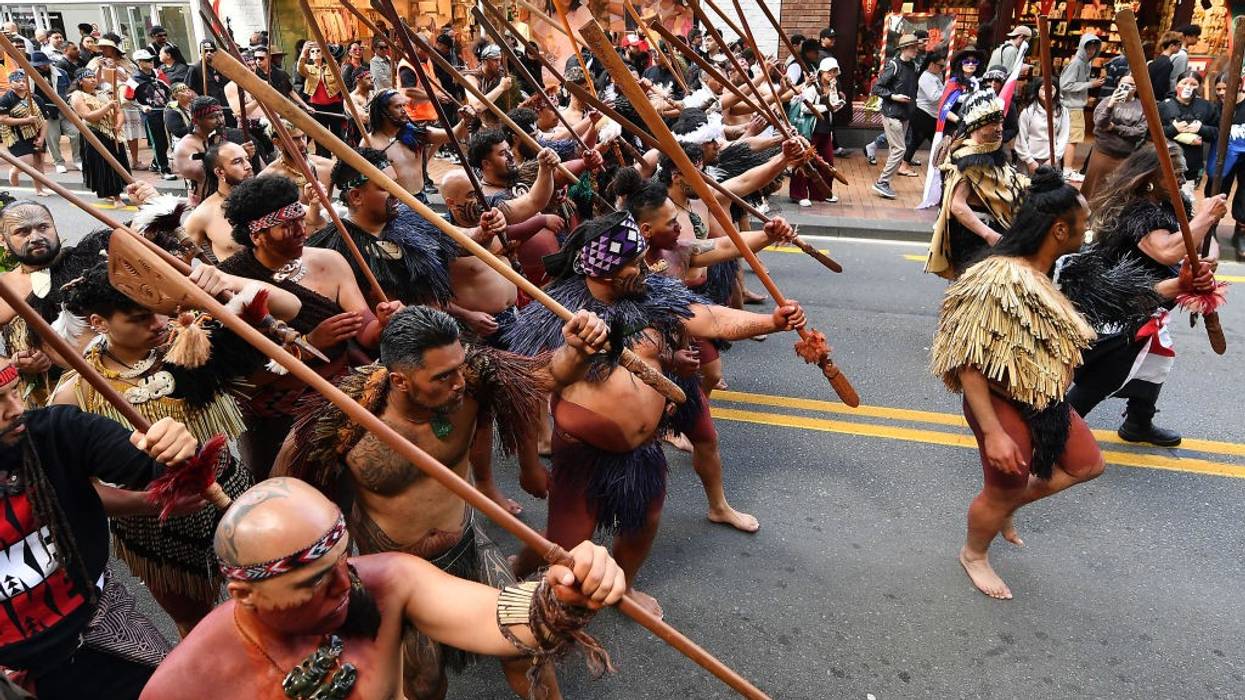
The Māori Party co-leader called Parliament's consideration of a bill that would reinterpret a key treaty "the deepest betrayal that we've ever had from a National government."
An estimated 55,000 people marched outside New Zealand's Parliament in Wellington on Tuesday to protest legislation that critics argue would dilute Indigenous rights by reinterpreting a treaty signed in 1840 by the British Crown and more than 500 Māori chiefs.
The peaceful demonstration was the culmination of a nine-day march, or hīkoi, that began at Cape Reinga, the northernmost point of New Zealand and the most spiritually significant place in the country for Māori, who are about 20% of the 5.3 million-person population.
Reuters reported that some "dressed in traditional attire with feathered headgear and cloaks and carried traditional Māori weapons, while others wore T-shirts emblazoned with Toitu te Tiriti (Honor the Treaty). Hundreds carried the Māori national flag."
"We have gathered in our tens of thousands, not just Māori, but others who support an inclusive, diverse, equal partnership that our country has been a world leader in pioneering."
The Treaty Principles Bill targeting the Treaty of Waitangi, or Te Tiriti o Waitangi, is being pushed by the ACT New Zealand party, a junior partner in the center-right coalition government, which also includes the National Party and New Zealand First (NZF).
Although the National and NZF have said that they are only supporting the legislation for the first of the three readings—meaning it is highly unlikely to pass—Debbie Ngarewa-Packer, co-leader of the Māori Party, or Te Pāti Māori, told the podcast The Front Page that even allowing it to be tabled is a "deep shame."
"We deserve better than to be used as political pawns," Ngarewa-Packer argued. "The fact that National has decided that we were tradeable and the mana of the coalition agreement was so much more important than the mana of Te Tiriti and tāngata is the deepest betrayal that we've ever had from a National government."
Pointing to U.S. President-elect Donald Trump, who won earlier this month after being ousted in the previous cycle, Ngarewa-Packer added, "We're a country that had the first women's vote, we have always punched above our weight in the anti-nuclear space, the anti-discrimination space, and here we are in 2024 with the sort of Trump-like culture coming into our politics."
The New York Times noted Tuesday that "a year before American voters' anger over the cost of living helped Donald J. Trump win the presidency, similar sentiments in New Zealand thrust in the nation's most conservative government in decades. Now, New Zealand bears little resemblance to the country recently led by Jacinda Ardern, whose brand of compassionate, progressive politics made her a global symbol of anti-Trump liberalism."
As the newspaper detailed:
The new government—a coalition of the main center-right party and two smaller, more populist ones—has reversed many of Ms. Ardern's policies. It has rescinded a world-leading ban on smoking for future generations, repealed rules designed to address climate change, and put a former arms industry lobbyist in charge of overhauling the nation's strict gun laws.
And in a country that has been celebrated for elevating the status of Māori, its Indigenous people, it has challenged their rights and the prominence of their culture and language in public life, driving a wedge into New Zealand society and setting off waves of protests.
Parliament was briefly suspended last Thursday after Maori members staged a traditional dance called a haka to disrupt the first reading. The haka—which garnered global attention—was started by Member of Parliament Hana-Rawhiti Maipi-Clarke, who tore up a copy of the bill.
Speaking to the Wellington crowd on Tuesday, Maipi-Clarke—who at 22 is the country's youngest MP—said, "We are the sovereign people of this land and the world is watching us here, not because of the system, not because of the rules, but because we haka."
Other participants in the Tuesday action included the Māori Queen, Ngā Wai Hono i te Pō, and Te Pāti Māori Co-Leader Rawiri Waititi, who led the crowd in a chant to "kill the bill."
According to The Northern Advocate, ACT Leader David Seymour, "the architect of the Treaty Principles Bill, was booed back inside the Beehive today by the tens of thousands protesting against his controversial bill."
While Seymour has framed the bill as an effort to end division and ensure equal rights for all, critics like Ella Henry, professor of Māori Entrepreneurship at Auckland University of Technology, warn that it is an effort to roll back New Zealand's previous progress in terms of relations with Indigenous people.
"So we have gathered in our tens of thousands, not just Māori, but others who support an inclusive, diverse, equal partnership that our country has been a world leader in pioneering," Henry told SBS News. "Those are the people who are marching."
Hayley Komene, who is from the Ngāti Kauwhata tribe, similarly told The Guardian that there was a "real strength and pride" at the march, and "there are people from lots of different backgrounds here for the same reason—it's beautiful."
Komene also slammed the government's Māori policies as "absolutely ridiculous" and stressed that "Te Tiriti is a constitutional document of our country."
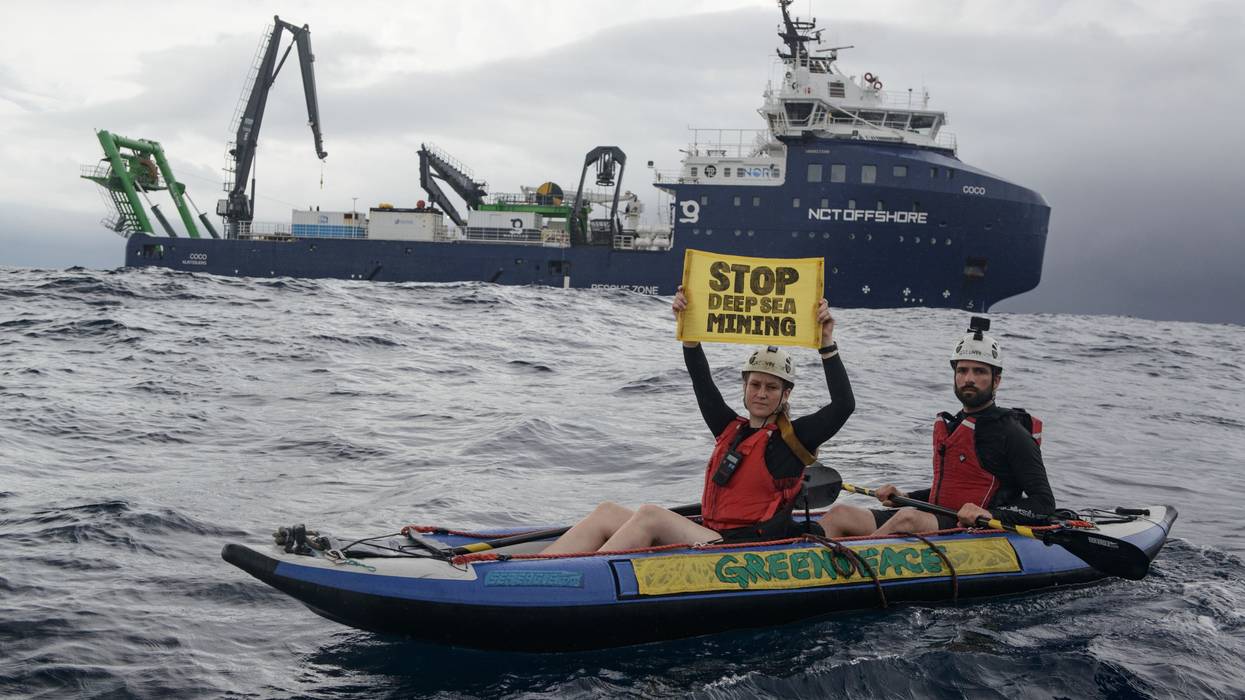
As we have begun to unravel the mysteries of the deep sea over the past two decades, the wisdom behind the international community’s commitments to protect it is clearer than ever. Now is time to act.
This week’s United Nations General Assembly marks nearly 20 years since the body first resolved to restrict bottom trawling on the world’s seamounts, submarine mountains that rise thousands of feet above the sea floor and comprise some of the most biologically rich marine ecosystems on the planet.
Led by Palau and other small island nations with generations-long ties to the ocean, the ensuing decades witnessed a raft of subsequent agreements that expanded protections for more of the deep sea—the dark, cold waters below 200 meters—culminating last year with the adoption of a treaty to protect marine biodiversity in areas beyond national jurisdiction.
These are important achievements that should be celebrated. But, we have been involved in diplomacy long enough to know that such agreements are often just the beginning of a long and winding journey to full implementation.
Today, for instance, not only does bottom trawling continue on seamounts, it occurs in ever deeper waters, despite scientific evidence of the severe damage it causes to corals and other habitats. In fact, the UN’s most recent World Ocean Assessment found that “fishing, especially bottom trawling, constitutes the greatest current threat to seamount ecosystems”.
A similar story is unfolding elsewhere in the deep sea. Not long ago, the crushing pressure and near total darkness of the mesopelagic layer of the ocean, sometimes referred to as the “twilight zone” (200-1000 meters deep), was thought to be inhospitable to life.
However, technological advances like submersibles and remotely operated vehicles, now offer a window on a world that is alive with deep water fish, squid, and shrimp. It is estimated that this marine realm holds up to 95 percent of all ocean fish by weight and as many as 10 million different species—a level of biodiversity akin to tropical rainforests.
We also now know that the deep sea environment is critical to the health of the ocean’s wider food web, including fish stocks that countless people around the world depend on for food and employment.
Moreover, new research has revealed that the mesopelagic’s staggering biomass plays an indispensable role in the climate system by keeping enormous amounts of heat-trapping gasses out of the atmosphere in a process known as the carbon pump.
However, as overfishing, pollution, and rapidly warming waters continue to take a toll on global fish stocks, nations have increasingly been looking at authorizing their fleets to exploit the deep sea in order to meet the insatiable demand for fish products used in fertilizer, aquaculture, and dietary supplements.
The danger of over-exploitation doesn’t end 1000 meters down. Mining companies have long looked to extend their reach from the land into the deep sea. Today, for example, the UN-affiliated International Seabed Authority, which regulates deep-sea mining, is working on finalizing rules to manage commercial operations on the ocean floor.
It has already permitted exploratory mining voyages in the Pacific’s vast Clarion-Clipperton Zone, where the ships dredge the sea floor 4000-5000 meters below the surface for nodules of nickel, manganese, copper, and cobalt that without government subsidies would never turn a profit.
As elsewhere, the activities could cause irreversible damage to the ecosystem and potentially release carbon that has been stored safely for millennia. If approved, full-scale mining could commence in a few years.
Remarkably (and not without irony), research funded in part by a corporate mining interest recently discovered the presence of “dark oxygen” in the same area of the seabed. It has long been understood that oxygen was created by living organisms in the presence of light through the process of photosynthesis.
However, a study published over the summer suggests that the electrochemical properties of the aforementioned nodules can generate oxygen in total darkness. The findings could have far-reaching implications that help us understand the origins of life and demonstrate the high stakes involved with mining.
As we have begun to unravel the mysteries of the deep sea over the past two decades, the wisdom behind the international community’s commitments to protect it is clearer than ever. Our imperative task today is to fully implement them before it is too late.
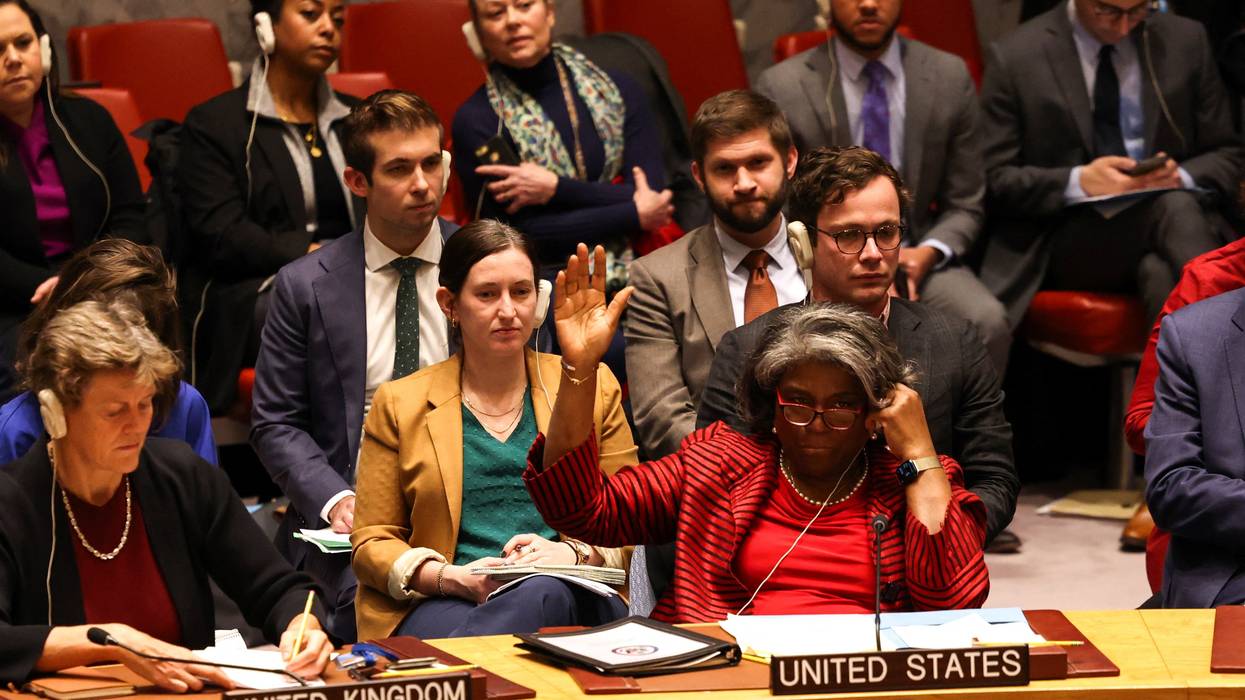
WEOG, the UN grouping anchored by the Anglo countries, Israel, and European states, wields disproportionate power to undermine human rights and international law.
What do two South Pacific countries, two North American countries, one country in the Middle East, and (until recently) one country in southern Africa have in common with Europe? The answer is rooted in centuries of imperialism and conquest in the ideologies that have sustained them — and in the four-letter acronym “WEOG.”
Five countries — the United States, Canada, Australia, New Zealand, and Israel (and for several years during apartheid, the South African regime) — are part of the UN diplomatic grouping known as “WEOG,” together with 20 European states.
WEOG stands for the “Western Europe and Other Group.” The “WE” for Western Europe is self-evident. But the “other” in the group is more coded, representing states founded by European settler colonialism.
WEOG is one of the five official “regional groupings” of the United Nations. But while the other four are all defined by regional boundaries (Africa, Asia-Pacific, Eastern Europe, and Latin America and the Caribbean), WEOG is cross regional and represents something else: the white world.
This will instantly shock the casual reader, but for practitioners and academics in the world of international relations, it’s a familiar concept. The West has long centered its approach to international relations on race. Indeed, the study of international relations began in the West as “race relations.” And Foreign Affairs, the leading U.S. publication on international relations, was originally the Journal of Race Development.
That approach was never horizontal, but rather one in which whiteness was centered and supreme. While sometimes obscured by a more genteel façade, below the surface the same dynamics continue today.
The message is clear: the defense of settler colonialism (and its inherent atrocities) trumps all other values, all other interests, and all other rules. The wagons must be circled. The colonial project must be protected. Human rights and international law be damned.
Of course, WEOG avoids any such direct racial billing, instead describing itself as a group of “western democracies.” The problem they have, however, is that their membership includes some states that are not (geographically) western, and some that are not democracies. Israel, former member South Africa, Australia, and New Zealand are all situated outside the West.
And as for democracies, original WEOG members Spain, Portugal, and Greece were governed during their membership by dictatorial regimes until the mid-1970s. South Africa and Israel were both admitted under apartheid regimes. And the United States had a formal system of racial segregation until the mid-1960s and was therefore hardly a “democracy” for a significant part of its population.
In other words, WEOG is not now and has never been a group of “western democracies.”
At other times, WEOG has been described as a principally anti-communist or anti-Soviet alliance. But there have been plenty of countries in the global South that opposed the Soviet Union and communism but were never admitted to WEOG. And while the Soviet Union ceased to exist in 1991, WEOG has continued on the same course for over three decades since, proving that this is not principally a Cold War alliance either.
Those tempted to view this as a matter of mere academic interest should first consider that WEOG wields disproportionate power in the UN. WEOG countries represent only about 11 percent of the global population. They are the second smallest UN group — with 29 members compared to the 54 members of the Africa Group, for example.
Nevertheless, three out of five permanent members of the Security Council are WEOG members, and the group enjoys an additional two elected seats on the Council beyond the five permanent members, for a total of seven out of 15 seats. Similar patterns of structural inequities privileging WEOG are reflected in the composition of other intergovernmental bodies as well.
They are also grossly over-represented in the UN’s senior management team. The post of head of political affairs is unofficially reserved for an American, as is the head of UNICEF and of the World Food Programme. The head of peacekeeping is reserved for the French, and humanitarian affairs for the British. And of the nine Secretaries-General in the organization’s history, four have been from WEOG countries.
The group also benefits from the formidable sticks and tempting carrots of the U.S. empire. Regardless of who occupies the rotating chair of the group, the dominant actor remains the United States, the group’s “first among equals.” Even though it sometimes claims to be an “observer,” the United States conveniently accepts full membership when electoral slates for UN bodies are decided.
This disproportionate influence is brought to bear across the UN agenda. The imperial, colonial, and white supremacist roots of WEOG run deep, and they directly impact the policy positions taken by the group (especially the “OGs”) in UN voting. Voting patterns bear this out especially in the defense of colonialism, apartheid, and political Zionism, and in opposition to Indigenous rights, the anti-racism agenda, Palestinian rights, and to the right to development.
This colonial logic is evident in WEOG’s opposition to guaranteeing people control over their own national development, to efforts to control mercenaries (often deployed to deny peoples’ self-determination), and to moves addressing the devastating impact of unilateral coercive measures (like sanctions) imposed by Western governments on countries of the global South.
Members of WEOG actively oppose anti-colonial and post-colonial perspectives on trade, debt, finance, and intellectual property. And when the UN moved to recognize the human right to food in 2021, only the United States and Israel, both WEOG members, voted no. Virtually every effort by formerly colonized countries to break from the exploitative economic relations and destructive racial legacies imposed by their former colonial masters is resisted by WEOG states.
A clear demonstration of the true nature of the sub-group can be found in its position on the UN’s official global program to combat racism, known as the Durban Declaration.
The global Durban Conference that drafted the declaration in 2001 was boycotted by Israel and the United States — and both the subsequent Durban II review conference and the Durban III meeting were boycotted by Australia, New Zealand, Canada, Israel, and the United States, along with a few European states. The group’s opposition is regularly registered in voting, in diplomatic demarches, and importantly, in positions taken in annual budget negotiations.
Worse still, the United States, Israel, and a hodge-podge of pro-Israel lobby groups, often with the complicity of some European nations, have carried on a decades-long campaign of disinformation to discredit the Declaration, going so far as to call it antisemitic, which is especially ironic given that the Declaration specifically commits the UN to combatting antisemitism.
The Declaration’s real offense? It directly challenges institutionalized racism, including in these countries, and sets out a program of remedial measures. Needless to say, the settler-colonial pedigree of these countries, and their long histories of institutionalized racism, put them squarely in the bullseye of the Declaration, a position that they cannot and will not tolerate. In their view, human rights critique is for the countries of the global South — not for the wealthy, white world of WEOG.
The world saw the same positioning again when the UN General Assembly convened on September 13, 2007 to adopt the UN Declaration on the Rights of Indigenous Peoples, after 20 years of debate. The Declaration was adopted with the overwhelming majority of states voting in favor, a handful abstaining, four countries (the United States, Canada, Australia, and New Zealand) voting against. Israel skipped the vote altogether.
Obviously, the shared history (and continued policies) of these five countries in persecuting, dispossessing, and exterminating the Indigenous peoples of the lands they colonized stands in direct contradiction of the provisions of the UN Declaration, and this realization was front and center when they joined forces to oppose it in 2007.
The settler-colonial agenda of the alliance is also evident in voting on Palestine. While most countries of the world recognize the State of Palestine, WEOG is once again the outlier.
The United States, Canada, Australia, New Zealand, and several European states (and, of course, Israel) have still not recognized Palestine. Israel and the United States (which also uses its veto in the Security Council to block Palestine’s full UN membership) consistently vote against UN resolutions supporting the human rights of the Palestinian people, while Canada often votes no or abstains, and Australia and New Zealand frequently abstain. Apartheid South Africa, during its tenure, was one of Israel’s closest allies and routinely supported it in the UN, while post-apartheid South Africa would become one of Palestine’s closest allies.
Indeed, perhaps most revelatory of the strident commitment of these countries to the defense of settler-colonialism is their lock-step support of Israel, even as Israel perpetrates history’s first live-streamed genocide against the indigenous Palestinians. WEOG countries that had previously made human rights and international law key centerpieces of their international public positioning (however cynically) have turned on a dime to openly distort, devalue, and dismiss these rules in order to buttress Israeli impunity.
Some have even crossed the line into direct complicity in war crimes, crimes against humanity, and genocide, exposing themselves both legally and politically. The United States, Canada, Australia, New Zealand, the United Kingdom, Germany, and several other European states have provided arms, financial investments, intelligence support, and diplomatic cover for Israel’s crimes, even while they are being committed.
The message is clear: the defense of settler colonialism (and its inherent atrocities) trumps all other values, all other interests, and all other rules. The wagons must be circled. The colonial project must be protected. Human rights and international law be damned.
But the UN has been on a constant trajectory of change, peaking in the mid-1970s after the entry of a large number of newly independent states — and again now, as the unipolar moment of the United States begins to fade.
Calls for reform are growing. And if the UN is to survive, the vestiges of the colonial era will need to give way to more equitable diplomatic, political, and economic arrangements. The principles of the organization, including self-determination, human rights, and equality will need to play a more central role in intergovernmental processes.
And WEOG will need to find its place in a diplomatic museum, alongside the top hats, all-male meetings, and smoke-filled rooms of yesteryear.

Leaders from Australia, Canada, and New Zealand emphasized that the ICJ's provisional decision is "binding," the need for humanitarian aid "has never been greater," and an Israeli assault on Rafah "would be catastrophic."
With mounting fears of an Israeli assault on Rafah and the Gaza Strip's death toll already topping 28,500, the prime ministers of Australia, Canada, and New Zealand on Thursday issued a joint statement with demands including a cease-fire, while U.S. President Joe Biden continued to resist mounting pressure to do the same.
Prime Ministers Anthony Albanese of Australia, Justin Trudeau of Canada, and Christopher Luxon of New Zealand began by urging the Israeli government not to attack Rafah, warning it "would be catastrophic," given the "already dire" humanitarian crisis across Gaza and approximately 1.5 million Palestinians crammed into the city.
"A sustainable cease-fire is necessary to finding a path towards securing lasting peace for Israelis and Palestinians."
The trio—who had previously put out a joint statement in December—highlighted the "growing international consensus" that there must be a cease-fire after over four months of a war that Israeli Prime Minister Benjamin Netanyahu declared in retaliation for the October 7 Hamas-led attack on Israel, which killed over 1,100 people.
As the BBC reported Thursday, French President Emmanuel and German Foreign Minister Annalena Baerbock have also expressed opposition to attacking Rafah, while Ireland and Spain have asked the European Commission "to examine 'urgently' whether Israel is complying with its human rights obligations in Gaza under an accord linking rights to trade."
According to Albanese, Trudeau, and Luxon:
Israel must listen to its friends and it must listen to the international community. The protection of civilians is paramount and a requirement under international humanitarian law. Palestinian civilians cannot be made to pay the price of defeating Hamas.
An immediate humanitarian cease-fire is urgently needed. Hostages must be released. The need for humanitarian assistance in Gaza has never been greater. Rapid, safe, and unimpeded humanitarian relief must be provided to civilians. The International Court of Justice has been clear: Israel must ensure the delivery of basic services and essential humanitarian assistance and must protect civilians. The court's decisions on provisional measures are binding.
Since the court last month ordered Israel to "take all measures within its power" to uphold its obligations under the Genocide Convention as the South Africa-led case moves forward, Israeli forces have killed thousands of more people in Gaza.
"A sustainable cease-fire is necessary to finding a path towards securing lasting peace for Israelis and Palestinians," the three leaders argued. "Any cease-fire cannot be one-sided. Hamas must lay down its arms and release all hostages immediately. We again unequivocally condemn Hamas for its terror attacks on Israel on October 7."
"Ultimately, a negotiated political solution is needed to achieve lasting peace and security," they concluded. "Australia, Canada, and New Zealand remain steadfast in their commitment to a two-state solution, including the creation of a Palestinian state alongside Israel, where Palestinians and Israelis live side by side in peace, security, and dignity."
Officials from the United States, Qatar, and Egypt have been negotiating a possible exchange of hostages taken on October 7 and Palestinians imprisoned in Israel as well as a pause in fighting. On Wednesday, The New York Times reported that "those talks are still underway in Cairo, but, according to Israeli news outlets, Mr. Netanyahu told Israel's representatives not to return to Cairo."
Netanyahu has not publicly confirmed the move but said in a statement Wednesday that "strong military pressure and very tough negotiations" are "the key to freeing more of our hostages." He added: "Indeed, I insist that Hamas drop its delusional demands. When they do so, we will be able to move forward."
While Biden has publicly called out Israel's "indiscriminate bombing" of Gaza and privately expressed frustrations with Netanyahu—reporting the White House contests—his administration has also bypassed Congress to arm Israeli forces and asked federal lawmakers for a $14.3 billion package on top of the $3.8 billion in annual U.S. military aid to Israel.
Like the trio of prime ministers, Win Without War executive director Sara Haghdoosti stressed in Thursday statement that Israel's looming "full-scale attack on Rafah would be catastrophic," though she added that "the U.S. is likely the only government in the world that could sway the Israeli government to not move forward with this plan."
"The squiggly line of GDP can go up but we also know full well that so too can homelessness; so too can the desecration of the environmental fundamentals that are necessary for life as we know it," she said.
A few weeks after Chlöe Swarbrick posted an 80-second video on Instagram, the Green Party member of the New Zealand Parliament was still winning praise on Friday for her brief and powerful takedown of gross domestic product.
"Watch Aotearoa New Zealand MP Chlöe Swarbrick deliver the most formidably cogent summary of the 20th-century economic order—and how it ruined everything," said U.K.-based journalist Dave Vetter, sharing the clip on X, formerly Twitter. "I genuinely don't think I've seen—or read—a more concise and effective summary than this."
"Even today, 'Greens' are portrayed by our media as pie-in-the-sky dreamers, while the besuited worshipers of an ideology wholly divorced from the observable universe are regarded as pragmatic geniuses," he added. "It's what you might call total reality inversion."
"We don't live in a game of Monopoly," Swarbrick said in her mid-December remarks to Parliament about an economic bill. She referenced environmentalist and entrepreneur Paul Hawken's 2009 declaration that "we are stealing the future, selling it in the present, and calling it gross domestic product."
Swarbrick also summarized the development of the modern concept of GDP—a measure of the value of goods and services produced in a country during a certain time period—for a U.S. congressional report nearly a century ago.
She then said, "That baseline measure of just those transactions does not give us any meaningful insight into the value of those transactions, whether we actually want them in the first place, whether they actually benefit people and the planet, nor the distribution of those transactions—that is, who benefits from those transactions."
"The squiggly line of GDP can go up but we also know full well that so too can homelessness; so too can the desecration of the environmental fundamentals that are necessary for life as we know it," she continued, arguing that "we can do this economy thing a lot better."
When Swarbrick took office in 2017, at age 23, she was the youngest MP to enter Parliament in 42 years. Her use of the term "OK, Boomer" to call out a heckler while she was speaking about climate legislation in 2019 informed the title of a short film about her career, OK Chlöe.
In addition to the climate emergency, her legislative priorities have included cannabis decriminalization, election access, mental health services, and a wealth tax. Swarbrick said in June that "wealth in Aotearoa is concentrated in the back pockets of a wealthy few. It's time we get on and fix this."
While New Zealand's Greens favor a wealth tax, Labour has been divided. October elections in the country marked the end of the Labour's leadership and, after weeks of negotiations, the right-wing National Party reached an agreement with ACT New Zealand and New Zealand First to form a government. Prime Minister Christopher Luxon and his party do not support a wealth tax.
"This is major loss for public health and a huge win for the tobacco industry—whose profits will be boosted at the expense of Kiwi lives," said one public health expert.
The new right-wing government of New Zealand, sworn in on Sunday, surveyed the policies left in place by the Labour Party and announced the reversal of one historic measure that was passed with the goal of preventing thousands of smoking-related deaths every year.
Prime Minister Christopher Luxon, head of the National Party and a former airline executive, announced that the government would scrap the generational smoking ban passed under progressive former Prime Minister Jacinda Ardern in 2021—a law that was praised by public health experts and inspired similar legislation in the United Kingdom.
The law has barred anyone born after 2009 from ever buying cigarettes, with the goal of stopping young people from becoming smokers. It also drastically reduced the legal amount of nicotine in tobacco products and cut the number of stores that are allowed to sell cigarettes from 6,000 nationwide to just 600.
Data modeling showed that the Smokefree Act would save $1.3 billion in health costs over two decades and would reduce mortality rates by 22% for women in New Zealand and by 9% for men.
Currently, about 5,000 people in New Zealand die each year from smoking-related causes.
The possibility of reducing those deaths didn't sway Luxon and his new administration to keep the law in place, with the new prime minister explaining that "coming back to those extra sources of revenue and other savings areas that will help us to fund the tax reduction" that the National Party aims to pass.
Boyd Swinburn, professor of population nutrition and global health at the University of Auckland, said the government is "effectively wanting smokers to continue smoking and more children to start so they can collect more excise tax."
Ben Uffindell, editor of the publication The Civilian, noted that Luxon's goal of increasing revenues and funding tax cuts "doesn't take into account increased cost to the health system."
Public health experts pointed out that the rollback of the law could particularly cost thousands of lives in the Indigenous Maori community.
Health Coalition Aotearoa (HCA), which uses the Maori-language name for New Zealand, said the government's move was "astounding," especially considering that new Minister of Health Dr. Shane Reti had previously stated support for anti-smoking measures.
"This is major loss for public health," said Swinburn, co-chair of the HCA, "and a huge win for the tobacco industry—whose profits will be boosted at the expense of Kiwi lives."
"We're proud to be the first country in the world to ban single-use plastic produce bags, as well as targeting single-use plastic straws, tableware, and plastic stickers on fruit," said New Zealand's ruling Labour Party.
In what it says is the first such prohibition in the world, New Zealand's left-of-center government is on the eve of banning an array of single-use plastic products including produce bags beginning Saturday.
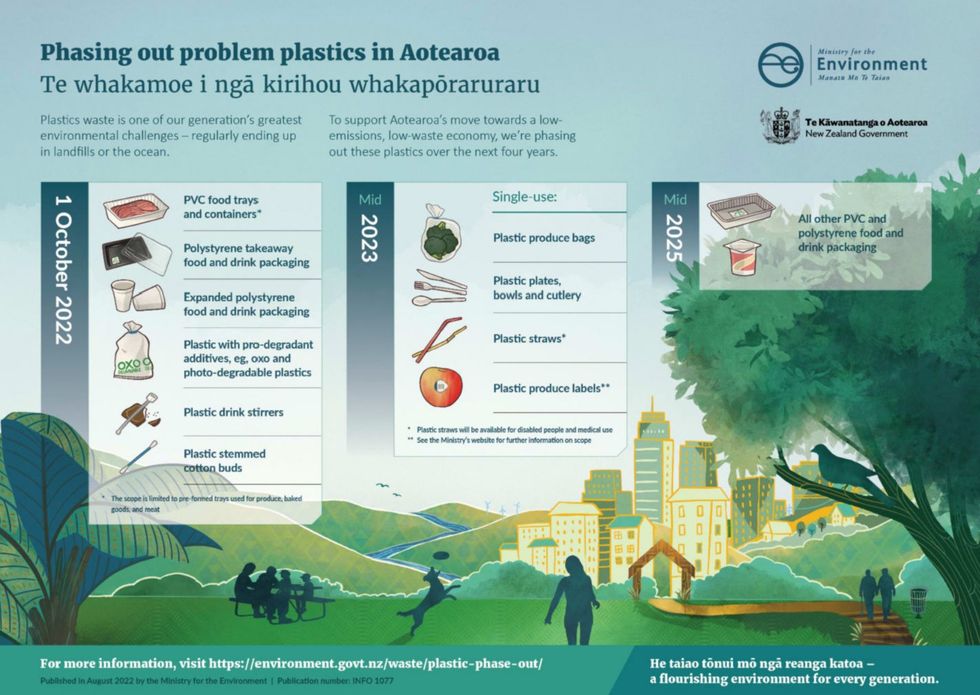
The Aotearoa New Zealand Ministry for the Environment this week reminded the nation of 5 million people that starting July 1, single-use plastic bags—"the ones you put your fruit and vegetables in at the supermarket"—will be banned. So will single-use plastic straws, with exceptions for people with disabilities and special health needs, as well as single-use plastic tableware, cutlery, and product labels.
"New Zealanders produce about 60 kilograms of plastic waste per person per year, so this is one of the many steps we are doing to reduce it," Associate Environment Minister Rachel Brooking told reporters Wednesday. "We really want to reduce single-use anything packaging. So we want people to be bringing their own bags, and supermarkets are selling reusable produce bags."
While other countries have banned one or more of the items on New Zealand's new blacklist, the archipelago nation says it's the first to enact such a comprehensive ban.
"Say goodbye to plastic produce bags! We're proud to be the first country in the world to ban single-use plastic produce bags, as well as targeting single-use plastic straws, tableware, and plastic stickers on fruit," the New Zealand Labour Party tweeted Thursday.
"It's the latest phase of our plan to cut plastic pollution, and will prevent the use of 150 million plastic produce bags a year," the party continued. "Already, our 2019 ban on single-use plastic supermarket bags has stopped a billion bags getting into landfills, oceans, and other places."
New Zealand previously banned plastic supermarket bags in 2019 and some polystyrene takeout food and drink packaging in 2022. The country plans to phase out food and beverage packaging made primarily from PVC or rigid polystyrene by mid-2025.
 (Image: Aotearoa New Zealand Ministry for the Environment)
"Kiwis have adapted well to bringing in their shopping bags to store and we're confident we can all do the same with bringing our own reusable produce bags from home too," Debra Goulding, the sustainable packaging manager at Foodstuffs—a cooperative of three New Zealand supermarket chains—told Scoop.
"Our teams have been working hard behind the scenes to make the transition easier for Kiwis," Goulding added. "We've focused on getting the right systems in place, having our people trained, and providing in-store signage for customers."
Hannah Blumhardt, a waste researcher and senior associate at the Institute of Governance and Policy Studies at Victoria University in the capital Wellington, told The Detail podcast that policymakers should focus on banning many more single-use items.
"We might replace single-use plastic plates with a single-use paper plate, but that paper plate has still required resources to be made, still requires energy to make that paper plate, and then the paper plate is probably going to be food contaminated so it's not going to be recyclable—it often won't be compostable either," she said.
"You've got countries like France—at the beginning of this year they've said that if you're a hospitality outlet and you're serving customers to have here, it is mandatory to use reusable plates and cups and cutlery—so you end up reducing all disposable items," Blumhardt continued.
"In Germany," she added, "they've also passed a law that's come into effect this year where any hospitality outlet that does takeaway, and that includes delivery services, they have to offer a reusable takeaway container option alongside the single-use option and it's got to be the same price or cheaper than the single-use option."
New Zealand's expanded plastics prohibition follows the second round of international negotiations on a global plastics treaty—an accord opposed by fossil fuel and other corporate interests.
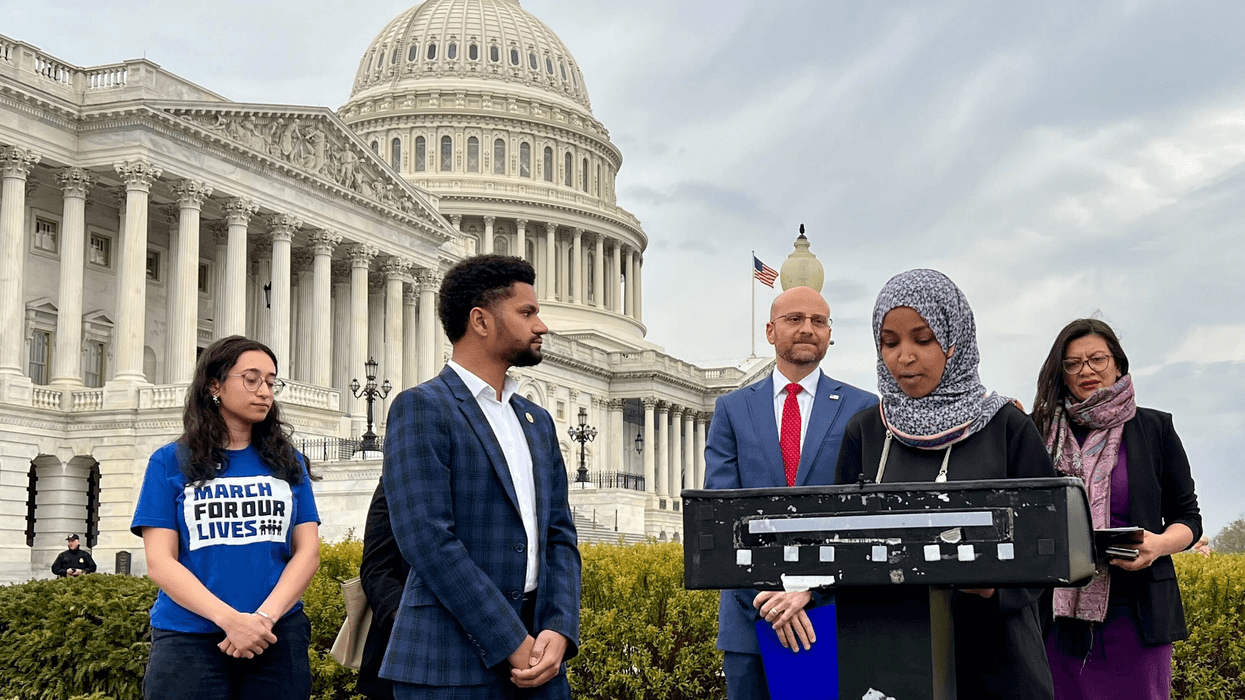
"In order to confront the evils of religious bigotry and hatred, we must come to understand that all our destinies are linked," said Omar, a former refugee from Somalia and one of two Muslim women in Congress.
Joined by Democratic House colleagues and activists outside the U.S. Capitol on Thursday—the first full day of Ramadan—Minnesota Congresswoman Ilhan Omar announced a new resolution condemning Islamophobia and commemorating the recent anniversary of the 2019 Christchurch, New Zealand mosque massacre.
Omar's office said the resolution—which is co-sponsored by more than 20 House Democrats—"comes after continued violence and threats made against religious minorities, particularly Muslims," while adding that the March 15, 2019 murder of 51 Muslim worshippers at the Al Noor Mosque in Christchurch by an Australian white supremacist "was a stated source of inspiration for mass shootings in the United States."
These include the deadly synagogue shooting in Poway, California; the massacre of 23 people, most of them of Mexican origin, at a Walmart in El Paso, Texas; and the murder of 10 people by a white supremacist in a Buffalo, New York grocery store.
Omar said:
As we begin the holy month of Ramadan, we must reaffirm that all people of faith should have the right to worship without fear. According to the Council on American-Islamic Relations, anti-Muslim hate crimes and attacks are at an all-time high. The attack in Christchurch, motivated by an extremist ideology of white supremacy, anti-Muslim hate, and the so-called replacement theory resonates deeply for Muslims in nearly every corner of the globe.
We also know that this increase in hate is not isolated to only Muslims. Church bombings, synagogue attacks, and racial hate crimes are also on the rise.
"In order to confront the evils of religious bigotry and hatred, we must come to understand that all our destinies are linked," Omar added. "That's why I'm proud to lead my colleagues in condemning the rise in Islamophobia and affirming the rights of religious minorities in the United States and around the world."
Robert McCaw, director of government relations at the Council on American-Islamic Relations, also spoke at Thursday's event, saying that "it is with a heavy heart that CAIR welcomes Omar's resolution," which "recognizes the threat posed by rising global Islamophobia to American Muslims and Muslims in other countries across the world, as well as the threat white supremacism poses to all people."
"It is incredibly important for Congress to lead the way in rejecting these hateful and dangerous ideologies, and CAIR calls on both sides of the aisle to co-sponsor and adopt this resolution," McCaw added. "As we remember the lives lost in Christchurch, we must continue to work towards a world where everyone is treated with humanity and dignity, regardless of their faith, ethnicity, or background."
In 2021, the Democratic-controlled House narrowly passed a resolution introduced by Omar aimed at combating Islamophobia after Rep. Lauren Boebert (R-Col.) referred to her and Rep. Rashida Tlaib (D-Mich.)—the only two Muslim women in Congress—as the "jihad squad."
The House GOP, which now narrowly controls the chamber, voted last month to remove Omar from the foreign affairs panel. Just before the vote, the congresswoman said that Republicans "are not OK with having a Muslim have a voice on that committee."
Omar's new federal resolution stood in stark contrast with Texas state Rep. Tony Tinderholt's (R-94) vote against a legislative resolution celebrating Ramadan.
"As a combat veteran, I served beside many local translators who were Muslims and good people," the Iraq War veteran explained. "I can also attest that Ramadan was routinely the most violent period during every deployment."
"Texas and America were founded on Christian principles and my faith as a Christian prevents me from celebrating Ramadan," Tinderholt added.
Responding to Tinderholt's statement, CAIR tweeted: "Every elected official has the right to express their own sincerely held religious beliefs—and we welcome that. But to insult another religion is uncalled for and harmful."
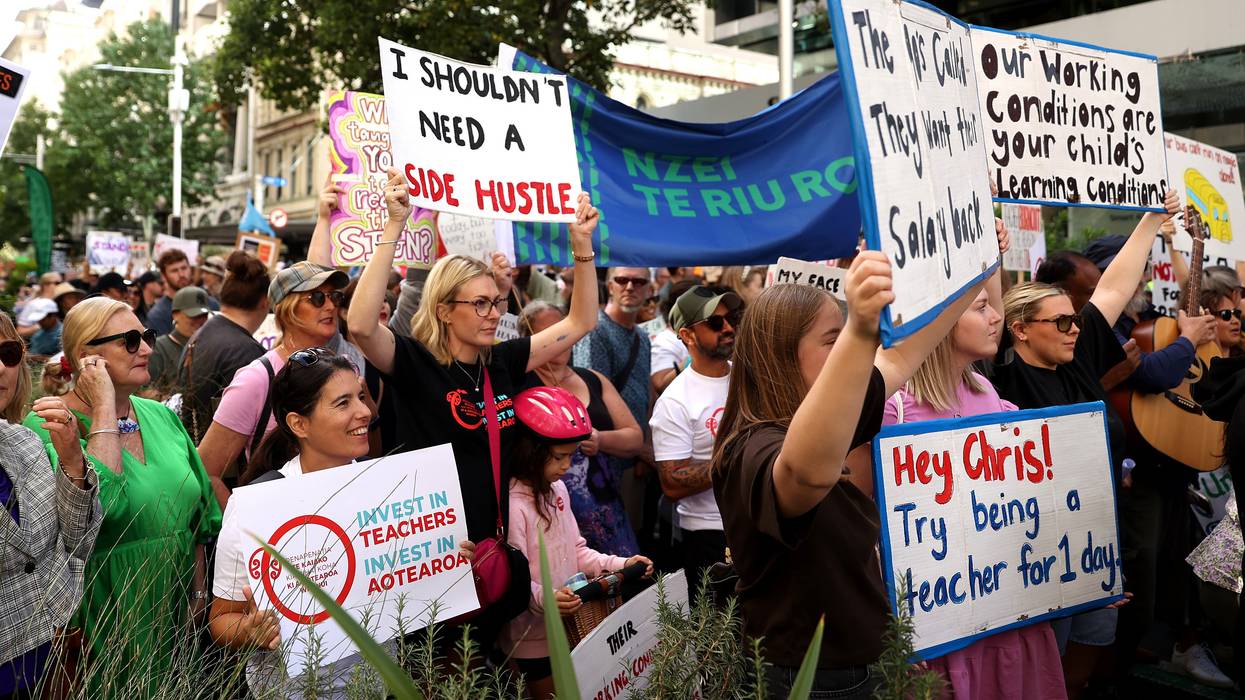
"Investing in teachers is investing in our kids," said one educator. "Investing in our kids is investing in New Zealand's future."
An estimated 50,000 New Zealand educators walked off the job Thursday to demand better pay, improved working conditions, and more government support amid a worsening cost-of-living crisis and a teacher shortage that has left many questioning their future in the profession.
The one-day nationwide strike, spearheaded by the Post Primary Teachers' Association (PPTA) and New Zealand Educational Institute (NZEI), kicked off after the trade unions rejected the Labour government's offers on pay, benefits, and other issues as inadequate to meet the needs of educators who have been under massive strain since the coronavirus pandemic began three years ago.
"I'm striking because the early years are the most important for our children," said kindergarten teacher Virginia Oakly, who joined tens of thousands of her fellow educators at Thursday's demonstrations.
"I'm striking because our kindergarten teachers currently don't have enough sick leave," Oakly added. "We know that it's one of the highest sectors in the country to suffer from illness and that has been made worse with Covid-19. We also can't get enough relievers to cover those absences because of the pay cap that doesn't recognize their experience and knowledge."
The New Zealand strike is part of a growing global wave of labor actions as teachers, nurses, transit workers, and others revolt against government austerity and pay that has lagged behind inflation, which remains elevated around the world.
The Guardian reported Thursday that New Zealand teachers "have so far turned down three pay rise offers from the government of 3%, and say they want 15% or more to continue their work."
In a report released late last year, the United Nations Educational, Scientific and Cultural Organization (UNESCO) found that "six out of 10 countries pay primary school teachers less than other professionals with similar qualifications."
"This criterion is particularly evident in high-income countries," UNESCO noted. "In five out of six countries in this group, primary school teachers earn less than other comparable professionals."
As part of their push for higher pay and better conditions, teachers in the U.K. are currently on the second day of a two-day strike, and tens of thousands of Los Angeles teachers are planning a three-day walkout beginning next week.
Last month, around 100,000 teachers took to the streets of Lisbon, Portugal to demand "respect for our profession."
New Zealand teachers, who have been engaged in contract negotiations with the government for nearly a year, echoed that call on Thursday.
"Teachers are crying out for a better work-life balance and to be recognized as the professionals that we are," said Maiana McCurdy, an Auckland primary school teacher. "As a mother, I'm striking because I want to know that my child's teacher is going to have the support they need to manage the increasingly difficult challenges that our tamariki are coming into the classroom with."
In an op-ed for The New Zealand Herald ahead of Thursday's walkouts, science and math teacher Peter Wills wrote that "we're striking so your kids can have teachers with the time to create great lessons for your children."
"Investing in teachers is investing in our kids," Wills added. "Investing in our kids is investing in New Zealand's future."