

SUBSCRIBE TO OUR FREE NEWSLETTER
Daily news & progressive opinion—funded by the people, not the corporations—delivered straight to your inbox.
5
#000000
#FFFFFF
To donate by check, phone, or other method, see our More Ways to Give page.
Daily news & progressive opinion—funded by the people, not the corporations—delivered straight to your inbox.
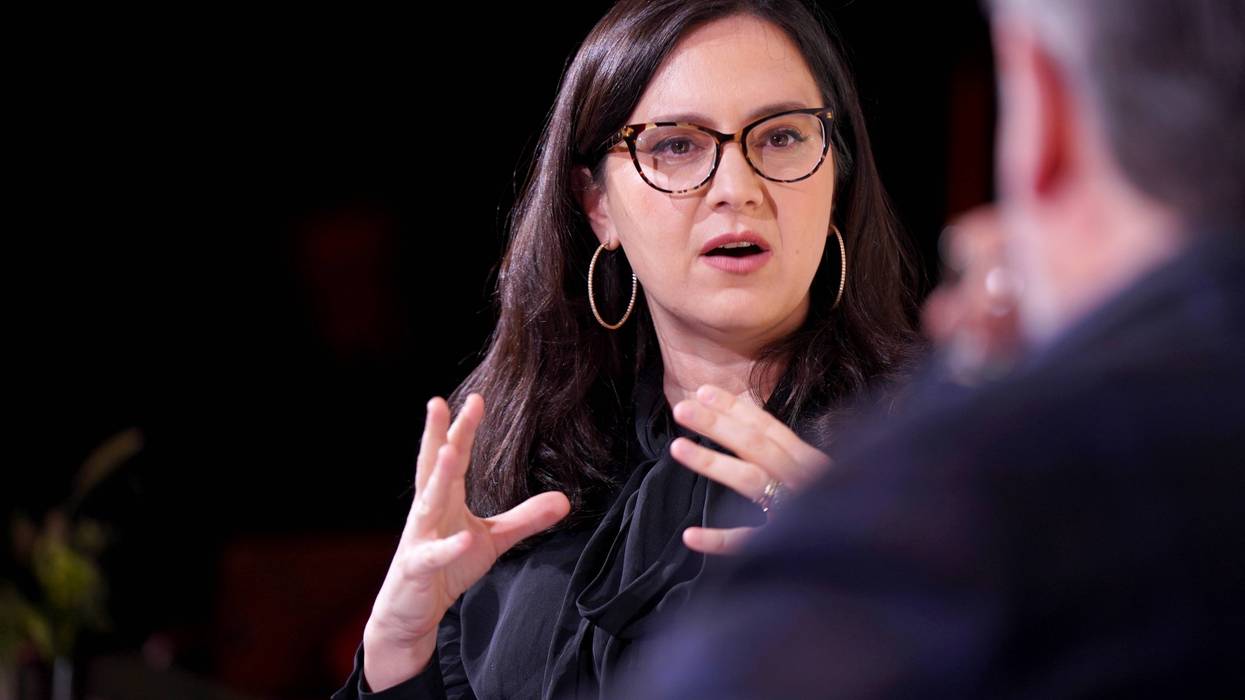
"She was putting a thumb on the scale on behalf of the administration. Constantly looking out for the views of the president."
Days after being fired from the CBS News program '60 Minutes' for speaking out against the dismissal of several top correspondents and declaring that editor-in-chief Bari Weiss was "brought in to kill" the show, veteran journalist Scott Pelley described in detail the right-wing former opinion columnist's efforts to push for political coverage that centered the White House's point of view—regardless of the facts.
"There was a thumb on the scale for the president’s version of events that I felt was a level of political influence that I had never seen in 37 years at CBS News," Pelley told The New York Times' Lulu Garcia-Navarro Sunday.
Pelley was interviewed after he and his former colleagues spoke out against what fired correspondent Cecilia Vega called "censorship" at the 58-year-old program since Weiss took the helm of CBS News last year. Weiss was installed following a White House-approved merger of parent company Paramount and Skydance Media, owned by the son of President Donald Trump backer Larry Ellison.
The new editor-in-chief, who first gained notoriety as a student at Columbia University when she led a campaign against pro-Palestinian professors and later railed against "cancel culture," arrived at CBS last fall with promises to promote "journalism that reports on the world as it actually is" and that is "fair, fearless, and factual."
But in his interview with the Times, Pelley expanded on his earlier accusation, made in a statement released last week after he was fired, that Weiss had demanded that he "inject falsehoods and bias into a politically sensitive story"—revealing that the coverage in question dealt with the killings of Renee Good and Alex Pretti by federal agents in Minneapolis in January.
Good was shot in her car by an Immigration and Customs Enforcement agent after several officers gave her conflicting instructions, and footage of the shooting showed an agent approaching the front of her vehicle as she turned the wheel to the right. Pretti was shot by Customs and Border Protection agents in another incident, after he approached a woman one officer had thrown to the ground. Top administration officials accused both victims of being violent and called Good a "domestic terrorist" while barring state officials from investigating the killings.
Pelley said that before Weiss intervened in the coverage of the fatal shootings, he had pushed to use images "in which we see the protesters acting aggressively."
"I felt it was very important to identify that the protesters themselves were being very aggressive and that they were half of these confrontations," he told Garcia-Navarro. "We also included a picture of Alex Pretti before he was killed kicking out a taillight on a police car and made a point of saying, this is Alex Pretti and this is what he did."
But Pelley's push to get ahead of any criticism that '60 Minutes' was being biased against the agents or the Trump administration didn't stop Weiss from emailing the show's executive producer hours before the story was set to air, asking that producers "make the protesters look more violent" and even promote a false claim about Good that was pushed by the White House.
Pelley said the message from Weiss was, "You need to describe her as driving toward the officer."
This is a devastating interview.
Scott Pelley tells the NYT that Bari Weiss directly put a “thumb on the scale” for Trump over the killing of Renee Good.
Here’s his explanation of exactly what happened. pic.twitter.com/Kh56P1q7rM
— Niall Stanage (@NiallStanage) June 7, 2026
"This is not what you see on the video," Pelley told Garcia-Navarro. "On the video, you see the officer standing slightly off the front of the car. And you clearly see Ms. Good’s wheels turned completely as far as they will go, away from the officer. But he shoots her in the head, kills her."
Pelley said he refused to make the changes, and did not hear from Weiss about the piece after it aired. A CBS spokesperson told the Times that the suggestions Weiss had made "had no political motivation and were proposed solely to make the piece as strong, fair, and accurate as possible."
Pelley told Garcia-Navarro: "My impression at the time was that she was putting a thumb on the scale on behalf of the administration. Constantly looking out for the views of the president. We’re reporting those views. There’s nothing wrong with reporting those views, but it was never enough."
The story on Pretti and Good came weeks after Weiss pushed the show's producers and correspondents to change a segment on Trump's deal with El Salvador under which hundreds of immigrants have been deported to the country's notorious Terrorism Confinement Center after being falsely accused of being gang members.
Pelley's revelation about the exchange with Weiss was called "devastating" by The Hill reporter Niall Stanage, while the grassroots progressive group Our Revolution said Pelley had described "a CBS News editor demanding reporters change facts to match Trump’s version of events to help justify the murder of a US citizen.
"That isn’t news. It’s state propaganda," said the group. "Bari Weiss is not a journalist. She is an asset of the Trump administration. She should be sued and removed and Paramount should answer for installing her."
Scottish historian William Dalrymple added that Pelley's interview revealed Weiss as "a major threat to truthful journalism."
The chaos at CBS has intensified as Paramount Skydance has pushed for a merger with Warner Bros. Discovery, which owns CNN—raising alarm that the cable network could soon see a significant shift toward reporting that blatantly centers the White House's viewpoints.
If 150 million people took advantage of a $100 credit, that would make $15 billion available to support independent media.
It is terrible to see Bari Weiss, under orders from Trumper owner David Ellison, dismantle "60 Minutes" and the rest of CBS News. CBS was never close to being a paragon of unbiased reporting; the rich always had a disproportionate voice, but the network, and especially "60 Minutes," did much excellent investigative reporting.
The Weiss-Ellison team is explicitly saying that this will no longer be the case under their leadership. Any investigative reporting this crew does will most likely be on President Donald Trump’s political opponents. And the material they present will likely be as distorted as the lies that Trump spouts on a daily basis.
The problem goes well beyond CBS. The Ellison family is also planning to take over CNN through its acquisition of Warner Bros., the parent company. The Trumper trio of Larry Ellison, Mark Zuckerberg, and Elon Musk own TikTok, Facebook and Instagram, and X, respectively. They do not hide their efforts to use their control of these social media platforms to push their political agenda.
And it goes beyond just outright control. Trump and Brendan Carr, his chair of the Federal Communications Commission, have said that they would use the federal government’s regulatory powers to punish outlets that broadcast material they don’t like. Trump used this threat to extract tribute from both ABC News and CBS News (pre-Weiss) over absurd lawsuits.
The media matter hugely for democracy, much more than campaign financing.
All in all, this is a really bad story. But there are things that can be done other than whine. First, the Ellison’s takeover of Warner is not a done deal. People can protest this monopolization of both movie production and news. Even Trumper politicians can be forced to respond to public pressure. Note the seeming retreat from Trump’s $1.8 billion slush fund for his criminal friends. Giving tax dollars to Trump’s chosen criminals was too much for people to stomach, and the Republicans in Congress were forced to nix it.
There are also a large number of independent outlets that continue to do solid reporting. I would put ProPublica at the top of that list, but there are many others. I would also include The New York Times and NPR, despite my many criticisms of both outlets over the years. And there are dozens of smaller publications, way too many for me to list, that people should look to support. Instead of buying something you see advertised on CBS or any other corrupt media outlet, send the money you would have spent to The Nation, In These Times, Payday Report, or any of a number of other independent outlets.
But we really need to go beyond what people cough up out of goodwill. The billionaires have endless money to push their Trumpian nonsense. The nickels and dimes that ordinary people can afford is not a match. We really need to have government support for independent media, and I’m not talking about going back to the old days with the federal government coughing up $500 million a year (0.007% of the budget) for the Corporation for Public Broadcasting.
We need an individual tax credit or voucher, modeled on the charitable contribution tax deduction. The difference is that this money would be designated for news outlets, and that it would be a credit (say $100), available to everyone, not a deduction from taxes. This way the money would go to the outlets that people find valuable, not the ones the government has chosen. (There is a question of eligibility, but this has generally not been a major problem in qualifying for tax-exempt status with the Internal Revenue Service.)
This route can make a huge amount of money available to support independent reporting. If it was set up nationally and 150 million people took advantage of a $100 credit, that would make $15 billion available to support independent media. That is roughly 300 times ProPublica’s annual budget.
Needless to say, not everyone will use their credit to support media progressives will like. Some may support tabloid-type reporting on Hollywood figures. Some of it will go to support right-wing Fox News- type propaganda. But if even 20% went to support real news, it would be an enormous boon for independent reporting.
And the great thing about this credit is that it can be done at the state and local level, so we don’t have to wait for the forces of good to retake Washington. There have already been some efforts in this direction around the country. In this respect, it’s worth noting that Katie Wilson, Seattle’s new progressive mayor, is a big proponent. If Seattle or some other progressive city or state led the way, it could set an example for others to follow.
To many, this sort of media tax credit will be a new idea. We all know the old line about intellectuals having a hard time with new ideas. But it is really important that people overcome their difficulties. The media matter hugely for democracy, much more than campaign financing. (Sorry, but it’s a bit nuts to think that campaign ads affect voting, but not what people see between the ads.)
I’ve pushed this scheme for a long time, and maybe it’s not the best plan. But if people have better ideas, put them on the table. Whining over the right’s takeover of the media is not a political strategy.
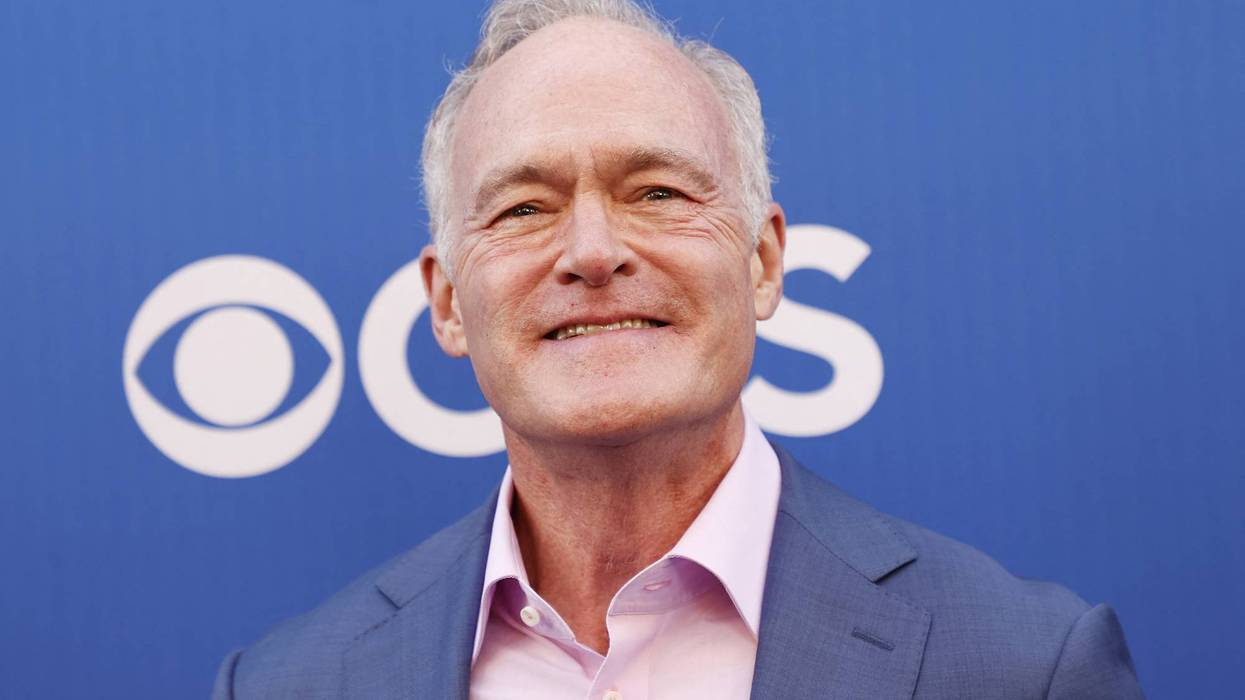
We can gain courage from our heroes of this moment: Scott Pelley is unintimidated, telling us bluntly that the new owner and management of CBS tried to force him to lie to us on the air and spin stories so they could please wannabe-Emperor Trump.
I started in radio news as a teenage reporter at WITL-AM/FM in Lansing, Michigan, then the number one station in the capitol city. I began reporting from the Capitol and City Hall, and was writing and reading the morning newscasts within a year.
The station owner was a hardcore Goldwater Republican, our news director was a liberal but Libertarian-curious Democrat, and I was a long-haired anti-war hippie member of Michigan State University Students for a Democratic Society.
I did the news there for years, and nobody ever told me how to spin it or what to insert or delete. I knew that I couldn’t bias it to reflect my own opinions: the news—accurate, factual, honest information—was sacred.
It was also the cost of our broadcast license, and we all knew it. The widely misunderstood Fairness Doctrine’s main demand was that radio and TV stations “program in the public interest” and that was widely understood to mean straightforward, reliable, faithful-to-reality news at the top and bottom of every hour on radio and an hour-long news block in prime time on TV.
As anti-democracy billionaires continue their march across the American media landscape and pour billions into elections, it falls to us to resist.
We did this—and embraced the Fairness Doctrine—because we knew it was part of the price of freedom, of democracy in our republic. When Thomas Jefferson said he’d rather live in a country with newspapers and no government than in one with a government but no newspapers, he wasn’t knocking government; he’d help create ours and was its president for eight years. He was talking about the vital importance of an honest and free press.
Part of that honesty came from the competition; there were multiple stations in Lansing and most had an in-house news operation like ours, and the ones that didn’t ran the CBS or AP radio newscast twice an hour. Honesty and clarity were essential to get and maintain an audience, as well as hanging onto our license.
Then-President Ronald Reagan ended the Fairness Doctrine in 1987, and now President Donald Trump and his oligarch enablers are trying to bury the entire concept of honest, straightforward news.
Over the past year and a half we’ve watched Brendan Carr, Trump’s hitman at the Federal Communications Commission, go to Conservative Political Action Conference (CPAC) conferences and brag about how he’s going to assault stations that say things he and Trump dislike. He’s trying to intimidate ABC affiliates into muzzling Jimmy Kimmel—again. And he succeeded in taking down Stephen Colbert.
And a Trump-adjacent billionaire nepo baby has acquired CBS and is systematically stripping it of its journalistic integrity, starting with the evening news and now gutting the nation’s No. 1 news magazine show, "60 Minutes."
Storied journalist and "60 Minutes" reporter Scott Pelley isn’t taking it lying down, even though it’s a virtual certainty that he has the standard non-disparagement clause that most media operations now require for talent, which forbid them to ever speak ill of their former employer should they leave for any reason. He’ll probably get sued for it, but he’s a man committed to the truth.
Trump, David Ellison, Bari Weiss, the billionaire owners of Sinclair, the billionaire Murdoch family’s Fox “News,” the 1,000+ billionaire-owned radio stations across the country, the billionaire-subsidized podcasters, and billionaire-owned social media sites like Facebook and X that have apparently been algorithmically slanted toward Trump’s neofascist movement are all following an ancient script.
Adolf Hitler, Benito Mussolini, Hideki Tojo, and Francisco Franco all seized control of the news in their countries in their first year in power. It took both Russian President Vladimir Putin and Hungarian Prime Minister Viktor Orbán two or so years, because they wrote a new script for the takeover: Sue the news outlets and reporters into bankruptcy for “defamation” or “slander,” then have friendly oligarchs take over the outlets.
Orbán even came to CPAC in Dallas to tell Republicans that they should do the same thing as he had done by turning America’s media over to right-wing billionaires. He also told the American CPAC conference in Budapest four years ago, during the Biden administration, that they should do the same in America when Republicans next seized control of the US government.
“Have your own media,” he said. “It’s the only way to point out the insanity of the progressive left. The problem is that the Western media is adjusted to the leftist viewpoint. Those who taught reporters in universities already had progressive leftist principles.”
He added:
Of course, the GOP has its media allies but they can’t compete with the mainstream liberal media. My friend Tucker Carlson is the only one who puts himself out there. His show is the most popular. What does it mean? It means programs like his should be broadcasted day and night. Or, as you say, 24/7.
Thus, this is now the Putin-Orbán-Trump formula:
Trump is 18 months into his project, and he’s already taken down the Voice of America, defunded PBS and NPR, seen the Washington Post and LA Times acquired by sycophantic billionaires, and turned CBS over to a nepo-baby billionaire who’s going after CNN next. As Jefferson pointed out, this is how democracies are fatally corrupted, which is apparently Trump and his billionaire enablers’ goal.
Combine that with a capture of the police and prosecutorial agencies of the government so, like in Putin’s Russia, they can harass and prosecute anybody who dares speak up against their destruction of our way of life and you have the classic formula for turning a democratic republic into an oligarchic dictatorship.
The classic symbol of authoritarian governance dating back to ancient Rome and Caligula—violence as entertainment—will come to the White House as musclebound men will beat each other bloody and senseless for spectacle and the amusement of our 80-year-old “president” on our nation’s birthday.
Masked thugs snatching people off the street without warrants and putting them into concentration camps in violation of the Fouth, Fifth, Sixth, Seventh, and Eighth Amendments also plays well for the fascist Klan-remnant Republican base, so long as the people they beat, pepper spray, or murder are either dark-skinned or “liberal agitators.”
We’re now way down the road to the complete destruction of America, all in less than two years, as I wrote and warned of in The Hidden History of American Oligarchy in 2020.
The courts are packed with Trump toadies; thousands of lawyers have been purged from government; the FBI is now weaponized against Americans; Blacks and women are being pushed out of senior military commands by an openly white supremacist defense secretary; our history is being whitewashed in national parks, museums, and every federal property; and Trump’s face hangs, 60 feet tall, on multiple federal buildings.
And now they’re coming for the news. If it falls, recovering our republic will be possible—the examples are Hungary with Peter Magyar and Volodymyr Zelenskyy being elected in Ukraine—but very, very difficult. It will take years and cost a fortune both in work, cash, and probably blood, as it did in those two countries.
But we can gain courage from our heroes of this moment. Scott Pelley is unintimidated, telling us bluntly that the new owner and management of CBS tried to force him to lie to us on the air and spin stories so they could please wannabe-Emperor Trump. When they tried to lie their way out of the PR mess Pelley created for them, he immediately called out their falsehoods.
This crisis isn’t limited to CBS: the same nepo-baby billionaire who’s taken over that network also, according to Sen. Bernie Sanders (I-Vt.), now owns, controls, or soon will control:
TikTok, Warner Bros., Paramount, DC Studios, The Discovery Channel, CNN, CBS, HBO, BET, Fandango, Rotten Tomatoes, Nickelodeon, MTV, Cartoon Network, Food Network, Travel Channel, Investigation Discovery, Animal Planet, Comedy Central, Showtime, TBS, TLC, HGTV, and more.
Oligarchy and monopoly are two sides of the same anti-democratic fascist coin. They’re always tied together.
As anti-democracy billionaires continue their march across the American media landscape and pour billions into elections, it falls to us to resist.
To register our discontent with those outlets. To boycott them. To demand that our politicians start breaking up the monopolies that Reagan legalized when in 1983 he ordered the Securities and Exchange Commission, FCC, and Federal Trade Commission to stop enforcing the antitrust laws that went all the way back to the 1890s (leading to three decades of “merger mania”).
Monopolies are destructive, but media monopolies are pure Putin-style poison.
We all must become truth tellers, regardless of whether our platforms are, like mine, on radio, TV, and Substack, or if the place we can make our mark and speak our voice is on social media, the local newspaper’s letters to the editor, financial or volunteer support for a fighting progressive politician, or the town square with a protest sign.
We are all Scott Pelley.