

SUBSCRIBE TO OUR FREE NEWSLETTER
Daily news & progressive opinion—funded by the people, not the corporations—delivered straight to your inbox.
5
#000000
#FFFFFF
To donate by check, phone, or other method, see our More Ways to Give page.
Daily news & progressive opinion—funded by the people, not the corporations—delivered straight to your inbox.

“Climate change isn’t a tragedy, it’s a crime. The fossil fuel industry are arsonists at a global scale. It’s their pollution that’s fueling these horrific wildfires," one climate advocate told Common Dreams.
As wildfires raged across Canada on Thursday, sending dangerous smoke across the border into major US cities, climate advocates called for accountability for the fossil fuel industry, which knew for decades that its products were largely responsible for the climate crisis, yet chose to push climate denial instead.
While fire is a natural part of the lifecycle of Canada's boreal forests, the heating of the atmosphere due to the burning of oil, gas, and coal has made fires more frequent and extreme.
"We need Nuremberg trials for Big Oil," the youth-led Sunrise Movement wrote on social media in response to the fires.
We need Nuremberg trials for Big Oil. https://t.co/nHhbDXB06X
— Sunrise Movement 🌅 (@sunrisemvmt) July 16, 2026
Climate Defiance agreed, posting, "Nuremberg-style trials are in order for the fossil fuel executives who knew what they were doing to our children’s futures and did anyway."
There were 884 fires burning in Canada on Thursday, with 124 out of control, according to the country's national wildland fire summary. Over 100 fires were raging in Ontario alone, where they have forced the evacuation of at least 15 rural communities; destroyed homes in the Indigenous community of Collins First Nation, or Namaygoosisagagun; and polluted the skies over parts of the upper Midwest and Northeastern US.
As of Thursday evening Eastern time, the four cities with the worst air quality in the world were Chicago, Detroit, New York, and Toronto, according to IQAir.
People have shared dramatic footage of the fires on social media. One video shows a train moving through a blaze near Armstrong, Ontario. Thankfully, all crew members were evacuated safely, The Guardian reported.
This is near Armstrong, Ontario.
When will the Canadian National Railway Company make a statement about this incident? pic.twitter.com/6bKJYugeR0
— Sol Mamakwa (@solmamakwa) July 14, 2026
Indigenous photographer Nadya Kwandibens shared images of flames rising over a lake with the words, "“My family hometown, Collins Ontario, is GONE."
Residents of the community fled the blaze in boats before the flames damaged and destroyed several homes and other structures, according to CBC News.
“Collins has burned to the ground. This is a tragedy and we are grateful that everyone got out safely,” Lise Vaugeois, the provincial representative for the region, said, as The Guardian reported. “Fires are part of a natural cycle, but the extreme temperatures we are experiencing across the county and the growing severity of weather events are indicators of climate change.”
Laura Chasmer, a professor of geography and the environment at the University of Western Ontario, noted that fires in Canada like the ones raging across Ontario have increased since 2015.
"This is associated with some of the extreme climate warming that we've been seeing, and the atmospheric drying of the surface," she told BBC News.
Brandi Morin, a Cree-Iroquois-French journalist from Treaty 6 territory in Alberta, noted in her Substack that Canada was warming at twice the global average. Despite this, the Canadian government has made progress on three major fossil fuel pipelines this July.
"Every barrel these new pipelines are built to move adds to the exact warming that’s turning our boreal forests into tinder," Morin wrote.
On the other side of the border, Michigan regulators late Wednesday approved important permits from the controversial Enbridge Line 5 pipeline.
Political leaders and climate advocates responded to the fires and smoke with calls to abandon fossil fuel projects, transition to renewable energy, and hold oil and gas companies accountable for the harms they have caused.
"We have the technology and the policy roadmap to replace fossil fuels with green energy extremely rapidly. The only thing stopping us is a handful of billionaires getting rich while our world burns," the Sunrise Movement said.
We have the technology and the policy roadmap to replace fossil fuels with green energy extremely rapidly.
The only thing stopping us is a handful of billionaires getting rich while our world burns. https://t.co/6oqGxoC8m3
— Sunrise Movement 🌅 (@sunrisemvmt) July 16, 2026
As smoke drifted over Boston on Wednesday, Sen. Ed Markey (D-Mass.) wrote on social media: "Look outside in Massachusetts right now. The climate crisis is here. Wildfire smoke is suffocating our communities and our children are breathing dirty air. We need a Green New Deal."
Look outside in Massachusetts right now. The climate crisis is here. Wildfire smoke is suffocating our communities and our children are breathing dirty air. We need a Green New Deal. https://t.co/pXo5XOOt0q
— Ed Markey (@EdMarkey) July 15, 2026
“Climate change isn’t a tragedy, it’s a crime. The fossil fuel industry are arsonists at a global scale. It’s their pollution that’s fueling these horrific wildfires," Jamie Henn, the director of Fossil Free Media, told Common Dreams. "Instead of approving new pipelines, the Canadian government should be holding the industry accountable and using their record profits to help communities on the frontlines of this crisis.”
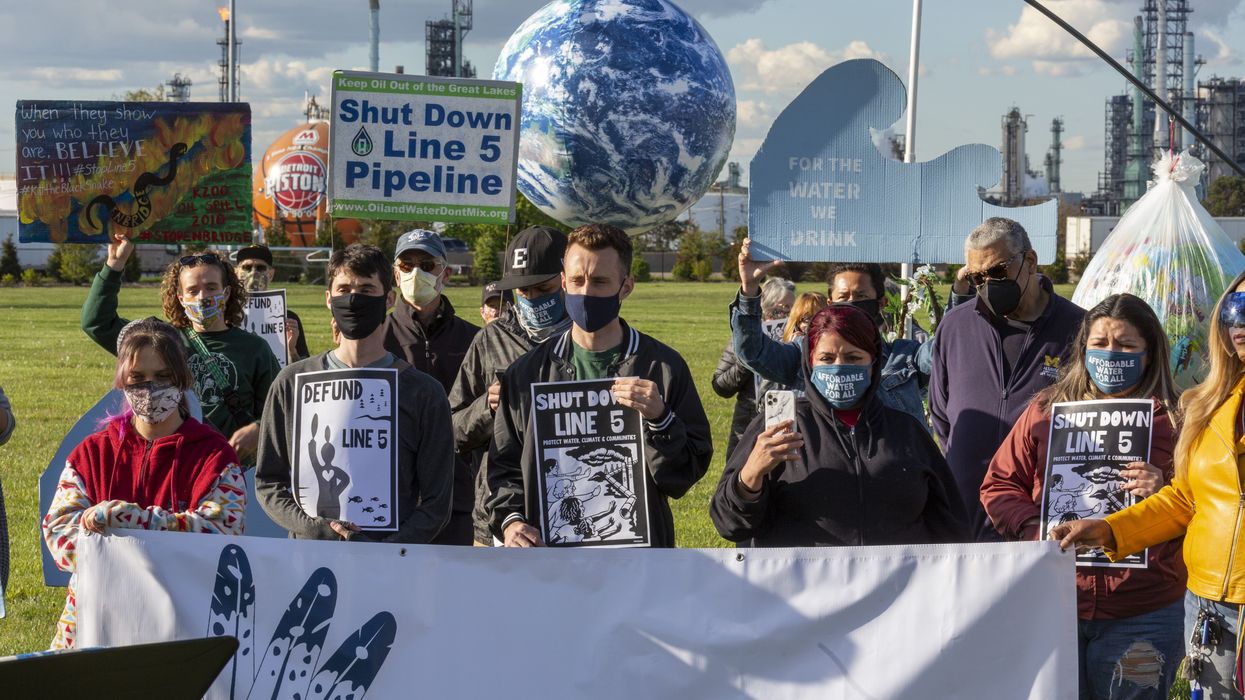
State regulators said the permits for a tunnel under the Straits of Mackinac would have "significant impacts" on wildlife and sacred Indigenous burial grounds, but issued them nonetheless.
Anti-fossil fuel campaigners on Wednesday emphasized that Michigan state regulators had issued key permits for the Enbridge Line 5 tunnel in the Straits of Mackinac on the same day that "wildfire smoke from climate change blotted out the Mackinac Bridge from view" and as the US and other countries faced extreme heatwaves.
Despite the mounting evidence that—as energy and climate experts have long warned—continued fossil fuel extraction is heating the planet and causing dangerous extreme weather, Michigan's Department of Environment, Great Lakes, and Energy handed down a permit Wednesday to allow the Canadian company Enbridge to construct a tunnel that EGLE officials acknowledged will likely have "significant impacts" on threatened or endangered species and Indigenous burial ground in the Straits.
“The magnitude of impacts to recognized historic and cultural values of this proposed project exceeds that of any other that EGLE has reviewed,” said EGLE in its statement on the permits.
Enbridge has sought to build a tunnel around its Line 5 pipeline in the Straits for years, following a massive oil spill from its Line 6B pipeline in the Kalamazoo River. Line 5 has been struck by ships' anchors numerous times, heightening concerns.
EGLE said in its explanation that the oil spill risk was found to be "unacceptable" and that the need for the tunnel outweighed its risks.
But opponents who have argued that Line 5 should be permanently shut down, including the Bay Mills Indian Community, condemned the agency for "rewarding" Enbridge with new permits even after its fossil fuel infrastructure has caused hazardous oil spills.
“Enbridge has spilled oil, committed safety violations, trespassed on lands, shattered ecosystems, pierced aquifers, violated our laws, and repeatedly shown contempt for tribal sovereignty," said Whitney Gravelle, president of the Bay Mills Indian Community. "They have left devastation in their wake, and now they’re being rewarded with responsibility over one of the most precious and sacred resources in our state. The Great Lakes are not safe in their hands. This decision is a deep betrayal of our Great Lake State, and we will confront it immediately, fiercely, and without hesitation.”
The state Department of Natural Resources also issued a permit following EGLE's decision, granting permission for the tunnel despite its potential impact on rare plants and animal habitats.
According to Michigan Bridge, about 1.53 acres of wetlands in Mackinac County would be impacted by the tunnel project, as well as 0.17 acres of Lake Michigan bottomlands in Emmet County, where Enbridge is expected to build a water intake structure.
The environmental legal organization Earthjustice, which has helped represent the Bay Mills Indian Community in its legal challenges against Enbridge, said that with the permits, the company will "transform the Straits of Mackinac into an industrial construction zone for at least six years, destroying views, displacing wildlife, and interrupting tourism dollars."
“Our environmental laws, the looming climate crisis, and simple common sense tells us that an oil pipeline doesn’t belong in the Great Lakes,” said Earthjustice managing attorney Debbie Chizewer. “Today’s decision is a setback, but we’re not giving up. A future without oil in the Great Lakes is still possible.”
EGLE is also expected to rule by September 30 on an Enbridge request to discharge millions of gallons of treated wastewater per day into Lake Michigan while it is constructing the tunnel, and the Michigan Supreme Court is considering a lawsuit brought by four Tribal Nations, including Bay Mills, alleging that the Michigan Public Service Commission improperly issued a key tunnel permit in 2023.
The state is also fighting Enbridge over Democratic Gov. Gretchen Whitmer's 2020 order to shut down Line 5 over oil spill concerns. She had campaigned in 2018 on a promise to shut down the pipeline. A federal judge ruled last year that the state had no authority to terminate the use of the pipeline, and the state appealed that ruling.
Advocates expressed anger on Wednesday at Whitmer as her government issued the permits.
“It’s incredibly disappointing that a governor who ran on a commitment to the climate and protecting the Great Lakes has now decided to instead endorse a Canadian industrial tunnel project that still threatens the Great Lakes and will contribute fossil fuels to the climate,” David Holtz, coalition coordinator for the anti-Line 5 group Oil & Water Don’t Mix, told Bridge Michigan.
David Gover, managing attorney for the Native American Rights Fund, said that "the Straits of Mackinac are not a piece of Enbridge oil infrastructure; they are the heart of creation for Anishinaabe people and a vital source of life for all who depend on the Great Lakes."
“We will pursue every legal avenue," Gover said, "to defend treaty rights, protect drinking water, and preserve tribal lifeways from another Enbridge disaster.”
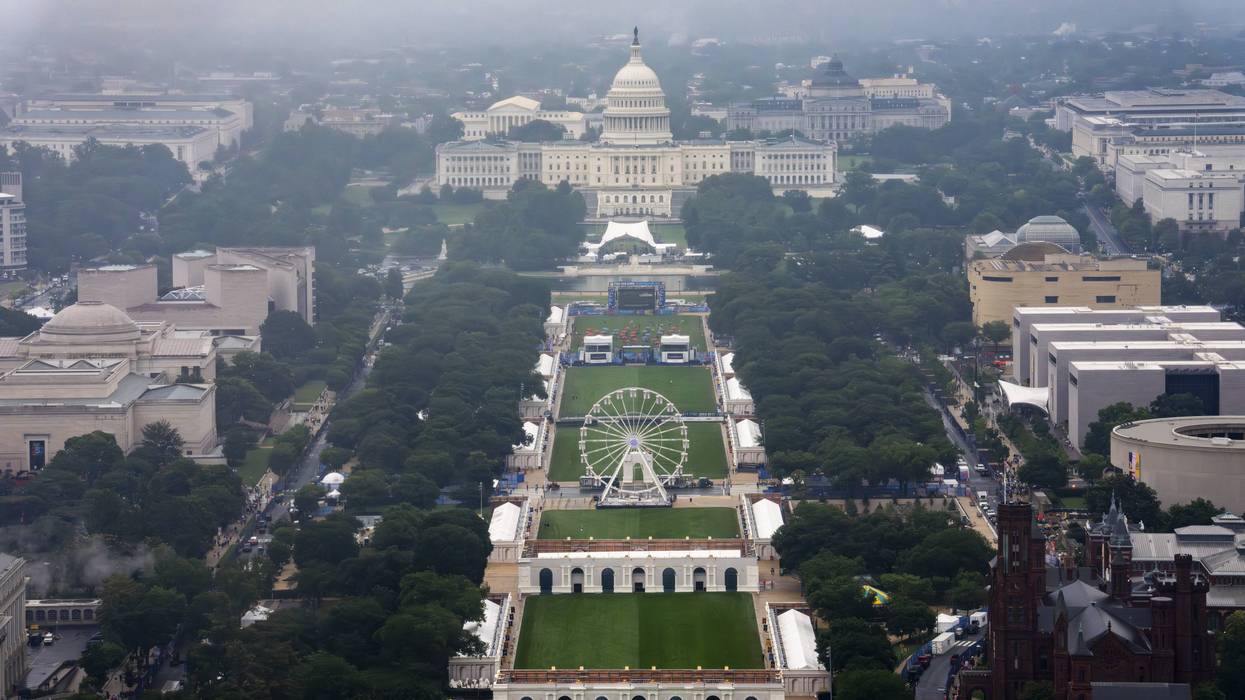
If we must, what we need to celebrate is the basic principles and ideas behind the Declaration of Independence, while being fully cognizant of the fact that we still have a long way to go to achieve equality in this country.
On July 4, 2026, the United States of America turns 250 years old. Should the Left celebrate the 250th anniversary of the founding of the United States with the signing of the Declaration of Independence? After all, this is a nation with a very dark and ugly past—with racism, genocide, and imperialism deeply embedded in its psyche.
Surely Native Americans have no reason to celebrate. The history of the United States government’s treatment of Native Americans is one of cruelty, oppression, and extermination. Leaving aside the 56 million Indigenous people that were killed by European settlers across the Americas by 1600, since its independence in 1776, the US government has launched more than 1,500 attacks against various Indigenous people, slaughtering them, and taking their lands. Native Americans in the US continue to face oppression, poverty, and discrimination, and rank near the bottom of all other groups in terms of health, education, and employment.
What about Black Americans? Do they have a reason to celebrate a nation that denied them their humanity for much of those 250 years, while they continue to experience racial discrimination to this day? Racism against Black people remains very much widespread in the Good Ol’ USA.
Should American women have a reason to celebrate the nation’s 250th birthday? They have been treated as second-class citizens until fairly recently, and while many countries around the world have or had female leaders, it is a widely shared belief that the US is still not ready for a woman president.
The Declaration of Independence should serve as a stark reminder of the need for a call to action when a government, like the one represented by Donald Trump, acts illegally and unconstitutionally to weaken democratic institutions.
If anything, a major milestone like the 250th anniversary of the signing of the Declaration of Independence should be an opportunity to confront the nation’s dark and ugly past and reflect on what has gone wrong with US democracy and what we can do about it. After all, isn’t it a tragic irony that the celebration of America’s 250th birthday, which is supposed to honor the principles of liberty and equality upon which the nation was allegedly founded, will take place with an administration in power whose own beliefs and actions embody the very tyrannical rule that the Declaration of Independence sought to overthrow?
What manner of national progress is this?
But history is not a linear progression. Nor is it guided by the realization of freedom and rationality, as Hegel thought. Human history moves in a spiral, and irrationality makes up a great part of human life and history. Moreover, not only does the value of ideals vary greatly (Nazism and imperialism were as potent ideals as those of democracy and self-determination), but there is usually a disconnect between ideals and political reality. Some of the lofty principles in the Declaration of Independence, such as “all men are created equal,” collided with the facts on the ground and, in fact, had a very narrow interpretation when they were written, as they applied only to white, propertied men.
Indeed, in 2026, we have a president who likes to govern like a king, or a dictator. As a matter of fact, the Supreme Court has given Donald J. Trump king-like powers. Thus, it is hardly surprising that Trump 2.0 has demolished democracy by initiating a new age of authoritarian rule with civil- and human-rights rollbacks, weaponizing the federal government against the president’s political rivals, and unleashing a paramilitary squad of fascist thugs into communities across the nation. It is also hardly surprising that Trump has become the most corrupt president in US history. He is exploiting shamelessly the highest office in the land to enrich himself and his family.
Trump’s enablers extend beyond today’s Supreme Court, which has moved so far rightward that it qualifies as the most reactionary in the nation’s modern history. It includes the plutocrats, media conglomerates, evangelical Christians, and pro-Israel political networks. Retail corporations, major law firms, and academic institutions capitulated with such ease to Trump’s bullying tactics that they made a mockery of liberal ideals.
All that being said, it is difficult not to appreciate the importance of the Declaration of Independence. It is indeed one of the most important documents in the history of politics and ideas for the simple but radical fact that, by articulating the intention of the American colonies to separate from British rule, it established the principles of self-government and individual rights while connecting equality and freedom.
Being profoundly influenced by the philosophical thinking of John Locke, Thomas Hobbes, and Jean-Jacques Rousseau (unlike contemporary US leaders, the likes of Thomas Jefferson, Benjamin Franklin, and John Adams were deeply learned men and had extensive knowledge of history and philosophy), the Declaration of Independence solidified the claims of social contract theory—that is, the idea that governments receive their just powers from the consent of the governed—and justified rebellion against tyranny. Within just a couple of decades, the Declaration of Independence inspired revolts across the globe. It had great impact on political and philosophical debates leading up to the French Revolution (1789) and served as a reference point behind the slave revolt against French colonial rule in Haiti in 1791 and the Irish rebellion against British rule in May 1798.
When Ho Chi Minh declared Vietnam an independent nation on September 2, 1945, he paraphrased the US Declaration of Independence. He opened his declaration of independence with the statement from the 1776 Declaration: “All men are created equal. They are endowed by their Creator with certain inalienable rights, among these are Life, Liberty, and the pursuit of Happiness.” But then he updated those words by saying, “In a broader sense, this means: All the peoples on the Earth are equal from birth, all the peoples have the right to live, to be happy and free.”
Indeed, the Declaration of Independence served as a “universal blueprint” for the anti-colonial struggles that occurred after World War II. It is indeed a radical document. One of its foundational principles is that “it is the Right of the People to alter or abolish” governments that become destructive to their fundamental rights. This principle is a cornerstone of democratic theory and should never be forgotten.
Ironically enough, all US administrations have largely abandoned the fundamental principles underpinning the Declaration of Independence—and none more so than President Donald Trump’s administration. The country is on a very slippery path under Donald Trump’s imperial proto-fascism. Democracy is dying before our very own eyes, and Trump’s desire to reshape the world order not only creates more uncertainty and instability but risks opening a Pandora’s box.
It is in this context that the Declaration of Independence should serve as a stark reminder of the need for a call to action when a government, like the one represented by Donald Trump, acts illegally and unconstitutionally to weaken democratic institutions and engages purely in self-dealing while endangering our communities. We have a monstrous, tyrannical government in power that the People must stand up to with all their might before it ruins everything.
If we must, what we need to celebrate on the 250th anniversary since the signing of the Declaration of Independence is nothing more and nothing less than the basic principles and ideas behind this document, in an updated manner, of course, à la Ho Chi Minh, while being fully cognizant of the fact that we still have a long way to go to achieve equality in this country. That was not the intention of those who drafted and signed the Declaration of Independence; nonetheless, they gave the world a political and philosophical document for the ages.
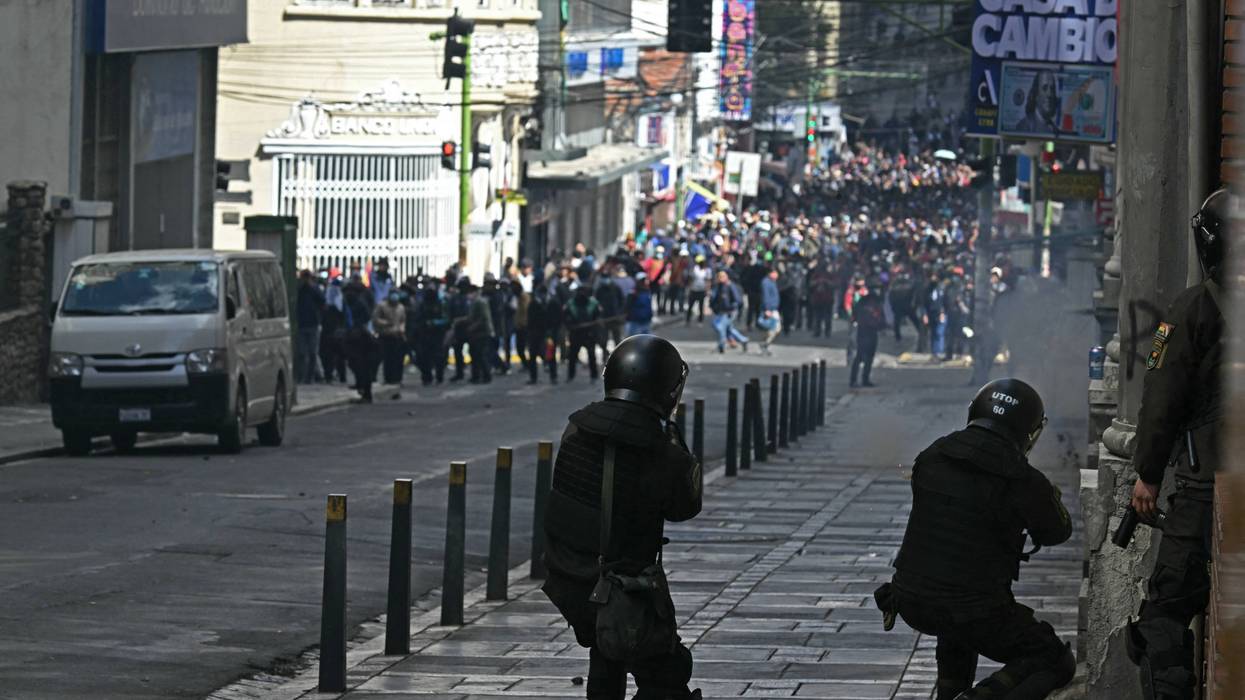
To understand why Bolivia is on the brink, we must understand a fundamental betrayal of the people by their political representatives.
For over six weeks now, Bolivia has been engulfed in a national revolt. What started as sectoral demands over public employee salaries, fuel subsidies, and land rights has metastasized into a full-throated cry for the resignation of Trump-aligned President Rodrigo Paz. The country is paralyzed by more than 100 road blockades that have severed the capital, La Paz, from the rest of the nation, cutting off food, fuel, and medicine. Ten people are dead, dozens more injured, and over 300 have been arrested. Journalists and activists have also been caught in the violence.
The government’s response has been a schizophrenic mix of hollow calls for peaceful dialogue and negotiation, and brutal repression. Paz has signed deals with some social sectors, and organized a Social Economic Council, while jailing the leaders of the groups he’s “negotiating” with.
Thousands of militarized police have been deployed, using tear gas, rubber bullets, and, according to persistent rumors the government denies, live ammunition. Leaders of various protest groups, including the Bolivian Workers’ Central (COB), the largest trade union in the country, and radical Aymara defense force Ponchos Rojos, have been jailed. The Wiphala, the sacred flag of Bolivia’s Indigenous majority, has been burned in public squares by counterprotesters while the state itself no longer displays it publicly.
As Argentinian President Javier Milei’s expatriated adviser Fernando Cerimedo put it, this government is fighting against “dirty leftists.” Cerimedo was reportedly crucial in deporting a human rights mission from Argentina this week. Protest leaders and politicians have been kidnapped in broad daylight, including one senator with the Movement Toward Socialism, taken by police in plain clothes.
When a government disregards the voting blocs that got it into office, blocks every avenue for democratic change, criminalizes dissent, and rules on behalf of a foreign-aligned racist elite, it leaves the people few political options for engagement and representation.
Far-right groups and “The Resistance” have re-popularized the slogan, “Make the homeland, kill an indian,” which had become a popular rallying cry in the 2019 coup. Those same far-right groups were also seen in San Julian, near Santa Cruz, using illegal weapons and explosives against protesters, alongside state security forces. The Paz government has not rebuked any of these figures, statements, or actions, and instead cracked down further on the left.
Internationally, the reaction maps perfectly onto the new ideological conflict dividing Latin America. The right-wing autocrats, from Argentina’s Milei and Venezuela’s Maria Corina Machado to the Trump administration, have been unequivocal. They have labeled the protesters “narco-terrorists” threatening democracy itself, with the government applauding their solidarity.
US Secretary of War Pete Hegseth declared that the US “will reject all attempts to overthrow the legitimate government.” President Donald Trump himself expressed solidarity for Paz at the Shield of the Americas, held at his very own Trump Resort in Miami. This support has emboldened the Bolivian far-right, which is openly pushing for a full “state of exception,” a euphemism for martial law that has been developed by various autocrats including Ecuador’s Daniel Noboa and El Salvador’s Nayib Bukele, to crush democracy and opposition in the name of a “war on drugs.”
That scenario is likely for Bolivia, too, where protesters labeled “narco-terrorists” would be the subject of that war on drugs. Paz and the government coalition in the Plurinational Assembly have already passed and signed a law modifying the state of exception law. The old law was passed in 2020, after the pro-US unelected government of Jeanine Anez committed multiple massacres against opposition in that state of exception, to try to tamper state abuses.
Now, many safeguards have been removed, with the law giving carte blanche to state agents to kill, seize property, shut down telecommunications, and suspend political rights. The president has also declared a 90-day humanitarian emergency, which allowed for the deployment of militarized forces in El Alto, leading to the death of one protester and multiple injuries.
To understand why Bolivia is on the brink, we must understand a fundamental betrayal of the people by their political representatives. Rodrigo Paz ran under the banner of the Christian Democratic Party (PDC), a big-tent coalition with Indigenous currents previously aligned with the left, populist anti-corruption crusaders, and hard-right figures from the Santa Cruz elite. Voters, exhausted by the chronic crises of the Luis Arce administration and facing a nightmare choice against the far-right former president Jorge “Tuto” Quiroga (who was vice president to former pro-US dictator, Hugo Banzer), held their noses and voted for what they believed was the least destructive option.
They were promised “Capitalism for Everyone,” a softer, more competent alternative that would see public programs and social rights protected while opening up the country further.
Instead, Paz’s first months have been a masterclass in neoliberal shock therapy, looking to privatize energy, cutting public services and subsidies, restructuring debt with American financial institutions, and proposing to reform Indigenous land tenure, which communities correctly interpreted as a prelude to opening communal lands to private extraction. Key subsidies ensuring many citizens’ very survival, including fuel and food subsidies, have also been cut, jump kicking the cost of living for the most vulnerable.
The result is the political destitution of the Bolivian left, which represents the vast majority of the country. The old vehicle, Evo Morales’ MAS, is decapitated and adrift. Evo himself is practically in exile with an arrest warrant hanging over his head. His protege, Andronico Rodriguez, has been a ghost in public life, and his Alianza Popular has not been able to build much momentum.
Former President Luis Arce, Evo’s former minister and now sworn enemy, is in prison, in preventive detention. Other socialist leaders, politicians, and activists have been jailed, while the cabinet has ironically vowed to continue crackdowns “against lawfare.”
The Paz government has been jailing the key leaders of the socialist era while releasing convicted terrorists and far-right racists linked to the 2019 coup government and its subsequent massacres, like Jeanine Áñez, Luis Fernando Camacho, and leaders of far-right youth groups deemed the equivalent of the Proud Boys. It has also brought back the Drug Enforcement Administration, which had been kicked out by the Morales government over alleged election interference.
Despite running as the left’s only option, and as the counter to the right, since taking office, Paz’s policy proposals, rhetoric, and platform have mostly been directed at the white, Christian, conservative elite in the tropics, rather than to the Indigenous majority in the Altiplano.
This betrayal is creating a crisis of representation in a country where trust in institutions and democracy is already very low—and in the poorest country in South America. Most of the activists in the streets voted for Paz, while many unions endorsed the PDC, but are now expressing their discontent at their interests being disregarded. One protester in La Paz told me, “We have to remind these oligarchs who the Casa Grande del Pueblo is for, and reclaim it.”
The government and its allies have worked overtime to criminalize the rage that has come from this betrayal. In the face of this repression, some groups have decided to fight fire with fire, arguing Paz’s repression has made negotiation unviable. The COB itself said it would be willing to do anything, “as in a war,” and has vowed to “increase radical pressure measures.”
As Quya Reyna, a writer, activist, and social leader argued in a manifesto for the protest movements, repression will only bring further suffering, and, if the government refuses to negotiate, this is the social cost it will bring. Another manifesto signed by some indigeneist protest groups now explicitly endorses armed resistance.
When a government disregards the voting blocs that got it into office, blocks every avenue for democratic change, criminalizes dissent, and rules on behalf of a foreign-aligned racist elite, it leaves the people few political options for engagement and representation.
The state is using its monopoly on force not to protect its citizens, but to protect the privileges of the few against the many. It cannot, then, be surprised at the rage it engenders by doing so. As Reyna added, “if you want peace, listen to the people and negotiate, don’t repress.”
Faced with this brick wall, the social movements are left with little choice but to play outside the system. In the long term, this is a terrible development for peaceful, stable, social democracy, as it may create a vicious cycle between faith in political institutions, and political violence. As one piece of graffiti scrawled in La Paz by protesters declares, “Let there be no peace for the oligarchies if there is no bread for the majority.”
Vice President Edmand Lara, a populist former police officer who was crucial to Paz’s election, has broken dramatically with the president, condemning the repression and inviting the Inter-American Commission on Human Rights to monitor the country.
The vice president has also denounced the cabinet’s own links to drug trafficking, though he has called for further crackdowns on crime, and Evo Morales. On the right, former president Tuto Quiroga, billionaire Marcelo Claure, Áñez allies, and others have pushed for Paz to step aside and allow security forces to rule, through a state of exception (essentially, martial law), while continuing economic “liberalization.”
Some reports have also indicated the military is interested in pushing Paz out, while embracing further right-wing figures. To satisfy them, Paz has given even more power to the hardliners like Ernesto Justiniano, the anti-drug czar, now minister of defense, while further alienating social sectors and moderate progressives within his cabinet, like José Luis Lupo, Lara, and billionaire Samuel Doria Medina, all of whom have urged for dialogue over repression.
This government is eating itself, while Bolivian democracy has perhaps never looked weaker.
The hard-fought promise of the Plurinational State, a multiracial social democracy with strong rights and constitutional protections, has been hollowed out by a new form of external rule for the elites, far-right racists, foreign states, and the security state. The majorities, meanwhile, have felt betrayed, and are using every means at their disposal to regain representation.
That popular movement now believes the only way forward is a fresh start—calling for Paz to resign, and for fresh elections. Until then, they will continue blocking the country, and forcing the government’s hands, to remind them of their power. Though, the right will continue blaming “dirty leftists” and “indians” for “destroying the country” and “stopping progress,” instead of blaming themselves.
To move forward, the country's leaders will have to realize that, whether in a democracy or dictatorship, they will have to govern with, and for, the Indigenous majorities, not without and against them.
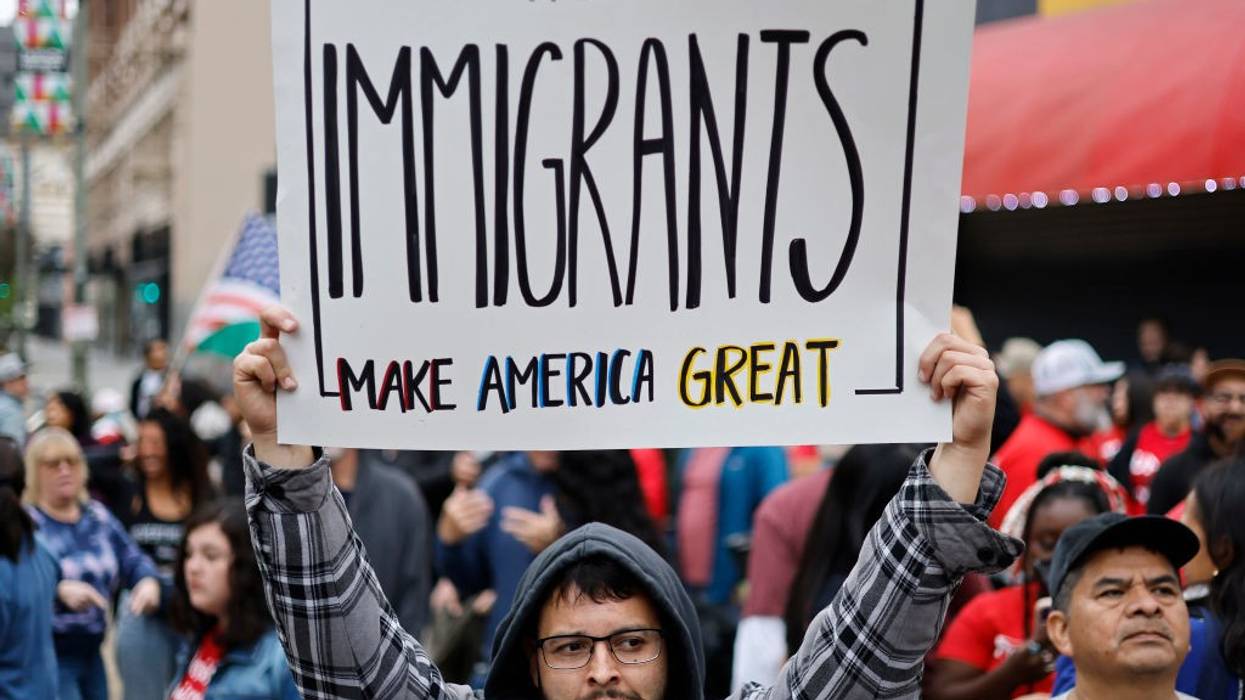
Amid Trumpian attacks on immigrants and erasure of history, it is more important than ever that we stop and examine the record of who we are and how we got to where we are as a country and an American people.
June is National Immigration Heritage Month, a time to celebrate the diverse peoples and cultures that have made America great.
This year–when not only immigration and cultural diversity are being challenged, but also the complex history of our country is being erased–it is more important than ever that we stop and examine the record of who we are and how we got to where we are as a country and an American people.
First, we should never forget that this country was born with two “original sins”: slavery and genocide. The current administration in Washington wants to rewrite our history by eliminating mention of negative events and practices that defined our past, focusing instead on the “greatness and industriousness” of our founders and their “glorious victories.” In reality, there would be no America if not for the surplus wealth created by the labor of enslaved people across the South and the riches accrued by those who benefited from the theft of Indigenous peoples’ lands.
Nor should it be forgotten (although it is) that the Declaration of Independence names one reason for the War of Independence against the British Empire as the American settlers’ grievance that King George would not defend them against “merciless Indian Savages,” who were resisting having their lands taken from them. And, of course, we fought a civil war not so much to end the deplorable practice of human slavery, but to rein in the power and independence of the Southern states.
What would be American food, fashion, music, art, humor, literature, diplomacy, and so much more be without the contributions of African Americans, the Chinese, Italian, Greek, Polish, Irish, Jewish, Latino, and Arab immigrants (and so many more)?
As the country grew and with the industrial age upon us, the need to build infrastructure to transport people and goods, mine coal for power; and operate factories opened the doors to new immigrants from countries far afield. Chinese built railroads; Irish dug canals; Irish and Eastern and Central Europeans worked in the mines, and they were joined in the mines and factories by Italians, Greeks, and Arabs.
As needed as these new immigrants were for America to grow and prosper, their very presence, growing numbers, and unique cultures provoked a backlash among the earlier northwest European settlers who had come to see themselves as the original and “real Americans.” The “new immigrants” were demeaned, discriminated against, and subjected to state and vigilante violence.
Tragically, we see the same pattern of behaviors playing out today as Americans are confronting our newest immigrants. In a brilliant paper written a decade and a half ago for the Immigration Policy Center, Jeffrey Kaye examines the immigration history of one town in Pennsylvania. He notes that when the Irish, Italian, and Eastern and Central Europeans were first moving into the community, newspaper articles and speeches by City Council members described the Irish as “drunkards,” the Slavs as “peculiar,” the Hungarians as “ignorant, immoral, and filthy,” and the Italians as “the most disreputable.” All were subjected to derision for their “queer languages” and not fitting in. The tragic irony is that one century later, the descendants of these same groups are now saying the very same things about the newest immigrants who were mostly from Latin American countries.
Forgotten in this history of miserable repetition are the lessons we should have learned and the benefits we accrued along the way. We now know that the early English settlers in New York and the eastern colonies learned lessons in governance and agriculture from the Native Americans, and yet they referred to them as “savages.” And we know that it was the hard work, for no wages, that brought wealth to white Southern landowners who nevertheless demeaned Blacks as lazy and shiftless. Much the same can be said about the immigrants of the industrial age. Despite the bigotry and violence they endured, we can ask, “Where would America be today if not for the hard work and inventiveness of these immigrant communities?” Further, what would be American food, fashion, music, art, humor, literature, diplomacy, and so much more be without the contributions of African Americans, the Chinese, Italian, Greek, Polish, Irish, Jewish, Latino, and Arab immigrants (and so many more)?
The lesson here is a simple one: We should never forget that what makes America great is its diversity and its capacity to absorb so many peoples and cultures. What threatens our greatness is when we forget this and stupidly attempt to fabricate our history and “whitewash” our culture.
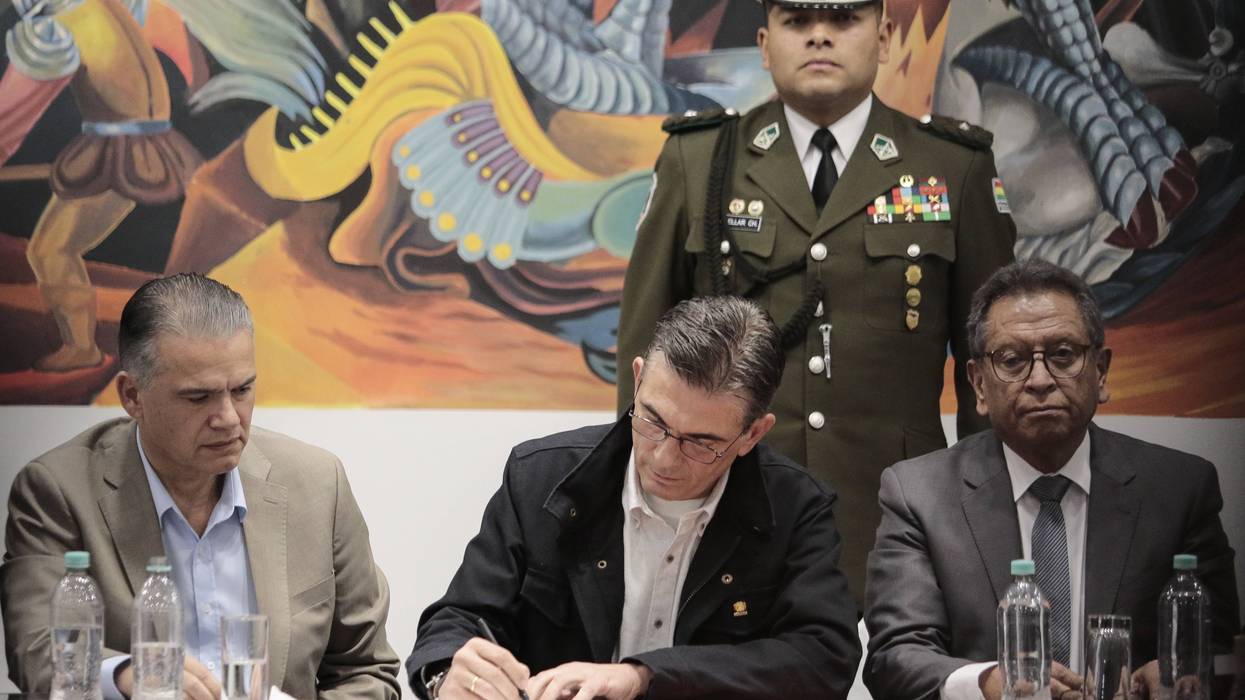
US Secretary of Defense Pete Hegseth linked "narco-terrorism," a top target of the Trump administration, to Bolivia's ongoing protests last week.
Days after the Trump administration blamed "narco-terrorists" for ongoing anti-government protests in Bolivia, US-backed President Rodrigo Paz adopted the term in a statement Monday as he signed legislation that could clear the way for his administration to impose a state of emergency—allowing the military to take action against the demonstrations and suspending constitutional rights across the South American country.
"Our security is put at risk when narco‑terrorism, and the priorities of certain actors, are not aligned with our democracy, our Constitution," Paz said at a signing ceremony. "They put their own interests above those of Bolivian society."
The president warned that the protest organizers' "days are numbered."
Local journalist Joseph Bouchard noted that Paz did not provide any evidence that the dozens of roadblocks that have been erected in Bolivia and the marches and other protests that have been held in cities including La Paz and El Alto are in any way connected to drug trafficking or "narco-terrorism." The government of the Santa Cruz department, the largest of nine constituent departments in Bolivia, also used the term "narcoguerrillas" to describe protest organizers.
Paz signed the legislation into law weeks after the Bolivian Chamber of Senators overturned a law that imposed strict limits on how the government can declare a state of emergency in the country. The limitations included ensuring that certain rights could not be suspended under a state of exception and making the president criminally liable for exceeding the law’s parameters.
On Sunday the legislature passed a new law clearing the way for Paz to declare a state of emergency and allow the military to deploy to clear about 90 blockades and other protests.
The demonstrations have included a 683-mile march in May from the northern territories to La Paz, with Indigenous representatives, teachers, mining unions, and other labor federations among those protesting low wages, privatization, and Paz's decision to end a fuel subsidy after he became president last November. The subsidy had been crucial for working people, organizers say. Some groups are calling for Paz's resignation.
According to The Associated Press and other outlets, the road blockades have disrupted deliveries of food, fuel, and medical supplies.
Before Paz signed the law on Monday, the country's public prosecutor charged a leader of the main labor federation with "terrorism" for his role in leading the demonstrations.
The independent public ombudsman said over the weekend that 10 people have died as a result of the blockades, 37 people have been injured, and 365 arrests have been made from May 1-June 2. The government has said seven of the deaths resulted from a lack of medical attention, but they are still being investigated.
Last week, US Secretary of Defense Pete Hegseth said on social media that the US government and military would “reject all attempts to overthrow the legitimate government” of Paz.
“The United States is watching. Bolivia must not allow itself to fall prey to the old status quo of narco-terrorist dominance in the region,” Hegseth added.
The Trump administration has also claimed to be fighting "narco-terrorism" as it has killed more than 200 people in boat bombings in the Caribbean and eastern Pacific Ocean, and charged Venezuelan President Nicolás Maduro with drug trafficking after the US military invaded Venezuela and abducted the president in January.
In March, residents of a farming town in Ecuador described an "ambush" by Ecuadorian and American forces who had attacked the area in what the country's right-wing president, Daniel Noboa, called an operation to take down “a training ground for drug traffickers."
The farmers said the town was a "livestock area" with no drug trafficking activity taking place.
Bouchard noted that before signing the law regarding the declaration of a state of emergency, Paz thanked Hegseth for his "support for democracy."
"I really don't know how anyone could take any of this seriously," said Bouchard, "after reading for three seconds about the Trump administration and the history of the US in Bolivia/Latin America."
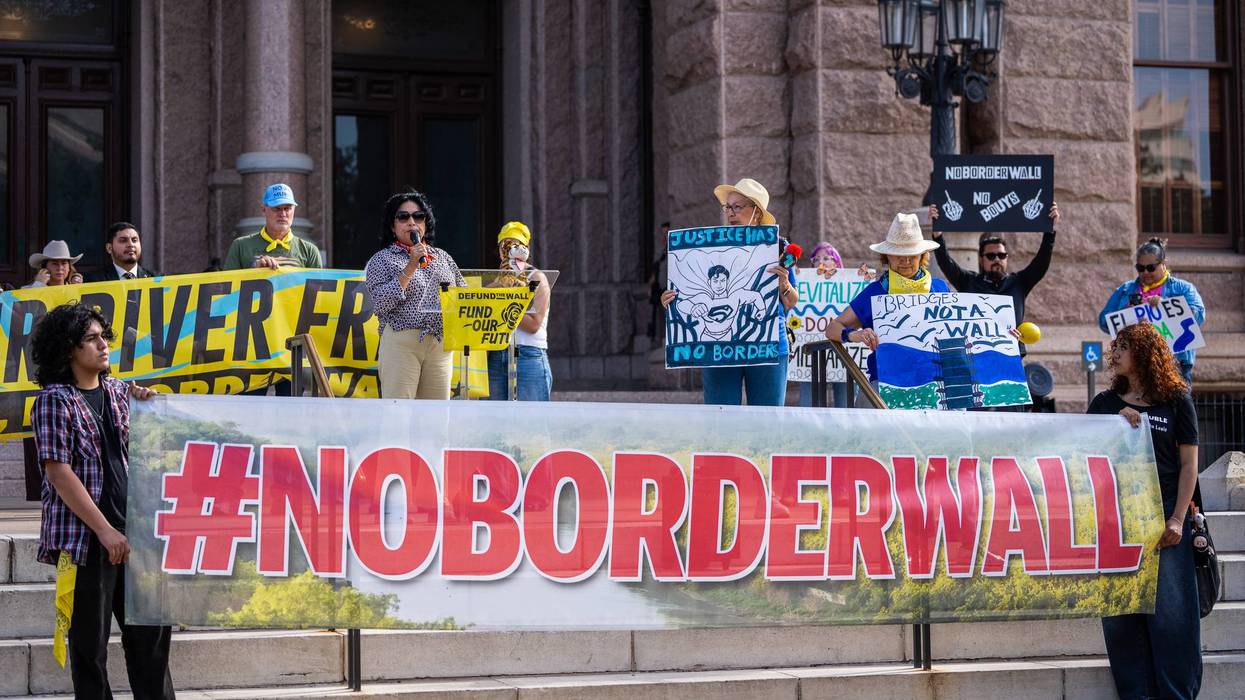
“These horrific plans are an affront to the millions of Americans who treasure Big Bend,” said one conservationist. “Politicians who’ve never set foot here are signing a death warrant for this wild and beautiful place.”
The Trump administration's revised waiver of dozens of environmental laws to expedite the construction of border roads and barriers through Big Bend National Park in southern Texas is set to take effect Tuesday, over the objection of Indigenous, migrant rights, and environmental groups.
Last month, the US Department of Homeland Security (DHS) initially published its determination that waivers from laws—including the National Park Service Organic Act, Endangered Species Act, and National Wild and Scenic Rivers Act—are needed "to ensure the expeditious construction of barriers and roads in the vicinity of the international land border in the state of Texas."
However, DHS said the project area description in its original notice of determination was "incorrect" and issued a revised notice with the correct geographical information, set to be published on Tuesday.
“The absolute disdain this administration has for our national parks is disgraceful, and now they’re targeting Texas’ most beloved national park,” Center for Biological Diversity national public lands advocate Laiken Jordahl said in a statement Monday.
“The only people benefiting from this destruction are the billionaire contractors set to pad their pockets while paving over our natural heritage and permanently locking a great American river behind hideous steel barriers," Jordahl added. "We won’t stop fighting for this crown-jewel national park and the Rio Grande.”
As CBD noted, DHS in May awarded $1.7 billion in contracts that include work on a "border wall through Big Bend.” Former Homeland Security Secretary Kristi Noem personally approved two contracts for SLSCO Ltd., a Texas-based company also under contract for the infamous Alligator Alcatraz camp for immigrants in Florida. The company is a major Republican donor and is accused in court of trafficking people and weapons across the border.
Last week, DHS awarded another $2.6 billion contract—the biggest border deal to date—for the Lower Canyons stretch of the portion of the Rio Grande that has "Wild and Scenic River" protections, and is downstream from the national park.
While running for president in 2016 and during his first term, Trump repeatedly vowed that Mexico would pay for the wall, for which US taxpayers and private donors have footed the bill. Only a small fraction of the wall has been completed.
While much of the border barrier consists of a 30-foot reinforced steel-bollard wall, the 118-mile portion of the Rio Grande running through Big Bend National Park currently has mostly natural barriers like the rivers, deep riparian canyons, mountains, other steep terrain, and the unforgiving Chihuahuan Desert.
Planning documents and maps from earlier this year suggested substantial border wall construction in the broader Big Bend region. Amid public outcry and opposition from politicians from across the political spectrum, US Customs and Border Protection (CBP) published a map showing no planned 30-foot wall inside Big Bend National Park. However, the map shows miles of planned barriers meant to stop vehicles but not people on foot, new patrol roads cut through the park, and more surveillance technology.
"The move marks the first time in American history that the federal government has cast aside a broad slate of environmental laws... in a national park," CBD said Monday.
Considerable ambiguity remains over the precise nature of the border barrier through Big Bend National Park. In April, CBD filed a lawsuit under the Freedom of Information Act "to obtain public records about construction plans in the area."
Indigenous peoples and their advocates have also opposed expanding the border barrier and have criticized DHS for waiving laws, including the Native American Graves Protection and Repatriation Act and the Archaeological and Historic Preservation Act, to enable the administration's plans.
David Keller, a noted archaeologist in the region, warned in a February interview with Big Bend Reporter that what he called “the military industrialization of one of the last, great, unspoiled places remaining in the United States of America" threatens millennia of Indigenous history stored in the soil and etched on rock faces.
The Trump administration's work on other portions of the border wall has blasted and bulldozed sacred Indigenous sites.
Late last month, seven former Big Bend National Park superintendents wrote to DHS Secretary Marywayne Mullin, urging him to reject the waiver of federal laws. CBD and over 130 advocacy groups and business2es have also called on Congress to block federal funding for any further border wall construction in the region, including Big Bend National Park and Big Bend Ranch State Park.
"If a border wall—or other unnecessary and highly destructive border infrastructure—is built inside Big Bend National Park, it would be the most egregious assault on the integrity of the entire National Park System since the construction of a dam in the Hetchy Hetchy Valley in Yosemite National Park more than a century ago," the former superintendents asserted.
Texas Public Radio reported Sunday that construction on the border wall in the Big Bend area is set to begin "within weeks."
"Shipments of what appear to be steel bollards have begun arriving in the region, and at least one 'man camp' housing facility for workers is being developed," the outlet said.
As the No Big Bend Wall Coalition notes, while CBP's Big Bend Sector represents 26.5% of the US-Mexico border, only about 1.3% of all border apprehensions happened there last year, belying Trump administration claims of "high illegal activity" in the area.
"Historically, the Big Bend Sector is the quietest part of the entire US border," the coalition said. "While federal rhetoric has described a 'national emergency' to justify waiving environmental protections and seizing private land, their own CBP data tells a different story."
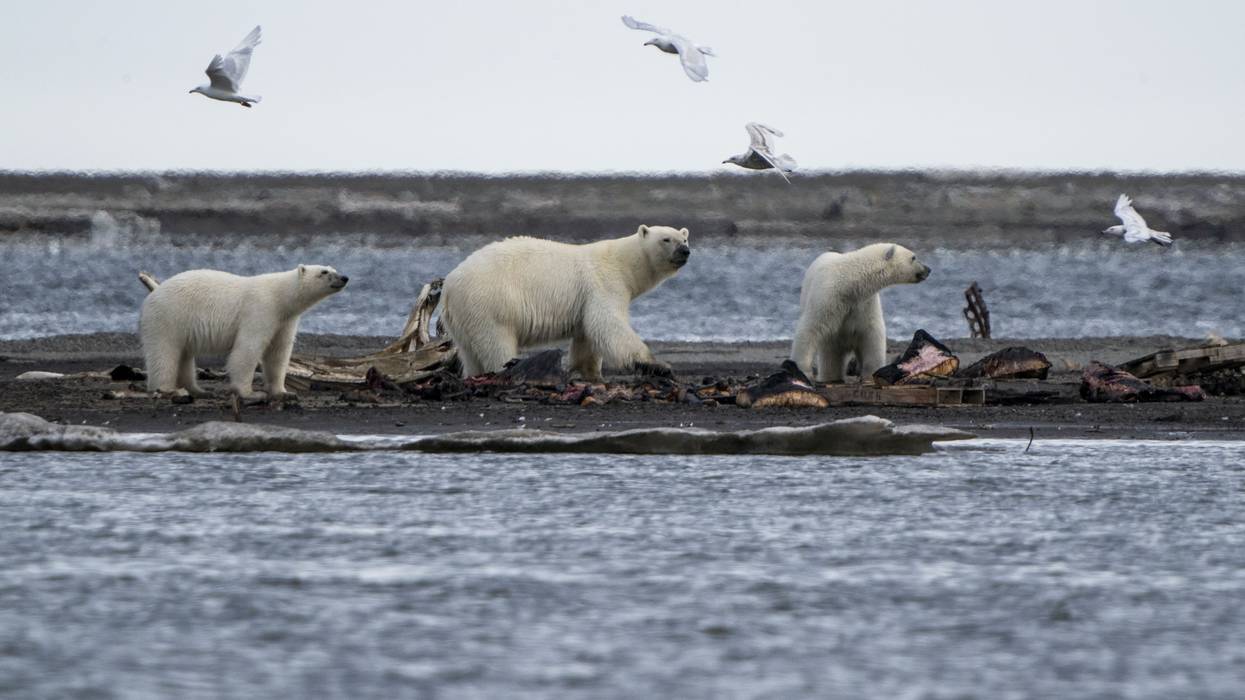
"Even though the interest in today’s sale was tepid, the new leasing still poses significant threats to habitat, iconic wildlife, and Indigenous ways of life," said Earthjustice.
In an embarrassment for President Donald Trump and his "drill, baby, drill" energy policy, Friday's third oil and gas lease sale in Alaska's Arctic National Wildlife Refuge once again drew no bids from Big Oil—but conservationists stressed that fossil fuel expansion still poses a serious threat to the pristine wilderness and its human and animal inhabitants.
The US Department of the Interior’s Bureau of Land Management (BLM) offered 60 tracts on 689,000 acres in the ANWR in northeastern Alaska's Coastal Plain for lease sales. Just two companies—the government-owned Alaska Industrial Development and Export Authority and Hex LLC, an Alaska firm—bought five leases that generated a paltry $3.7 million in total receipts.
“Yet again, no major oil and gas companies showed up to bid, because they know that drilling in the Arctic Refuge is a losing proposition,” said Kristen Moreland, executive director of the Gwich'in Steering Committee, which represents the Gwich'in Indigenous people and opposes drilling.
“We will continue to fight the Trump administration’s leasing program, and work with our friends and allies to protect this sacred and irreplaceable landscape from development of any kind," Moreland added.
The Trump administration had touted fossil fuel lease sales as a way to help pay for tax cuts in the so-called One Big Beautiful Bill Act that mostly benefited corporations and wealthy individuals. The law, which was signed last July by Trump and extends tax cuts the president enacted in 2017, is expected to result in over $5 trillion in lost revenue through 2034, according to an analysis by the Tax Foundation, the world's leading independent tax policy nonprofit.
Despite the underwhelming result, the BLM described Friday's ANWR lease sale as "successful," with agency Director Steve Pearce calling it "another important step toward restoring American Energy Dominance and responsibly developing the vast resources Congress directed us to make available in the Coastal Plain."
Friday's lease sale was the third such auction, the first of which was held in 2021 during Trump's first term and generated just 1% of the administration's projected revenue. The Biden administration—which canceled the leases issued in the 2021 sale—held another lease auction last year because Trump's 2017 tax cut law required two ANWR lease sales within seven years. The 2025 auction drew no bidders.
Green groups and other drilling opponents warned that Friday's flop does not diminish the threat posed by fossil fuel development in ANWR, which is home to the North Slope Iñupiat and the Gwich’in peoples and 270 animal species, including all of the world’s remaining South Beaufort Sea polar bears and the 200,000 porcupine caribou upon which the Gwich'in—who call the area the "sacred place where life begins—rely upon for their survival. The North Slope Iñupiat broadly support drilling and called Friday's lease sale "an important milestone."
"Even though the interest in today’s sale was tepid, the new leasing still poses significant threats to habitat, iconic wildlife, and Indigenous ways of life in one of the nation’s most wild and beautiful landscapes," Earthjustice—one of the groups leading a lawsuit challenging the lease sales—said in a statement. "All of today’s leases are in important polar bear habitat, for example."
Athan Manuel, the Sierra Club's director of lands protection, said that "today's lease sale was another embarrassment and broken promise. The Trump administration has pushed leasing out the Arctic Refuge as the way to finance huge tax cuts, yet today generated $3.7 million for the federal government."
“Let's call that what it is, another scam to trick Americans into giving away our precious natural world," Manuel continued. "It does nothing to change the reality that drilling in the Arctic National Wildlife Refuge remains a risky, controversial, and fundamentally flawed proposition."
"For years, the public was promised that sacrificing the refuge would generate significant economic benefits," Manuel added. "Instead, this leasing program has been plagued by uncertainty while putting one of America's most important public lands at risk."
Autumn Hanna, vice president of the advocacy group Taxpayers for Common Sense, said, "From two previous failed lease sales that delivered less than 1% of promised revenue, taxpayers already know that drilling in the Arctic Refuge is a bad deal."
"Today’s lease sale is yet another reminder that oil and gas development in the refuge is high-risk, low-reward, with zero interest from real industry players," Hanna added. "Americans will not see relief at the pump and, instead, face greater risks from the drilling in a sensitive region.”
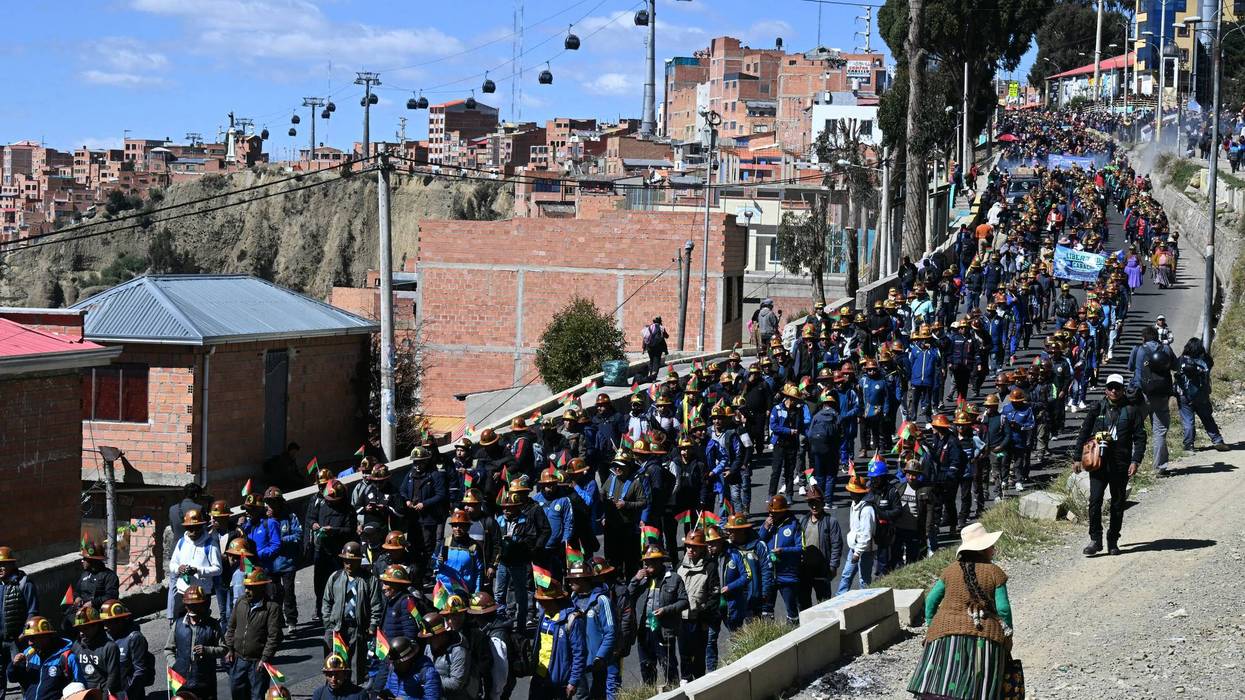
Peasants' unions and other groups are protesting a law that they say would allow corporate control of small farmers' land, as well as fuel shortages and a low minimum wage.
An economic crisis and the repeal of a crucial gas subsidy, fuel shortages, and a law that opponents say will allow the encroachment of corporate interests on Indigenous and peasant lands are among the central concerns of thousands of miners and other workers who have joined a march from Bolivia's northern Amazon territories to La Paz, with a major miners union in the capital joining the protest on Wednesday.
The Federation of Mining Cooperatives of La Paz and an influential peasant union met land workers and Indigenous representatives this week as they arrived in the capital after having marched 1,100 kilometers (683 miles) "for over 20 days from the tropics into freezing high-altitude terrain, many wearing nothing more substantial on their feet than plastic sandals," as Olivia Arigho-Stiles reported at Jacobin.
At least 50 marchers required medical treatment last week for exhaustion, dehydration, and other ailments, but the unions are showing no sign of ending the general strike that was begun by Bolivian Workers’ Central (COB), with the mass mobilization also including at least 70 road blockades around the country, according to the Bolivia Highway Association.
TeleSUR reported that the entry of the miners union signified "a substantial increase in pressure" on right-wing President Rodrigo Paz, whose resignation some workers' organizations are calling for.
The Federation of Mining Cooperatives joined the ongoing marches and protests after Paz failed to attend a scheduled dialogue. Miners have been alarmed by the scarcity of fuel, "a dire shortage of essential explosive material, and significant delays in the liberation of new areas designated for mining exploitation," reported TeleSUR.
The broader protests began in response to stagnant, low wages as well as Law 1720, which the government has claimed will benefit small-scale farmers by allowing them to obtain mortgages after converting their smallholdings into "medium-size" businesses.
But Roger Adan Chambi, an Aymara lawyer and specialist in Indigenous land law, told Jacobin that the measure was passed "without consulting the sectors it was supposed to benefit (peasants and small producers), jeopardizing legal security and constitutional guarantees regarding land ownership."
“Far from being an opportunity for small producers to access credit, this law weakens the property rights of peasants and Indigenous communities, especially those resisting on the agricultural frontier,” Chambi said. “Structural insecurity and the lack of basic services will, in the future, force them to mortgage or sell their plots, facilitating dispossession and the transfer of land to corporations.”
Oscar Cardoza, a peasant union leader and a representative of the marchers, declared at a public gathering in La Paz this week: “Our life is collective, not individual. The land must be respected; it’s not for sale.”
Al Jazeera reported that the end of a fuel subsidy, which was cut after Paz took office last year during what he called an "economic, financial, energy, and social emergency," also pushed COB to issue the call for a general strike.
The subsidy had been crucial for working Bolivians, and the cut has made quality fuel increasingly inaccessible.
"Starting today, a general, indefinite, and active strike is declared, until the government understands the people’s demands,” COB secretary-general Mario Argollo told a group of 1,000 supporters on May 1.
The union is also calling for a 20% increase to the nation’s minimum wage, which currently sits at 3,300 bolivianos ($477.71) per month.
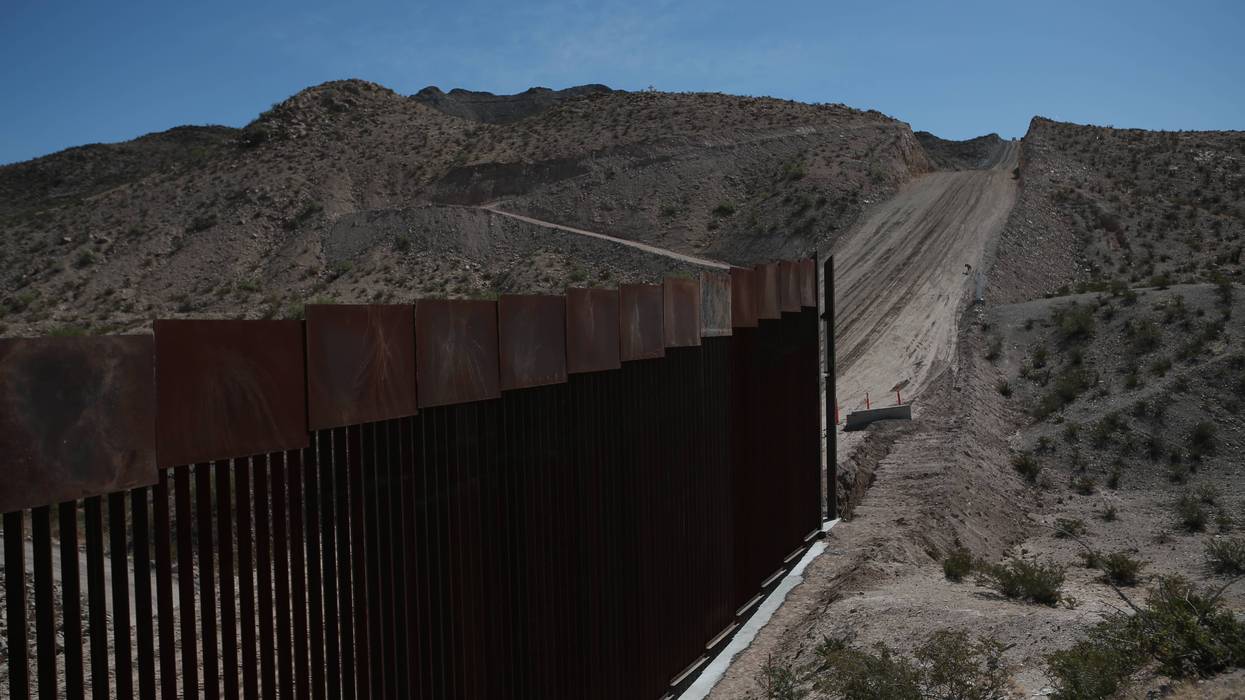
As it devastates borderland communities and wildlife, the wall stands for shutting out complex things, possibly complexity itself. It represents Trump’s promise to his base that their worldview will be fulfilled.
A leading preoccupation of the first Trump administration has all but slipped from view. Except when ostensible conservatives speak out against it, the major media have scarcely breathed a word on the subject. But it’s still there, 30 feet tall, aspirationally 1,952 miles long, obliterating habitats, dividing families, and sucking down public funds faster than a carrier-based air squadron.
The media’s lack of attention is understandable. All-too-real wars of choice and metaphorical wars against science, universities, and the environment have dominated our airtime and the headlines. The rise of a new medievalism in medicine and the abrogation of international trade and security agreements have also won attention. Add to all of that a federal paramilitary kidnapping people, even from what still passes for the halls of justice, while murdering the occasional protester, and one’s journalistic cup runneth over.
The meta story of the US government’s comprehensive abandonment of its Enlightenment heritage needs telling, too. Goodbye to empiricism and the troublesome scientific discourse it produces. Goodbye as well to empiricism’s political collaterals, including the “created equal” credo of the Declaration of Independence, which the current regime finds distinctly irritating. There is simply too much to report on as the new monarchy, as if in a sped-up nature film, blossoms flowerlike, its palace under renovation, the king’s signature being prepared to grace the currency, and myriad kickback mechanisms whirring like gold-plated turbines to enrich an aristocracy of tech bros and oil emirs.
So, dear reader, it’s not just logical but inevitable that Donald Trump’s border wall, a major story during his first administration, has essentially fallen out of the news. Rest assured, though, that the world’s least pragmatic and most performative construction project continues to prosper.
Modern border management relies on three tools: human patrols, remote detection backed by quick response teams, and the construction of physical obstacles. Smart gatekeepers coordinate those tools to maximize effectiveness and minimize cost. But there’s no need for thrift in Trumpworld. The One Big Beautiful Bill Act, or OBBBA, which Trump signed into law last July 4, negated all need for fiscal restraint. Among other things, it appropriated $46.55 billion for border wall construction, $7.8 billion for US Customs and Border Protection (CBP) agents and their vehicles, $6.2 billion for high-tech border surveillance, and a hefty $10 billion for anything else border-related. The total: $70.55 billion. Those funds will be available through Fiscal Year 2029. By comparison, the government will spend about $10 billion less over that same period to fund the entire Department of the Interior, which manages half a billion acres of surface land as well as the continental shelf and vast subsurface mineral deposits.
Such border largesse means that the Department of Homeland Security (DHS) can go all out on all three tactical approaches at the US-Mexico border—patrol, surveillance, and a wall—simultaneously, without troubling to eliminate redundancies, tailor tactics to the environment, or streamline coordination. Daddy has proudly given DHS his credit card.
In addition to bifurcating the wildlife habitat and scarring a gemlike landscape, the wall builders will extract large amounts of groundwater to make concrete for the wall’s foundation, almost certainly desiccating wetlands that are hotspots of biodiversity.
In a victory-lap cabinet meeting four days after enacting the OBBBA, Trump told Kristi Noem, then still his DHS secretary, “You’re loaded up on the border.” He essentially admitted that the bill’s munificence demonstrated power, not budgetary acumen, simultaneously adding, “We had zero [migrants] come in last month, so I am not sure how much of it we want to spend. You may actually think about saving a lot of money because the wall is largely built.” The president then continued with fact-free claims that the migrant population abounded with murderers and mental defectives.
Notwithstanding Trump’s comments, DHS administrators and the contractors who are their most immediate constituents show no sign of leaving money on the table. At the border, their blank-check funding meets a matching regulatory void—the most extensive waiver of laws and regulations in American history. In addition to suspending laws intended to protect the environment, wildlife, national parks, national wildlife refuges, lands sacred to Native Americans, and historic and cultural sites, the Trump administration has also waived more than 60 contracting and procurement regulations. In the name of a national emergency, which is no emergency at all—illegal border crossings (as measured by apprehensions) have indeed plunged—the president has stripped the playing field of all boundaries and opened the door to cronyism and corruption.
Under showers of money and in the absence of restraint, a single border wall is no longer viewed as adequate. Double-walling has become the norm and certain select areas now boast triple walls. With no cap on costs, whole mountaintops, rugged and unvisited, have been sheared apart to make way for the standard 30-foot-tall, steel-bollard wall, even at costs exceeding $41 million per mile, or almost $8,000 per foot. Meanwhile, the Border Patrol’s terminally bored agents (giving new meaning to bored-er) sit behind the wall in white trucks, looking at their phones and incubating their hemorrhoids.
It’s easy to think of the mostly arid US-Mexico border zone as empty, but biologically it’s a busy place. The grasslands of the San Rafael Valley in Arizona, for instance, are home to 17 threatened and endangered species. For years, existing vehicle barriers, bolstered by remote detection technology, have allowed jaguars, ocelots, mountain lions, mule deer, and other wildlife to move back and forth across the valley’s 30 miles of border and disperse according to their ancient ways. A network of 60 remote cameras along that stretch, monitored by the Sky Island Alliance, recorded just one possible migrant per camera every 20 months. Besides being easily patrolled, the valley is also heart-stoppingly beautiful. Nonetheless, DHS intends to double wall all of it. In addition to bifurcating the wildlife habitat and scarring a gemlike landscape, the wall builders will extract large amounts of groundwater to make concrete for the wall’s foundation, almost certainly desiccating wetlands that are hotspots of biodiversity. And for nothing, save symbolism, bragging rights, and contractor profits.
No detail illuminates the mentality behind border enforcement better than this: In cooperation with US Customs and Border Protection, military elements at Fort Huachuca, Arizona are now engaged in “the largest Concertina wire (C-wire) emplacement in US territorial history.” “C-wire,” or “razor wire,” is designed to lacerate any flesh, human or animal, that comes in contact with it. Fort Huachuca soldiers are deploying 43,000 rolls of it, the largest single purchase ever.
Usually C-wire is used atop a wall or fence to prevent people from climbing over. Ominously, it’s now being spread on the ground, sometimes in areas where there is no wall, but also in front of the wall and between double walls—a policy of pure viciousness, not necessity. Someone should explain this deployment to the bighorn sheep of California’s Jacumba Mountains, which are now separated from their key Mexican waterhole by thickets of the nasty stuff, which will become ever more camouflaged and treacherous as grass and brush grow through it.
For treachery, however, it’s hard to top CBP’s plans to “secure” 536 miles of the border in Texas by mooring a chain of cylindrical buoys, linked end to end, down the middle of the Rio Grande. Once in place, the array will look like an orange sausage, five feet in diameter, floating on the river. The anchors and mooring lines, of course, will be invisible. What could possibly go wrong?
This ill-conceived plan offers a retro-snapshot of American life before the National Environmental Policy Act (NEPA) became law in 1970, back when strip mines and other land-wrecking ventures could be launched with no evaluation of their impact, no public involvement, and no second opinions as to their necessity. The waiver of NEPA and every other environmental constraint means that no modeling of the “Buoy Wall’s” hydrodynamics (that is, its reaction to flooding), if any exists, has been made public.
The Rio Grande International Study Center in Laredo, Texas, however, commissioned its own study. The results are unequivocal. The Buoy Wall will be a debris trap during floods, as when a hurricane lodges over the region. It will redirect flows of water and raise water levels, especially in places where it’s paired with river-crowding segments of the wall. And if a section of buoys should break loose from the sandy, unstable riverbed, the likelihood of disaster will soar.
Geomorphologist Mark Tompkins, who authored the report, concludes, “Failures will cause catastrophic flooding, damage, and destruction to property, and risks to the health and safety of people near the river corridor.” Thousands of people living adjacent to the river in Laredo and other communities in both Mexico and the US will be put at risk.
Walls have their place. They can be effective in urban areas. But DHS startled more than a few onlookers with plans to build a wall among the cliffs and arid wildlands of Big Bend National Park. Even the sheriffs of West Texas, one of the reddest regions in the country, got riled up. Although DHS may yet fall back to a more sensible “detection technology” alternative for the national park, it has failed to communicate a clear decision, while nearby private lands and Big Bend Ranch State Park remain at risk.
Even worse uncertainty may be brewing in Arizona, where the lands of the Tohono O’odham people, whose presence predates the border by many centuries, are spread on either side of the line. The tribe’s exemplary cooperation with border authorities includes tribal enforcement teams that have helped keep illegal crossings at a historic low. But the rigid minds and hungry contractors of the “CBP industrial complex” remain unsatisfied. The agency’s “smart wall map” indicates that it aims to build a double wall across the Tohono O’odham reservation, splitting apart families, clans, and longstanding webs of relationship.
And then there’s the unhappy Roman Catholic Diocese of Las Cruces, which serves Sunland Park, New Mexico. Walls have long separated El Paso and Sunland Park from the Mexican city of Ciudad Juárez. However, there is an unwalled gap at Monte Cristo Rey, a steep-sided peak long considered impractical for barrier construction. Not now, though. Blasting for the Border Wall began on Cristo Rey in March, in time to appall the thousands of Holy Week pilgrims who visit the statue of Christ the King on the mountain’s summit.
The land available to CBP, however, is not sufficient to finish the job on Cristo Rey, and the adjacent landowner, the Catholic Church, refuses to sell. CBP claims it may assert the right of eminent domain, while the church has said it will fight, although its best tool for resistance, the Religious Freedom Restoration Act, has predictably been among the many laws waived by DHS.
On a recent trip to the border, I visited one of the most exquisite places in the entire Southwest. To get to it, I drove 40 miles on dirt roads across broken, arroyo-carved desert. The Border Wall was almost always in sight.
Apart from the roadway itself, the commonest evidence of a human presence were signs at the approach to each arroyo: DO NOT ENTER WHEN FLOODED, which is good advice in an area where flash floods from local thunderstorms can sweep away a heavy truck. All the arroyos that the road crosses are also crossed by the Border Wall. Floods pile tons of debris against the wall, and sometimes the accumulated weight is enough to push the structure down. CBP continues to experiment with designs for swinging water gates, but a durable solution remains unproven.
Between a pair of “lay-bys”—bulldozed flats where the wall contractor has assembled fleets of eighteen-wheelers, excavators, scrapers, dumpers, pickups, bulldozers, loaders, and cement trucks—I veered down a rough track to a steel gate and let myself in. A little way beyond that, I stopped my car beside a lazy creek at the bottom of a canyon. White-barked sycamores and cottonwoods, just coming into leaf, towered overhead. Amid their shadows, the air smelled of duff and wet sand. The birds were not just singing, they were yelling. When I opened a birding app on my phone, the bird-call IDs scrolled by like movie credits.
From concertina wire to counter-functional buoys, from mountain blasting to free-wheeling billion-dollar contracts, the mindset behind the wall is the same as that which spawned the Iran war. Both are exercises in unchecked power.
The canyon has a perfectly good name, but I’ll call it Paradox Canyon in recognition of the contrast between the vigorous life it contains and the brutalist-walled horizon looming above it. During the first Trump administration, the nearest mountain peak was cleaved open like a watermelon, leaving the landscape not just scarred but grotesquely amputated.
The current contractor, Fisher Industries, is no stranger to disassembling and rearranging mountains. Besides installing the standard bollard wall, Fisher is pouring a concrete patrol road at the foot of the wall, portions of which, rising above Paradox Canyon, are so steep that, absent the paving, no wheeled vehicle can climb it.
The next mountain, however, is too steep even for a patrol road. The previous contractor’s employees dubbed the peak “Widow Maker,” and the zigzag scars of switchbacks and ledges by which they gained access to the path of the wall make it easy to understand why.
Fisher is the largest player in the wall-building business. Based in North Dakota, it was the contractor for “We Build the Wall,” a crowd-funded enterprise that got its promoters, including Steve Bannon, a longtime Trump ally, convicted for fraud. “We Build the Wall” funded Fisher to build 3.5 miles of wall on private land beside the Rio Grande near Mission, Texas. The Department of Justice and the International Boundary Waters Commission subsequently sued Fisher for shoddy work and violation of the boundary treaty with Mexico. The suit has since been settled, with Fisher having agreed to make immediate repairs and carry out future repairs subject to the forfeit of a $3-million bond.
The Paradox Canyon rancher whom I came to visit is philosophical about the wall. The assault on his land began at the end of Trump I and, after a Biden-era pause, has resumed at full strength. The “shock and awe” accompanying Trump’s resumption of office, he says, left no room for negotiating a more sensible path forward. He believes that the symbolism of the wall is its real power, as it channels the fears of the MAGA faithful. The wall, he says, stands for more than shutting out migrants and narcos. It stands for shutting out other complex things, possibly complexity itself. It represents Trump’s promise to his base that their worldview will be fulfilled.
My rancher friend feels that his present task is to weather the storm of wall building and await a time when wiser heads prevail, when the rush to spend and build might yield to thoughtful redesign, when gaps for wildlife might be installed and properly monitored, and when the wall’s proponents and its enemies might find a “third path.”
Meanwhile, the excavators, scrapers, bulldozers, and haulers carry on. From concertina wire to counter-functional buoys, from mountain blasting to free-wheeling billion-dollar contracts, the mindset behind the wall is the same as that which spawned the Iran war. Both are exercises in unchecked power. Both were conceived with disdain for the complexities of the real world. Both serve rhetorical as much as tangible purposes.
The war with Iran has confounded Trump’s expectation of a quick victory. Thousands of gravestones will be its monument. The Border Wall, in its own slow way, will provide another sort of monument. It won’t be the graves of those who died crossing it or flanking it by sea, for they will rarely be marked at all. And it won’t be the local extinctions of plants or animals, for they will simply vanish. It will instead be a tottering, linear, soulless version of Stonehenge—think of it as America’s Steelhenge—built on sand and made of haste, fear, and avarice.
It will memorialize Trump’s success in making America less and less great.