

SUBSCRIBE TO OUR FREE NEWSLETTER
Daily news & progressive opinion—funded by the people, not the corporations—delivered straight to your inbox.
5
#000000
#FFFFFF
To donate by check, phone, or other method, see our More Ways to Give page.
Daily news & progressive opinion—funded by the people, not the corporations—delivered straight to your inbox.
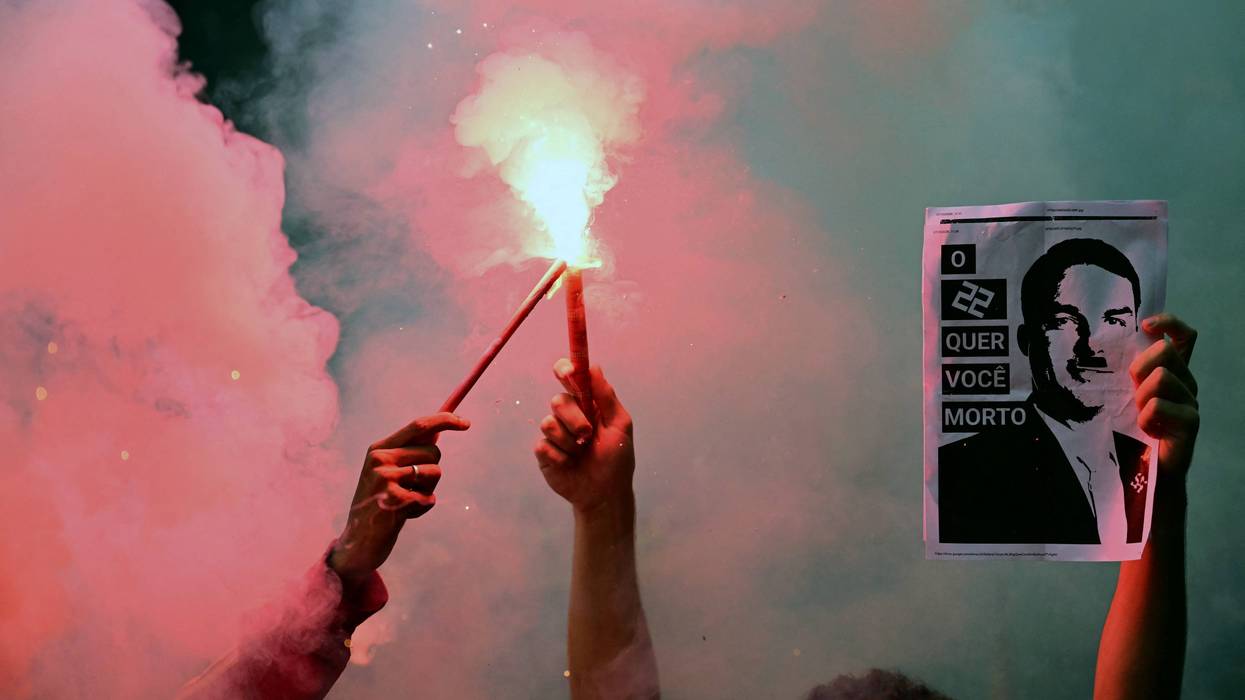
The choice on October 25 should not be about Lula’s limited social democratic tendencies. It is about protecting the Brazilian democratic project from a complete fascistic takeover.
On October 4, Brazilians handed the far-right their best result in decades. Sen. Flávio Bolsonaro, eldest son and political heir of convicted coup plotter and former neofascist President Jair Bolsonaro, finished first with 47.03% of valid votes to left-wing President Luiz Inácio Lula da Silva’s 45.16%, according to Brazil’s electoral court. The two meet in a runoff on October 25.
With a gap of about 2.2 million votes, more than 33.4 million registered Brazilians stayed home, the highest first-round abstention rate since 1998. Polling suggests the ideological blocs are holding firm, showing a dead heat or a narrow Bolsonaro edge. That is despite a cascade of scandals for Flávio, and despite an estimated 1 million people marching for democracy on São Paulo’s Avenida Paulista on October 11.
So the outcome may rest on those who sat out round one. Their choice will decide whether Latin America’s largest democracy, and the forest that regulates the planet’s climate, fall to an oligarchic, US-aligned far-right. Here is what hangs in the balance.
A Flávio Bolsonaro presidency would restore a movement that tried to overturn an election by force, now armed with a congressional majority, a revenge agenda, and the backing of the world's most powerful government and military.
Under Jair Bolsonaro, Amazon clearing rose about 60%, with more than 45,000 square kilometers destroyed from 2019 to 2022, according to official data. Under Lula, deforestation fell roughly 45%, to its lowest level in over a decade.
Flávio wants to resume his father’s project, which environmental groups call “ecocide.” He said in August he does not believe climate change is real, and his 76-page government plan never mentions it, Folha de S.Paulo found. Instead, it pledges to slash Ibama, Funai, and ICMBio, the agencies that enforce environmental law, protect Indigenous peoples, and manage national parks. It promises “agile” licensing that Folha reports would approve development (including fracking) permits automatically when agencies miss deadlines.
“There is concern that activities now considered illegal could simply be legalized,” warned Taciana Stec of the climate institute Talanoa. As Breno Rodrigues de Messias Leite of the Federal University of Amazonas put it, “He will have to respond to his electoral base, which is precisely rural producers.” That base of agribusiness, ranchers, miners, and land-grabbers could essentially destroy the Amazon.
Flávio is running as his father’s proxy. Jair Bolsonaro is serving a 27-year sentence, handed down by the Supreme Court in September 2025, for leading a plot to overturn the 2022 election that included plans to assassinate Lula, Vice President Geraldo Alckmin, and Justice Alexandre de Moraes. It culminated on January 8, 2023, when Bolsonaro supporters ransacked Congress, the presidential palace, and the Supreme Court, the darkest day for Brazilian democracy since the dictatorship.
Flávio announced his candidacy after his father anointed him from prison, and said his first priority would be to release him. His brother Eduardo spent 2025 in Washington lobbying the Trump administration to punish Brazil with tariffs and sanctions over the prosecution. The sanctions have already had a disastrous impact on Brazil’s economy and sovereignty, and are hybrid warfare to meddle in the election in favor of Bolsonaro.
Now Flávio promises to go further. On October 6, he vowed to use Congress’ new right-wing majority to “change the Constitution” and "redemocratize” Brazil, reports The Rio Times. Coming from open fascists, it’s hard to believe their definition of “democracy.” “There is no way to accept the Supreme Federal Court the way it is,” he said. His plan would curb the powers of the court that convicted his father. His ironically named Liberal Party won 121 House seats and the largest Senate bloc, and his allies are closing in on the 308 votes needed to amend the Constitution.
One of the Bolsonarista camp’s positions has been the impeachment of Supreme Court judges and a purge of federal bureaucracy. In Bolsonarista vocabulary, "redemocratization" means dismantling the institutions that held anti-democratic destruction accountable. Lula’s efforts to crack down on foreign meddling by oligarchs, the US, Israel, and others would also be stopped, meaning Brazil’s democracy would essentially be held hostage by capitalist and foreign interests.
Flávio poses as an anti-establishment outsider. Yet Federal Police are investigating him for possible “money laundering, currency evasion, corruption” over the financing of Dark Horse, a hagiographic biopic of his father. Daniel Vorcaro, owner of the collapsed Banco Master and the center of one of Brazil’s largest financial scandals, allegedly sent R$61 million toward the film at Flávio’s request. The Intercept Brasil published voice notes of Flávio asking him for money.
A crypto platform handed out tokens to users sharing pro-Flávio content, which election lawyers called an illegal donation. Days before the first round, Meta blocked Lula’s campaign from running ads, citing unspecified violations. And the Bolsonaros sit at the center of a transnational far-right network. It runs through President Donald Trump, who hosted Flávio at the White House in May; Steve Bannon; Elon Musk, who waged war on Brazil’s Supreme Court in 2024; and now-convicted Israel- and Trump-linked, Argentine disinformation operative Fernando Cerimedo, who spread a toxic sludge of baseless fraud claims on various platforms and his own media networks after Jair’s 2022 defeat.
The Bolsonaros’ economic program serves that same oligarchic, far-right capitalist class. Flávio’s economic coordinator, Daniella Marques, calls Javier Milei’s Argentina a “great example” and has promised a R$200 billion “tesouraço,” or giant scissors, to public programs. Milei’s chainsaw drove Argentine poverty above 50% in his first months and has wiped tens of thousands of companies off the formal economy. Most of the public workforce has also been gutted. Flávio promises tax cuts, privatization, and an end to what he calls “dependence” on welfare, a threat to programs like Bolsa Família that tens of millions of poor Brazilians rely on.
Flávio would also surrender the sovereignty Brazil has built, including Pix—a free public payment system so successful that Washington targeted it in a 2025 trade probe—and diversified trade with China, the BRICS, and Europe. Lula's Brazil has also been a significant force in recognizing a Palestinian state, and in reforming the United Nations Security Council to balance the scales in favor of the Global South. Brazil has been a leader in multilateral finance and post-American economic sovereignty. Bolsonaro would gut all of it.
On October 7, a fire tore through a lab building at the Federal University of Pernambuco, a day after students there protested Flávio’s candidacy. Hours earlier, students had received messages threatening to “blow up the department” in Flávio's name. Bolsonarismo has instilled a climate of fear and terror, as these kinds of attacks are now commonplace by the far-right in Brazil. Bolsonaro has borrowed the “God, Homeland, Family” slogan linked to fascist movements.
With the far-right sweeping institutions across the hemisphere, Lula may be the last shield against a full-blown reactionary counterrevolution.
Jair Bolsonaro’s government slashed university budgets, and his movement smears them as factories of communism and enemies of the “homeland.” Flávio’s plan would tie research funding to business metrics like “productive impact.” Scholarships, he said in September, must be “for developing technology, innovation, artificial intelligence,” not fields that “add nothing.” Social sciences and humanities funding would likely be slashed, while there is a fast-tracking of AI and military expansion.
This is the family that made science denial a governing principle. Jair called Covid-19 a “little flu” and sabotaged vaccine purchases while more than 700,000 Brazilians died. A Senate inquiry recommended he be charged with crimes against humanity.
The Bolsonaros’ home base is Rio de Janeiro, where far-right militias of current and former police control whole neighborhoods, running extortion, land-grabbing, gambling, and drug and arms trafficking.
These militias are also in an all-out war against the left, with ties to the Bolsonaros. As a state legislator, Flávio honored Adriano da Nóbrega, an ex-police captain later identified as the leader of the militia hit squad known as the Crime Office, and employed Nóbrega’s mother and ex-wife. Ronnie Lessa, the ex-officer who confessed to murdering socialist councilwoman Marielle Franco in 2018, lived in Jair Bolsonaro’s gated condominium. This is the fascistic, militaristic, sheltered, nihilistic world the Bolsonaros live in.
Flávio also wants Salvadorian President Nayib Bukele’s model on security. After meeting El Salvador’s security minister in August, he promised 500,000 new prison spaces. “Brazil has few people in prison,” he said, in a country with more than 850,000 behind bars. He backs lowering the age of criminal responsibility to 14 and a national facial-recognition database, Brookings reports. He and his brother lobbied Washington to designate Brazilian gangs as terrorist organizations, which invites a US invasion. When Pete Hegseth posted video of a US missile obliterating a boat (a war crime), Flávio replied that “there are boats like this here in Rio de Janeiro.” He has pledged to join Trump’s “Shield of the Americas,” which has been used to bully left-wing governments and weaponize “narcoterrorism” to go after guerrillas and opponents, while shielding allies. Bolsonaro has also hinted at declaring a “state of exception” on crime, a euphemism for martial law. Most right-wing states in Latin America are now under a state of exception. The term, taking its origin in Nazi theorist Carl Schmitt, has been used in many Latin American autocracies to ban opposition, protests, and justify extrajudicial torture and murder.
Bolsonaro also has a horrific record on gender and LGBT+ rights. His father told a congresswoman she didn't even “deserve” to be raped, and told Playboy he would rather a son “die in an accident” than be gay. Liberal Party star Nikolas Ferreira donned a wig in Congress to mock trans women, and this year led a campaign to keep trans congresswoman Erika Hilton from chairing the Women’s Rights Commission. This, in the country that leads the world in killings of trans people.
This war on women and LGBT+ Brazilians is inseparable from the movement’s alliance with the evangelical far-right. Flávio sealed a partnership with megachurch pastor Silas Malafaia in May, betting that moral panic over “gender ideology” and “trans bathrooms” (echoing Trumpism) will deliver one of the country’s largest voting blocs. Alongside them was PL leader Sóstenes Cavalcante, sponsor of a 2024 bill to punish abortion after 22 weeks as homicide, even for rape survivors. A Bolsonaro government would pursue that agenda aggressively, even more as they would control Congress and the Supreme Court.
Under Lula, Brazil backed South Africa’s genocide case against Israel at the International Court of Justice, defended the International Criminal Court, and refused to choose sides in Washington’s new cold war. Flávio would reverse it all. He has pledged that Brazil will be a “brother of Israel,” move its embassy to Jerusalem, and join Milei and Israeli Prime Minister Netanyahu's Isaac Accords. In June, he offered Secretary of State Marco Rubio his transition team at the “disposal” of the US government. Bolsonaro launched his presidential campaign alongside Netanyahu.
Regionally, the right now governs Argentina, Chile, Bolivia, Colombia, Peru, Paraguay, Ecuador, Costa Rica, El Salvador, Honduras, Panama, and the Dominican Republic. Venezuela is a de facto US vassal state, and the Trump administration has signaled Cuba and Nicaragua are next.
If Brazil falls, Mexico would be the last major Latin American economy outside Washington’s thumb. An emboldened Trump administration, which has already threatened military action against Mexican cartels, would turn up the pressure on Claudia Sheinbaum, and may even look to topple her government.
This runoff is a referendum on democracy, human dignity, and ecological survival. A Flávio Bolsonaro presidency would restore a movement that tried to overturn an election by force, now armed with a congressional majority, a revenge agenda, and the backing of the world's most powerful government and military.
Lula is not above criticism. His government has backed oil drilling near the mouth of the Amazon and made its peace with agribusiness. But the choice on October 25 should not be about Lula’s limited social democratic tendencies. It is about protecting the Brazilian democratic project from a complete fascistic takeover.
Brazil, Latin America’s largest democracy, has survived colonial plunder, slavery, a 21-year dictatorship, neoliberal devastation, and multiple coup attempts. With the far-right sweeping institutions across the hemisphere, Lula may be the last shield against a full-blown reactionary counterrevolution. The 33 million Brazilians who stayed home on October 4 will need to show up, otherwise the world will get a whole lot darker.

Fascism must be recognized and called by name. Meaning in the headlines. Regarding it simply as a weakening of democracy, as so many are quick to concede, is a recipe for doing nothing.
This is an attempt to answer the question, "What’s going on in the world," in the broadest possible terms. To do so, two sides, or two viewpoints, must be clearly and fundamentally separated. This will necessarily eliminate our national political parochialism of Democrat-Republican, woke-antiwoke, even liberal-illiberal.
The premise here is that the answer to the posed question lies in finding a form of opposition that underlies the others, namely, progress-regress. We identify it politically as radical-reactionary, revolution-counterrevolution, leftwing-rightwing.
The rightwing worldview holds that things are the way they are because at all times society has tested itself and found alternatives to be lacking. The present arrangement—the current state of society—is regarded as the natural order of things. Change is therefore to be resisted.
By the time the European fascisms of the previous century were fully recognized, it was already to late.
The leftwing worldview holds that societies, however formed, are, in each state, imperfect. Therefore, the present arrangement merely reflects the biases that formed it—one part of society gaining at the expense of another—an injustice that must be changed.
We look around the world and see a lot of looking back, not much looking forward. This tells us the rightwing worldview is presently dominating. We see it throughout the Americas, Europe, and Asia. Germany is a particular cause for concern because of the recent regional successes of the far-right AfD, built upon remnants of National Socialism, or Nazism.
At the limits is ultra-right Israel. It commits a genocide and says it was only a response. The other side started it. Started what? Nobody starts a genocide except its perpetrator. From a leftist’s perspective, October 7 was a prison break, and, yes, prison breaks can involve atrocities. A question to consider: Are prison breaks illegal? They are if the prison was legal, but the Palestine prison has been illegal since 1967. Take away the United States, and Israel’s high officials would be in front of the dock.
How did we get to living under fascism? And how did it happen so fast? For example and perspective, let’s go back a few years and note a time when great change failed to come, even when it was dangled before the large majorities that had been clamoring for it.
Before he was a presidential candidate, Barack Obama was a strong critic of our public healthcare system. He favored single-payer universal healthcare. Shortly after being elected, President Obama met with leaders from the insurance-hospital-pharmaceutical complex that makes up our healthcare industry. What was missing? No single-payer representatives were present.
A moment aside about that term, “single-payer”: It is an industry term of obfuscation, confusing Americans about how the system works. How many people really know what it means? Contrast it with the simpler term, “universal,” or the even simpler and more direct, “national.” National healthcare. We have it for older people. It’s called Medicare.
By now, though, President Obama had tempered the “change you can believe in.” His new idea was that if we were starting from scratch, single-payer would be the way to go, but since we are not starting from scratch, the change would be too “disruptive.”
Logical thinkers, scratch your heads. Every change is disruptive. That’s the point! To disrupt the old. Medicare started from scratch, and national healthcare could as well, if the will was there.
Back to our fascist life, and here’s where you have to give credit to President Donald Trump. The rightward drift of our country began decades ago, and not just under Ronald Reagan. John Mitchell, appointed Richard Nixon’s attorney general in 1969, at the time infamously said, “This country is going to go so far to the right you won’t recognize it.” Yeah, that’s right. Both parties have become business parties. Wall Street clearly won the class war.
Trump came into the present rightward drift and accelerated it to a full fascism. He did it just like that, and he didn’t start from scratch. He caught it in the middle. Tell people that you are returning the nation to its rightful place, and pretty soon masked federal police are shooting people in the streets. Blasting speedboats on the high seas out of existence because we can. Placing people in detention-concentration camps under horrible and humiliating conditions, with or without proof of criminality. The federal government was not drowned in a bathtub. It survived to mask itself, clothed in riot gear.
And, just recently, Trump threatened to “annihilate” Iran at the United Nations General Assembly, flaunting in the forum of its creation his own criminality for the “supreme international crime” enshrined in the UN Charter, Chapter VII: Action with Respect to Threats to the Peace, Breaches of the Peace, and Acts of Aggression.
Billions of words have been written about Trump’s character deficiencies. Okay, we get it by now. Only it’s not about what he is. It’s what he’s doing, and what his heel-clicking order takers do for him. Trump is a political malignancy. In this case, it’s not cancer. It’s fascism, as far right as you can go. Like any malignancy, you remove it, and this removal can’t come too soon. Can you remove the fascism without removing Trump? You can, because he’s only a figurehead.
But first fascism must be recognized and called by name. Meaning in the headlines. Regarding it simply as a weakening of democracy, as so many are quick to concede, is a recipe for doing nothing. Waiting for the next election.
Some recent editorials from respected media have gone a little further, describing the situation as “alarming,” which fails to alarm on two counts. They don’t specifically state that we’re living under a fascism, and they don’t attempt to rally people for a remedy. Because it’s getting late.
By the time the European fascisms of the previous century were fully recognized, it was already to late. National pride is fascism’s selling point. Presently, we have entirely too many buyers.
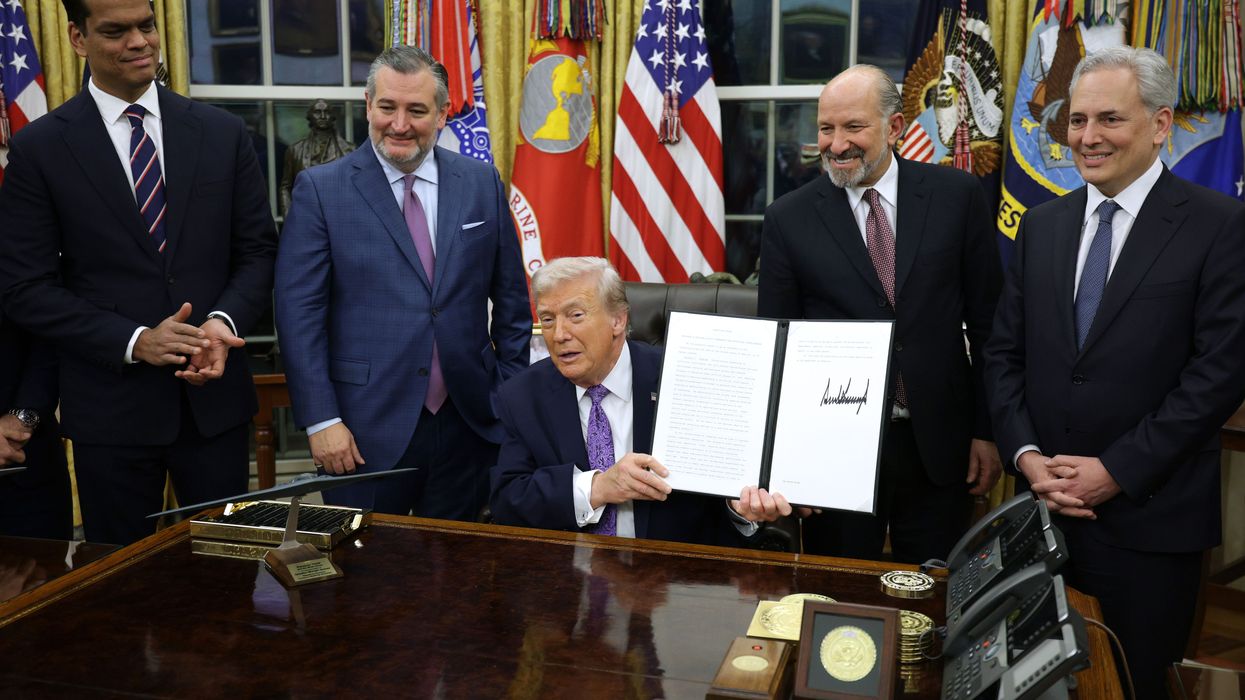
The human, beneath the lowering pendulum, is not trapped; they can get up and develop national legislation and international treaties to stop the pendulum’s movement and, eventually, remove it entirely.
There are many ways in which the swinging pendulum could lower onto the neck of the human.
The human could come to represent something wholly different than themself in relying on advanced artificial intelligence. More drastically, the human could become subservient to AI at some point in the future. And, in the worst-case scenario, the human could be physically wiped out by AI-launched nuclear weapons. AI is already embedded in command-and-control systems surrounding American nuclear weapons. If given greater allowance in the future, it would be unlikely to have the same reservations about using them that humans do.
Then, there is danger with the human themself, as we see with End of Times-bent leaders, such as Israeli Prime Minister Benjamin Netanyahu and US President Donald Trump. They could continue to further escalate wars and international criminal behavior to the point that would push the world into a wider conflict in which nuclear weapons may be used. Even if these destructive weapons were not used in a future global conflict, conventional weapons have the ability to decimate cities as we’ve seen with Dresden, London, and Gaza.
The human underneath the pendulum has agency, although it can be hard to remember this in the face of seemingly overwhelming odds.
Lastly, there is climate change. While unlikely to cause the pendulum to drop on the human’s neck in one fell swoop, continuous massive fires, heat, flooding, and violent storms will cause further mass migration and xenophobic backlash. The countries where climate migrants go to—wealthy Western ones—will have their own weather-related disasters and will be depleted of relief funds. With no relief from “natural” devastation, the human is unlikely to see any use for government and likely to live in increasingly gated communities with tribalistic mindsets.
Already there are 450,000 projected heat-related deaths mostly in the Global South over the next half year from climate change and Super El Niño. This seems to have hardly caused most Westerners to bat an eyelash, as they have already heightened their walls against migration either by letting people drown in the Mediterranean or by voting for someone who promised mass deportations. The fascists we’ve elected or who are growing in power, like AfD in Germany, reflect the current lack of empathy for the Global South other, and we’re only seeing the beginning of human-caused climate change’s wrath.
But the human, beneath the lowering pendulum, is not trapped. There are no ropes around their torso or arms tying them down. The human can get up and develop national legislation and international treaties to stop the pendulum’s movement and, eventually, remove it entirely. The US, on a national level, nearly did this under former President Joe Biden. The Democrats were one vote away from passing Build Back Better, which would have created tens of thousands of green jobs and throttled the fossil fuel industry. Former Sen. Joe Manchin (D-W.Va.) was the single holdout. Biden needed to arm-twist him to get him onboard, as we know the GOP would’ve done if they were in his shoes. Europe passed the General Data Protection Regulation in 2018 that makes it more difficult for Big Tech to collect individuals’ data without their consent. In 1987, nations came together and adopted the Montreal Protocol to phase out ozone-depleting chemicals. Every country in the world has joined since, and the ozone layer is on track to recover. It is a proven template for future global climate action.
Thus, the pendulum need not fall on the human’s neck. The blind advance of AI to the detriment of workers, the environment, and what it means to be human can be stopped. The fascist wave has crested, but it can fall like in Hungary and potentially in the US after the November elections. The extent of future climate change disasters can be mitigated when the people take the power back.
The human underneath the pendulum has agency, although it can be hard to remember this in the face of seemingly overwhelming odds.
The time to retake control of the human condition is now.

Sadly, it seems that humanity never learns lessons from its dark past.
How do we explain the rise and normalization of fascism in Germany and the United States? How important are the upcoming midterm elections? And what may happen if the Democrats sweep the midterm elections? Can the Democratic Party offer a vision for the future beyond a return to the pre-Trump status quo? Political scientist, political economist, author, and journalist C. J. Polychroniou shares provocative thoughts on these questions in an interview with French-Greek independent journalist and writer Alexandra Boutri.
Alexandra Boutri: In a recent essay on German state elections, you hinted that Germany, once considered the economic engine of Europe, is now in the midst of a systemic crisis. What’s going on there? How did fascism become normalized again in Germany?
C. J. Polychroniou: Let me start by briefly addressing the point you made about Germany’s status as the powerhouse of Europe because economics is a big part of the story behind the meteoric rise of the fascist Alternative for Germany (AfD) party. Germany’s second so-called Wirtschaftswunder (economic miracle), which kicked off in the early years of the new millennium, was aided by the creation of a currency regime that was “made in Germany.” The euro not only created stability for the German economy due to lack of exchange fluctuations but allowed it to gain huge competitiveness against other members of the eurozone. German competitiveness increased overnight by nearly 20 percent, while competitiveness in other European countries declined. Germany’s euro partners absorbed over 40 percent of its exports. In the process, huge imbalances emerged within the eurozone as Germany built an enormous trade surplus while individual countries within the EU, particularly the southern European nations, run huge deficits and saw their debt levels explode.
The situation in the US is even more dramatic because the fascists are already in power...
It’s important to remember that not only was Germany running a budget deficit prior to the implementation of the euro regime but was derided as the sick man of Europe because of its consistently sluggish economy. Nonetheless, it wasn’t just the new currency regime that greatly contributed to Germany’s economic recovery and subsequent emergence as Europe’s powerhouse. The Social Democratic government of Gerhard Schröder (1998-2005) implemented a series of major labor and welfare reforms inspired by the philosophy of austerity and fiscal conservatism in order to intensify Germany’s export-oriented growth model after reunification.
In sum, the so-called German economic miracle depended on the promotion of neoliberal policies (wage suppression and putting an end to the social market economy) and reliance on an export-led growth model. The primary beneficiaries of this “economic miracle” were German industrialists and financiers. Net real wages in Germany remained stagnant, poverty increased, and domestic investment collapsed.
Enter the AfD. It was founded in 2013 by some conservative German academics, journalists, and politicians who were concerned with the direction of their country’s economy. They were against the euro and opposed the bailout of European indebted countries such as Greece. Many years earlier, four renegade professors (Wilhelm Hankel, Karl Albrecht Schachtschneider, Joachim Starbatty, and Wilhelm Nolling) had actually launched a legal challenge in Germany’s Federal Constitutional Court against the adoption of the euro. I spoke to professor Joachim Starbatty at the start of the euro debt crisis. His position was clear and straightforward. Rightly or wrongly, he felt that a monetary union could survive only if economic competitiveness among all member states moved in the same direction and if the different governments implemented sustainable fiscal policies.
The AfD started out as a eurosceptic party but began campaigning on an anti-immigration platform soon after its founding, mainly in reaction to then Chancellor Merkel’s decision to open Germany’s borders and welcome more than 1 million refugees and asylum seekers. Its leaders realized that there were a lot of disgruntled voters out there who felt that the establishment parties are incapable of addressing the country’s many interlocking crises and that scapegoating can be used to bring people together from different socioeconomic groups by creating a common enemy.
The AfD capitalizes on economic and cultural anxieties, just like Hitler did in the 1930s. As a new report by legal experts has found, the AfD is a very extreme political party, “working systematically to undermine Germany’s free democratic order.” And what should be of particular concern is that the success this party is enjoying so far is indeed comparable to the rise of the Nazis. True enough, the AfD is particularly strong in the former east Germany which still lags behind west Germany, but it has already emerged as the most popular party in the country. Hence, to continue speaking of a surge on the part of fascism in Germany is an understatement.
Now, Germany’s export-oriented growth model seems to have run its course. It’s facing mounting pressure from China’s own export power. Growth has been stagnant for the past several years. The slight increase in domestic gross product that the German economy experienced in the second quarter of 2026 cannot conceal the fact that German trade deficit with China continues to grow. To turn things around, shockingly enough, Chancellor Merz, who is the most unpopular chancellor in the country’s postwar history, has called on Germans to work longer hours, citing Greece, a country whose labor market is characterized by low wages while employers can enforce 13-hour work days, a model. As far as the small wage increases that have taken place over the last few years are concerned, they are “simply too low” to keep pace with rising costs.
The question about how fascism became normalized again is not difficult to answer. It became normalized again in Germany and throughout Europe in the same way that Trump normalized racism and fascist tendencies in the United States, namely by integrating extremist rhetoric and policies into mainstream political culture. Harsh, inhumane immigration policies have become laws while the line between security and surveillance is gone in today’s so-called democratic societies. Laws are now used not for the purpose of defending democracy and freedom of speech but in order to suppress dissent. Genocide has unfolded before our eyes, but opposition to it can result in penalties, institutional punishment, and arrests. Even universities, allegedly a bedrock for democracy, are violating “basic free speech, association, and assembly rights.”
Western capitalist polities have rolled out the red carpet for fascism. Indeed, it would seem that humanity never learns lessons from its dark past. The far right has gone from antisemitism (it supports Israel but remains antisemitic) to Islamophobia and there is a significant rise in xenophobia not just throughout Europe but all across the world. Meanwhile, the president of the most powerful nation in history threatens another country (Iran) with total annihilation. The West has entered again the age of monsters.
Alexandra Boutri: With the 2026 midterm elections in the US fast approaching, and which may be the most consequential in the history of the country, isn’t it the case that the United States is also experiencing massive systemic failures?
C. J. Polychroniou: No question about it. While there are striking differences between Germany and the United States on many levels, both countries face enormous economic challenges and real threats from domestic political forces with extreme, anti-democratic beliefs. On that note, I would say that the situation in the US is even more dramatic because the fascists are already in power, you have a mentally militarized society, and the system of checks and balances simply isn’t working. Formally, AfD’s leaders reject political violence to attain the party’s goals, while Trump has repeatedly stoked violence. But here I should add that the MAGA crowd is even more extremist than AfD’s supporters. In the meantime, wealth inequality in the United States has reached an all-time high, and the tech giants are building a dystopia.
Alexandra Boutri: What’s your own sense about the upcoming midterms? How important are they, and what will they mean?
C. J. Polychroniou: As far as midterm elections go, I think you are absolutely right when you stated earlier that they may be the most consequential in the history of the country. The president’s party usually loses House seats in midterm elections, so there is a good chance that the Democrats will control the chamber come November. There are several key races that will determine who controls the Senate, but the Democrats are clear favorites. However, it may all come down to independent voters. Also, I hope that Hispanics will turn their backs on the GOP. One of the things that Democrats and progressives in general in the US have failed to realize is how socially conservative the new immigrants that have come to the United States are. Unlike the huge waves of European immigrants that arrived in the United States between the late 1890s and 1950s and led to support for the Democratic Party because they carried with them progressive and even radical ideas about politics and society, the new immigrants that have been coming to the US since the 1980s (over 80% are from Latin America and Asia) are overwhelmingly conservative and religious.
But there is a deeper concern here about the midterm elections, which is that Trump will interfere by trying to deny people their voting rights, having federal officials seize ballots, and even declaring results void with false allegations of voter fraud. It is also conceivable that he may demand from Republicans that they refuse to swear in newly elected Democrats in the House of Representatives.
Alexandra Boutri: As far as I can see, the problem is that the leadership of the Democratic Party lacks courage and has no vision for the future. For the establishment Democrats, the perfect outcome would be a return to the pre-Trump status quo. Am I wrong in thinking that way?
C. J. Polychroniou: No, you are not wrong. The current leadership of the Democratic Party is simply hopeless. As was the previous one, and the one before that, and so on. And the left-wing of the party can only do so much. The Democrats need bold, courageous, visionary leadership that is willing to embrace a truly progressive socioeconomic agenda and reject militarism. What is quite disconcerting about a party that claims to fight on behalf of American workers is how shallow and inconsistent its policy agenda is when it comes to meaningful change.
The current leadership of the Democratic Party is simply hopeless.
The ruling Labour Party under the leadership of Andy Burnham has promised a “new direction” for Britain by adopting bold reforms on key areas that affect the well-being of its citizens. They range from changes to economic policy, improving public services, transferring power from Westminster to communities, and combating the threats of global warming. I don’t know if Burnham will be able to deliver and restore Labour’s fortunes, but the early signs are quite encouraging. The Democrats should move in a similar direction if Trumpism is to be defeated.
On that note, it is uplifting to see that the Political Economy Research Institute (PERI) at the University of Massachusetts at Amherst has launched Game Changers: Economic Policies for a Working America. The project is initiated and directed by PERI’s co-director Gerald Epstein and represents a bold intellectual undertaking for putting an end to the madness of free market fundamentalism by creating an alternative economic setting with “rules that first and foremost protect the well-being of American workers.”
Alexandra Boutri: You said above that this is the time of monsters. So, what is to be done?
C. J. Polychroniou: I said this is the age of monsters. “Now is the time of monsters” is a quote widely attributed to Italian Marxist intellectual Antonio Gramsci. The problem is that Gramsci never used those words in Prison Notebooks. What he actually wrote was “In this interregnum a great variety of morbid symptoms appear.” Moreover, and this is even less known, the statement had nothing to do with the rise of fascism but, rather, with developments inside the Italian Communist Party!
What is to be done in an age of monsters? I will paraphrase Albert Camus and say that “in a world of conflict, in a world of victims and executioners,” it is the moral duty of thinking and decent people everywhere, irrespective of their political preferences and ideological affiliations, race, ethnicity, and national origin, “not to be on the side of the executioners.”
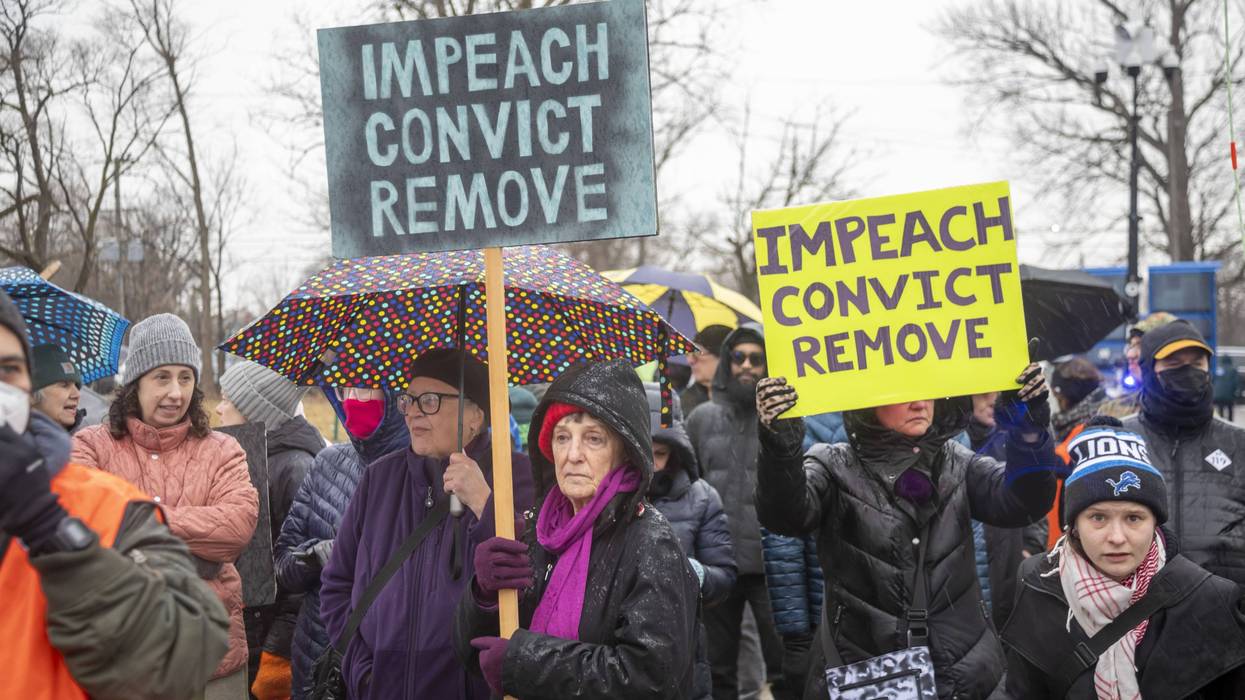
No Kings is an historical descriptive designed to engage our intellect, but it asks nothing. It demands nothing. It, like media editorials, sounds an alarm but an alarm is endless without a call. What’s missing is a bold call for removal.
We’re nearly two years into President Donald Trump’s second term in office—his first where his fascist dreams took flight—and I’m not the only one to notice. Millions of people in groups as large as city blocks, and as tiny as a corner in a village without a traffic light, have gathered to protest under the banner, No Kings.
Its success was in bringing together disparate groups of people. At some I had the impression that out of thousands of people, no two had a similar political orientation. That’s the good part. It’s also a weakness.
At the same time, and now with increasing regularity, respected media (from The New York Times down to those that take their lead from it) editorialize in stark terms against the administration. Editorials read like a list of grievances, not unlike the Declaration of Independence. But unlike the Declaration, they lack a political message.
Fascism is not a throwaway word. Trump told people he was returning the nation to its “rightful place,” and pretty soon hastily organized federal police ganged up on people and shot them in the streets.
No Kings is an historical descriptive designed to engage our intellect, but it asks nothing. It demands nothing. It, like media editorials, sounds an alarm but an alarm is endless without a call. What’s missing is a bold call for removal. Remove him!
By what mechanism? Do I mean by impeachment? No, I do not. Do I mean by the 25th Amendment? No, I do not. Do I mean by the Democratic Party? No, I do not.
It is not up to those that call for removal to state or provide a mechanism. The call signifies itself. If the causes are alarming enough—and I suggest we are presently living under a fascist regime—there is nothing left to be done but what was once done.
The Declaration of Independence keenly notes that people “are more disposed to suffer, while evils are sufferable, than to right themselves by abolishing the forms to which they are accustomed.” Before enumerating the greatness of the causes for separation, the Declaration expresses a sentiment that Washington’s gatekeepers would have us forget: that it is the right and the duty of the people to throw off such government as is reducing them to despotism.
The gulf must be acknowledged between what the leaders of a country in 1776 declared and did, and what, not the leaders, but the followers of a country in 2026 are prepared and able to do. The situations cannot be compared, but they can be instructive.
The Declaration is a radical document. It did not wait for the government of the mother country to have a change of heart, as we wait for the midterm elections. Suffering what we must.
What is our cause for alarm? And should it mark the time for a call for removal? Even if it only articulates what we want?
Fascism is not a throwaway word. Trump told people he was returning the nation to its “rightful place,” and pretty soon hastily organized federal police ganged up on people and shot them in the streets. They’re coming for people. They may not have come yet for you and me.
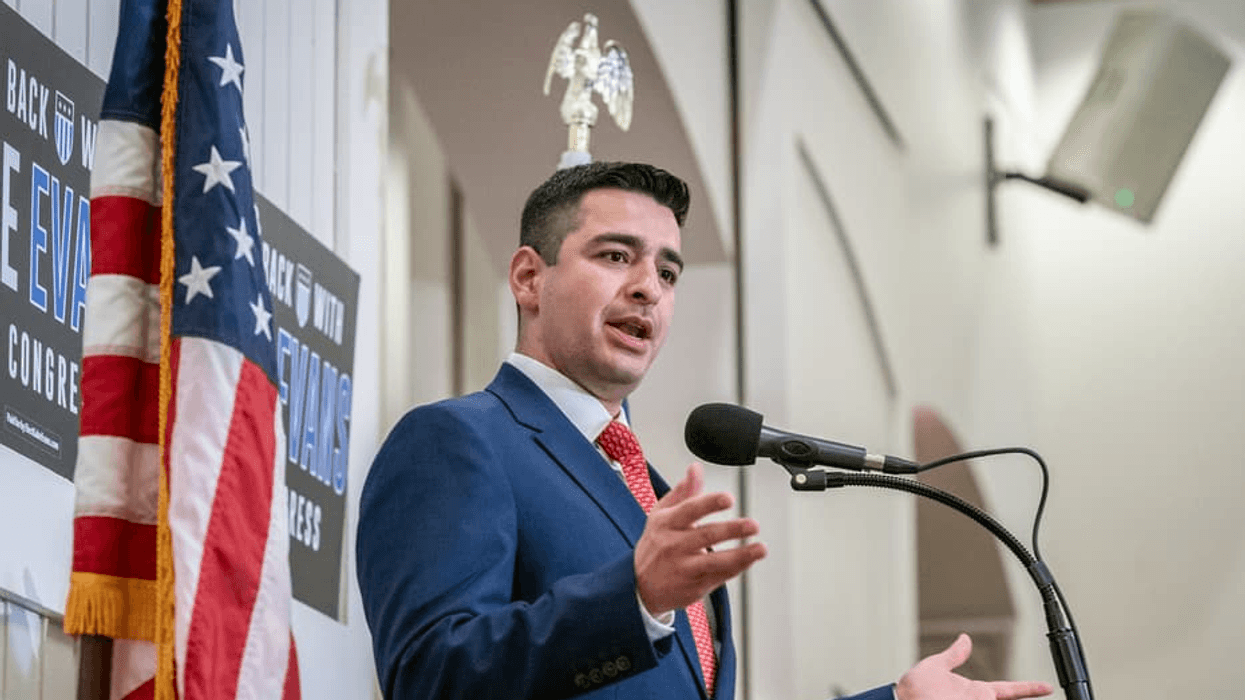
Local Colorado media should focus on how congressional candidates will improve people's lives now, not what they believed in college or their preferred diets.
We all had a lot to remember last week. The 25th anniversary of the 9/11 attacks seemed even more desperate and frightening in retrospect than perhaps they were on that day. We watched in horror all over again. Then sprinkled in between the remembrances of that terrible day were political commercials. And we voters in races across the country are being pushed to forget what our congressional representatives have done or not done for us in the last two or even four years. Then there was the promise from the current occupant of the White House that if we just retained Trumpublican control of Congress by voting as if President Donald Trump himself were on the ballot, then each of us would get a cool $5,000 in cash. How is that for a gotcha week?
In Colorado’s 8th Congressional District (CD8), we have a particularly perplexing race going on in which Trump groupie Rep. Gabe Evans is running against young Democratic state legislator Manny Rutinel. Both men appear in their commercials to be trying to appeal to a younger voter demographic. Perhaps on some of the deeper social media sites that we older voters don't visit as often both candidates may offer policy solutions that actually address the problems in a district that includes urban and rural areas.
Part of Colorado’s CD8 once even tried to organize to secede from the state because some voters felt as if their areas weren't quite Trumpy enough. Fortunately, for both candidates and for the residents of CD8, that secession effort failed. Yet, this district that was envisioned and created at least in part to help assure there would be better Latino representation from Colorado to the US House of Representatives has had some of the closest races since its creation, and this midterm election promises that same level of competition. The urban voters will more likely vote for Rutinel while the rural voters will likely cast their vote for Evans. Whoever wins this race will be the candidate who peels off the most significant number of votes from his opponent’s stronghold areas. So, Manny needs some of those rural voters to lean his way; Gabe needs more urban votes.
I just want to know what they're going to do to help, what they're going to do to stop the mess, and what they're going to do to help all constituents.
It distresses me as a voter that both candidates declined to meet in televised debates on a popular local news outlet, and yet the former journalist in me understands why the candidates would decline that debate moderated by perhaps our most watched local political newscaster. I'd challenge anyone in the state to know quite as much about us as Kyle Clark from 9News, our NBC affiliate. So here I am telling you I understand why Manny would not want to stand in front of Clark yet again. Manny was flat-footed when I watched him debate during the primary, and Kyle asked about his positions when he was in college on healthcare, on the environment, and even on his chosen dietary path. Manny's positions at that time are a little more (or a lot more in some cases) progressive than he wants himself to be viewed as in this race. Clark might even have him leaning towards the word socialist that 9News loves to put front and center (as does The Denver Post). I point this out because the national media is leaning into this as well—this drilling down to socialist or democratic socialist before saying the name of the candidate tells me that the corporate owners and advertisers are still at work too. Even this journalist I so respect wants to make sure everybody understands that socialism is on the rise and that progressivism is essentially another word for that scary stuff called socialism. All of that is a bunch of hooey.
What we see happening in CD1 in Colorado—where Melot Kiros defeated long-time incumbent Democrat Diana DeGette in the democratic primary in June—and in districts all over the country is a surge by voters in changing the generational layers in our government, and with younger leaders comes a changing of viewpoints about what it means to live in a society with one another. Young people in Colorado and throughout the nation supported and voted in huge numbers for Sen. Bernie Sanders (I-Vt.) in his 2016 Democratic presidential primary bid and again in 2020. So did an awful lot of Boomers. Those young people carried with them much of the passion of that process and charge to get involved at every level—and so they are. Some are loyal Bernie-crats, and some are not.
I am concerned about the televised town hall (same affiliate) that's coming up in Greeley, in CD8, that will be moderated by Kyle Clark (and I would bet by his colleague Marshall Zelinger). I worry about the impartiality issues already breached between Clark and Rutinel. I say that with a deep respect for all journalists who work on election coverage—and in Denver, I am beyond grateful for the incredible work that Kyle, Marshall, and the whole 9News team has done to bring us information about our elections. Bravo.
And yet, Clark can be like a dog on a bone on an issue that to many of us seems irrelevant at this moment in history—and so he has been with Manny Rutinel, in my opinion. In some level of fairness, I have not seen Clark interview Gabe Evans very much. Commercials are not telling us much either. Do I really want to know how many people in Washington comment on Gabe’s boots? Gabe’s post Labor Day commercial just makes me want to gag. And I really loved the one (not) when a police officer told us to worry that Manny was a vegan. That one made me laugh because since when do we in Colorado vilify anyone who chooses to eat a vegan lifestyle? But Manny really goofed up his response on that one, I thought.
I'm going to take myself back to when I was the age that Kyle zeroes in on as he interrogates Manny’s background and beliefs, and I take myself back and think about what I thought was going to happen in 1972 or 73 when I was watching the Nixon garbage unfold with babes in my arms. I was raised in a Republican household, and I was a young person finally seeing someone held accountable for what they did. Nixon, my goodness, his crimes look like a spit in the ocean, as the saying goes, compared with what we've seen Trump and the Trumpublicans do together. That's what I want Kyle Clark to drill down on. That is what I want. To find out about policy—that is what I want to hear from my representatives. How will you as my representative stop the broken promises? And how will you recognize what happens when people don't have enough to eat or they don't have enough money for the rent? How about when they don't have enough money to send their kids to the best schools or when their skin isn't the right color? That's what I want my journalists to drill down on. How are you going to stop the cruelty unfolding around us all?
Just the other night, Kyle expressed his need to be straightforward in the face of a growing move toward fascism. It is time for a different kind of discussion among us. And I agree with Kyle, so why the heck do we care about prolonged discussions of college-level sorting through directions and beliefs? I do not think most voters care unless you rile them up to care about that. Could Manny say that he believes people have a right to healthcare? Of course he could. And there is no healthcare provider in CD8 in Colorado who wouldn't agree with that—imagine the health business activity. Instead of closing hospitals, we would be filling them with the people who need the care they have been delaying or not getting for years.
We are darned close to a constitutional crisis, if we are not in one already, and I quite honestly do not care about whatever was back in anybody’s youth unless crimes were committed. I do care that Gabe Evans has voted for the Trump agenda almost entirely and has never given a thought to protecting his constituents. He called those who lost Medicaid coverage “cost savings” after he voted enthusiastically for the Big, Beautiful Bill, HR1.
Local journalists, especially Kyle Clark and team, I love that you're speaking out and saying we have a problem moving toward fascism. I agree. Now please, please, if you believe that talk about the detention centers and the deplorable, unhealthy conditions inside them, talk about the things that are happening around us now. Talk about our food supplies not being inspected adequately and bacteria spreading in ways it never has before. Talk about the fact that people have lost their Medicaid benefits and can't get care for their disabled loved ones or their elderly loved ones. Talk about the cost of groceries, the cost of gasoline, and the damage to your lives during a time when Trump is playing the oil markets like a fiddle. Talk about the grift and ask them how we deal with it and then how do we make things better for all of us together. I don't want anybody to suffer for healthcare either, that's not what this is all about. I just want to know what they're going to do to help, what they're going to do to stop the mess, and what they're going to do to help all constituents.
Let's find out where the meat is on this bone or if there tofu in the bowl. CNN just reported that Latino voters are losing faith in Trump in CD8, and that’s telling. Now, will our local journalists continue to look backwards, or will they help us have what we need to know about what the heck is going on in CD8 in Colorado? Voting will start soon, and information is vital. Let’s get going on saving this democracy before it’s too late, and that requires a free press that does its job even more intently.
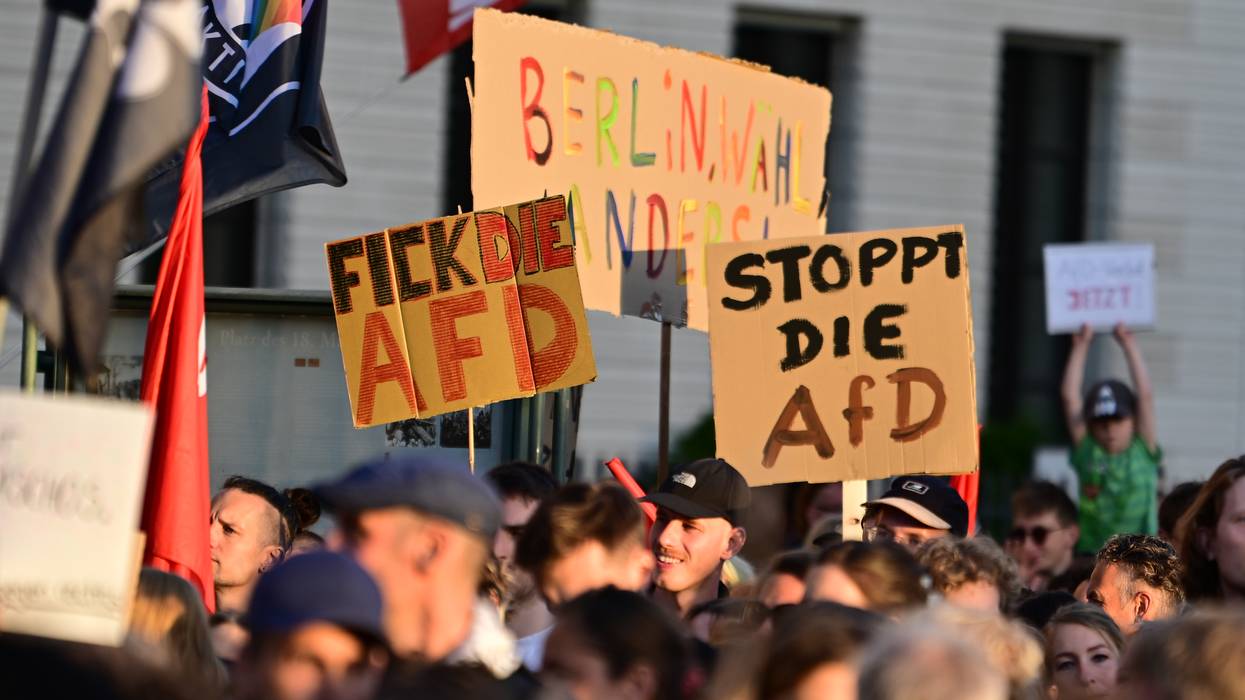
For the rest of Germany, the overwhelming majority of whom firmly reject fascism as the future, the mandate is clear: Solidarity Forever!
Upon learning of the landslide electoral triumph of a fascist political party in a province that was once part of socialist Germany, these foreboding words immediately came to mind: “The womb is fertile still from which that crawled.” It is the concluding line from Bertolt Brecht’s brilliant denunciation of the Hitler regime, The Resistible Rise of Arturo Ui. What happened in Saxony-Anhalt in the last election with the far-right AfD, or Alternative for Germany, gaining 43.5% of the vote is certainly a somber vindication of Brecht’s warning. But why there and why now? The answers are not readily apparent, but neither are they inscrutable.
First, the resistible rise of the AfD was not resisted sufficiently or effectively enough. In fact, the prevailing policies of Germany’s ruling parties—whether CDU (Christian Democratic Union) or SPD (Social Democratic Party of Germany)—actually served to propel alienation, angst, and anger among the masses. This is particularly true for the provinces of the former German Democratic Republic, all of which have significantly higher support for the AfD than their counterparts in the west.
The tactic of imposing a firewall (Brandmauer) of noncooperation around the AfD proved to be a poor choice for the resistance. After 30 years of being largely treated as second-class citizens, to be functionally defined as some sort of political leper for their party preference only strengthened the resolve and resentment of AfD voters in the east.
Germany remains, as before, a deeply divided country. The Reunification (die Wende) decades ago did little to integrate, let alone unify, east and west. “Ossies” and “Wessies” largely live in separate political and economic universes divided by colonial-like snobbery on the one side and legitimate grievances on the other.
The AfD officially associates itself with Blau (blue). It is perhaps worth noting that in common German parlance when someone is said to be Blau, they are totally drunk.
What was once a gap in living standards has become a chasm. The annual GDP per capita in Bavaria, for example, is $68,619, while in Saxony-Anhalt it is $42,471, the lowest of all provinces. Eastern German employees earn about 80%-86% of the income levels of their western counterparts. Employees in the western state of Baden-Württemberg earn on average 23% more than workers in Mecklenburg-Vorpommern, where provincial elections will be held on September 20 and where polls indicate the AfD will get at least 37% of the vote. The unemployment rate in eastern Germany sits around 8.1%, whereas in the west it is about 6.1%. Poverty rates in the east, now well over 20%, have consistently remained higher than in the west, now under 15%.
Despite these economic woes, the current embattled Chancellor, Friedrich Merz, and his CDU cohorts have proposed major rollbacks in the social safety net, stricter rules for sick leave, cuts to family benefits, and plans to alter pension payments. “The welfare state as we have known it,” proclaimed the multimillionaire Mertz, “can no longer be financed.” Mertz, a corporate lawyer and former head of Germany’s branch of BlackRock, the world’s largest asset management company with over $15 trillion in assets, is an unabashed cheerleader for monopoly capitalism as expressed in his book, Daring More Capitalism. Militarism is also high on his imperialist agenda.
His proposed military budget for 2027 is $125 billion, an increase of 33% from 2026. As he stated at the onset of his political career in the national government: My “government will provide the Bundeswehr with all the financial resources it needs to become the strongest conventional army in Europe.”
Not surprisingly, his CDU party crashed in the Saxony-Anhalt election, receiving only 16.7% of the vote, a 20.4 point drop from the previous election. It, along with the SPD, is projected to register colossal losses in the coming Mecklenburg-Vorpommern election as well.
A glimmer of hope in the east for anti-fascist and anti-capitalist forces emerges from Berlin. Polls there indicate that the Left Party (Die Linke) is projected to receive about 20% of the vote on September 20, the highest of all political parties on the ballot. There is a very real possibility that a prominent leader of the Left Party, Elif Eralp, will become the next mayor of Berlin replacing the disgraced CDU mayor Kai Wegner. Eralp is the daughter of politically active trade unionists in Turkey. She continues that legacy of activism with her outspoken opposition to racism and for affordable housing. “I don’t want large real estate firms to determine in which direction Berlin develops,” declared Eralp in her progressive campaign, “I believe a different Berlin is possible, one in which everyone is able to afford housing.”
More hope for the future comes from the massive anti-fascist protests in the wake of the AfD victory promptly held in Berlin, Potsdam, Münster, Göttingen, Dresden. Frankfurt, Aachen, Bamberg, Darmstadt, Halle, and elsewhere. One protest sign read, “The rainbow has no color brown.” Brown, of course, refers to the NSDAP, the Nazis. The AfD officially associates itself with Blau (blue). It is perhaps worth noting that in common German parlance when someone is said to be Blau, they are totally drunk.
For those intoxicated by a lust for power, now dangerously rejuvenated, sobriety in politics is no alternative. That means for the rest of Germany, the overwhelming majority of whom firmly reject fascism as the future, the mandate is clear: Solidarity Forever!
The womb from which the AfD crawled must be made infertile, forever.
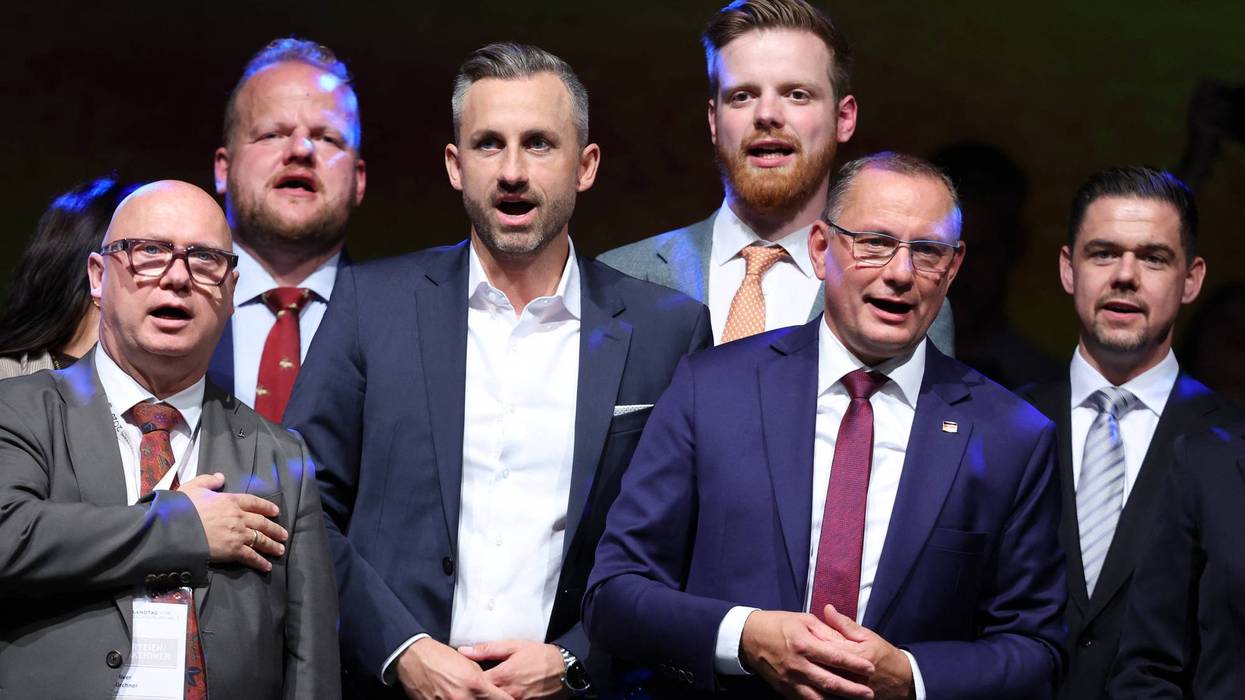
History tells us that when ordinary people are forced to watch the rich buy their government and that government then fails to sustain them, they lose faith in democracy long before they realize it was actually unregulated capitalism that screwed them.
While Americans were celebrating this Labor Day weekend, in Magdenburg, Germany a 35-year-old neofascist, Ulrich Siegmund, told a cheering crowd that his right-wing Alternative für Deutschland party was “taking our country back.” They’d just pulled 44% of the vote in the German state of Saxony-Anhalt, double what it’d been just five years ago.
Their platform was simple: Expel brown-skinned immigrants; dump the EU and NATO to instead build an alliance with Russia; and tear up the tech, climate, and energy rules so the fossil fuel and tech billionaires could take over Germany’s government like they are America’s under President Donald Trump.
It was a stunning victory for Russian President Vladimir Putin, Elon Musk, and Trump, who all went online (Putin through spokesman Kirill Dmitriev) and immediately congratulated the heirs to Hitler’s party on their showing in the election.
That same weekend, Fareed Zakaria aired a conversation with Chrystia Freeland, Francis Fukuyama, and David French about why liberal democracy is in retreat, and Freeland argued that China’s so-far-successful model of state-directed capitalism is the biggest threat to democracy around the world.
If you let the winners of capitalism write the rules of capitalism, they’ll first destroy the competition and then come for the government that hosts them.
And there’s a lot of truth in that, since China’s success proves that capitalism doesn’t need democracy to flourish and, in fact, may do even better in an authoritarian state like modern China and 1930s Germany.
But the most serious threat to American democracy isn’t coming from Beijing; it’s coming out of Wichita, Silicon Valley, Mar-a-Lago, and from Republicans in black robes who’ve been taking gifts from billionaires for years. Here’s why.
At the end of the day, capitalism is just a game we play, which is why pro football is such a good analogy. Football is a phenomenal engine for producing it’s goal—entertainment—and it works because there are rules, referees who enforce them, and a league that ruthlessly punishes cheaters.
But imagine a Trump-run NFL announcing that whichever team wrote the biggest check to the league’s head guy could put 14 men on the field, pull face masks, and throw kidney punches with no flags. The richest team would win every game, the entertainment value would ultimately collapse, and within a few seasons the game itself would be dead.
Capitalism is exactly that kind of engine. Since Deng Xiaoping opened China to markets in 1978, according to the World Bank, growth of the Chinese economy has averaged over 9% a year, lifting nearly 800 million people out of extreme poverty, the largest reduction of human misery in recorded history.
I spent the month of November, 1986 in Beijing studying acupuncture; the city was poor, the air choked with coal smoke, and capitalism was just getting off the block with experimental “special economic zones” like Shenzhen. Nobody voted for it; China was then and is now essentially a totalitarian state, proving that capitalism doesn’t need democracy to be successful.
As the Chinese figured out in the 1970s when they rejected President Ronald Reagan’s neoliberalism and instead embraced state-run capitalism (I wrote about this at length in The Hidden History of Neoliberalism: How Reaganism Gutted America), in order to work well and produce general prosperity, capitalism just requires rules that prevent the most successful capitalists from rising up and taking over the state (as is happening here).
For example, when China’s richest man (Jack Ma) started complaining in 2020 that government regulators were holding his companies back from maximum profitability, the Chinese government killed off Ma’s Ant Group’s IPO and fined his Alibaba $2.8 billion for the monopolistic behavior of forcing merchants into exclusive contracts. Ma himself vanished from public view for a few months while he was “rehabilitated.”
I’m no admirer of a one-party state, and I’d never want to live under one. But the Chinese Communist Party figured out more than 50 years ago—from watching the failures in our example—that if you let the winners of capitalism write the rules of capitalism, they’ll first destroy the competition and then come for the government that hosts them.
They instead regulated their billionaires and their companies, in other words, because they knew what unregulated billionaires typically do to whoever’s in charge.
We Americans once understood that, and had a president who spoke about it in simple, straightforward terms.
President Franklin D. Roosevelt came into office in 1933 to clean up the GOP’s mess of the Republican Great Depression; he fought back against his generation’s oligarchs, declaring in 1936:
For out of this modern civilization economic royalists carved new dynasties. New kingdoms were built upon concentration of control over material things…
It was natural and perhaps human that the privileged princes of these new economic dynasties, thirsting for power, reached out for control over Government itself.
FDR took on those “economic royalists” and defeated them. He explicitly called them out when the Democratic Party renominated him for president in 1936 in Philadelphia:
"These economic royalists complain that we seek to overthrow the institutions of America. What they really complain of is that we seek to take away their power."
He paused for a moment, then thundered, “Our allegiance to American institutions requires the overthrow of this kind of power!”
The crowd roared, delighted that he’d put millions to work while stripping that day’s oligarchs of their power. And he raised the top tax rate on the morbidly rich back up to 90%, while stopping an effort to kidnap him and turn our government fascist:
“In vain,” Roosevelt said, “they seek to hide behind the Flag and the Constitution. In their blindness they forget what the Flag and the Constitution stand for. Now, as always, they stand for democracy, not tyranny; for freedom, not subjection; and against a dictatorship by mob rule and the over-privileged alike.”
Four months later at Madison Square Garden FDR named the forces of “monopoly, speculation, and reckless banking,” said they were “unanimous in their hate” for him, and told the crowd he welcomed their hatred.
He wasn’t trying to abolish capitalism. He was putting it back under control of the people’s rule book: Glass-Steagall, the Securities and Exchange Commission, the Wagner Act, antitrust enforcement, a minimum wage, and a top tax rate of 90%.
Republicans fought it all, calling it “socialism” in increasingly hysterical tones, but it worked and FDR put America back together and built the world’s first middle class that was more than half of a nation’s people.
The American oligarchs of that era, in response, pulled out of politics and went back to just doing business and getting rich, until President Richard Nixon put Lewis Powell on the Supreme Court and Powell began the process—from the bench—of turning America into a full-blown oligarchy.
During FDR’s era, fascism had risen out of the ashes of the Republican Great Depression, sweeping in a few short years across Italy, Germany, Austria, and Spain.
History tells us that when ordinary people are forced to watch the rich buy their government and that government then fails to sustain them, they lose faith in democracy long before they realize it was actually unregulated capitalism that screwed them.
Invariably, that’s when a strongman shows up promising to “take their country back,” and they cheer.
Roosevelt’s answer was to make democracy deliver for the working people, and to make the morbidly rich pay for it. And it worked: Over the next 40 years America built the largest middle class the world had ever seen.
I’ve spent most of my adult life inside capitalism; over the past 55 years Louise and I have started and run five small businesses. Not once in all those years did we go to a politician with a wad of cash and ask him to change the rules so we could get richer. We were working under FDR’s rules.
Then along came the fossil fuel billionaires funding Reagan, and it all changed in a single generation. The Powell Memo laid out the plan in 1971, and Fred Koch’s sons, along with Coors, Scaife, Olin, Murdoch, and Bradley built the think tanks, the media, and captured the university chairs to indoctrinate the next generation.
What Reagan added was a new sales pitch Americans hadn’t heard before: Government is the problem, the rules are the enemy, and your real opponent is the Black family down the street or the woman you think took your promotion.
Regulation is capitalism’s immune system and works for an economy the same way the NFL’s rules work for that game.
In one fell swoop, the richest men in America dismantled four decades of FDR’s restraints and taxes while working people argued with each other about whether Reagan’s reviled “union bosses,” immigrants, “welfare queens,” or queer people were responsible for their troubles.
Then in 2010 the five corrupt Republican appointees on the Supreme Court handed down Citizens United and told the billionaires they could buy American democracy’s referees openly. Several of those justices, we later learned from ProPublica, had spent years accepting undisclosed yacht cruises, private jets, and luxury vacations from billionaire donors with business before the court while John Robert’s wife took millions from the same law firms that argued in front of her husband.
The result of this “football game” being corrupted by America’s capitalists is measurable. In the 2024 election, just 100 billionaire families spent $2.6 billion on federal races, 1 of every 6 dollars spent by anyone, and roughly 160 times what billionaires spent before Citizens United.
Virtually all of that money went to support Republican candidates who are back to Reagan’s old trick of blaming the middle class’ ills on the poorest and least powerful among us while jacking trillions into the money bins of Zuck, Musk, Trump, and Bezos.
Musk alone put up $278 million, then got handed the keys to the federal government so he could shut down investigations into himself and his businesses. And the man who moved JD Vance from obscure writer to vice president, Peter Thiel, wrote in 2009 that he no longer believed freedom and democracy were compatible, a perspective both Putin and Xi Jinping heartily endorse.
These men aren’t confused about how they’re trying to transform America: they’ve watched Chinese state-run capitalism produce vast wealth without elections and concluded, correctly, that the elections were the unnecessary part, if only the people can be sufficiently intimidated or brainwashed.
Europe’s been running this same neoliberal experiment since the Reagan-Thatcher 1980s, and Saxony-Anhalt is its poster child. Decades of privatization, austerity, and deregulation left eastern Germans feeling that the government in Berlin had forgotten about them.
Into that void came a party whose leading figures have been under investigation for taking money from a Kremlin-linked influence network and whose richest cheerleader lives in Texas and controls the social media outlet that was arguably largely responsible for AfD’s success.
When Putin took over the new, fragile Russian democracy at the beginning of this millennium, his first job was to get control of the oligarchs who largely owned the economy. He killed some, imprisoned others, and made those who’d swear total loyalty and fealty to him richer than Midas.
Trump appears to be following that same plan, which is why America’s oligarchs are beating a path to his door, bearing gifts.
Democracy not only isn’t necessary in the minds of these “new Republicans”; it’s there to be bought-and-sold, bent to their will with billions spent on elections and propaganda, and ultimately turned against itself to create an authoritarian surveillance state of, by, and for the wealthiest capitalists.
Regulation is capitalism’s immune system and works for an economy the same way the NFL’s rules work for that game. Antitrust laws, campaign finance limits, financial transparency rules, and progressive taxation keep the richest teams from “buying the league” and corrupting the entire system.
Roosevelt understood that the “privileged princes” would always reach for control over government, and that the only defense was a government strong enough to say no. We had that for 40 years, from the 1930s to the 1980s.
We can have it again, but only if the people who benefit from an honest game outvote the followers of the billionaires like Trump and Musk who’ve been paying to rig it.
We need a constitutional amendment overturning Citizens United like I detail in Who Killed the American Dream?, real antitrust enforcement, free or low-cost healthcare and college for the middle class, more widespread unionization, rational immigration reform, and a return to high taxes on the morbidly rich: all programs the billionaires and their lickspittle elected Republicans oppose.
Check your registration at vote.org and find out who’s running for your state legislature at openstates.org, because the rule book gets rewritten in statehouses too.
And if you found this useful, please subscribe to and share the Hartmann Report, because independent media that isn’t owned by a billionaire is also a major part of democracy’s immune system.
Tag, we’re it.
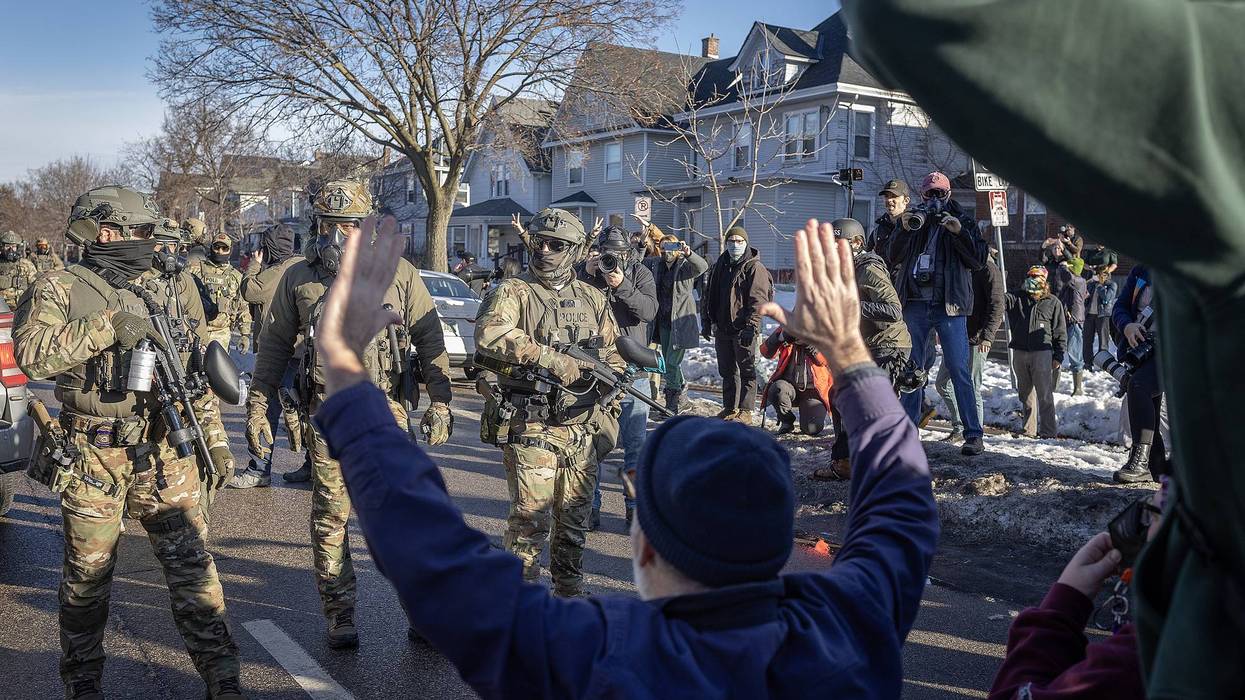
Wake up, America. You're living in a nightmare.
Imagine living in a country that can arrest and imprison you whenever it wants, without any judge or jury deciding you did anything wrong. It can call you a “domestic terrorist” and put you in prison for life. It can even execute you on the basis of nothing more than its own decision that you’re dangerous.
Well, I have bad news for you. You’re living in that country right now.
As he loses power and popularity — and faces mounting resistance abroad and at home — Trump is enlarging his police state.
His regime is having ever more people arrested, imprisoned, and deported without any judge or jury deciding they did anything wrong. It’s using racial profiling in deciding whom to target. It’s making warrantless searches and seizures of people, their cars, and their homes. All of this violates the US Constitution.
Trump’s police state not only continues, but it is growing larger by the day.
According to a new analysis by The New York Times, the regime’s surge in immigration arrests this summer has swept up thousands of people, most of whom have not been charged with or convicted of a crime (less than 4 percent had a past violent criminal conviction).
Those being arrested, imprisoned, and potentially deported include some married to US citizens, others who entered the US legally and are pursuing asylum claims, and some who came here with temporary legal status that the Trump regime has decided to revoke.
In other words, they were all here legally.
If you have temporary protected status because you escaped from inhumane conditions in another country, ICE might now summon you to an ICE office and put a monitor around your ankle — even if you have no criminal history and are in full compliance with your immigration status. The Trump regime has unilaterally revoked temporary protected status and claims the ankle monitors are necessary to track people whom it may want to deport at some point.
You’re not even safe if you’re a US citizen born in America. ProPublica has found that more than 170 US citizens have been wrongfully detained by ICE agents in raids and protests over a recent nine-month span. It described cases involving alleged force and multiday detention without access to counsel or communication.
Some estimates put the number of US citizens subjected to ICE as much higher, but there’s no way of knowing because there’s no legal process for filtering out and protecting American citizens, just as there’s no legal process for protecting anyone else who’s here legally. Trump’s police state is extrajudicial, and it’s being done in secret.
You might even be murdered, without a trial finding you guilty of anything. In addition to Renee Good and Alex Pretti in Minnesota last January, ICE agents have murdered two others just this summer.
One was Lorenzo Salgado Araujo, murdered by ICE in Houston on July 7, 2026. Salgado Araujo had lived in the US for decades. ICE agents pursued him in unmarked cars and shot him while he was driving a work crew to a job site. The Department of Homeland Security claims Salgado Araujo tried to use his vehicle as a weapon against an officer, but witnesses dispute this account.
The other was Johan Sebastian Durán Guerrero, murdered by ICE on July 13, 2026, in Biddeford, Maine. Durán Guerrero was a 25-year-old immigrant from Colombia. Agents pursued him while he was driving to work. The Department of Homeland Security claims its agent feared for public safety as Durán Guerrero tried to drive away, but elected officials and family members dispute this account, noting that Durán Guerrero was not an intended target of the immigration operation.
None of these murders has been fully investigated.
You might also be murdered without a trial if you happen to be on a vessel off Latin America’s Caribbean coast or in the eastern Pacific Ocean. A mere accusation of drug trafficking is enough to kill you, without any evidence presented before any court of law or neutral magistrate.
Historians looking back on this shameful period will wonder how this was allowed.
The US military announced Monday that it had again carried out a strike on a vessel in the eastern Pacific Ocean, killing two people it accused of trafficking drugs — bringing the overall death toll to 223 people killed in 67 strikes during the nearly yearlong US campaign of bombing boats alleged to be smuggling drugs.
Finally, the Trump regime is imprisoning Americans who demonstrate against its police state.
In June, in two federal courts sentenced nine people who protested outside an immigrant detention facility in Texas to 30 to 100 years in prison, after the regime accused them of being members of Antifa. During the protest, a police officer was shot; he survived.
Those sentences are longer than the harshest sentence handed down to any of the convicted rioters in the January 6 attack on the US Capitol in 2021 (all of whom have since received pardons or commutations from Trump).
These cases are the first to incorporate new guidance from the regime that classifies Antifa as a “domestic terrorist organization.” That’s despite the fact that Antifa is a decentralized movement rather than a single organization and that there is no federal charge of domestic terrorism under existing US law.
I want to make three concluding points about all this.
First, Trump’s police state not only continues, but it is growing larger by the day. Kristi Noem’s replacement as secretary of homeland security, Markwayne Mullin, along with his boss in the White House, Stephen Miller, and the secretary of defense, Pete Hegseth, have more money, manpower, and firepower than ever. They are ramping up all of their extrajudicial arrests, detentions, deportations, and murders.
The only difference between last year and now is they’re no longer announcing what they’re doing with fanfare and braggadocio, because the American public has grown wary of it.
Second, none of us is safe from this because the arrests, installations of ankle bracelets, imprisonments, deportations, and murders are made without any judge, jury, or neutral party deciding that the assumptions on which they’re based are adequate and truthful.
Not even “domestic terrorism” arrests and lengthy prison sentences necessitate judicial inquiry into what exactly is meant by “domestic terrorism” and whether defendants have done anything to justify that appellation.
Finally, this growing menace is cruel, inhumane, and likely unconstitutional. It is causing hundreds of thousands of families in our country extreme mental distress; many people are not leaving their homes for fear of being arrested or worse. It is likely chilling First Amendment rights to speak up and protest against these atrocities.
Historians looking back on this shameful period will wonder how this was allowed. How can one maniacal man in the Oval Office, his fanatical assistant, and two suck-up Cabinet secretaries have been so cruel and oblivious to basic human rights? How can their Republican enablers in Congress have been willing to go along? How can the American public have been so quiet?

While money pours into groups peddling abstinence-only programs, our health educators march on without funding for professional development and our sex ed advocates fight on without the resources to win.
Sex education is both everywhere and nowhere. If you scroll through right-wing news sites or visit a school board meeting, you’d think the content of our schools’ health curriculum—and who has the power to shape it—has become the all-consuming debate of the decade. On one side of the aisle, it has. Just this summer, the Trump administration canceled millions in funding to Teen Pregnancy Prevention programs, announcing plans to promote abstinence-only curricula that encourage marriage and procreation. The political left, on the other hand, has stayed far too quiet about sex ed. As leaders of nonprofit organizations working to expand access to research-based comprehensive sex education, we’re left wondering why programs with the power to build a progressive, empathetic, and pluralistic society barely make the progressive agenda—and are severely underfunded.
While the right has devoted time and resources toward rallying its base against comprehensive sex education, most progressive philanthropies and initiatives have yet to match their level of investment. Extremist actors and organizations have funded school board candidates; passed legislation promoting anti-abortion educational tools and mandating medically-inaccurate curricula; and fearmongered at the local, state, and national level. While money pours into groups peddling abstinence-only programs, our health educators march on without funding for professional development and our sex ed advocates fight on without the resources to win.
This dramatic imbalance in funding has little to do with what’s best for young people and much to do with politics, power, and extremism. The right has placed immense value in sex education as a tool to further its ideological agenda. Young people in the process of forming their own values and beliefs are particularly vulnerable to curriculum steeped in extremist political rhetoric, and the right has chosen the classroom as the place where the next generation of voters will encounter its narrow vision of conservative “family values.” For example, politicians in over 20 states have introduced or passed bills requiring public schools to show a misleading, manipulative, and scientifically-inaccurate animated video about fetal development in the classroom, often as early as third grade. The video, “Meet Baby Olivia,” was created and funded by the national extremist group Live Action for the explicit purpose of indoctrinating students and building anti-abortion sentiment. Politicians have also restricted LGBTQ+-inclusive messages, language, and pride flags from classrooms through “Don’t Say Gay” legislation and other tactics. By preaching abstinence and peddling shame and stigma in the classroom, the right is strengthening its hold on the American electorate for decades to come.
Students bear the brunt of this political strategy. Studies show that comprehensive sex education helps students become healthier and more successful adults. Sex education leads to lower sexually transmitted infection rates, fewer unintended pregnancies, and better self-esteem. Beyond that, sex education bolsters students’ emotional intelligence, offering young people the language to name their feelings, move through stress, and communicate through disagreement. Without it, students are left without the necessary tools to navigate puberty or to seek help in the face of mental health challenges and sexual violence or harassment. In other words, sex education quite literally saves lives.
We urge funders to see sex education as the upstream investment that pays off now—in the well-being of our youth—while also safeguarding the future of our democracy.
It is clear that the right recognizes the power of sex education, and that we should, as well. Comprehensive sex education includes lessons on empathy, fostering students’ understanding of difference and diversity, and how to respect those who do not share their backgrounds or beliefs. Conservative figureheads increasingly warn against “toxic empathy,” or compassion for people at the margins of society, in favor of rigid adherence to political dogma. Empathy is a threat to fascism, and the far-right is correct in tracing its origin to the classroom. By fostering empathy and emotional intelligence, well-funded sex education builds a strong citizenry that supports pluralism and democratic values. Sex education is a fundamental pillar of democracy, though it stands on shaky ground.
Although the foundations and philanthropies working to build a progressive, equitable, and democratic society have not matched the right’s investment in sex education, it isn’t too late to take action. Investing in sex education can take many forms. Progressive philanthropies can fund organizations that develop curriculum and train educators, support campaigns to enact pro-sex education legislation and stop harmful legislation at state level, or elect friendly school board candidates. Lawmakers and administrators require technical assistance to update their state’s standards and bolster public awareness, and educators desperate to give their students accurate information need professional development resources and support navigating attacks from extremist agitators.
To be sure, foundations have their hands full. Heightened attacks on civil liberties and bodily autonomy at every level of government have required funders to make tough choices. It may seem idealistic to propose investing in long-term strategies to safeguard democracy when so many issues and organizations need urgent support right now, for direct services and efforts to protect what remains of our access to abortion care and HIV prevention programs. As leaders at the helm of nonprofits, we understand what it means to make tough decisions. However, investments that bolster all of the issues and communities we care about are worth making. We urge funders to see sex education as the upstream investment that pays off now—in the well-being of our youth—while also safeguarding the future of our democracy.
By protecting and expanding access to sex education, funders will help raise a generation equipped to understand their bodies; navigate difficult conversations; and build strong, resilient communities. They will also lay the groundwork for a more progressive, more just society. What could be of more value?