

SUBSCRIBE TO OUR FREE NEWSLETTER
Daily news & progressive opinion—funded by the people, not the corporations—delivered straight to your inbox.
5
#000000
#FFFFFF
To donate by check, phone, or other method, see our More Ways to Give page.
Daily news & progressive opinion—funded by the people, not the corporations—delivered straight to your inbox.

While he can no longer speak to the world about the latest developments, Ellsberg will continue to speak directly to hearts and minds about the extreme evils of our time—and the potential for overcoming them with love in action.
On a warm evening almost a decade ago, I sat under the stars with Daniel Ellsberg while he talked about nuclear war with alarming intensity. He was most of the way through writing his last and most important book, The Doomsday Machine: Confessions of a Nuclear War Planner. Somehow, he had set aside the denial so many people rely on to cope with a world that could suddenly end in unimaginable horror. Listening, I felt more and more frightened. Dan knew what he was talking about.
After working inside this country’s doomsday machinery, even drafting nuclear war plans for the Pentagon during President John F. Kennedy’s administration, Dan Ellsberg had gained intricate perspectives on what greased the bureaucratic wheels, personal ambitions, and political messaging of the warfare state. Deceptions about arranging for the ultimate violence of thermonuclear omnicide were of a piece with routine falsehoods about American warmaking. It was easy enough to get away with lying, he told me: “How difficult is it to deceive the public? I would say, as a former insider, one becomes aware: It’s not difficult to deceive them. First of all, you’re often telling them what they would like to believe—that we’re better than other people, we’re superior in our morality and our perceptions of the world.”
Dan had made history in 1971 by revealing the top-secret Pentagon Papers, exposing the constant litany of official lies that accompanied the U.S. escalation of the Vietnam War. In response, the government used the blunderbuss of the World War I-era Espionage Act to prosecute him. At age 41, he faced a possible prison sentence of more than 100 years. But his trial ended abruptly with all charges dismissed when the Nixon administration’s illegal interference in the case came to light in mid-1972. Five decades later, he reflected: “Looking back, the chance that I would get out of 12 felony counts from Richard Nixon was close to zero. It was a miracle.”
Dan’s mix of deep humanism and realism was in harmony with his aversion to contorting logic to suit rigid ideology.
That miracle enabled Dan to keep on speaking, writing, researching, and protesting for the rest of his life. (In those five decades, he averaged nearly two arrests per year for civil disobedience.) He worked tirelessly to prevent and oppose a succession of new American wars. And he consistently gave eloquent public support as well as warm personal solidarity to heroic whistleblowers— Thomas Drake, Katharine Gun, Daniel Hale, Matthew Hoh, Chelsea Manning, Edward Snowden, Jeffrey Sterling, Mordechai Vanunu, Ann Wright, and others—who sacrificed much to challenge deadly patterns of official deceit.
Dan often spoke out for freeing WikiLeaks publisher Julian Assange, whose work had revealed devastating secret U.S. documents on America’s wars in Afghanistan and Iraq. At the end of a visit in June 2015, when they said goodbye inside Ecuador’s embassy in London, I saw that both men were on the verge of tears. At that point, Assange was three years into his asylum at that embassy, with no end in sight.
Secretly indicted in the United States, Assange remained in the Ecuadorian embassy for nearly four more years until London police dragged him off to prison. Hours later, in a radio interview, Dan said: “Julian Assange is the first journalist to be indicted. If he is extradited to the U.S. and convicted, he will not be the last. The First Amendment is a pillar of our democracy and this is an assault on it. If freedom of speech is violated to this extent, our republic is in danger. Unauthorized disclosures are the lifeblood of the republic.”
Unauthorized disclosures were the essence of what WikiLeaks had published and what Dan had provided with the Pentagon Papers. Similarly, countless exposés about U.S. government war crimes became possible due to the courage of Chelsea Manning, and profuse front-page news about the government’s systematic violations of the Fourth Amendment resulted from Edward Snowden’s bravery. While gladly publishing some of their revelations, major American newspapers largely refused to defend their rights.
Such dynamics were all too familiar to Dan. He told me that the attitude toward him of The New York Times, which won a Pulitzer Prize with its huge Pentagon Papers scoop, was akin to a district attorney’s view of a “snitch”—useful but distasteful.
In recent times, Dan detested the smug media paradigm of “Ellsberg good, Snowden bad.” So, he pushed back against the theme as rendered by New Yorker staff writer Malcolm Gladwell, who wrote a lengthy piece along those lines in late 2016. Dan quickly responded with a letter to the editor, which never appeared.
The New Yorker certainly could have found room to print Dan’s letter, which said: “I couldn’t disagree more with Gladwell’s overall account.” The letter was just under 300 words; the Gladwell piece had run more than 5,000. While promoting the “Ellsberg good, Snowden bad” trope, The New Yorker did not let readers know that Ellsberg himself completely rejected it:
Each of us, having earned privileged access to secret information, saw unconstitutional, dangerously wrong policies ongoing by our government. (In Snowden’s case, he discovered blatantly criminal violations of our Fourth Amendment right to privacy, on a scale that threatens our democracy.) We found our superiors, up to the presidents, were deeply complicit and clearly unwilling either to expose, reform, or end the wrongdoing.
Each of us chose to sacrifice careers, and possibly a lifetime’s freedom, to reveal to the public, Congress, and the courts what had long been going on in secret from them. We hoped, each with some success, to allow our democratic system to bring about desperately needed change.
The truth is there are no whistleblowers, in fact no one on Earth, with whom I identify more closely than with Edward Snowden.
Here is one difference between us that is deeply real to me: Edward Snowden, when he was 30 years old, did what I could and should have done—what I profoundly wish I had done—when I was his age, instead of 10 years later.
As he encouraged whistleblowing, Dan often expressed regret that he hadn’t engaged in it sooner. During the summer of 2014, a billboard was on display at bus stops in Washington, D.C., featuring a quote from Dan—with big letters at the top saying “DON’T DO WHAT I DID. DON’T WAIT,” followed by “until a new war has started, don’t wait until thousands more have died, before you tell the truth with documents that reveal lies or crimes or internal projections of costs and dangers. You might save a war’s worth of lives.” Two whistleblowers who had been U.S. diplomats, Matthew Hoh and Ann Wright, unveiled the billboard at a bus stop near the State Department.
Above all, Daniel Ellsberg was preoccupied with opposing policies that could lead to nuclear war. “No policies in human history have more deserved to be recognized as immoral. Or insane,” he wrote in The Doomsday Machine. “The story of how this calamitous predicament came about and how and why it has persisted for over half a century is a chronicle of human madness.”
It’s fitting that the events set for Daniel Ellsberg Week (ending on June 16, the first anniversary of when Dan passed away) will include at least one protest at a Northrop Grumman facility. That company has a $13.3 billion contract to develop a new version of an intercontinental ballistic missile (ICBM), which—as Dan frequently emphasized—is the most dangerous of all nuclear weapons. He was eager to awaken Congress to scientific data about “nuclear winter” and the imperative of shutting down ICBMs to reduce the risks of nuclear war.
Five years ago, several of us from the Institute for Public Accuracy hand-delivered paperbacks of The Doomsday Machine—with a personalized letter from Dan to each member of the House and Senate—to all 535 congressional offices on Capitol Hill. “I am concerned that the public, most members of Congress, and possibly even high members of the Executive branch have remained in the dark, or in a state of denial, about the implications of rigorous studies by environmental scientists over the last dozen years,” Dan wrote near the top of his two-page letter. Those studies “confirm that using even a large fraction of the existing U.S. or Russian nuclear weapons that are on high alert would bring about nuclear winter, leading to global famine and near extinction of humanity.”
Dan’s letter singled out the urgency of one “immediate step” in particular: “to eliminate entirely our redundant, vulnerable, and destabilizing land-based ICBM force.” Unlike air-launched and sea-based nuclear weapons, which are not vulnerable to attack, the ICBMs are vulnerable to a preemptive strike and so are “poised to launch” on the basis of “10-minute warning signals that may be—and have been, on both sides—false alarms, which press leadership to ‘use them or lose them.’”
As Dan pointed out, “It is in the power of Congress to decouple the hair-trigger on our system by defunding and dismantling the current land-based Minuteman missiles and rejecting funding for their proposed replacements. The same holds for lower-yield weapons for first use against Russia, on submarines or in Europe, which are detonators for escalation to nuclear winter.”
In essence, Dan was telling members of Congress to do their job, with the fate of the Earth and its inhabitants hanging in the balance:
This grotesque situation of existential danger has evolved in secret in the almost total absence of congressional oversight, investigations, or hearings. It is time for Congress to remedy this by preparing for first-ever hearings on current nuclear doctrine and “options,” and by demanding objective, authoritative scientific studies of their full consequences including fire, smoke, nuclear winter, and famine. Classified studies of nuclear winter using actual details of existing attack plans, never yet done by the Pentagon but necessarily involving its directed cooperation, could be done by the National Academy of Sciences, requested and funded by Congress.
But Dan’s letter was distinctly out of sync with Congress. Few in office then—or now—have publicly acknowledged that such a “grotesque situation of existential danger” really exists. And even fewer have been willing to break from the current Cold War mindset that continues to fuel the rush to global annihilation. On matters of foreign policy and nuclear weapons, the Congressional Record is mainly a compendium of arrogance and delusion, in sharp contrast to the treasure trove of Dan’s profound insights preserved at Ellsberg.net.
Clear as he was about the overarching scourge of militarism embraced by the leaders of both major parties, Dan was emphatic about not equating the two parties at election time. He understood that efforts like Green Party presidential campaigns are misguided at best. But, as he said dryly, he did favor third parties—on the right (“the more the better”). He knew what some self-described progressives have failed to recognize as the usual reality of the U.S. electoral system: Right-wing third parties help the left, and left-wing third parties help the right.
Several weeks before the 2020 election, Dan addressed voters in the swing state of Michigan via an article he wrote for the Detroit Metro Times. Appearing under a headline no less relevant today—“Trump Is an Enemy of the Constitution and Must Be Defeated”—the piece said that “it’s now of transcendent importance to prevent him from gaining a second term.” Dan warned that “we’re facing an authoritarian threat to our democratic system of a kind we’ve never seen before,” making votes for Joe Biden in swing states crucial.
Dan’s mix of deep humanism and realism was in harmony with his aversion to contorting logic to suit rigid ideology. Bad as current realities were, he said, it was manifestly untrue that things couldn’t get worse. He had no intention of ignoring the very real dangers of nuclear war or fascism.
During the last few months of his life, after disclosing a diagnosis of inoperable pancreatic cancer, Dan reached many millions of people with an intensive schedule of interviews. Journalists were mostly eager to ask him about events related to the Pentagon Papers. While he said many important things in response to such questions, Dan most wanted to talk about the unhinged momentum of the nuclear arms race and the ominous U.S. frenzy of antagonism toward Russia and China lacking any sense of genuine diplomacy.
While he can no longer speak to the world about the latest developments, Dan Ellsberg will continue to speak directly to hearts and minds about the extreme evils of our time—and the potential for overcoming them with love in action.
A free documentary film premiering now, A Common Insanity: A Conversation with Daniel Ellsberg About Nuclear Weapons, concludes with these words from Dan as he looks straight at us: “Can humanity survive the nuclear era? We don’t know. I choose to act as if we have a chance.”
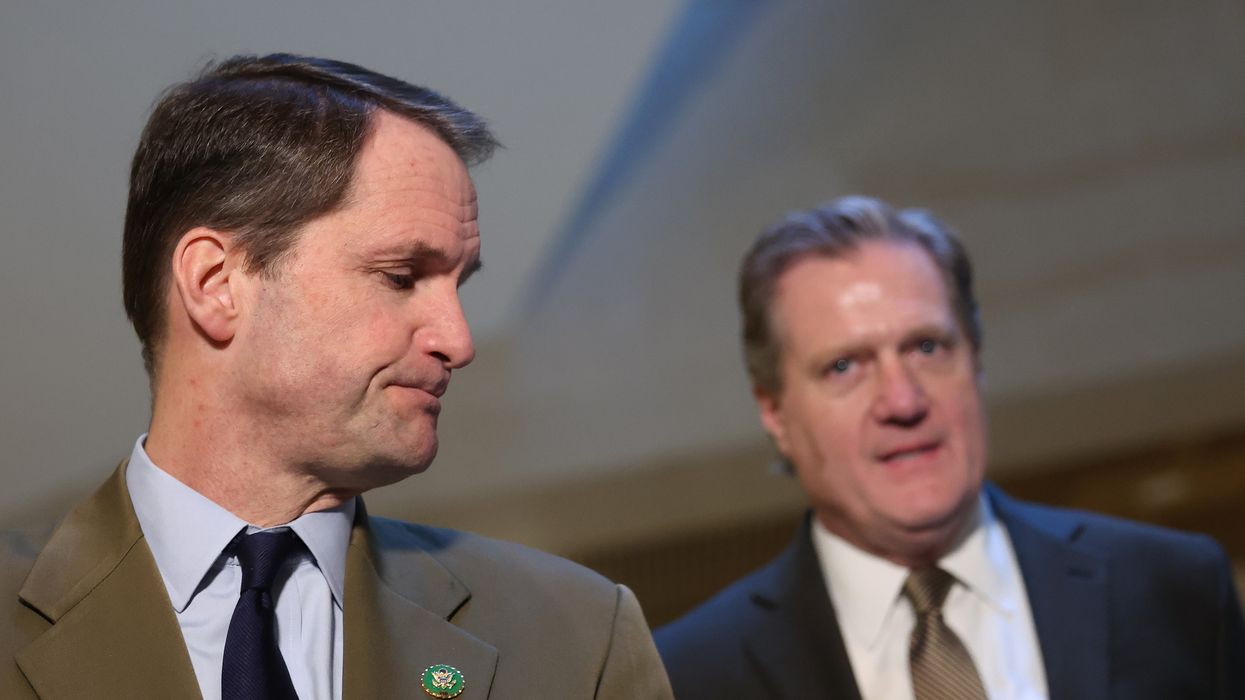
"In my opinion no country that has something like this to enter into force can still be considered to be free," said Edward Snowden.
NSA whistleblower Edward Snowden is among the privacy advocates sounding the alarm over a major expansion of mass surveillance that the U.S. House approved in a bipartisan vote last week, a step toward handing the federal government—and a potential second Trump administration—even more power to spy on Americans' communications without a warrant.
Sean Vitka, policy director of Demand Progress, used social media to press the top Democrat on the House Permanent Select Committee on Intelligence (HPSCI) on the implications of an amendment that the lower chamber approved as part of a bill to reauthorize Section 702 of the Foreign Intelligence Surveillance Act (FISA).
"Did you know your FISA [electronic communications service provider] amendment facilitates Stasi-like powers, very plausibly for [former President Donald] Trump? I asked your staff if you were lied to about it or if you knew. Can you confirm?" Vitka asked Rep. Jim Himes (D-Conn.) on X, the platform formerly known as Twitter. (Trump, the presumptive 2024 GOP nominee, has postured as a FISA opponent, but as president he signed an extension of Section 702 authority.)
Vitka noted Sunday that Himes repeatedly characterized the amendment—which was led by HPSCI Chair Rep. Mike Turner (R-Ohio)—as narrow, even though it would dramatically expand the kinds of businesses that can be forced to help the government conduct surveillance operations under Section 702, possibly handing a would-be authoritarian chilling surveillance powers.
As the Brennan Center for Justice explained, "Although the amendment exempts hotels, libraries, restaurants, and a handful of other types of establishments, an enormous range of businesses could still be conscripted into service, including grocery stores, department stores, hardware stores, laundromats, barber shops, fitness centers, and countless other locations Americans frequent—even the offices in which they work."
"Moreover, although the targets would still have to be non-U.S. persons overseas, many of these businesses would lack the technical ability to turn over specific communications, so they would be forced to give the NSA access to entire communications streams—trusting the government to retain only the communications of approved targets," the group added.
Section 702 permits U.S. agencies to spy on non-citizens located outside of the country, but the communications of Americans—including activists, journalists, and lawmakers—have
frequently been swept up under the surveillance authority, sparking a bipartisan reform push.
Himes, an
opponent of reform efforts, responded dismissively to Vitka's question on Sunday, writing that "life is really too short to engage with people who need to use bombastic absurdities like 'Stasi-like.'"
"Yes I know exactly what is in there," Himes added, referring to the Turner-led amendment. "Some of it is classified. And none of it is remotely 'Stasi-like.' Sell your nonsense elsewhere."
Snowden, who in 2013 exposed the NSA's
illegal mass surveillance program, said in response that "the 'it's classified' dodge" by Himes "is a bright red flag."
"This amendment radically—and I repeat radically—expands the range of who the gov't can force to spy on their behalf. It may be law in DAYS!" Snowden wrote on social media.
Snowden went on to argue that Vitka's "invocation of 'Stasi-like' is not only a fair characterization" of the amendment, "it's probably generous."
"Frankly, it's hard to imagine any modern communication beyond the reach of this thing—which is, of course, the true reason they're trying to sneak it into law so quietly," he added. "It is unbelievably overbroad, and in my opinion no country that has something like this to enter into force can still be considered to be free."
"The House bill represents one of the most dramatic and terrifying expansions of government surveillance authority in history."
Elizabeth Goitein, co-director of the Brennan Center's Liberty and National Security Program,
said the "disregard for Americans' civil liberties" in Himes' reply to Vitka "is staggering."
"This provision allows the NSA to force a huge range of ordinary U.S. businesses to assist the NSA in Section 702 surveillance," Goitein added. "That's not 'nonsense,' that's a fact. And this is your response?"
URGENT: Please read thread below. We have just days to convince the Senate NOT to pass a “terrifying” law (@RonWyden) that will force U.S. businesses to serve as NSA spies. CALL YOUR SENATOR NOW using this call tool (click below or call 202-899-8938). 1/25 https://t.co/HAOHURZoJQ
— Elizabeth Goitein (@LizaGoitein) April 15, 2024
The Reforming Intelligence and Securing America Act (RISAA), described by some as "Patriot Act 2.0," passed the House in an overwhelming bipartisan vote last week after mass spying supporters—including the Biden White House—defeated an effort to add a search warrant requirement to the bill.
But the legislation still has to clear a procedural hurdle to reach the Senate. Later Monday, the House is expected to vote on whether to table a motion to reconsider RISAA's passage.
If the bill does reach the closely divided Senate, privacy advocates are expected to continue their fight for meaningful reforms.
"The House bill represents one of the most dramatic and terrifying expansions of government surveillance authority in history," Sen. Ron Wyden (D-Ore.) said in a statement following Friday's House vote. "It allows the government to force any American who installs, maintains, or repairs anything that transmits or stores communications to spy on the government's behalf. That means anyone with access to a server, a wire, a cable box, a Wi-Fi router, or a phone."
"It would be secret: The Americans receiving the government directives would be bound to silence, and there would be no court oversight," he added. "I will do everything in my power to stop this bill."

"Absent significant amendment, RISAA will do nothing to prevent the government's repeated abuses of Section 702 to spy on Americans," critics said.
Update (3:45 pm ET):
Nineteen Republicans in the U.S. House of Representatives on Wednesday blocked the GOP speaker's effort to move forward with reauthorizing Section 702 of the Foreign Intelligence Surveillance Act, a controversial spying authority historically abused by government agencies.
"The failure of today's vote makes clear that even with the speaker's finger on the scale, Congress won't reauthorize FISA without meaningful privacy reforms," responded Jake Laperruque, deputy director of the Center for Democracy & Technology's Security and Surveillance Project.
"The path forward is clear: We need strong reforms to Section 702, including closing the backdoor search loophole and data broker loophole," he added. "Another short-term extension ignores the genuine privacy concerns that have been raised by members of both parties. It's time to bring a bill with genuine reforms to the House floor."
Earlier:
With just over a week left for the U.S. Congress to renew a major—and highly controversial—state surveillance program before it expires, privacy defenders on Tuesday warned that so-called "compromise" legislation is little more than a ploy to permanently reauthorize warrantless government spying on American citizens.
The Biden administration and members of Congress from both parties are seeking to extend Section 702 of the Foreign Intelligence Surveillance Act (FISA), which permits warrantless surveillance of non-U.S. citizens but also captures the communications of Americans.
Following a Tuesday markup session by the House Rules Committee and Wednesday consultations with intelligence officials, House Speaker Mike Johnson (R-La.) is expected to call a vote on the Reforming Intelligence and Securing America Act (RISAA) on Thursday. The bill would reauthorize Section 702 for five years while enacting what supporters call a series of reforms meant to protect Americans against state surveillance.
"Absent significant amendment, RISAA will do nothing to prevent the government's repeated abuses of Section 702 to spy on Americans," said the Brennan Center for Justice, Electronic Privacy Information Center (EPIC), and FreedomWorks in a joint statement.
Introduced in February by Rep. Laurel Lee (R-Fla.), RISAA would reauthorize what the congresswoman called "an indispensable tool that protects us from national security threats within the United States and abroad."
Congress passed a short-term extension of Section 702 last December, with lawmakers unable to agree on whether and how to reform the contentious law that has been abused hundreds of thousands of times, including to spy on protestors, congressional donors, journalists, and others.
RISAA is meant to be a compromise between the Protect Liberty and End Warrantless Surveillance Act and the FISA Reform and Reauthorization Act. The former bill was supported by privacy defenders, while the ACLU warned that the latter "would greatly expand the government's ability to spy on Americans without a warrant."
Proponents are touting RISAA's 56 purported reforms. Johnson asserted last week that the legislation "will establish new procedures to rein in the FBI, increase accountability at the Foreign Intelligence Surveillance Court (FISC), impose penalties for wrongdoing, and institute unprecedented transparency across the FISA process so we no longer have to wait years to uncover potential abuses."
However, civil liberties defenders warn that many of RISAA's so-called reforms are little more than window dressing that preserve the status quo.
"Making 56 ineffective tweaks to a fundamentally broken law is not reforming it," said the Brennan Center, EPIC, and FreedomWorks.
Johnson had previously supported closing the so-called data broker loophole—which the government exploits to purchase sensitive information—and the backdoor search loophole, through which domestic law enforcement agencies can access Americans' communications without a warrant. While the House is expected to vote Thursday on an amendment to close the backdoor search loophole, lawmakers are also likely to vote on three FISA expansions and special protections that only apply to members of Congress.
"This is so disappointing—when Speaker Johnson was on the Judiciary Committee with me, he was in our coalition fighting for major FISA reforms to protect sensitive data. Now that he's speaker, he's folding to spy agencies who want to violate your privacy," Congressional Progressive Caucus Chair Pramila Jayapal (D-Wash.) wrote on social media Tuesday.
Jayapal lamented that RISAA says the "FBI has to notify congressmembers to spy on us, but regular Americans can be spied on without a warrant?"
Demand Progress policy director Sean Vitka said in a statement, "In a truly staggering betrayal of public trust, Speaker Johnson is now not only sabotaging votes on overwhelmingly popular privacy protections for Americans, he is trying to ram through the Intelligence Committee's expansions of FISA."
"This is a five-alarm fire, born from Speaker Johnson's apparent decision to jam his thumb on the scale and sell out everyone in the United States to foreign data brokers," Vitka added.
Furthermore, RISAA contains a provision that Elizabeth Goitein, co-director of the Liberty and National Security program at the Brennan Center, warns "could result in the permanent reauthorization" of Section 702 "without a single reform."
"The House must NOT pass any legislation that could be read to permanently reauthorize Section 702, let alone permanently reauthorizing it without a single reform," Goitein said. "This provision of RISAA must be fixed, or the bill should be DOA."
Rights groups are particularly concerned about reporting that parts of the debate could be held in "secret session."
Privacy rights advocates and experts are sounding the alarm this week as members of the U.S. House of Representatives dive back into a contentious battle over reforming warrantless government surveillance powers that historically have been abused and consider closed-door debate.
House Republicans on Monday unveiled the Reforming Intelligence and Securing America Act and announced that the Committee on Rules will meet Wednesday to discuss the bill, which combines two previously competing proposals focused on Section 702 of the Foreign Intelligence Surveillance Act (FISA).
Section 702—which Congress temporarily extended with an annual defense package in December—only allows warrantless surveillance targeting foreigners located outside the United States, but Americans' data is also collected, and several agencies including the Federal Bureau of Investigation (FBI) have been widely lambasted for misusing it.
"Rushing to pass an anti-reform bill, subject only to very limited (and partially secret) debate, is a flagrant attempt to sidestep the strong, bipartisan movement for surveillance reform."
The new bill "more closely aligns with the original proposal from the House Intelligence Committee over that of its Judiciary competitor, focusing on more reforms at the FBI to address misuse of the powerful spy tool," according to The Hill. "But it does not include Judiciary's hope for a warrant requirement—something deemed a red line for the intelligence community but nonetheless a top priority for privacy advocates in Congress."
The outlet also noted that "the process of bringing the bill to the floor will push the House to return to a previously floated idea from Speaker Mike Johnson (R-La.) to do a queen-of-the-hill-style debate format that would allow for consideration of amendments—including a potential amendment on a warrant requirement."
Also stressing the divisiveness of the warrant policy, Wired detailed Monday:
Several aides attributed the drawn-out nature of the fight, at least in part, to the relative naivete of the House speaker on national security matters, saying that, with little experience in the area, Johnson had not previously had the opportunity to be captured by the intelligence community—powerful interests accused by congressional staffers of routinely deploying "fear tactics" to defend surveillance operations plagued by regular error and abuse.
Johnson's lack of any intelligence background, staffers say, would have likely increased his dependence on House intelligence staffers, who, while cultivating a sense of awe due to their access to national secrets, routinely behave as ambassadors between the spy agencies and regular congressional staff.
Privacy advocates inside and outside the House continue to emphasize the need for a warrant requirement. They are also concerned about reporting from Politico's Jordain Carney late Sunday that some debate may occur in "secret session."
"Most lawmakers want major reform of Section 702. The Judiciary Committee's reform bill passed out of committee on a 35-2 vote," said Elizabeth Goitein, senior director of the Brennan Center for Justice's Liberty & National Security Program. "Intelligence Committee leaders know they can't win on an even playing field, so they're trying to use secrecy to avoid reform."
"Secret law is anathema to democracies, and making law in secret is the next worst thing. Open debate is a core feature of our democratic system," she continued, noting how uncommon secret sessions are. "House members should unite in opposition to this ploy and demand open debate on surveillance reform."
Responding to Goitein on social media, exiled American whistleblower Edward Snowden declared: "Secrecy and deceit must have no place in the making of American law. This effort to revive disgraced Bush-era practices in order to thwart a *reform bill* is a scandal. A genuine scandal."
Jeramie Scott, senior counsel and director of EPIC's Project on Surveillance Oversight was similarly critical, saying: "Rushing to pass an anti-reform bill, subject only to very limited (and partially secret) debate, is a flagrant attempt to sidestep the strong, bipartisan movement for surveillance reform. The American people deserve better."
Jake Laperruque of the Center for Democracy & Technology's Security and Surveillance Project—who backed the previous House Judiciary Committee bill—cast doubt on the new legislation's prospects given opposition from not only that panel but also the far-right Freedom Caucus, which has scheduled a Tuesday afternoon press conference.
Laperruque said Monday that "I don't think you can say with any certainty" that the bill would get support from a majority of Republicans, who narrowly control the House.

"It's incredibly disheartening that Congress decided to extend an easily abused law with zero of the reforms needed to protect all of our privacy," said the ACLU's senior policy counsel.
The ACLU and National Security Agency whistleblower Edward Snowden were among those condemning House and Senate lawmakers on Thursday for approving an extension of a law that the federal government has used to spy on the communications of Americans without a warrant.
The extension of Section 702 of the Foreign Intelligence Surveillance Act (FISA) was crammed into the 3,000-page National Defense Authorization Act, an $886 billion piece of legislation that approves funding for the Pentagon for the coming fiscal year.
Just hours after the Senate narrowly defeated a last-ditch motion to strip out the Section 702 extension and approved the NDAA in a bipartisan 87-13 vote, the House passed the legislation in a similarly resounding fashion on Thursday, with 163 Democrats and 147 Republicans supporting the bill.
Just 45 Democrats voted no after the Congressional Progressive Caucus leadership urged the bloc's 100-plus members to oppose the measure, citing the proposed four-month extension of Section 702 and excessive military spending.
The NDAA now heads to the desk of President Joe Biden, who is expected to sign it. The White House has publicly urged Congress to reauthorize Section 702, which ostensibly allows federal authorities to surveil only the communications of non-U.S. citizens located outside the country.
In practice, however, the program has been used to spy on the communications of American activists, journalists, members of Congress, and others without a warrant. Government records show that the FBI abused Section 702 more than 278,000 times between 2020 and early 2021.
Kia Hamadanchy, the ACLU's senior policy counsel, said in a Thursday statement following the House vote that "it's incredibly disheartening that Congress decided to extend an easily abused law with zero of the reforms needed to protect all of our privacy."
"As long as Section 702 is being used by the government to spy on Americans without a warrant," Hamadanchy added, "we will continue to fight this unconstitutional law and work with Congress to strengthen our Fourth Amendment protections against government surveillance."
Snowden, a former NSA contractor who helped expose the agency's mass surveillance apparatus, wrote on social media that "Congress has voted to pass the NDAA—in which they deceitfully concealed an extension of the warrantless spying program ('Section 702') universally opposed by the public."
https://t.co/D1cqGYIvDC
— Edward Snowden (@Snowden) December 14, 2023
Elizabeth Goitein, co-director of the Liberty and National Security Program at the Brennan Center for Justice, criticized lawmakers for caving to "abject fearmongering by the administration and surveillance hawks" who claimed the reauthorization of Section 702 was urgently needed to protect national security.
Goitein noted that the four-month extension of Section 702 will likely become a 16-month extension as the Biden administration is expected to use the four months to ask the FISA Court for a one-year extension. The spying authority was set to expire at the end of the year.
"The fight continues," Goitein wrote on social media. "We can't sit back and wait for 16 months; we must demand that Congress reform Section 702 *now* to end the abuses and rein in warrantless surveillance of Americans."
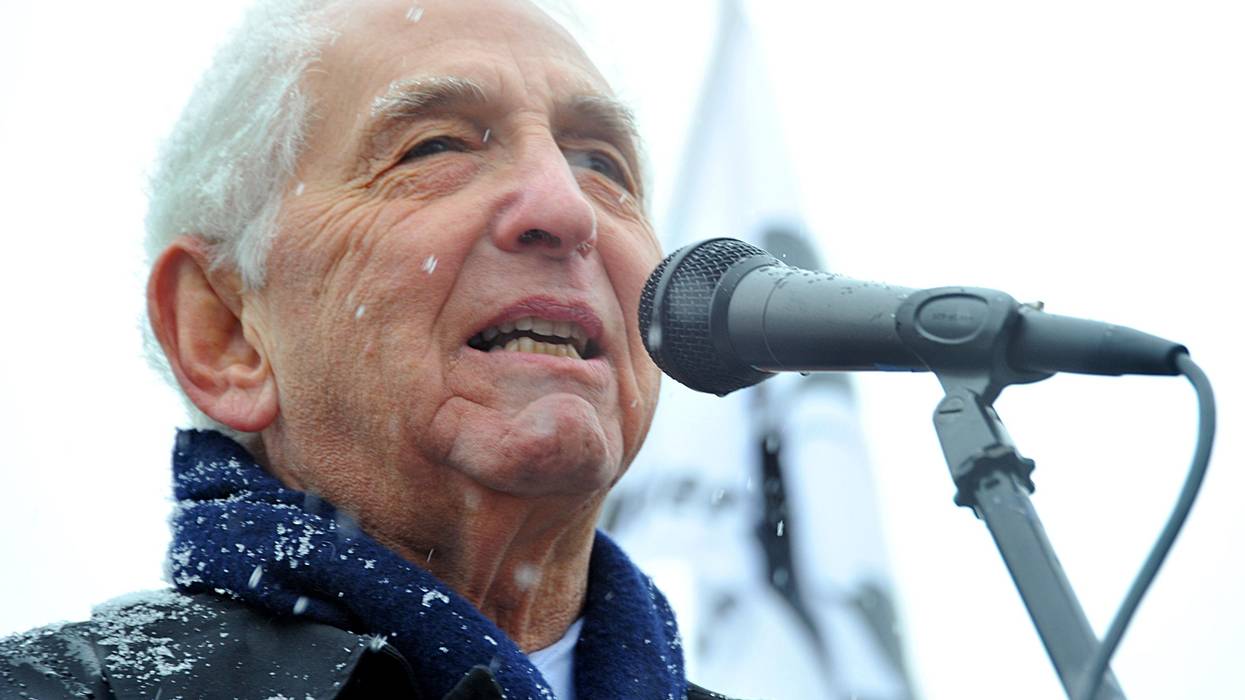
His life and legacy are reminders that individual acts of moral courage depend on examples set by others, and they have the potential to spark more, far into the future.
In 1971, when Daniel Ellsberg arrived at a federal court in Boston, a journalist asked if he was concerned about the prospect of going to prison for leaking a 7,000-page top-secret history of the Vietnam War. Ellsberg responded with a question of his own: “Wouldn’t you go to prison to help end this war?”
The classified documents Ellsberg released to The New York Times and 18 other newspapers were quickly dubbed the Pentagon Papers. They exposed more than two decades of government deceit about U.S. involvement in Vietnam, from 1945 to 1968.
Ellsberg died June 16, 2023, three months after announcing that he had been diagnosed with terminal cancer. To millions of Americans who opposed the war, his whistleblowing was an act of patriotism – but millions of others regarded it as treason. In Ellsberg’s own papers at UMass Amherst, where I teach history and direct the Ellsberg Initiative for Peace and Democracy, you can read hundreds of letters to him from ordinary citizens expressing both extremes: the highest possible praise, and vitriolic, often antisemitic, hostility.
How a young war planner became a peace activist is one of the most striking conversion stories in American history. But Ellsberg’s political and moral transformation did not happen in a vacuum.
How a young war planner became a peace activist is one of the most striking conversion stories in American history. But Ellsberg’s political and moral transformation did not happen in a vacuum. It reflected a titanic shift in public attitudes about the Vietnam War. The massive anti-war movement inspired and reinforced Ellsberg’s dissent – and, in turn, his example has emboldened activists and whistleblowers in the decades since.
Once a fervent Cold Warrior, Ellsberg joined the Marine Corps in the mid-1950s, earned his doctorate in economics from Harvard and in 1959 became a nuclear war analyst for the Rand Corp., a think tank that, at the time, was funded mostly by the Air Force. In 1964, he was one of the brainy young analysts, dubbed “whiz kids” by the media, that Defense Secretary Robert McNamara recruited to the Pentagon.
Throughout his 20s and early 30s, Ellsberg believed that serving the president was a “knightly calling,” even if it required lying to the public. So how did he come to believe that loyalty to truth-telling superseded loyalty to the chief of state?
From 1965 to 1967, Ellsberg went to Vietnam for the State Department, believing the war was a challenging but necessary part of a global struggle to contain communism. Yet he became deeply disillusioned, convinced that the war could not be won. He was particularly disturbed by indiscriminate U.S. bombing and shelling, most of it on South Vietnam, the land the U.S. claimed to be protecting. About 20,000 American lives had already been lost, and roughly a million Vietnamese people had been killed, about half of them civilians. By the war’s end eight years later, 58,000 Americans and 3 million Vietnamese had died.
By 1968, Ellsberg was trying to persuade U.S. leaders to seek a negotiated end to the war. On his own time, meanwhile, he was beginning to meet anti-war activists who advocated a bottom-up effort to demand immediate U.S. withdrawal.
One of them, a Gandhian pacifist named Janaki Natarajan, convinced Ellsberg that he should study leading advocates of nonviolent resistance, such as Martin Luther King Jr., Henry David Thoreau and Barbara Deming. To this day, one of Ellsberg’s favorite quotations comes from Thoreau’s “Civil Disobedience”: “Cast your whole vote, not a strip of paper merely, but your whole influence.”
But most galvanizing for Ellsberg were the Pentagon Papers, which he helped compile for McNamara. Full of technocratic euphemisms for lethal policies, the documents convinced him that the entire history of U.S. involvement in Vietnam was marked by deception: that it was an aggressive counterrevolution that denied the Vietnamese people the right of self-determination, disguised as a battle for democracy.
Ellsberg had first viewed the Vietnam War as a just cause to be won, then as an unwinnable stalemate to be gradually abandoned. By late 1969, however, he saw it as an immoral war to be ended unilaterally and immediately.
Millions of Americans had already come to that conclusion. Back in 1965, in fact, Ellsberg’s future wife, Patricia Marx, agreed to a first date only if it included an anti-war demonstration in Washington.
Just as he finished reading the Pentagon Papers, Ellsberg attended a War Resisters League conference that proved pivotal to his decision to leak the documents. There he met a few of the 3,250 young Americans who were sentenced to up to three years in prison for resisting the draft. Deeply moved by their courage, Ellsberg asked himself what he could do if he were willing to risk prison and his career.
A month later, with help from his friend and Rand colleague Anthony Russo, Ellsberg began photocopying the Pentagon Papers.
For the next year and a half, Ellsberg tried to get anti-war members of Congress to put the documents into the congressional record and hold hearings. None was willing, so he eventually offered them to war correspondent Neil Sheehan at The New York Times – the first newspaper to report on the papers’ revelations.
Public interest was scant, however, until President Richard Nixon began attacking the press and Ellsberg. Although the Pentagon Papers did not include Nixon’s time in office, the White House feared that Ellsberg might leak more documents – especially about Nixon’s 1968 effort to sabotage the Vietnam peace talks to improve his odds of winning the presidential election.
The government indicted Ellsberg on a dozen felony counts with a possible 115-year prison sentence. He was the first American ever criminally charged under the Espionage Act of 1917 for disclosing classified documents to the press and public rather than to a foreign agent or nation.
Ellsberg was spared prison. Late in his 1973 trial, Watergate prosecutors discovered that the White House had authorized crimes against him, including a break-in at his psychiatrist’s office, in a failed search for incriminating information. The judge had little choice but to declare a mistrial.
Ellsberg was a free man, but the personal cost of his dissent was severe. He lost many friends and had to forge a new career as a writer and lecturer. For more than five decades he has been an activist and has been arrested for nonviolent civil disobedience some 80 times on behalf of peace, nuclear disarmament, government accountability, and First Amendment rights.
In early March 2023, Ellsberg made public a letter to friends and supporters announcing that he had only months to live. He closed by thanking fellow activists whose “dedication, courage, and determination to act have inspired and sustained my own efforts.”
Ellsberg’s life and legacy are reminders that individual acts of moral courage depend on examples set by others, and they have the potential to spark more, far into the future. As Ellsberg often said, “civil courage is contagious.”
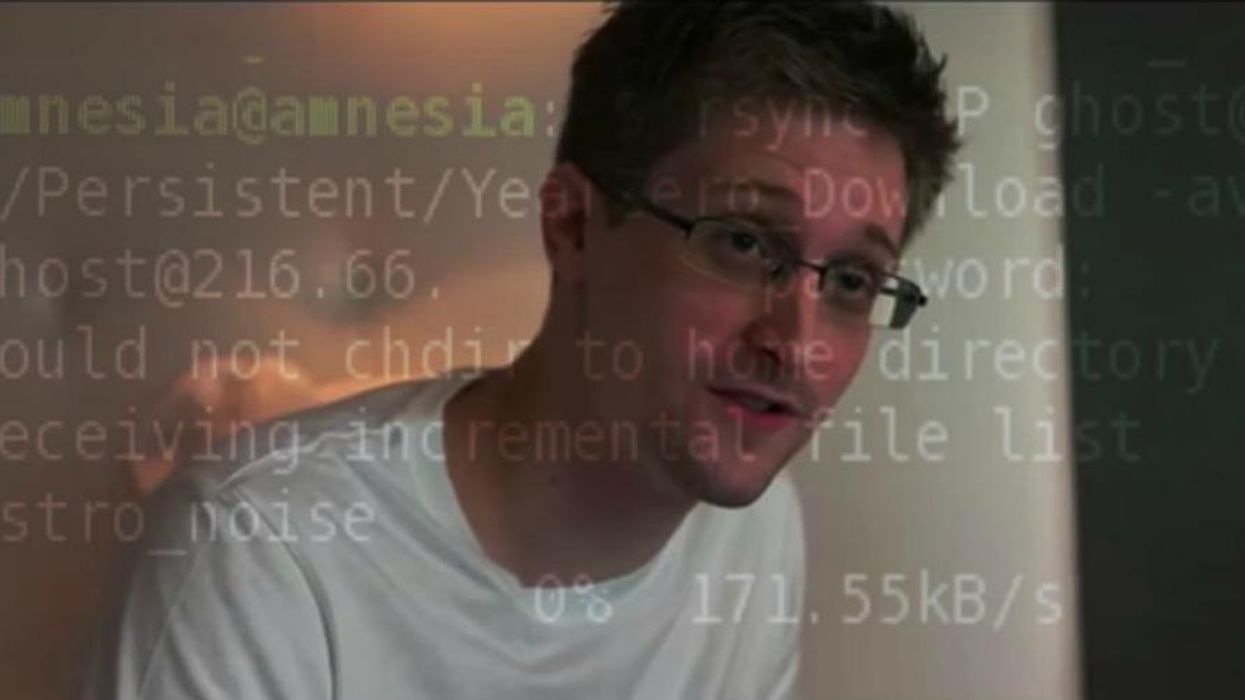
"We trusted the government not to screw us," said Edward Snowden. "But they did. We trusted the tech companies not to take advantage of us. But they did. That is going to happen again, because that is the nature of power."
With this week marking 10 years since whistleblower Edward Snowden disclosed information to journalists about widespread government spying by United States and British agencies, the former National Security Agency contractor on Thursday joined other advocates in warning that the fight for privacy rights, while making several inroads in the past decade, has grown harder due to major changes in technology.
"If we think about what we saw in 2013 and the capabilities of governments today," Snowden told The Guardian, "2013 seems like child's play."
Snowden said that the advent of commercially available surveillance products such as Ring cameras, Pegasus spyware, and facial recognition technology has posed new dangers.
As Common Dreams has reported, the home security company Ring has faced legal challenges due to security concerns and its products' vulnerability to hacking, and has faced criticism from rights groups for partnering with more than 1,000 police departments—including some with histories of police violence—and leaving community members vulnerable to harassment or wrongful arrests.
Law enforcement agencies have also begun using facial recognition technology to identify crime suspects despite the fact that the software is known to frequently misidentify people of color—leading to the wrongful arrest and detention earlier this year of Randal Reid in Georgia, among other cases.
"Despite calls over the last few years for federal legislation to rein in Big Tech companies, we've seen nothing significant in limiting tech companies' ability to collect data."
Last month, journalists and civil society groups called for a global moratorium on the sale and transfer of spyware like Pegasus, which has been used to target dozens of journalists in at least 10 countries.
Protecting the public from surveillance "is an ongoing process," Snowden told The Guardian on Thursday. "And we will have to be working at it for the rest of our lives and our children's lives and beyond."
In 2013, Snowden revealed that the U.S. government was broadly monitoring the communications of citizens, sparking a debate over surveillance as well as sustained privacy rights campaigns from groups like Electronic Frontier Foundation (EFF) and Fight for the Future.
"Technology has grown to be enormously influential," Snowden told The Guardian on Thursday. "We trusted the government not to screw us. But they did. We trusted the tech companies not to take advantage of us. But they did. That is going to happen again, because that is the nature of power."
Last month ahead of the anniversary of Snowden's revelations, EFF noted that some improvements to privacy rights have been made in the past decade, including:
"Despite calls over the last few years for federal legislation to rein in Big Tech companies, we've seen nothing significant in limiting tech companies' ability to collect data... or regulate biometric surveillance, or close the backdoor that allows the government to buy personal information rather than get a warrant, much less create a new Church Committee to investigate the intelligence community's overreaches," wrote EFF senior policy analyst Matthew Guariglia, executive director Cindy Cohn, and assistant director Andrew Crocker. "It's why so many cities and states have had to take it upon themselves to ban face recognition or predictive policing, or pass laws to protect consumer privacy and stop biometric data collection without consent."
"It's been 10 years since the Snowden revelations," they added, "and Congress needs to wake up and finally pass some legislation that actually protects our privacy, from companies as well as from the NSA directly."

"If the courts are unwilling to hear Wikimedia's challenge, then Congress must step in to protect Americans' privacy," said the Knight First Amendment Institute's litigation director.
Privacy advocates on Tuesday blasted the U.S. Supreme Court's refusal to hear the Wikimedia Foundation's case against a federal program for spying on Americans' online communications with people abroad.
The nonprofit foundation, which operates Wikipedia, took aim at the National Security Agency (NSA) program "Upstream" that—under Section 702 of the Foreign Intelligence Surveillance Act—searches emails, internet messages, and other web communications leaving and entering the United States.
"In the course of this surveillance, both U.S. residents and individuals located outside the U.S. are impacted," the foundation explained in a statement. "The NSA copies and combs through vast amounts of internet traffic, including private data showing what millions of people around the world are browsing online, from communications with friends and family to reading and editing knowledge on Wikipedia and other Wikimedia projects."
"This government surveillance has had a measurable chilling effect on Wikipedia users, with research documenting a drop in traffic to Wikipedia articles on sensitive topics, following public revelations about the NSA's mass surveillance in 2013," the group added.
Last August, Wikimedia—represented by the ACLU, Knight First Amendment Institute at Columbia University, and the law firm Cooley LLP—petitioned the high court to take up the case after a divided panel of the U.S. Court of Appeals for the 4th Circuit dismissed it based on the "state secrets privilege."
"The Supreme Court's refusal to grant our petition strikes a blow against an individual's right to privacy and freedom of expression—two cornerstones of our society and the building blocks of Wikipedia," said Wikimedia legal director James Buatti. "We will continue to champion everyone's right to free knowledge, and urge Congress to take on the issue of mass surveillance as it evaluates whether to reauthorize Section 702 later this year."
As Common Dreams reported earlier this month, in a separate case, the ACLU sued the NSA along with the Central Intelligence Agency, Department of Justice, and Office of the Director of National Intelligence for failing to respond to public records requests for information about Section 702, which will expire if it is not reauthorized.
"Before Congress votes on reauthorizing this law, Americans should know how the government wants to use these sweeping spying powers," Patrick Toomey, deputy project director for the ACLU's National Security Project, said at the time.
Responding to the development in the Wikimedia case on Tuesday, Toomey declared that "the Supreme Court let secrecy prevail today, at immense cost to Americans' privacy."
"We depend on the courts to hold the government to account, especially when it wields powerful new technologies to peer into our lives like never before. But the Supreme Court has again allowed the executive branch to hide abuses behind unjustifiable claims of secrecy," he continued. "It is now up to Congress to insist on landmark reforms that will safeguard Americans in the face of the NSA's mass spying programs."
In a series of tweets about the case, the ACLU asserted that "we all deserve to use the internet without fear of being monitored by the government" and by declining to hear the case, "the court has slammed shut one of the only doors left to hold the NSA accountable for surveillance abuses revealed in 2013" by whistleblower Edward Snowden.
That thread concluded with a call for Congress to kill Section 702—which Snowden himself echoed on the platform:
Alex Abdo, litigation director of the Knight First Amendment Institute, joined them in urging action from U.S. lawmakers.
"This decision is a blow to the rule of law," Abdo said of the high court. "The government has now succeeded in insulating from public judicial review one of the most sweeping surveillance programs ever enacted. If the courts are unwilling to hear Wikimedia's challenge, then Congress must step in to protect Americans' privacy by reining in the NSA's mass surveillance of the internet."
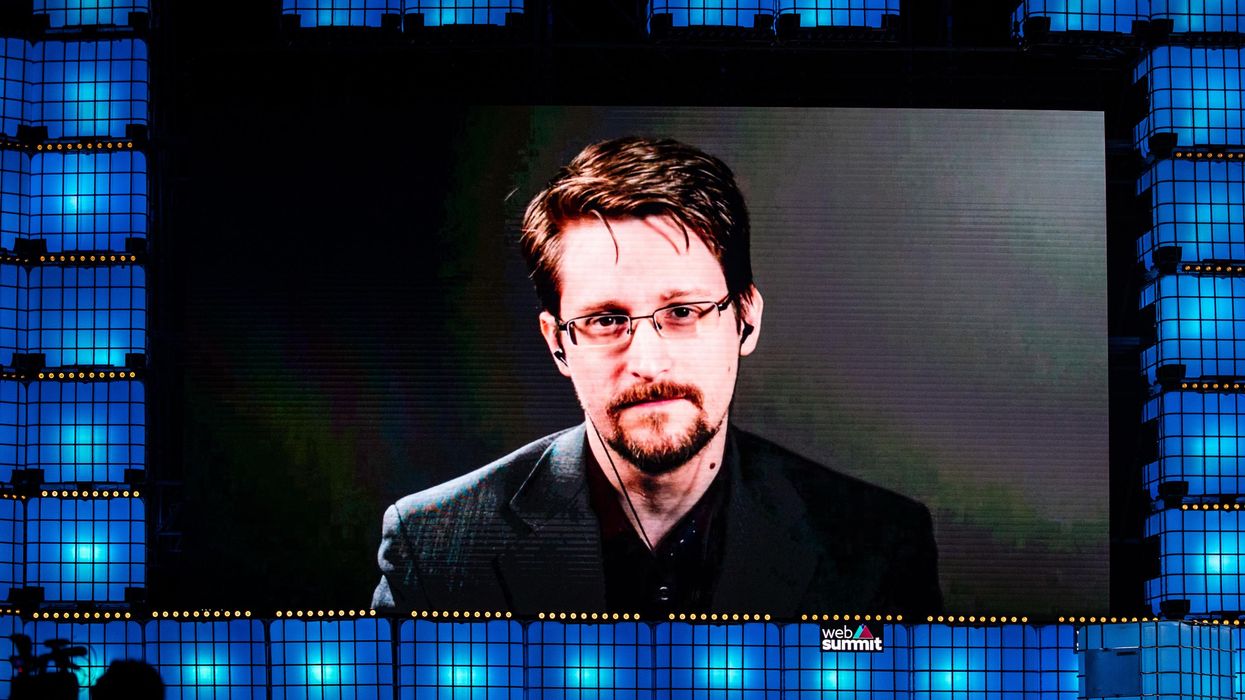
NSA whistleblower Edward Snowden said Wednesday that the U.S. Department of Homeland Security should be shut down after reporting shined light on the agency's sweeping campaign to police what it deems disinformation online, an effort that raised alarm among civil liberties groups.
"It's time to talk about shutting down the Department of Homeland Security," Snowden, a former NSA contractor who exposed the agency's illegal mass spying program in 2013, wrote on Twitter.
"The First Amendment bars the government from deciding for us what is true or false, online or anywhere."
DHS, formed in 2002 in the wake of the September 11 attacks, "was always a mistake, a costly artifact of the hysteric post-9/11 authoritarianism that left us no more safe, but much less free," Snowden continued. "Its plan to become the Speech Police is the final straw."
Snowden was responding to an in-depth story by The Intercept on Monday detailing secretive DHS attempts to "curb speech it considers dangerous" by trying to pressure and "influence tech platforms" such as Twitter and Facebook. The department's "stepped up counter-disinformation effort" began under former President Donald Trump and has continued under President Joe Biden, the outlet noted.
"According to a draft copy of DHS' Quadrennial Homeland Security Review, DHS' capstone report outlining the department's strategy and priorities in the coming years, the department plans to target 'inaccurate information' on a wide range of topics, including 'the origins of the Covid-19 pandemic and the efficacy of Covid-19 vaccines, racial justice, U.S. withdrawal from Afghanistan, and the nature of U.S. support to Ukraine," The Intercept's Ken Klippenstein and Lee Fang reported.
"How disinformation is defined by the government has not been clearly articulated, and the inherently subjective nature of what constitutes disinformation provides a broad opening for DHS officials to make politically motivated determinations about what constitutes dangerous speech," Klippenstein and Fang stressed.
"DHS justifies these goals--which have expanded far beyond its original purview on foreign threats to encompass disinformation originating domestically--by claiming that terrorist threats can be 'exacerbated by misinformation and disinformation spread online," they added. "But the laudable goal of protecting Americans from danger has often been used to conceal political maneuvering."
The ACLU, which has previously called for the dismantling of DHS over its myriad abuses, expressed concerns in response to the The Intercept's story, which noted that the agency's efforts to police disinformation online have only expanded in the wake of the agency's decision to scrap its widely derided Disinformation Governance Board earlier this year.
"The First Amendment bars the government from deciding for us what is true or false, online or anywhere," the ACLU tweeted earlier this week. "Our government can't use private pressure to get around our constitutional rights."
Adam Goldstein, the vice president of research at FIRE--a free speech organization that is fighting right-wing censorship campaigns across the U.S.--told The Intercept that "no matter your political allegiances, all of us have good reason to be concerned about government efforts to pressure private social media platforms into reaching the government's preferred decisions about what content we can see online."
"Any governmental requests to social media platforms to review or remove certain content should be made with extreme transparency," Goldstein added.

American whistleblower Edward Snowden was among 72 foreign-born individuals granted Russian citizenship on Monday in a decree signed by President Vladimir Putin, just over seven months into Russia's war on Ukraine.
"After two years of waiting and nearly 10 years of exile, a little stability will make a difference for my family."
Snowden--who exposed the mass surveillance practices of the U.S. National Security Agency (NSA)--has lived in Russia since the summer of 2013, when the United States revoked his passport while he was attempting to travel from Hong Kong to Ecuador.
Shortly after Russia granted him permanent residency rights, Snowden announced in November 2020 that he and his wife, Lindsay Mills--who gave birth to their first son that year, and a second son earlier this year--were seeking dual citizenship.
"After years of separation from our parents, my wife and I have no desire to be separated from our son," Snowden explained. "That's why, in this era of pandemics and closed borders, we're applying for dual U.S.-Russian citizenship."
"Lindsay and I will remain Americans, raising our son with all the values of the America we love--including the freedom to speak his mind. And I look forward to the day I can return to the states, so the whole family can be reunited," he added. "Our greatest wish is that, wherever our son lives, he feels at home."
In a tweet noting that statement and sharing a family photo, the 39-year-old said Monday that "after years of separation from our parents, my wife and I have no desire to be separated from our SONS. After two years of waiting and nearly 10 years of exile, a little stability will make a difference for my family. I pray for privacy for them--and for us all."
Snowden attorney Anatoly Kucherena told Russian state-owned RIA Novosti on Monday that Mills is seeking citizenship. The lawyer also said that Snowden will not be forced to participate in the recently announced "partial mobilization" to send troops to Ukraine, as he has not served in Russia's army.
Not long before Russia invaded Ukraine in late February, Snowden accused the global news media of "pushing for war." Since the invasion, he has faced some criticism for his lack of comment on the conflict.
Just after the war began, he said that "I'm not suspended from the ceiling above a barrel of acid by a rope that burns a little faster every time I tweet, you concern-trolling ghouls. I've just lost any confidence I had that sharing my thinking on this particular topic continues to be useful, because I called it wrong."
In response to the citizenship news on Monday, Evan Greer, director of the U.S.-based digital rights group Fight for the Future, tweeted that "if the Biden administration dropped the charges against Snowden, Putin wouldn't be able to use him for a PR stunt, just sayin'."
Shadowproof managing editor Kevin Gosztola said: "Let's be clear. Snowden sought citizenship in Russia because his government will not let him return to his home country without putting him on trial exposing mass surveillance that systematically violated the privacy rights of millions and even spurred modest reform."
Snowden--who potentially faces decades in U.S. prison for theft and Espionage Act charges--has previously said that he would return to the United States if he believed he would receive a fair trial.
A federal appeals court ruled two years ago that the NSA's warrantless surveillance of U.S. phone records--which Snowden exposed--was illegal. Snowden has continued to criticize years of impunity for the agency's violation of Americans' civil liberties.
"Our position has not changed. Mr. Snowden should return to the United States where he should face justice as any other American citizen would," Ned Price, a spokesperson for the U.S. State Department, said Monday, also suggesting that the exile may be required to fight in Russia's war against Ukraine, despite his attorney's comments on the matter.
The Washington Post reported that White House Press Secretary Karine Jean-Pierre declined to comment, only saying that "since I believe there have been criminal charges brought against him, we would point you to the Department of Justice for any specifics on this."
Meanwhile, in Russia, when asked if Putin will meet with Snowden, presidential spokesperson Dmitry Peskov reportedly said that "there are no such plans."