SUBSCRIBE TO OUR FREE NEWSLETTER
Daily news & progressive opinion—funded by the people, not the corporations—delivered straight to your inbox.
5
#000000
#FFFFFF
To donate by check, phone, or other method, see our More Ways to Give page.
Daily news & progressive opinion—funded by the people, not the corporations—delivered straight to your inbox.
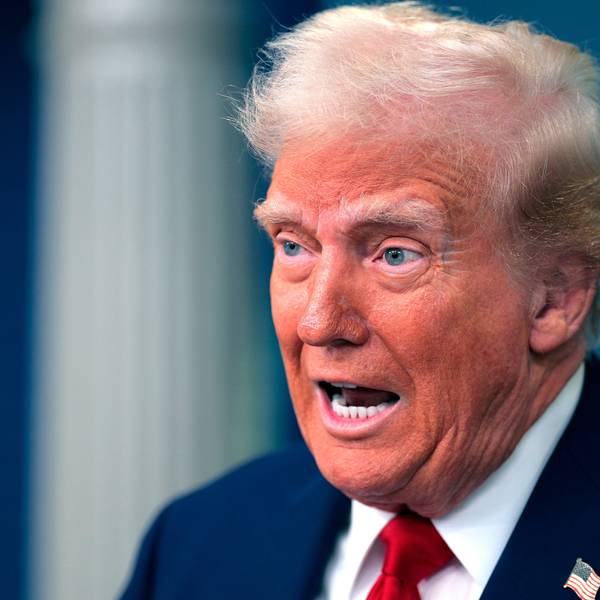
President Donald Trump reportedly did not realize he was promoting chief strategist Steve Bannon to the National Security Council (NSC) Principals Committee when he signed the executive order dropping intelligence and defense officials from the top government panel and elevating the former Breitbart News chair in their place.
The New York Times reported over the weekend that Trump had not been fully briefed on his own executive order, which became "a greater source of frustration to the president" than the protests and legal actions over his travel ban blocking immigrants from seven majority-Muslim countries.
Reporters Glenn Thrush and Maggie Haberman depicted an administration that's just barely keeping a lid on its internal crises, turf wars, and lack of preparation--and a scheming chief strategist that's successfully taken advantage of it all.
They wrote:
[White House chief of staff Reince] Priebus told Mr. Trump and Mr. Bannon that the administration needs to rethink its policy and communications operation in the wake of embarrassing revelations that key details of the orders were withheld from agencies, White House staff, and Republican congressional leaders like Speaker Paul D. Ryan.
Mr. Priebus has also created a 10-point checklist for the release of any new initiatives that includes signoff from the communications department and the White House staff secretary, Robert Porter, according to several aides familiar with the process.
Mr. Priebus bristles at the perception that he occupies a diminished perch in the West Wing pecking order compared with previous chiefs. But for the moment, Mr. Bannon remains the president's dominant adviser, despite Mr. Trump's anger that he was not fully briefed on details of the executive order he signed giving his chief strategist a seat on the National Security Council, a greater source of frustration to the president than the fallout from the travel ban.
Trump seemingly clarified on Twitter that he calls his own shots, "largely based on an accumulation of data, and everyone knows it." He also accused the Times of writing "total fiction" about him.
The executive order promoted Bannon, a white nationalist with no foreign policy or government experience, to a regular seat at some of the most sensitive meetings at the highest levels of government, along with other NSC meetings. Meanwhile, the Director of National Intelligence (DNI) and the chairman of the Joint Chiefs of Staff--who need to be confirmed by the Senate--were directed to only attend meetings when discussions pertain to their "responsibilities and expertise."
The memo led to speculation that the right-wing power grab in the executive branch could be setting the stage for a coup d'etat.
Dear Common Dreams reader, It’s been nearly 30 years since I co-founded Common Dreams with my late wife, Lina Newhouser. We had the radical notion that journalism should serve the public good, not corporate profits. It was clear to us from the outset what it would take to build such a project. No paid advertisements. No corporate sponsors. No millionaire publisher telling us what to think or do. Many people said we wouldn't last a year, but we proved those doubters wrong. Together with a tremendous team of journalists and dedicated staff, we built an independent media outlet free from the constraints of profits and corporate control. Our mission has always been simple: To inform. To inspire. To ignite change for the common good. Building Common Dreams was not easy. Our survival was never guaranteed. When you take on the most powerful forces—Wall Street greed, fossil fuel industry destruction, Big Tech lobbyists, and uber-rich oligarchs who have spent billions upon billions rigging the economy and democracy in their favor—the only bulwark you have is supporters who believe in your work. But here’s the urgent message from me today. It's never been this bad out there. And it's never been this hard to keep us going. At the very moment Common Dreams is most needed, the threats we face are intensifying. We need your support now more than ever. We don't accept corporate advertising and never will. We don't have a paywall because we don't think people should be blocked from critical news based on their ability to pay. Everything we do is funded by the donations of readers like you. When everyone does the little they can afford, we are strong. But if that support retreats or dries up, so do we. Will you donate now to make sure Common Dreams not only survives but thrives? —Craig Brown, Co-founder |
President Donald Trump reportedly did not realize he was promoting chief strategist Steve Bannon to the National Security Council (NSC) Principals Committee when he signed the executive order dropping intelligence and defense officials from the top government panel and elevating the former Breitbart News chair in their place.
The New York Times reported over the weekend that Trump had not been fully briefed on his own executive order, which became "a greater source of frustration to the president" than the protests and legal actions over his travel ban blocking immigrants from seven majority-Muslim countries.
Reporters Glenn Thrush and Maggie Haberman depicted an administration that's just barely keeping a lid on its internal crises, turf wars, and lack of preparation--and a scheming chief strategist that's successfully taken advantage of it all.
They wrote:
[White House chief of staff Reince] Priebus told Mr. Trump and Mr. Bannon that the administration needs to rethink its policy and communications operation in the wake of embarrassing revelations that key details of the orders were withheld from agencies, White House staff, and Republican congressional leaders like Speaker Paul D. Ryan.
Mr. Priebus has also created a 10-point checklist for the release of any new initiatives that includes signoff from the communications department and the White House staff secretary, Robert Porter, according to several aides familiar with the process.
Mr. Priebus bristles at the perception that he occupies a diminished perch in the West Wing pecking order compared with previous chiefs. But for the moment, Mr. Bannon remains the president's dominant adviser, despite Mr. Trump's anger that he was not fully briefed on details of the executive order he signed giving his chief strategist a seat on the National Security Council, a greater source of frustration to the president than the fallout from the travel ban.
Trump seemingly clarified on Twitter that he calls his own shots, "largely based on an accumulation of data, and everyone knows it." He also accused the Times of writing "total fiction" about him.
The executive order promoted Bannon, a white nationalist with no foreign policy or government experience, to a regular seat at some of the most sensitive meetings at the highest levels of government, along with other NSC meetings. Meanwhile, the Director of National Intelligence (DNI) and the chairman of the Joint Chiefs of Staff--who need to be confirmed by the Senate--were directed to only attend meetings when discussions pertain to their "responsibilities and expertise."
The memo led to speculation that the right-wing power grab in the executive branch could be setting the stage for a coup d'etat.
President Donald Trump reportedly did not realize he was promoting chief strategist Steve Bannon to the National Security Council (NSC) Principals Committee when he signed the executive order dropping intelligence and defense officials from the top government panel and elevating the former Breitbart News chair in their place.
The New York Times reported over the weekend that Trump had not been fully briefed on his own executive order, which became "a greater source of frustration to the president" than the protests and legal actions over his travel ban blocking immigrants from seven majority-Muslim countries.
Reporters Glenn Thrush and Maggie Haberman depicted an administration that's just barely keeping a lid on its internal crises, turf wars, and lack of preparation--and a scheming chief strategist that's successfully taken advantage of it all.
They wrote:
[White House chief of staff Reince] Priebus told Mr. Trump and Mr. Bannon that the administration needs to rethink its policy and communications operation in the wake of embarrassing revelations that key details of the orders were withheld from agencies, White House staff, and Republican congressional leaders like Speaker Paul D. Ryan.
Mr. Priebus has also created a 10-point checklist for the release of any new initiatives that includes signoff from the communications department and the White House staff secretary, Robert Porter, according to several aides familiar with the process.
Mr. Priebus bristles at the perception that he occupies a diminished perch in the West Wing pecking order compared with previous chiefs. But for the moment, Mr. Bannon remains the president's dominant adviser, despite Mr. Trump's anger that he was not fully briefed on details of the executive order he signed giving his chief strategist a seat on the National Security Council, a greater source of frustration to the president than the fallout from the travel ban.
Trump seemingly clarified on Twitter that he calls his own shots, "largely based on an accumulation of data, and everyone knows it." He also accused the Times of writing "total fiction" about him.
The executive order promoted Bannon, a white nationalist with no foreign policy or government experience, to a regular seat at some of the most sensitive meetings at the highest levels of government, along with other NSC meetings. Meanwhile, the Director of National Intelligence (DNI) and the chairman of the Joint Chiefs of Staff--who need to be confirmed by the Senate--were directed to only attend meetings when discussions pertain to their "responsibilities and expertise."
The memo led to speculation that the right-wing power grab in the executive branch could be setting the stage for a coup d'etat.