SUBSCRIBE TO OUR FREE NEWSLETTER
Daily news & progressive opinion—funded by the people, not the corporations—delivered straight to your inbox.
5
#000000
#FFFFFF
To donate by check, phone, or other method, see our More Ways to Give page.
Daily news & progressive opinion—funded by the people, not the corporations—delivered straight to your inbox.
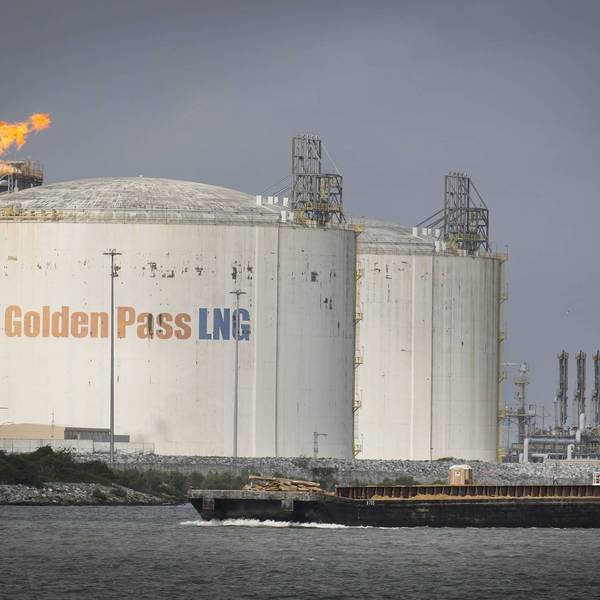
Despite President Barack Obama's claims of climate leadership, the U.S. oil industry is booming under his watch.
Bloomberg Business journalist Jennifer Dlouhy reported on Tuesday that "U.S. oil production has surged 82 percent to near-record levels in the past seven years and natural gas is up by nearly one-quarter."
The domestic fracking surge--a pillar of Obama's "all of the above" energy policy--is key to this trend.
"Instead of shutting down the hydraulic fracturing process that has unlocked natural gas from dense rock formations," Dlouhy noted, "Obama has promoted the fuel as a stepping stone to a greener, renewable future."
Notably, Jack Gerard, CEO and president of the American Petroleum Institute, gloated Tuesday at the Sixth Annual State of American Energy event: "The United States begins this new year leading the world in energy production."
However, the country's largest fossil fuel industry organization is not satisfied.
"As the president's last full year in office begins, we hope that he will take note of and help foster the U.S. model," said Gerard. "We hope that he'll note that the already heavy regulatory burden--almost 100 pending regulations and counting--upon the oil and natural gas industry could hinder, rather than advance what he hopes to be one of his administration's defining legacies, environmental improvement."
But Bill Snape, senior counsel for the Center for Biological Diversity, told Bloomberg he has a different take.
"From day one of the administration and accelerating into the present, this administration and this White House has viewed the natural gas and oil bonanza in this country as an economic opportunity, and they have ridden it and ridden it hard," said Snape. "They greased the skids for too much natural gas, oil and fracking in this country."
What's more, Gerard's statement comes despite a major oil industry giveaway passed in December when Congress agreed to end a 40-year-old ban on crude oil exports as a condition of the omnibus spending and taxation bill.
According to a study published in August by the Center for American Progress, the elimination of the export ban is poised to boost U.S. production of crude oil by "an average of 3.3 million barrels per day between 2015 and 2035."
As Lukas Ross of Friends of the Earth recently noted, the elimination of the export ban was just one of several gifts Obama gave to the oil industry last year alone.
Big oil continues to surge despite growing protests and awareness that, to save the climate, the vast majority of fossil fuels must remain in the earth. In a study published in the journal Nature earlier this year, researchers concluded that, in order to stave off climate disaster, the vast majority of fossil fuel deposits around the world must remain untouched.
Amid powerful and growing international climate justice movements, the industry group did appear to get one thing right.
"Emboldened by their ability to stop the Keystone XL pipeline," Gerard declared in his Tuesday address, "anti-fossil fuel advocates have set their sights on all energy infrastructure projects."
Dear Common Dreams reader, It’s been nearly 30 years since I co-founded Common Dreams with my late wife, Lina Newhouser. We had the radical notion that journalism should serve the public good, not corporate profits. It was clear to us from the outset what it would take to build such a project. No paid advertisements. No corporate sponsors. No millionaire publisher telling us what to think or do. Many people said we wouldn't last a year, but we proved those doubters wrong. Together with a tremendous team of journalists and dedicated staff, we built an independent media outlet free from the constraints of profits and corporate control. Our mission has always been simple: To inform. To inspire. To ignite change for the common good. Building Common Dreams was not easy. Our survival was never guaranteed. When you take on the most powerful forces—Wall Street greed, fossil fuel industry destruction, Big Tech lobbyists, and uber-rich oligarchs who have spent billions upon billions rigging the economy and democracy in their favor—the only bulwark you have is supporters who believe in your work. But here’s the urgent message from me today. It's never been this bad out there. And it's never been this hard to keep us going. At the very moment Common Dreams is most needed, the threats we face are intensifying. We need your support now more than ever. We don't accept corporate advertising and never will. We don't have a paywall because we don't think people should be blocked from critical news based on their ability to pay. Everything we do is funded by the donations of readers like you. When everyone does the little they can afford, we are strong. But if that support retreats or dries up, so do we. Will you donate now to make sure Common Dreams not only survives but thrives? —Craig Brown, Co-founder |
Despite President Barack Obama's claims of climate leadership, the U.S. oil industry is booming under his watch.
Bloomberg Business journalist Jennifer Dlouhy reported on Tuesday that "U.S. oil production has surged 82 percent to near-record levels in the past seven years and natural gas is up by nearly one-quarter."
The domestic fracking surge--a pillar of Obama's "all of the above" energy policy--is key to this trend.
"Instead of shutting down the hydraulic fracturing process that has unlocked natural gas from dense rock formations," Dlouhy noted, "Obama has promoted the fuel as a stepping stone to a greener, renewable future."
Notably, Jack Gerard, CEO and president of the American Petroleum Institute, gloated Tuesday at the Sixth Annual State of American Energy event: "The United States begins this new year leading the world in energy production."
However, the country's largest fossil fuel industry organization is not satisfied.
"As the president's last full year in office begins, we hope that he will take note of and help foster the U.S. model," said Gerard. "We hope that he'll note that the already heavy regulatory burden--almost 100 pending regulations and counting--upon the oil and natural gas industry could hinder, rather than advance what he hopes to be one of his administration's defining legacies, environmental improvement."
But Bill Snape, senior counsel for the Center for Biological Diversity, told Bloomberg he has a different take.
"From day one of the administration and accelerating into the present, this administration and this White House has viewed the natural gas and oil bonanza in this country as an economic opportunity, and they have ridden it and ridden it hard," said Snape. "They greased the skids for too much natural gas, oil and fracking in this country."
What's more, Gerard's statement comes despite a major oil industry giveaway passed in December when Congress agreed to end a 40-year-old ban on crude oil exports as a condition of the omnibus spending and taxation bill.
According to a study published in August by the Center for American Progress, the elimination of the export ban is poised to boost U.S. production of crude oil by "an average of 3.3 million barrels per day between 2015 and 2035."
As Lukas Ross of Friends of the Earth recently noted, the elimination of the export ban was just one of several gifts Obama gave to the oil industry last year alone.
Big oil continues to surge despite growing protests and awareness that, to save the climate, the vast majority of fossil fuels must remain in the earth. In a study published in the journal Nature earlier this year, researchers concluded that, in order to stave off climate disaster, the vast majority of fossil fuel deposits around the world must remain untouched.
Amid powerful and growing international climate justice movements, the industry group did appear to get one thing right.
"Emboldened by their ability to stop the Keystone XL pipeline," Gerard declared in his Tuesday address, "anti-fossil fuel advocates have set their sights on all energy infrastructure projects."
Despite President Barack Obama's claims of climate leadership, the U.S. oil industry is booming under his watch.
Bloomberg Business journalist Jennifer Dlouhy reported on Tuesday that "U.S. oil production has surged 82 percent to near-record levels in the past seven years and natural gas is up by nearly one-quarter."
The domestic fracking surge--a pillar of Obama's "all of the above" energy policy--is key to this trend.
"Instead of shutting down the hydraulic fracturing process that has unlocked natural gas from dense rock formations," Dlouhy noted, "Obama has promoted the fuel as a stepping stone to a greener, renewable future."
Notably, Jack Gerard, CEO and president of the American Petroleum Institute, gloated Tuesday at the Sixth Annual State of American Energy event: "The United States begins this new year leading the world in energy production."
However, the country's largest fossil fuel industry organization is not satisfied.
"As the president's last full year in office begins, we hope that he will take note of and help foster the U.S. model," said Gerard. "We hope that he'll note that the already heavy regulatory burden--almost 100 pending regulations and counting--upon the oil and natural gas industry could hinder, rather than advance what he hopes to be one of his administration's defining legacies, environmental improvement."
But Bill Snape, senior counsel for the Center for Biological Diversity, told Bloomberg he has a different take.
"From day one of the administration and accelerating into the present, this administration and this White House has viewed the natural gas and oil bonanza in this country as an economic opportunity, and they have ridden it and ridden it hard," said Snape. "They greased the skids for too much natural gas, oil and fracking in this country."
What's more, Gerard's statement comes despite a major oil industry giveaway passed in December when Congress agreed to end a 40-year-old ban on crude oil exports as a condition of the omnibus spending and taxation bill.
According to a study published in August by the Center for American Progress, the elimination of the export ban is poised to boost U.S. production of crude oil by "an average of 3.3 million barrels per day between 2015 and 2035."
As Lukas Ross of Friends of the Earth recently noted, the elimination of the export ban was just one of several gifts Obama gave to the oil industry last year alone.
Big oil continues to surge despite growing protests and awareness that, to save the climate, the vast majority of fossil fuels must remain in the earth. In a study published in the journal Nature earlier this year, researchers concluded that, in order to stave off climate disaster, the vast majority of fossil fuel deposits around the world must remain untouched.
Amid powerful and growing international climate justice movements, the industry group did appear to get one thing right.
"Emboldened by their ability to stop the Keystone XL pipeline," Gerard declared in his Tuesday address, "anti-fossil fuel advocates have set their sights on all energy infrastructure projects."