

SUBSCRIBE TO OUR FREE NEWSLETTER
Daily news & progressive opinion—funded by the people, not the corporations—delivered straight to your inbox.
5
#000000
#FFFFFF
To donate by check, phone, or other method, see our More Ways to Give page.


Daily news & progressive opinion—funded by the people, not the corporations—delivered straight to your inbox.
Following a United Nations ruling condemning the illegal and arbitrary imprisonment of former Maldives president Mohamed Nasheed, the legal team for the man sometimes called 'the Mandela of the Maldives' announced this week it will ramp up an international diplomatic pressure campaign until he is freed.
"Nasheed's unfair trial and conviction is emblematic of a new crisis in the country...where a fledgling democracy has entered a much darker period of repression," said human rights lawyer Amal Clooney, who is working alongside other attorneys to secure Nasheed's release.
Nasheed's wife, Laila Ali, echoed those charges, telling the Sydney Morning Herald on Tuesday that her husband's case "is merely a symbol of a much wider crackdown. The Maldives has returned to its dark past."
The nation's first democratically elected president, who was ousted in 2012, was sentenced to 13 years in jail earlier this year on terror charges related to the arrest of an allegedly corrupt judge when he was still in office.
The UN's Office of the High Commissioner for Human Rights had previously denounced Nasheed's trial as "vastly unfair, arbitrary and disproportionate."
In its report issued in September, the UN Working Group on Arbitrary Detention (WGAD) said there were "several factors which, taken together, strongly suggest that Mr. Nasheed's conviction was politically motivated." Furthermore, the Working Group ruled Nasheed "did not receive a fair trial" while calling for his immediate release and compensation.
As Clooney put it, the WGAD ruling "upholds every legal argument put forward on behalf of President Nasheed, and flatly rejects the Government's myths and denials."
For its part, the Maldivian government said last week that it "does not accept the decision of the WGAD and will not be made to act on the basis of a non-binding opinion."
But, buoyed by the UN's backing, Nasheed's lawyers are now calling for immediate action by governments around the world, including international economic sanctions and travel bans for individuals connected to the island government. They are asking not just for Nasheed's release, but also for the government to drop charges against 1,700 other people facing imprisonment for non-violently exercising of their rights to free speech and peaceful assembly.
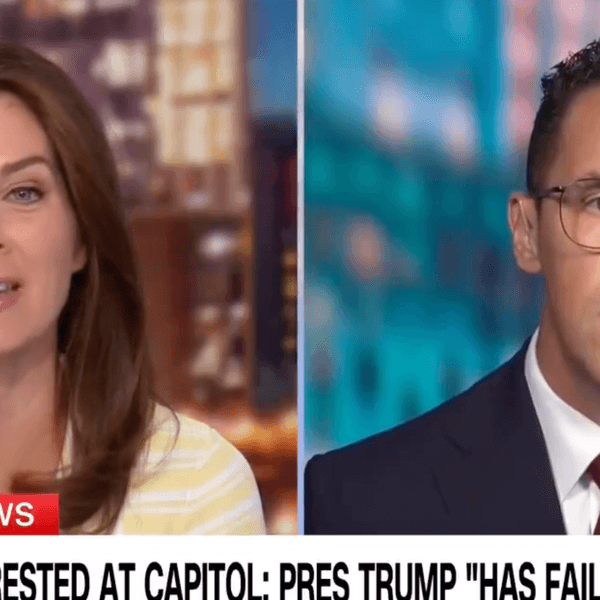
In an interview on CNN's "Amanpour," Clooney offered more details about the diplomatic pressure campaign, calling on world leaders "to move from public statements in support [of] our case to more concrete measures."
"We are having private conversations with governments," she told host Christiane Amanpour, specifically citing India and Australia. "Because in the end it's not enough that we get public statements and public support. We also need people picking up the phone and calling president Yameen [Abdulla Yameen Abdul Gayoom] and saying you cannot do this."
"We haven't come out and called for an all-out tourist boycott yet, but at the same time I don't think we would exclude it," Clooney said separately on Monday. "Tourists have the power of the purse."
Added fellow attorney Jared Genser, of the U.S.-based campaign group Freedom Now: "Governments don't release people like President Nasheed unless they are really forced to do so."
Dear Common Dreams reader, It’s been nearly 30 years since I co-founded Common Dreams with my late wife, Lina Newhouser. We had the radical notion that journalism should serve the public good, not corporate profits. It was clear to us from the outset what it would take to build such a project. No paid advertisements. No corporate sponsors. No millionaire publisher telling us what to think or do. Many people said we wouldn't last a year, but we proved those doubters wrong. Together with a tremendous team of journalists and dedicated staff, we built an independent media outlet free from the constraints of profits and corporate control. Our mission has always been simple: To inform. To inspire. To ignite change for the common good. Building Common Dreams was not easy. Our survival was never guaranteed. When you take on the most powerful forces—Wall Street greed, fossil fuel industry destruction, Big Tech lobbyists, and uber-rich oligarchs who have spent billions upon billions rigging the economy and democracy in their favor—the only bulwark you have is supporters who believe in your work. But here’s the urgent message from me today. It's never been this bad out there. And it's never been this hard to keep us going. At the very moment Common Dreams is most needed, the threats we face are intensifying. We need your support now more than ever. We don't accept corporate advertising and never will. We don't have a paywall because we don't think people should be blocked from critical news based on their ability to pay. Everything we do is funded by the donations of readers like you. When everyone does the little they can afford, we are strong. But if that support retreats or dries up, so do we. Will you donate now to make sure Common Dreams not only survives but thrives? —Craig Brown, Co-founder |
Following a United Nations ruling condemning the illegal and arbitrary imprisonment of former Maldives president Mohamed Nasheed, the legal team for the man sometimes called 'the Mandela of the Maldives' announced this week it will ramp up an international diplomatic pressure campaign until he is freed.
"Nasheed's unfair trial and conviction is emblematic of a new crisis in the country...where a fledgling democracy has entered a much darker period of repression," said human rights lawyer Amal Clooney, who is working alongside other attorneys to secure Nasheed's release.
Nasheed's wife, Laila Ali, echoed those charges, telling the Sydney Morning Herald on Tuesday that her husband's case "is merely a symbol of a much wider crackdown. The Maldives has returned to its dark past."
The nation's first democratically elected president, who was ousted in 2012, was sentenced to 13 years in jail earlier this year on terror charges related to the arrest of an allegedly corrupt judge when he was still in office.
The UN's Office of the High Commissioner for Human Rights had previously denounced Nasheed's trial as "vastly unfair, arbitrary and disproportionate."
In its report issued in September, the UN Working Group on Arbitrary Detention (WGAD) said there were "several factors which, taken together, strongly suggest that Mr. Nasheed's conviction was politically motivated." Furthermore, the Working Group ruled Nasheed "did not receive a fair trial" while calling for his immediate release and compensation.
As Clooney put it, the WGAD ruling "upholds every legal argument put forward on behalf of President Nasheed, and flatly rejects the Government's myths and denials."
For its part, the Maldivian government said last week that it "does not accept the decision of the WGAD and will not be made to act on the basis of a non-binding opinion."
But, buoyed by the UN's backing, Nasheed's lawyers are now calling for immediate action by governments around the world, including international economic sanctions and travel bans for individuals connected to the island government. They are asking not just for Nasheed's release, but also for the government to drop charges against 1,700 other people facing imprisonment for non-violently exercising of their rights to free speech and peaceful assembly.
In an interview on CNN's "Amanpour," Clooney offered more details about the diplomatic pressure campaign, calling on world leaders "to move from public statements in support [of] our case to more concrete measures."
"We are having private conversations with governments," she told host Christiane Amanpour, specifically citing India and Australia. "Because in the end it's not enough that we get public statements and public support. We also need people picking up the phone and calling president Yameen [Abdulla Yameen Abdul Gayoom] and saying you cannot do this."
"We haven't come out and called for an all-out tourist boycott yet, but at the same time I don't think we would exclude it," Clooney said separately on Monday. "Tourists have the power of the purse."
Added fellow attorney Jared Genser, of the U.S.-based campaign group Freedom Now: "Governments don't release people like President Nasheed unless they are really forced to do so."
Following a United Nations ruling condemning the illegal and arbitrary imprisonment of former Maldives president Mohamed Nasheed, the legal team for the man sometimes called 'the Mandela of the Maldives' announced this week it will ramp up an international diplomatic pressure campaign until he is freed.
"Nasheed's unfair trial and conviction is emblematic of a new crisis in the country...where a fledgling democracy has entered a much darker period of repression," said human rights lawyer Amal Clooney, who is working alongside other attorneys to secure Nasheed's release.
Nasheed's wife, Laila Ali, echoed those charges, telling the Sydney Morning Herald on Tuesday that her husband's case "is merely a symbol of a much wider crackdown. The Maldives has returned to its dark past."
The nation's first democratically elected president, who was ousted in 2012, was sentenced to 13 years in jail earlier this year on terror charges related to the arrest of an allegedly corrupt judge when he was still in office.
The UN's Office of the High Commissioner for Human Rights had previously denounced Nasheed's trial as "vastly unfair, arbitrary and disproportionate."
In its report issued in September, the UN Working Group on Arbitrary Detention (WGAD) said there were "several factors which, taken together, strongly suggest that Mr. Nasheed's conviction was politically motivated." Furthermore, the Working Group ruled Nasheed "did not receive a fair trial" while calling for his immediate release and compensation.
As Clooney put it, the WGAD ruling "upholds every legal argument put forward on behalf of President Nasheed, and flatly rejects the Government's myths and denials."
For its part, the Maldivian government said last week that it "does not accept the decision of the WGAD and will not be made to act on the basis of a non-binding opinion."
But, buoyed by the UN's backing, Nasheed's lawyers are now calling for immediate action by governments around the world, including international economic sanctions and travel bans for individuals connected to the island government. They are asking not just for Nasheed's release, but also for the government to drop charges against 1,700 other people facing imprisonment for non-violently exercising of their rights to free speech and peaceful assembly.
In an interview on CNN's "Amanpour," Clooney offered more details about the diplomatic pressure campaign, calling on world leaders "to move from public statements in support [of] our case to more concrete measures."
"We are having private conversations with governments," she told host Christiane Amanpour, specifically citing India and Australia. "Because in the end it's not enough that we get public statements and public support. We also need people picking up the phone and calling president Yameen [Abdulla Yameen Abdul Gayoom] and saying you cannot do this."
"We haven't come out and called for an all-out tourist boycott yet, but at the same time I don't think we would exclude it," Clooney said separately on Monday. "Tourists have the power of the purse."
Added fellow attorney Jared Genser, of the U.S.-based campaign group Freedom Now: "Governments don't release people like President Nasheed unless they are really forced to do so."