Corker Signals Veto-Proof Votes Exist as Congress Moves to Kill Iran Deal
Senate Foreign Relations Committee will consider bill on Tuesday that could sabotage ongoing nuclear talks between Tehran and world powers
Senator Bob Corker (R-Tenn.) has indicated that sufficient bipartisan support exists to override a promised presidential veto of a bill that would grant Congress authority to review, and possibly reject, a multilateral nuclear agreement between Iran and the P5+1 nations: the U.S., U.K., France, China, Russia, and Germany.
With markup of the bill set for Tuesday afternoon by the Senate Foreign Relations Committee, which Corker chairs, the vote count in the Senate now takes center stage. The White House has lobbied Senate Democrats heavily to oppose Corker's original version, which it has called a clear attempt to undermine the hard-fought progress made after more than a year of high-level talks regarding Iran's nuclear program. The Republican-controlled Senate would need at least 67 votes to override Obama's promised veto. The bill already has the support of eight Democratic co-sponsors as well as Sen. Angus King (I-Maine), who caucuses with the Democrats.
However, despite his original support for the measure, Sen. King on Monday night expressed new hesitations, telling MSNBC, "If this looks like this is just going to be used as a partisan issue, some way to embarrass the president, to deny him of a foreign policy achievement, I'm out, man."
With more than 50 amendments up for debate, it remains unclear what the final piece of legislation will look like when, assuming passage by the committee's Republican majority, it reaches the Senate floor. Prior to Tuesday's committee session, top White House officials--including Secretary of State John Kerry, Energy Secretary Ernest Moniz, and Treasury Secretary Jack Lew--will hold a closed-door meeting as a final attempt to dissuade lawmakers from passing anything that could potentially sabotage the pending nuclear deal that has been championed by peace-makers and foreign policy experts as an historic diplomatic achievement.
"The president wants Congress to ensure that our negotiators have the time and space that they need to reach an agreement by the end of June," White House spokesperson Josh Earnest said on Monday.
Meanwhile, citing "key congressional negotiators," Politico reported that lawmakers involved "are confident they can strike a bipartisan agreement" and Corker on Monday night said he thinks the final bill--officially titled the Iran Nuclear Agreement Review Act--will have the requisite votes. "Look, I don't ever want to over-commit and under-deliver," he told reporters. "We are moving in a very positive direction, and we've worked through some issues that I think have given me a lot of hope. ... I think that this weekend has been very productive."
As The Hill explains, however, achieving that threshold will not likely come without compromise and some concessions to Democrats:
Only two Democrats on the panel are expected to vote for the bill, unless [Corker] agrees to several significant changes.
Corker has spent the last several days negotiating a possible package of changes with Sen. Ben Cardin (Md.), the ranking Democrat on the committee. They met face to face for the first time Monday but spoke by telephone throughout the recent two-week congressional recess.
Corker said Monday he was optimistic about the prospect of a managers' package that would address concerns raised by Democrats on his committee.
He suggested one option might be to change the definition of the 60-day review period currently in the legislation, during which time Obama would not be able to waive sanctions after reaching a final deal.
"The integrity of the process is 100 percent intact. There may be some definitions about the 60 days," he said when asked whether such a change would water down the legislation.
"There's no way to pass a bill without strong bipartisan support," he added.
In that vein, Sen. Barbara Boxer (D-Calif) has emerged as the strongest counter-weight to Corker in the Senate. "To force Congress to weigh in now on the Iran nuclear talks before a final deal has been completed would be a reckless rush to judgment," Boxer wrote in a letter sent to Corker last week. "It would undermine negotiations at a critical moment and could derail a once-in-a-lifetime opportunity to deal with this looming threat."
At the beginning of this week, Boxer introduced a series of amendments designed to soften key elements of Corker's bill--including a provision that would not allow Congress to reject a brokered deal outright. As the Huffington Post reports:
As of Monday evening, Boxer had filed 18 amendments, including one that eliminates the language of Corker's legislation and replaces it with her own oversight bill. Boxer's bill, introduced in March, would require the White House to report to Congress regularly on Iranian compliance with the final nuclear deal and would simplify the process for lawmakers to reinstate sanctions against Iran in case of a violation. Boxer's amendment would not, however, allow Congress to vote down the agreement.
Corker ultimately decides which amendments to put up for a committee vote. On Monday, he seemed unlikely to consider those that would significantly alter his original text.
According to reporting by Dan Roberts, the Guardian's Washington correspondent, the recent departure of Sen. Bob Menendez (D-NJ), who stepped down as ranking member and co-chair of the Foreign Relations Committee following his indictment on federal corruption charges, has given the less-hawkish Sen. Cardin a chance to push for a more palatable deal:
In particular, Democrats want to use the so-called "mark-up" session scheduled for Tuesday afternoon to remove language requiring Obama to certify that Iran has not supported terrorism before allowing the deal - a clause supporters say would prove almost impossible to comply with - and water down Congress's ability to delay the temporary lifting of sanctions.
"Our hope - we are not there yet - is that Senator Corker and I would introduce a managers' amendment that would incorporate certain agreed changes that would make this bill, I hope, accomplish its two principal purposes but without the language that could be offensive to the president and the strength of his negotiations," [said Cardin during a local radio show Monday].
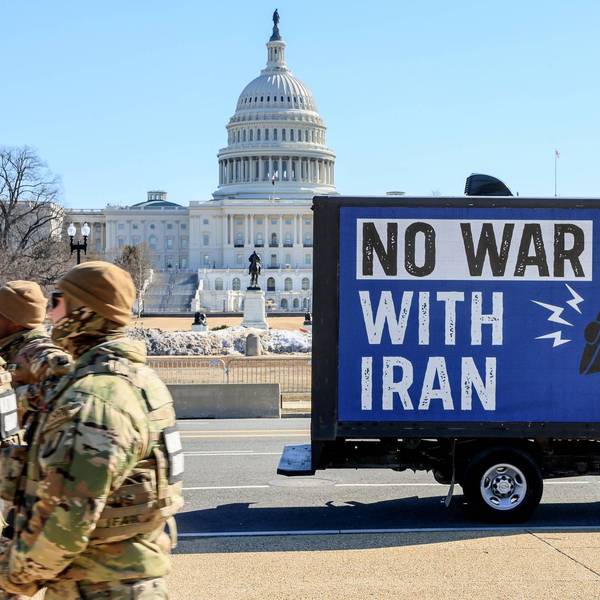
Among a number of a similar efforts by progressives and anti-war forces pushing against congressional attempts to kill the nuclear deal with Iran, a petition by Just Foreign Policy is circulating that asks constituents to lobby their senators against the two Senate bills. "Oppose the Kirk-Menendez bill and the Corker-Graham bill," the petition tells lawmakers. "These bills are designed to blow up the talks with Iran and kill any chance for diplomacy and a negotiated agreement on Iran's nuclear program." As of Tuesday morning, the petition had 29,417 signatures towards its final goal of 30,000.
If the Republican-controlled Senate approves a bill, GOP leaders in the House have said they will move swiftly to pass their version of the bill.
An Urgent Message From Our Co-Founder
Dear Common Dreams reader, It’s been nearly 30 years since I co-founded Common Dreams with my late wife, Lina Newhouser. We had the radical notion that journalism should serve the public good, not corporate profits. It was clear to us from the outset what it would take to build such a project. No paid advertisements. No corporate sponsors. No millionaire publisher telling us what to think or do. Many people said we wouldn't last a year, but we proved those doubters wrong. Together with a tremendous team of journalists and dedicated staff, we built an independent media outlet free from the constraints of profits and corporate control. Our mission has always been simple: To inform. To inspire. To ignite change for the common good. Building Common Dreams was not easy. Our survival was never guaranteed. When you take on the most powerful forces—Wall Street greed, fossil fuel industry destruction, Big Tech lobbyists, and uber-rich oligarchs who have spent billions upon billions rigging the economy and democracy in their favor—the only bulwark you have is supporters who believe in your work. But here’s the urgent message from me today. It's never been this bad out there. And it's never been this hard to keep us going. At the very moment Common Dreams is most needed, the threats we face are intensifying. We need your support now more than ever. We don't accept corporate advertising and never will. We don't have a paywall because we don't think people should be blocked from critical news based on their ability to pay. Everything we do is funded by the donations of readers like you. When everyone does the little they can afford, we are strong. But if that support retreats or dries up, so do we. Will you donate now to make sure Common Dreams not only survives but thrives? —Craig Brown, Co-founder |
Senator Bob Corker (R-Tenn.) has indicated that sufficient bipartisan support exists to override a promised presidential veto of a bill that would grant Congress authority to review, and possibly reject, a multilateral nuclear agreement between Iran and the P5+1 nations: the U.S., U.K., France, China, Russia, and Germany.
With markup of the bill set for Tuesday afternoon by the Senate Foreign Relations Committee, which Corker chairs, the vote count in the Senate now takes center stage. The White House has lobbied Senate Democrats heavily to oppose Corker's original version, which it has called a clear attempt to undermine the hard-fought progress made after more than a year of high-level talks regarding Iran's nuclear program. The Republican-controlled Senate would need at least 67 votes to override Obama's promised veto. The bill already has the support of eight Democratic co-sponsors as well as Sen. Angus King (I-Maine), who caucuses with the Democrats.
However, despite his original support for the measure, Sen. King on Monday night expressed new hesitations, telling MSNBC, "If this looks like this is just going to be used as a partisan issue, some way to embarrass the president, to deny him of a foreign policy achievement, I'm out, man."
With more than 50 amendments up for debate, it remains unclear what the final piece of legislation will look like when, assuming passage by the committee's Republican majority, it reaches the Senate floor. Prior to Tuesday's committee session, top White House officials--including Secretary of State John Kerry, Energy Secretary Ernest Moniz, and Treasury Secretary Jack Lew--will hold a closed-door meeting as a final attempt to dissuade lawmakers from passing anything that could potentially sabotage the pending nuclear deal that has been championed by peace-makers and foreign policy experts as an historic diplomatic achievement.
"The president wants Congress to ensure that our negotiators have the time and space that they need to reach an agreement by the end of June," White House spokesperson Josh Earnest said on Monday.
Meanwhile, citing "key congressional negotiators," Politico reported that lawmakers involved "are confident they can strike a bipartisan agreement" and Corker on Monday night said he thinks the final bill--officially titled the Iran Nuclear Agreement Review Act--will have the requisite votes. "Look, I don't ever want to over-commit and under-deliver," he told reporters. "We are moving in a very positive direction, and we've worked through some issues that I think have given me a lot of hope. ... I think that this weekend has been very productive."
As The Hill explains, however, achieving that threshold will not likely come without compromise and some concessions to Democrats:
Only two Democrats on the panel are expected to vote for the bill, unless [Corker] agrees to several significant changes.
Corker has spent the last several days negotiating a possible package of changes with Sen. Ben Cardin (Md.), the ranking Democrat on the committee. They met face to face for the first time Monday but spoke by telephone throughout the recent two-week congressional recess.
Corker said Monday he was optimistic about the prospect of a managers' package that would address concerns raised by Democrats on his committee.
He suggested one option might be to change the definition of the 60-day review period currently in the legislation, during which time Obama would not be able to waive sanctions after reaching a final deal.
"The integrity of the process is 100 percent intact. There may be some definitions about the 60 days," he said when asked whether such a change would water down the legislation.
"There's no way to pass a bill without strong bipartisan support," he added.
In that vein, Sen. Barbara Boxer (D-Calif) has emerged as the strongest counter-weight to Corker in the Senate. "To force Congress to weigh in now on the Iran nuclear talks before a final deal has been completed would be a reckless rush to judgment," Boxer wrote in a letter sent to Corker last week. "It would undermine negotiations at a critical moment and could derail a once-in-a-lifetime opportunity to deal with this looming threat."
At the beginning of this week, Boxer introduced a series of amendments designed to soften key elements of Corker's bill--including a provision that would not allow Congress to reject a brokered deal outright. As the Huffington Post reports:
As of Monday evening, Boxer had filed 18 amendments, including one that eliminates the language of Corker's legislation and replaces it with her own oversight bill. Boxer's bill, introduced in March, would require the White House to report to Congress regularly on Iranian compliance with the final nuclear deal and would simplify the process for lawmakers to reinstate sanctions against Iran in case of a violation. Boxer's amendment would not, however, allow Congress to vote down the agreement.
Corker ultimately decides which amendments to put up for a committee vote. On Monday, he seemed unlikely to consider those that would significantly alter his original text.
According to reporting by Dan Roberts, the Guardian's Washington correspondent, the recent departure of Sen. Bob Menendez (D-NJ), who stepped down as ranking member and co-chair of the Foreign Relations Committee following his indictment on federal corruption charges, has given the less-hawkish Sen. Cardin a chance to push for a more palatable deal:
In particular, Democrats want to use the so-called "mark-up" session scheduled for Tuesday afternoon to remove language requiring Obama to certify that Iran has not supported terrorism before allowing the deal - a clause supporters say would prove almost impossible to comply with - and water down Congress's ability to delay the temporary lifting of sanctions.
"Our hope - we are not there yet - is that Senator Corker and I would introduce a managers' amendment that would incorporate certain agreed changes that would make this bill, I hope, accomplish its two principal purposes but without the language that could be offensive to the president and the strength of his negotiations," [said Cardin during a local radio show Monday].
Among a number of a similar efforts by progressives and anti-war forces pushing against congressional attempts to kill the nuclear deal with Iran, a petition by Just Foreign Policy is circulating that asks constituents to lobby their senators against the two Senate bills. "Oppose the Kirk-Menendez bill and the Corker-Graham bill," the petition tells lawmakers. "These bills are designed to blow up the talks with Iran and kill any chance for diplomacy and a negotiated agreement on Iran's nuclear program." As of Tuesday morning, the petition had 29,417 signatures towards its final goal of 30,000.
If the Republican-controlled Senate approves a bill, GOP leaders in the House have said they will move swiftly to pass their version of the bill.
Senator Bob Corker (R-Tenn.) has indicated that sufficient bipartisan support exists to override a promised presidential veto of a bill that would grant Congress authority to review, and possibly reject, a multilateral nuclear agreement between Iran and the P5+1 nations: the U.S., U.K., France, China, Russia, and Germany.
With markup of the bill set for Tuesday afternoon by the Senate Foreign Relations Committee, which Corker chairs, the vote count in the Senate now takes center stage. The White House has lobbied Senate Democrats heavily to oppose Corker's original version, which it has called a clear attempt to undermine the hard-fought progress made after more than a year of high-level talks regarding Iran's nuclear program. The Republican-controlled Senate would need at least 67 votes to override Obama's promised veto. The bill already has the support of eight Democratic co-sponsors as well as Sen. Angus King (I-Maine), who caucuses with the Democrats.
However, despite his original support for the measure, Sen. King on Monday night expressed new hesitations, telling MSNBC, "If this looks like this is just going to be used as a partisan issue, some way to embarrass the president, to deny him of a foreign policy achievement, I'm out, man."
With more than 50 amendments up for debate, it remains unclear what the final piece of legislation will look like when, assuming passage by the committee's Republican majority, it reaches the Senate floor. Prior to Tuesday's committee session, top White House officials--including Secretary of State John Kerry, Energy Secretary Ernest Moniz, and Treasury Secretary Jack Lew--will hold a closed-door meeting as a final attempt to dissuade lawmakers from passing anything that could potentially sabotage the pending nuclear deal that has been championed by peace-makers and foreign policy experts as an historic diplomatic achievement.
"The president wants Congress to ensure that our negotiators have the time and space that they need to reach an agreement by the end of June," White House spokesperson Josh Earnest said on Monday.
Meanwhile, citing "key congressional negotiators," Politico reported that lawmakers involved "are confident they can strike a bipartisan agreement" and Corker on Monday night said he thinks the final bill--officially titled the Iran Nuclear Agreement Review Act--will have the requisite votes. "Look, I don't ever want to over-commit and under-deliver," he told reporters. "We are moving in a very positive direction, and we've worked through some issues that I think have given me a lot of hope. ... I think that this weekend has been very productive."
As The Hill explains, however, achieving that threshold will not likely come without compromise and some concessions to Democrats:
Only two Democrats on the panel are expected to vote for the bill, unless [Corker] agrees to several significant changes.
Corker has spent the last several days negotiating a possible package of changes with Sen. Ben Cardin (Md.), the ranking Democrat on the committee. They met face to face for the first time Monday but spoke by telephone throughout the recent two-week congressional recess.
Corker said Monday he was optimistic about the prospect of a managers' package that would address concerns raised by Democrats on his committee.
He suggested one option might be to change the definition of the 60-day review period currently in the legislation, during which time Obama would not be able to waive sanctions after reaching a final deal.
"The integrity of the process is 100 percent intact. There may be some definitions about the 60 days," he said when asked whether such a change would water down the legislation.
"There's no way to pass a bill without strong bipartisan support," he added.
In that vein, Sen. Barbara Boxer (D-Calif) has emerged as the strongest counter-weight to Corker in the Senate. "To force Congress to weigh in now on the Iran nuclear talks before a final deal has been completed would be a reckless rush to judgment," Boxer wrote in a letter sent to Corker last week. "It would undermine negotiations at a critical moment and could derail a once-in-a-lifetime opportunity to deal with this looming threat."
At the beginning of this week, Boxer introduced a series of amendments designed to soften key elements of Corker's bill--including a provision that would not allow Congress to reject a brokered deal outright. As the Huffington Post reports:
As of Monday evening, Boxer had filed 18 amendments, including one that eliminates the language of Corker's legislation and replaces it with her own oversight bill. Boxer's bill, introduced in March, would require the White House to report to Congress regularly on Iranian compliance with the final nuclear deal and would simplify the process for lawmakers to reinstate sanctions against Iran in case of a violation. Boxer's amendment would not, however, allow Congress to vote down the agreement.
Corker ultimately decides which amendments to put up for a committee vote. On Monday, he seemed unlikely to consider those that would significantly alter his original text.
According to reporting by Dan Roberts, the Guardian's Washington correspondent, the recent departure of Sen. Bob Menendez (D-NJ), who stepped down as ranking member and co-chair of the Foreign Relations Committee following his indictment on federal corruption charges, has given the less-hawkish Sen. Cardin a chance to push for a more palatable deal:
In particular, Democrats want to use the so-called "mark-up" session scheduled for Tuesday afternoon to remove language requiring Obama to certify that Iran has not supported terrorism before allowing the deal - a clause supporters say would prove almost impossible to comply with - and water down Congress's ability to delay the temporary lifting of sanctions.
"Our hope - we are not there yet - is that Senator Corker and I would introduce a managers' amendment that would incorporate certain agreed changes that would make this bill, I hope, accomplish its two principal purposes but without the language that could be offensive to the president and the strength of his negotiations," [said Cardin during a local radio show Monday].
Among a number of a similar efforts by progressives and anti-war forces pushing against congressional attempts to kill the nuclear deal with Iran, a petition by Just Foreign Policy is circulating that asks constituents to lobby their senators against the two Senate bills. "Oppose the Kirk-Menendez bill and the Corker-Graham bill," the petition tells lawmakers. "These bills are designed to blow up the talks with Iran and kill any chance for diplomacy and a negotiated agreement on Iran's nuclear program." As of Tuesday morning, the petition had 29,417 signatures towards its final goal of 30,000.
If the Republican-controlled Senate approves a bill, GOP leaders in the House have said they will move swiftly to pass their version of the bill.