SUBSCRIBE TO OUR FREE NEWSLETTER
Daily news & progressive opinion—funded by the people, not the corporations—delivered straight to your inbox.
5
#000000
#FFFFFF
To donate by check, phone, or other method, see our More Ways to Give page.
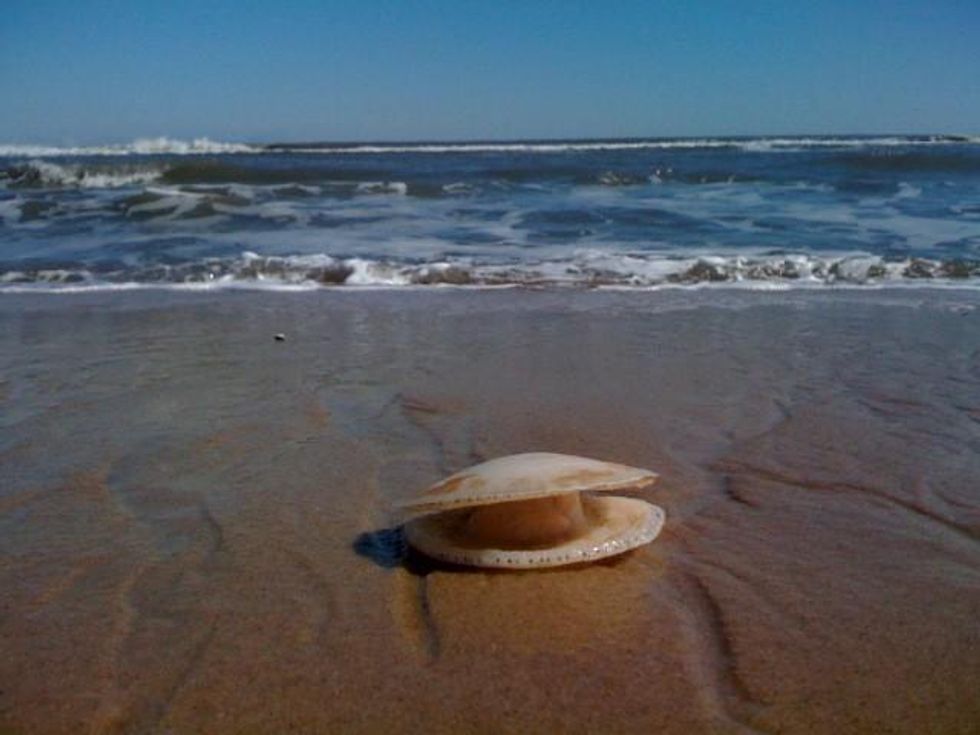
"By June of 2013, we lost almost 95 per cent of our crops," Rob Saunders, CEO of Island Scallops in B.C. told Canada's CTV News.
The cause of this increase in acidity, scientists say, is the exponential burning of fossil fuels for energy and its subsequent pollution. Oceans naturally absorb carbon dioxide, a byproduct of fossil fuel emissions, which causes acidity to rise.
An overdose of carbon in the atmosphere subsequently causes too much acidity in the world's oceans, Chris Harley, a marine ecologist from the University of British Columbia, told CTV News. Overly acidic water is bad for shellfish, as it impairs them from developing rigid shells. Oyster hatcheries along the West Coast are also experiencing a steep decline, CTV News reports.
"This is a bit of a red flag," said Harley.
And this red flag has a much bigger impact than one might imagine. "Whenever we see an impact at some level of the food chain, there is a cascading effect at other levels of the food chain," said Peter Ross, an expert in ocean pollution science.
A recent study warned that ocean acidification is accelerating at a rate unparalleled in the life of the oceans--perhaps the fastest rate in the planet's existence--which is degrading marine ecosystems on a mass scale.
"The current rate of change is likely to be more than 10 times faster than it has been in any of the evolutionary crises in the earth's history," said German marine biologist Hans Poertner upon the release of a recent study published in the journal Nature.
Ocean acidification has been referred to as the "evil twin" of climate change.
Poertner says that if humanity's industrial carbon emissions continue with a "business as usual" attitude, levels of acidity in the world's oceans will be catastrophic.
______________________
"By June of 2013, we lost almost 95 per cent of our crops," Rob Saunders, CEO of Island Scallops in B.C. told Canada's CTV News.
The cause of this increase in acidity, scientists say, is the exponential burning of fossil fuels for energy and its subsequent pollution. Oceans naturally absorb carbon dioxide, a byproduct of fossil fuel emissions, which causes acidity to rise.
An overdose of carbon in the atmosphere subsequently causes too much acidity in the world's oceans, Chris Harley, a marine ecologist from the University of British Columbia, told CTV News. Overly acidic water is bad for shellfish, as it impairs them from developing rigid shells. Oyster hatcheries along the West Coast are also experiencing a steep decline, CTV News reports.
"This is a bit of a red flag," said Harley.
And this red flag has a much bigger impact than one might imagine. "Whenever we see an impact at some level of the food chain, there is a cascading effect at other levels of the food chain," said Peter Ross, an expert in ocean pollution science.
A recent study warned that ocean acidification is accelerating at a rate unparalleled in the life of the oceans--perhaps the fastest rate in the planet's existence--which is degrading marine ecosystems on a mass scale.
"The current rate of change is likely to be more than 10 times faster than it has been in any of the evolutionary crises in the earth's history," said German marine biologist Hans Poertner upon the release of a recent study published in the journal Nature.
Ocean acidification has been referred to as the "evil twin" of climate change.
Poertner says that if humanity's industrial carbon emissions continue with a "business as usual" attitude, levels of acidity in the world's oceans will be catastrophic.
______________________
"By June of 2013, we lost almost 95 per cent of our crops," Rob Saunders, CEO of Island Scallops in B.C. told Canada's CTV News.
The cause of this increase in acidity, scientists say, is the exponential burning of fossil fuels for energy and its subsequent pollution. Oceans naturally absorb carbon dioxide, a byproduct of fossil fuel emissions, which causes acidity to rise.
An overdose of carbon in the atmosphere subsequently causes too much acidity in the world's oceans, Chris Harley, a marine ecologist from the University of British Columbia, told CTV News. Overly acidic water is bad for shellfish, as it impairs them from developing rigid shells. Oyster hatcheries along the West Coast are also experiencing a steep decline, CTV News reports.
"This is a bit of a red flag," said Harley.
And this red flag has a much bigger impact than one might imagine. "Whenever we see an impact at some level of the food chain, there is a cascading effect at other levels of the food chain," said Peter Ross, an expert in ocean pollution science.
A recent study warned that ocean acidification is accelerating at a rate unparalleled in the life of the oceans--perhaps the fastest rate in the planet's existence--which is degrading marine ecosystems on a mass scale.
"The current rate of change is likely to be more than 10 times faster than it has been in any of the evolutionary crises in the earth's history," said German marine biologist Hans Poertner upon the release of a recent study published in the journal Nature.
Ocean acidification has been referred to as the "evil twin" of climate change.
Poertner says that if humanity's industrial carbon emissions continue with a "business as usual" attitude, levels of acidity in the world's oceans will be catastrophic.
______________________