

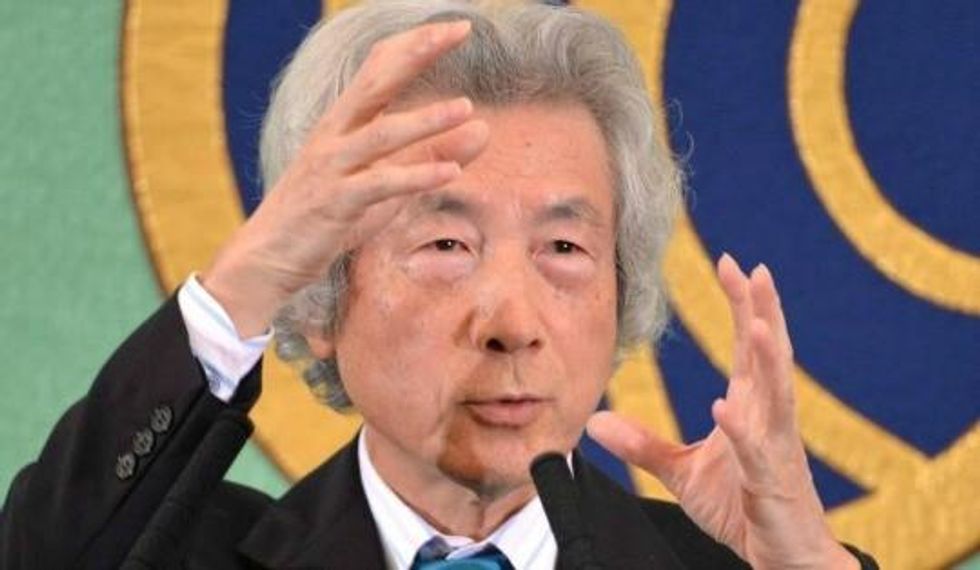
Abe, who has been in favor of restarting nuclear power plants in the country in spite of the Fukushima nuclear catastrophe of 2011, "should use the power given to him to do what the majority of the people want," said the nation's previous Prime Minister Junichiro Koizumi in a speech at the Japan Press Club on Tuesday.
"What a magnificent and fantastic project it would be. [Abe] can... use his power to utilize nature as resources. There are no other prime ministers who are as lucky as he." -former PM Junichiro Koizumi
Recent polling shows the majority of Japan's population favors shutting down nuclear energy. A survey by the Asahi Shimbun published on Tuesday reveals that 60 percent support the "zero-nuclear proposal" proposed by Koizumi.
"What a magnificent and fantastic project it would be. He can get to use his power to utilize nature as resources. There are no other prime ministers who are as lucky as he is," Koizumi added.
Koizumi noted that Abe has abundant political capital for the task. "Even within the LDP [Liberal Democratic Party], there are quite a few lawmakers who at heart are leaning towards the zero-nuclear policy," he said. "A prime minister's power is enormous. If he proposed the zero-nuclear policy, no objections would emerge."
"It can be achieved. Why miss this chance?" Koizumi asked.
Koizumi was joined by another former prime minister, Morihiro Hosokawa, in the call for a nuclear free Japan. Raising the issue of nuclear waste--and Japan's lack of nuclear waste storage capabilities--Hosokawa told the Tokyo Shimbun on Tuesday that he couldn't understand why Abe and other leaders would support restarting the nation's nuclear reactors "when there is no place to discard the nuclear waste."
"It would be a crime against future generations for our generation to restart nuclear plants without resolving this issue," he added--a sentiment shared by Koizumi in his press club speech.
"We have not been able to find nuclear waste disposal sites for the last 10 years," Koizumi said. "It is too optimistic and irresponsible for them to say that politicians should be responsible for not having a clear prospect (for radioactive waste sites) especially after the earthquake."
As Reuters reports, "Koizumi was one of Japan's most popular prime ministers before he stepped down in 2006, and his comments carry influence among the general public and within the ruling bloc, led by his old Liberal Democratic Party (LDP)."
With increasing groundwater radiation contamination only one among a host of ongoing issues at the crippled Fukushima power plant, the plant's operator TEPCO began preparations last week to engage in the most dangerous part of the plant's cleanup thus far--the removal of the spent fuel rods within the unstable Reactor 4 building. The process unprecedent and dangerous operation has forced nuclear experts to raise alarm bells, warning that if something goes wrong it could trigger another massive and potentially apocalyptic nuclear disaster.
_____________________
Abe, who has been in favor of restarting nuclear power plants in the country in spite of the Fukushima nuclear catastrophe of 2011, "should use the power given to him to do what the majority of the people want," said the nation's previous Prime Minister Junichiro Koizumi in a speech at the Japan Press Club on Tuesday.
"What a magnificent and fantastic project it would be. [Abe] can... use his power to utilize nature as resources. There are no other prime ministers who are as lucky as he." -former PM Junichiro Koizumi
Recent polling shows the majority of Japan's population favors shutting down nuclear energy. A survey by the Asahi Shimbun published on Tuesday reveals that 60 percent support the "zero-nuclear proposal" proposed by Koizumi.
"What a magnificent and fantastic project it would be. He can get to use his power to utilize nature as resources. There are no other prime ministers who are as lucky as he is," Koizumi added.
Koizumi noted that Abe has abundant political capital for the task. "Even within the LDP [Liberal Democratic Party], there are quite a few lawmakers who at heart are leaning towards the zero-nuclear policy," he said. "A prime minister's power is enormous. If he proposed the zero-nuclear policy, no objections would emerge."
"It can be achieved. Why miss this chance?" Koizumi asked.
Koizumi was joined by another former prime minister, Morihiro Hosokawa, in the call for a nuclear free Japan. Raising the issue of nuclear waste--and Japan's lack of nuclear waste storage capabilities--Hosokawa told the Tokyo Shimbun on Tuesday that he couldn't understand why Abe and other leaders would support restarting the nation's nuclear reactors "when there is no place to discard the nuclear waste."
"It would be a crime against future generations for our generation to restart nuclear plants without resolving this issue," he added--a sentiment shared by Koizumi in his press club speech.
"We have not been able to find nuclear waste disposal sites for the last 10 years," Koizumi said. "It is too optimistic and irresponsible for them to say that politicians should be responsible for not having a clear prospect (for radioactive waste sites) especially after the earthquake."
As Reuters reports, "Koizumi was one of Japan's most popular prime ministers before he stepped down in 2006, and his comments carry influence among the general public and within the ruling bloc, led by his old Liberal Democratic Party (LDP)."
With increasing groundwater radiation contamination only one among a host of ongoing issues at the crippled Fukushima power plant, the plant's operator TEPCO began preparations last week to engage in the most dangerous part of the plant's cleanup thus far--the removal of the spent fuel rods within the unstable Reactor 4 building. The process unprecedent and dangerous operation has forced nuclear experts to raise alarm bells, warning that if something goes wrong it could trigger another massive and potentially apocalyptic nuclear disaster.
_____________________
Abe, who has been in favor of restarting nuclear power plants in the country in spite of the Fukushima nuclear catastrophe of 2011, "should use the power given to him to do what the majority of the people want," said the nation's previous Prime Minister Junichiro Koizumi in a speech at the Japan Press Club on Tuesday.
"What a magnificent and fantastic project it would be. [Abe] can... use his power to utilize nature as resources. There are no other prime ministers who are as lucky as he." -former PM Junichiro Koizumi
Recent polling shows the majority of Japan's population favors shutting down nuclear energy. A survey by the Asahi Shimbun published on Tuesday reveals that 60 percent support the "zero-nuclear proposal" proposed by Koizumi.
"What a magnificent and fantastic project it would be. He can get to use his power to utilize nature as resources. There are no other prime ministers who are as lucky as he is," Koizumi added.
Koizumi noted that Abe has abundant political capital for the task. "Even within the LDP [Liberal Democratic Party], there are quite a few lawmakers who at heart are leaning towards the zero-nuclear policy," he said. "A prime minister's power is enormous. If he proposed the zero-nuclear policy, no objections would emerge."
"It can be achieved. Why miss this chance?" Koizumi asked.
Koizumi was joined by another former prime minister, Morihiro Hosokawa, in the call for a nuclear free Japan. Raising the issue of nuclear waste--and Japan's lack of nuclear waste storage capabilities--Hosokawa told the Tokyo Shimbun on Tuesday that he couldn't understand why Abe and other leaders would support restarting the nation's nuclear reactors "when there is no place to discard the nuclear waste."
"It would be a crime against future generations for our generation to restart nuclear plants without resolving this issue," he added--a sentiment shared by Koizumi in his press club speech.
"We have not been able to find nuclear waste disposal sites for the last 10 years," Koizumi said. "It is too optimistic and irresponsible for them to say that politicians should be responsible for not having a clear prospect (for radioactive waste sites) especially after the earthquake."
As Reuters reports, "Koizumi was one of Japan's most popular prime ministers before he stepped down in 2006, and his comments carry influence among the general public and within the ruling bloc, led by his old Liberal Democratic Party (LDP)."
With increasing groundwater radiation contamination only one among a host of ongoing issues at the crippled Fukushima power plant, the plant's operator TEPCO began preparations last week to engage in the most dangerous part of the plant's cleanup thus far--the removal of the spent fuel rods within the unstable Reactor 4 building. The process unprecedent and dangerous operation has forced nuclear experts to raise alarm bells, warning that if something goes wrong it could trigger another massive and potentially apocalyptic nuclear disaster.
_____________________