SUBSCRIBE TO OUR FREE NEWSLETTER
Daily news & progressive opinion—funded by the people, not the corporations—delivered straight to your inbox.
5
#000000
#FFFFFF
To donate by check, phone, or other method, see our More Ways to Give page.
Daily news & progressive opinion—funded by the people, not the corporations—delivered straight to your inbox.
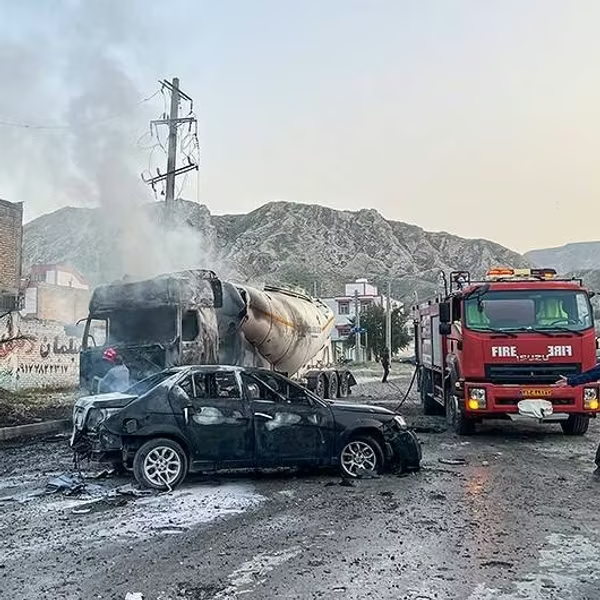
BAGHDAD - At least 60 people have been killed and scores more wounded in a series of attacks in the Iraqi capital, Baghdad, police say.
Two car bombs exploded at a market in Sadr City killing 39 people and injuring 56 others, while three separate car bombs and an improvised device killed 11 in the west and east of Baghdad, officials said on Friday.
BAGHDAD - At least 60 people have been killed and scores more wounded in a series of attacks in the Iraqi capital, Baghdad, police say.
Two car bombs exploded at a market in Sadr City killing 39 people and injuring 56 others, while three separate car bombs and an improvised device killed 11 in the west and east of Baghdad, officials said on Friday.
Mike
Hanna, Al Jazeera's correspondent in the capital, said four of the
attacks were in Shia areas and two of them in Sunni neighbourhoods.
"At this time it would appear that the attacks are being targeted at
the civilian population in general, rather than any sectarian basis,"
Hanna said.
Earlier
on Friday seven people were killed and 18 others wounded after six
roadside bombs exploded in Iraq's western Anbar province.
The bombs went off near the houses of a judge and police
officers in the town of Khalidiya, about 83km west of Baghdad, the
capital.
"Four homes were hit by homemade bombs and C4 [plastic explosive]," Lieutenant Khoder Ahmed al-Alwani, a police officer, said.
Judge Fadhel Mahmud Saleh escaped unhurt from the explosion at his house, but two of his sons were wounded.
"This is the second assassination attempt against me this month.
They put a sticky bomb on my car but it was discovered," he told an AFP
news agency correspondent at the scene.
Soldier killed
An Iraqi soldier was among the dead, killed when security forces responded to the initial blasts.
He died after he stormed a house that was filled with explosives, General Baha al-Qaisi, Anbar's police chief, said.
"There was an explosion this morning in a house belonging to the terrorists in the Khaldiya district," he said.
"When we entered the premises, there was a second blast which caused the death of a soldier."
The police chief said they discovered a large store of TNT and other
explosives but had "yet to recover the remains of the terrorists who
were in the building".
The rural Khalidiya area is dominated by
Sunni Arabs and is the birthplace of the Sahwa, or Awakening, in which
armed locals who once fought US forces switched sides to battle
al-Qaeda in Iraq.
Al-Qaeda hunt
The blasts come four days after a string of blows against al-Qaeda by Iraqi security forces.
Nouri al-Maliki, the Iraqi prime minister, announced on April 19
that an Iraqi intelligence team had hunted down and killed Abu Ayub
al-Masri, the leader of al-Qaeda in Iraq, and Abu Omar al-Baghdadi, the
purported leader of al-Qaeda's local affiliate, the Islamic State of
Iraq.
"It's impossible at this stage to say whether there is a connection
between these killings ... and the bombings we are seeing in Baghdad,"
Al Jazeera's correspondent said.
"But at this stage it would appear to be an opportunistic attempt to
take advantage of the ongoing political uncertainly because there is no
agreement about forming a government.
Violence in Iraq has fallen in the last two years as the sectarian
bloodshed that followed the 2003 US-led invasion faded, but
tensions increased last month after a national election resulted in no
clear winner.
Dear Common Dreams reader, It’s been nearly 30 years since I co-founded Common Dreams with my late wife, Lina Newhouser. We had the radical notion that journalism should serve the public good, not corporate profits. It was clear to us from the outset what it would take to build such a project. No paid advertisements. No corporate sponsors. No millionaire publisher telling us what to think or do. Many people said we wouldn't last a year, but we proved those doubters wrong. Together with a tremendous team of journalists and dedicated staff, we built an independent media outlet free from the constraints of profits and corporate control. Our mission has always been simple: To inform. To inspire. To ignite change for the common good. Building Common Dreams was not easy. Our survival was never guaranteed. When you take on the most powerful forces—Wall Street greed, fossil fuel industry destruction, Big Tech lobbyists, and uber-rich oligarchs who have spent billions upon billions rigging the economy and democracy in their favor—the only bulwark you have is supporters who believe in your work. But here’s the urgent message from me today. It's never been this bad out there. And it's never been this hard to keep us going. At the very moment Common Dreams is most needed, the threats we face are intensifying. We need your support now more than ever. We don't accept corporate advertising and never will. We don't have a paywall because we don't think people should be blocked from critical news based on their ability to pay. Everything we do is funded by the donations of readers like you. When everyone does the little they can afford, we are strong. But if that support retreats or dries up, so do we. Will you donate now to make sure Common Dreams not only survives but thrives? —Craig Brown, Co-founder |
BAGHDAD - At least 60 people have been killed and scores more wounded in a series of attacks in the Iraqi capital, Baghdad, police say.
Two car bombs exploded at a market in Sadr City killing 39 people and injuring 56 others, while three separate car bombs and an improvised device killed 11 in the west and east of Baghdad, officials said on Friday.
Mike
Hanna, Al Jazeera's correspondent in the capital, said four of the
attacks were in Shia areas and two of them in Sunni neighbourhoods.
"At this time it would appear that the attacks are being targeted at
the civilian population in general, rather than any sectarian basis,"
Hanna said.
Earlier
on Friday seven people were killed and 18 others wounded after six
roadside bombs exploded in Iraq's western Anbar province.
The bombs went off near the houses of a judge and police
officers in the town of Khalidiya, about 83km west of Baghdad, the
capital.
"Four homes were hit by homemade bombs and C4 [plastic explosive]," Lieutenant Khoder Ahmed al-Alwani, a police officer, said.
Judge Fadhel Mahmud Saleh escaped unhurt from the explosion at his house, but two of his sons were wounded.
"This is the second assassination attempt against me this month.
They put a sticky bomb on my car but it was discovered," he told an AFP
news agency correspondent at the scene.
Soldier killed
An Iraqi soldier was among the dead, killed when security forces responded to the initial blasts.
He died after he stormed a house that was filled with explosives, General Baha al-Qaisi, Anbar's police chief, said.
"There was an explosion this morning in a house belonging to the terrorists in the Khaldiya district," he said.
"When we entered the premises, there was a second blast which caused the death of a soldier."
The police chief said they discovered a large store of TNT and other
explosives but had "yet to recover the remains of the terrorists who
were in the building".
The rural Khalidiya area is dominated by
Sunni Arabs and is the birthplace of the Sahwa, or Awakening, in which
armed locals who once fought US forces switched sides to battle
al-Qaeda in Iraq.
Al-Qaeda hunt
The blasts come four days after a string of blows against al-Qaeda by Iraqi security forces.
Nouri al-Maliki, the Iraqi prime minister, announced on April 19
that an Iraqi intelligence team had hunted down and killed Abu Ayub
al-Masri, the leader of al-Qaeda in Iraq, and Abu Omar al-Baghdadi, the
purported leader of al-Qaeda's local affiliate, the Islamic State of
Iraq.
"It's impossible at this stage to say whether there is a connection
between these killings ... and the bombings we are seeing in Baghdad,"
Al Jazeera's correspondent said.
"But at this stage it would appear to be an opportunistic attempt to
take advantage of the ongoing political uncertainly because there is no
agreement about forming a government.
Violence in Iraq has fallen in the last two years as the sectarian
bloodshed that followed the 2003 US-led invasion faded, but
tensions increased last month after a national election resulted in no
clear winner.
BAGHDAD - At least 60 people have been killed and scores more wounded in a series of attacks in the Iraqi capital, Baghdad, police say.
Two car bombs exploded at a market in Sadr City killing 39 people and injuring 56 others, while three separate car bombs and an improvised device killed 11 in the west and east of Baghdad, officials said on Friday.
Mike
Hanna, Al Jazeera's correspondent in the capital, said four of the
attacks were in Shia areas and two of them in Sunni neighbourhoods.
"At this time it would appear that the attacks are being targeted at
the civilian population in general, rather than any sectarian basis,"
Hanna said.
Earlier
on Friday seven people were killed and 18 others wounded after six
roadside bombs exploded in Iraq's western Anbar province.
The bombs went off near the houses of a judge and police
officers in the town of Khalidiya, about 83km west of Baghdad, the
capital.
"Four homes were hit by homemade bombs and C4 [plastic explosive]," Lieutenant Khoder Ahmed al-Alwani, a police officer, said.
Judge Fadhel Mahmud Saleh escaped unhurt from the explosion at his house, but two of his sons were wounded.
"This is the second assassination attempt against me this month.
They put a sticky bomb on my car but it was discovered," he told an AFP
news agency correspondent at the scene.
Soldier killed
An Iraqi soldier was among the dead, killed when security forces responded to the initial blasts.
He died after he stormed a house that was filled with explosives, General Baha al-Qaisi, Anbar's police chief, said.
"There was an explosion this morning in a house belonging to the terrorists in the Khaldiya district," he said.
"When we entered the premises, there was a second blast which caused the death of a soldier."
The police chief said they discovered a large store of TNT and other
explosives but had "yet to recover the remains of the terrorists who
were in the building".
The rural Khalidiya area is dominated by
Sunni Arabs and is the birthplace of the Sahwa, or Awakening, in which
armed locals who once fought US forces switched sides to battle
al-Qaeda in Iraq.
Al-Qaeda hunt
The blasts come four days after a string of blows against al-Qaeda by Iraqi security forces.
Nouri al-Maliki, the Iraqi prime minister, announced on April 19
that an Iraqi intelligence team had hunted down and killed Abu Ayub
al-Masri, the leader of al-Qaeda in Iraq, and Abu Omar al-Baghdadi, the
purported leader of al-Qaeda's local affiliate, the Islamic State of
Iraq.
"It's impossible at this stage to say whether there is a connection
between these killings ... and the bombings we are seeing in Baghdad,"
Al Jazeera's correspondent said.
"But at this stage it would appear to be an opportunistic attempt to
take advantage of the ongoing political uncertainly because there is no
agreement about forming a government.
Violence in Iraq has fallen in the last two years as the sectarian
bloodshed that followed the 2003 US-led invasion faded, but
tensions increased last month after a national election resulted in no
clear winner.