SUBSCRIBE TO OUR FREE NEWSLETTER
Daily news & progressive opinion—funded by the people, not the corporations—delivered straight to your inbox.
5
#000000
#FFFFFF
To donate by check, phone, or other method, see our More Ways to Give page.
Daily news & progressive opinion—funded by the people, not the corporations—delivered straight to your inbox.
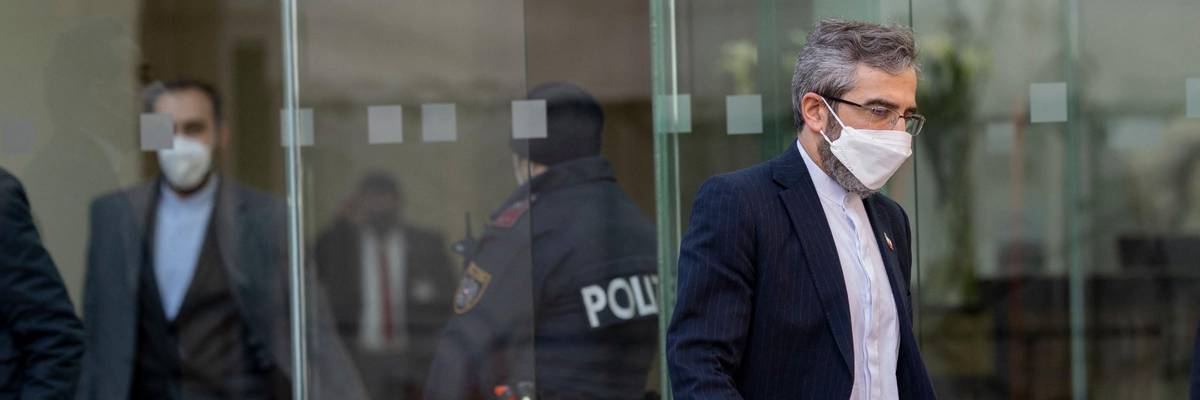
Iran's chief nuclear negotiator Ali Bagheri Kani is leaving the Coburg Palais, the venue of the Joint Comprehensive Plan of Action (JCPOA), after his meeting with Deputy Secretary General of the European External Action Service (EEAS) Enrique Mora (not pictured), in Vienna on March 11, 2022. The EU said on March 11, 2022 that the talks it is chairing on the revival of the 2015 Iran nuclear accord must be paused, days after fresh demands from Russia complicated negotiations. (Photo: Joe Klamar/AFP via Getty Images)
Stunning news today as European Union foreign affairs chief Josep Borell announced a "pause" in the Iran nuclear talks in Vienna, citing "external factors." Diplomats say this refers to the eleventh-hour demand by the Russians, one of the original JCPOA signatories, to relieve some of its sanctions over the Ukraine invasion in exchange for its support on a renewed deal.
"If it collapses on the goal line because of Russian sabotage, it further underscores the folly of Biden not going back to the deal via Executive Order on the first day of his presidency."
Though the JCPOA has not been killed by these Russian demands, Moscow does have the ability to harm the United States by delaying the agreement at a crucial point of Washington's vulnerability to high oil prices. It may also have the ability to pull the plug on the agreement as a whole by triggering snap-back sanctions in the UN Security Council or preventing the Joint Commission from adopting the decision to bring the US back into the deal. The snap-back option would of course create a very significant crisis between Tehran and Moscow.
In retrospect, the parties were clearly mistaken in thinking that Russia would continue to compartmentalize the JCPOA talks from its tensions with the West. The Ukraine crisis of 2014 did not undermine the JCPOA negotiations, but it is of course incomparable to the Ukraine crisis of 2022. It remains unclear, however, if the Russian objective is to delay the deal to undermine the West's efforts to pressure Russia over Ukraine or to completely scuttle the deal.
Though Tehran has been tempered in its statements so far, it must clearly be angered by the Russian maneuvers. But Iran is stuck between two bad choices: Accepting the potential collapse of the deal and continued U.S. sanctions, or seeking a potential agreement with the U.S. outside of the JCPOA. The latter could dangerously increase tensions between Tehran and Moscow while making Iran dependent on the U.S. at a time when GOP officials have made it clear they will kill the JCPOA if they take the White House in 2024.
Hopefully, the deal can still be salvaged. But if it collapses on the goal line because of Russian sabotage, it further underscores the folly of Biden not going back to the deal via Executive Order on the first day of his presidency. No one could have predicted Russia's illegal invasion of Ukraine as a factor, but many predicted that it would be unpredictably messy to negotiate a return.
Dear Common Dreams reader, It’s been nearly 30 years since I co-founded Common Dreams with my late wife, Lina Newhouser. We had the radical notion that journalism should serve the public good, not corporate profits. It was clear to us from the outset what it would take to build such a project. No paid advertisements. No corporate sponsors. No millionaire publisher telling us what to think or do. Many people said we wouldn't last a year, but we proved those doubters wrong. Together with a tremendous team of journalists and dedicated staff, we built an independent media outlet free from the constraints of profits and corporate control. Our mission has always been simple: To inform. To inspire. To ignite change for the common good. Building Common Dreams was not easy. Our survival was never guaranteed. When you take on the most powerful forces—Wall Street greed, fossil fuel industry destruction, Big Tech lobbyists, and uber-rich oligarchs who have spent billions upon billions rigging the economy and democracy in their favor—the only bulwark you have is supporters who believe in your work. But here’s the urgent message from me today. It's never been this bad out there. And it's never been this hard to keep us going. At the very moment Common Dreams is most needed, the threats we face are intensifying. We need your support now more than ever. We don't accept corporate advertising and never will. We don't have a paywall because we don't think people should be blocked from critical news based on their ability to pay. Everything we do is funded by the donations of readers like you. When everyone does the little they can afford, we are strong. But if that support retreats or dries up, so do we. Will you donate now to make sure Common Dreams not only survives but thrives? —Craig Brown, Co-founder |
Stunning news today as European Union foreign affairs chief Josep Borell announced a "pause" in the Iran nuclear talks in Vienna, citing "external factors." Diplomats say this refers to the eleventh-hour demand by the Russians, one of the original JCPOA signatories, to relieve some of its sanctions over the Ukraine invasion in exchange for its support on a renewed deal.
"If it collapses on the goal line because of Russian sabotage, it further underscores the folly of Biden not going back to the deal via Executive Order on the first day of his presidency."
Though the JCPOA has not been killed by these Russian demands, Moscow does have the ability to harm the United States by delaying the agreement at a crucial point of Washington's vulnerability to high oil prices. It may also have the ability to pull the plug on the agreement as a whole by triggering snap-back sanctions in the UN Security Council or preventing the Joint Commission from adopting the decision to bring the US back into the deal. The snap-back option would of course create a very significant crisis between Tehran and Moscow.
In retrospect, the parties were clearly mistaken in thinking that Russia would continue to compartmentalize the JCPOA talks from its tensions with the West. The Ukraine crisis of 2014 did not undermine the JCPOA negotiations, but it is of course incomparable to the Ukraine crisis of 2022. It remains unclear, however, if the Russian objective is to delay the deal to undermine the West's efforts to pressure Russia over Ukraine or to completely scuttle the deal.
Though Tehran has been tempered in its statements so far, it must clearly be angered by the Russian maneuvers. But Iran is stuck between two bad choices: Accepting the potential collapse of the deal and continued U.S. sanctions, or seeking a potential agreement with the U.S. outside of the JCPOA. The latter could dangerously increase tensions between Tehran and Moscow while making Iran dependent on the U.S. at a time when GOP officials have made it clear they will kill the JCPOA if they take the White House in 2024.
Hopefully, the deal can still be salvaged. But if it collapses on the goal line because of Russian sabotage, it further underscores the folly of Biden not going back to the deal via Executive Order on the first day of his presidency. No one could have predicted Russia's illegal invasion of Ukraine as a factor, but many predicted that it would be unpredictably messy to negotiate a return.
Stunning news today as European Union foreign affairs chief Josep Borell announced a "pause" in the Iran nuclear talks in Vienna, citing "external factors." Diplomats say this refers to the eleventh-hour demand by the Russians, one of the original JCPOA signatories, to relieve some of its sanctions over the Ukraine invasion in exchange for its support on a renewed deal.
"If it collapses on the goal line because of Russian sabotage, it further underscores the folly of Biden not going back to the deal via Executive Order on the first day of his presidency."
Though the JCPOA has not been killed by these Russian demands, Moscow does have the ability to harm the United States by delaying the agreement at a crucial point of Washington's vulnerability to high oil prices. It may also have the ability to pull the plug on the agreement as a whole by triggering snap-back sanctions in the UN Security Council or preventing the Joint Commission from adopting the decision to bring the US back into the deal. The snap-back option would of course create a very significant crisis between Tehran and Moscow.
In retrospect, the parties were clearly mistaken in thinking that Russia would continue to compartmentalize the JCPOA talks from its tensions with the West. The Ukraine crisis of 2014 did not undermine the JCPOA negotiations, but it is of course incomparable to the Ukraine crisis of 2022. It remains unclear, however, if the Russian objective is to delay the deal to undermine the West's efforts to pressure Russia over Ukraine or to completely scuttle the deal.
Though Tehran has been tempered in its statements so far, it must clearly be angered by the Russian maneuvers. But Iran is stuck between two bad choices: Accepting the potential collapse of the deal and continued U.S. sanctions, or seeking a potential agreement with the U.S. outside of the JCPOA. The latter could dangerously increase tensions between Tehran and Moscow while making Iran dependent on the U.S. at a time when GOP officials have made it clear they will kill the JCPOA if they take the White House in 2024.
Hopefully, the deal can still be salvaged. But if it collapses on the goal line because of Russian sabotage, it further underscores the folly of Biden not going back to the deal via Executive Order on the first day of his presidency. No one could have predicted Russia's illegal invasion of Ukraine as a factor, but many predicted that it would be unpredictably messy to negotiate a return.