SUBSCRIBE TO OUR FREE NEWSLETTER
Daily news & progressive opinion—funded by the people, not the corporations—delivered straight to your inbox.
5
#000000
#FFFFFF
To donate by check, phone, or other method, see our More Ways to Give page.
Daily news & progressive opinion—funded by the people, not the corporations—delivered straight to your inbox.
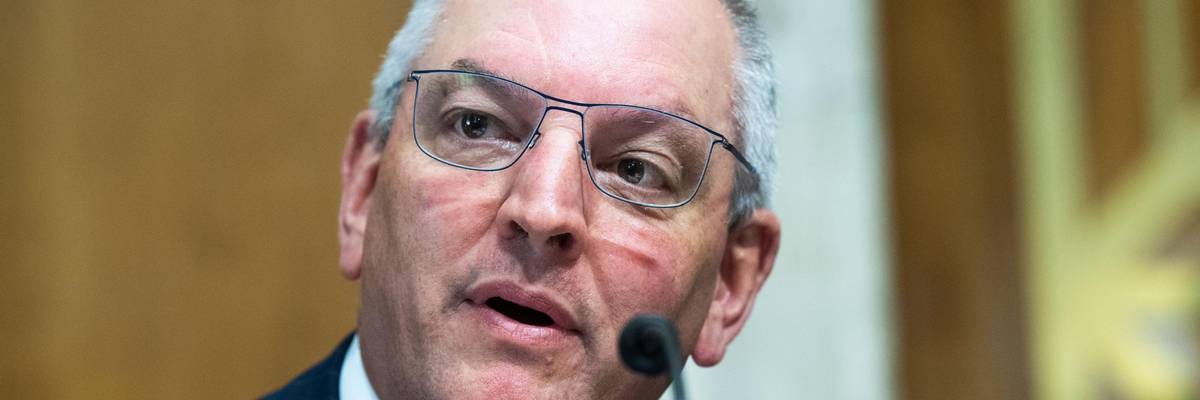
Louisiana Gov. John Bel Edwards testifies during a Senate Energy and Natural Resources Committee hearing in Dirksen Senate Office Building on May 13, 2021. (Photo: Tom Williams/CQ-Roll Call, Inc via Getty Images)
The governor of Louisana has a unique chance to ensure that Black Louisianans have an equal opportunity to participate in the political process and elect candidates of their choice to Congress. That's why the ACLU and our coalition partners in the region are calling on Gov. John Bel Edwards to veto the proposed congressional and state legislative districting plans, submitted to his office by the Louisiana State Legislature.
The new maps fail to provide Black voters in Louisiana an equal opportunity to participate in the political process and elect candidates of their choice.
H.B. 1 and S.B. 5, the proposed congressional districting plans passed by the Louisiana State Legislature, as well as H.B. 14 and S.B. 1, the proposed state legislative plans, violate Section 2 of the Voting Rights Act of 1965. The new maps fail to provide Black voters in Louisiana an equal opportunity to participate in the political process and elect candidates of their choice. The failures of the maps are particularly concerning because of the population growth and shifts in Louisiana over the last 10 years.
According to the new census data, the number of Black people in Louisiana increased by 3.78% between 2010 and 2020. And the total number of Black Louisiana residents over the age of 18--the Black Voting Age Population (BVAP)--increased by 7.21%. Furthermore, Louisiana's total population growth since 2010 was driven by growth in minority populations. For example, per the 2020 census data, in the Shreveport area (including Bossier, Caddo, and De Soto Parishes), the overall population decreased by 1.3%, but the region's Black population grew by 2.14%.
Under the current congressional district maps, Black Louisianans are severely underrepresented. Louisiana's voting-age population is nearly one-third Black; however, Black voters in Louisiana only have an opportunity to elect candidates of their choice in one of the six congressional districts (i.e., 16.7% of the districts).
Under the current state legislative district maps, just 37 out of the 144 (25.69%) members of the Louisiana Legislature are Black, even though Black residents comprise 33.1% of the state's population. Of these Black legislative members, all but one were elected from single-member majority-minority districts. And that single outlying district has a BVAP close to 50%, which is high enough to make it possible for Black voters to elect their candidate of choice. This is a direct consequence of the configuration of Louisiana's legislative districts.
The 2020 congressional election results reflect the state's racially polarized voting patterns. In the five districts comprised of a majority of white voters, there were three elections in which voters had a choice between Black and white congressional candidates. In each, the white majority elected white candidates, defeating the Black-preferred candidates and underscoring the importance of enacting more majority-minority districts.
Under the current congressional and state legislative maps, Black voters in Louisiana have less opportunity to elect candidates of their choice than white voters. Instead of using the redistricting process as an opportunity to correct the long-standing dilution of Black voting strength in Louisiana, the state legislature introduced H.B. 1, S.B. 5, H.B. 14, and S.B. 1, all of which would further entrench and exacerbate the dilution of Black voting strength in the state over the next 10 years.
In all 50 states, especially Louisiana, representation is important. It not only promotes the trust needed for the successful relationship between governors and the governed in any democratic society, but also promotes fairness. To live up to the tenets of a representative democracy, the Louisiana State Legislature must reflect the richly diverse population it serves.
Dear Common Dreams reader, It’s been nearly 30 years since I co-founded Common Dreams with my late wife, Lina Newhouser. We had the radical notion that journalism should serve the public good, not corporate profits. It was clear to us from the outset what it would take to build such a project. No paid advertisements. No corporate sponsors. No millionaire publisher telling us what to think or do. Many people said we wouldn't last a year, but we proved those doubters wrong. Together with a tremendous team of journalists and dedicated staff, we built an independent media outlet free from the constraints of profits and corporate control. Our mission has always been simple: To inform. To inspire. To ignite change for the common good. Building Common Dreams was not easy. Our survival was never guaranteed. When you take on the most powerful forces—Wall Street greed, fossil fuel industry destruction, Big Tech lobbyists, and uber-rich oligarchs who have spent billions upon billions rigging the economy and democracy in their favor—the only bulwark you have is supporters who believe in your work. But here’s the urgent message from me today. It's never been this bad out there. And it's never been this hard to keep us going. At the very moment Common Dreams is most needed, the threats we face are intensifying. We need your support now more than ever. We don't accept corporate advertising and never will. We don't have a paywall because we don't think people should be blocked from critical news based on their ability to pay. Everything we do is funded by the donations of readers like you. When everyone does the little they can afford, we are strong. But if that support retreats or dries up, so do we. Will you donate now to make sure Common Dreams not only survives but thrives? —Craig Brown, Co-founder |
The governor of Louisana has a unique chance to ensure that Black Louisianans have an equal opportunity to participate in the political process and elect candidates of their choice to Congress. That's why the ACLU and our coalition partners in the region are calling on Gov. John Bel Edwards to veto the proposed congressional and state legislative districting plans, submitted to his office by the Louisiana State Legislature.
The new maps fail to provide Black voters in Louisiana an equal opportunity to participate in the political process and elect candidates of their choice.
H.B. 1 and S.B. 5, the proposed congressional districting plans passed by the Louisiana State Legislature, as well as H.B. 14 and S.B. 1, the proposed state legislative plans, violate Section 2 of the Voting Rights Act of 1965. The new maps fail to provide Black voters in Louisiana an equal opportunity to participate in the political process and elect candidates of their choice. The failures of the maps are particularly concerning because of the population growth and shifts in Louisiana over the last 10 years.
According to the new census data, the number of Black people in Louisiana increased by 3.78% between 2010 and 2020. And the total number of Black Louisiana residents over the age of 18--the Black Voting Age Population (BVAP)--increased by 7.21%. Furthermore, Louisiana's total population growth since 2010 was driven by growth in minority populations. For example, per the 2020 census data, in the Shreveport area (including Bossier, Caddo, and De Soto Parishes), the overall population decreased by 1.3%, but the region's Black population grew by 2.14%.
Under the current congressional district maps, Black Louisianans are severely underrepresented. Louisiana's voting-age population is nearly one-third Black; however, Black voters in Louisiana only have an opportunity to elect candidates of their choice in one of the six congressional districts (i.e., 16.7% of the districts).
Under the current state legislative district maps, just 37 out of the 144 (25.69%) members of the Louisiana Legislature are Black, even though Black residents comprise 33.1% of the state's population. Of these Black legislative members, all but one were elected from single-member majority-minority districts. And that single outlying district has a BVAP close to 50%, which is high enough to make it possible for Black voters to elect their candidate of choice. This is a direct consequence of the configuration of Louisiana's legislative districts.
The 2020 congressional election results reflect the state's racially polarized voting patterns. In the five districts comprised of a majority of white voters, there were three elections in which voters had a choice between Black and white congressional candidates. In each, the white majority elected white candidates, defeating the Black-preferred candidates and underscoring the importance of enacting more majority-minority districts.
Under the current congressional and state legislative maps, Black voters in Louisiana have less opportunity to elect candidates of their choice than white voters. Instead of using the redistricting process as an opportunity to correct the long-standing dilution of Black voting strength in Louisiana, the state legislature introduced H.B. 1, S.B. 5, H.B. 14, and S.B. 1, all of which would further entrench and exacerbate the dilution of Black voting strength in the state over the next 10 years.
In all 50 states, especially Louisiana, representation is important. It not only promotes the trust needed for the successful relationship between governors and the governed in any democratic society, but also promotes fairness. To live up to the tenets of a representative democracy, the Louisiana State Legislature must reflect the richly diverse population it serves.
The governor of Louisana has a unique chance to ensure that Black Louisianans have an equal opportunity to participate in the political process and elect candidates of their choice to Congress. That's why the ACLU and our coalition partners in the region are calling on Gov. John Bel Edwards to veto the proposed congressional and state legislative districting plans, submitted to his office by the Louisiana State Legislature.
The new maps fail to provide Black voters in Louisiana an equal opportunity to participate in the political process and elect candidates of their choice.
H.B. 1 and S.B. 5, the proposed congressional districting plans passed by the Louisiana State Legislature, as well as H.B. 14 and S.B. 1, the proposed state legislative plans, violate Section 2 of the Voting Rights Act of 1965. The new maps fail to provide Black voters in Louisiana an equal opportunity to participate in the political process and elect candidates of their choice. The failures of the maps are particularly concerning because of the population growth and shifts in Louisiana over the last 10 years.
According to the new census data, the number of Black people in Louisiana increased by 3.78% between 2010 and 2020. And the total number of Black Louisiana residents over the age of 18--the Black Voting Age Population (BVAP)--increased by 7.21%. Furthermore, Louisiana's total population growth since 2010 was driven by growth in minority populations. For example, per the 2020 census data, in the Shreveport area (including Bossier, Caddo, and De Soto Parishes), the overall population decreased by 1.3%, but the region's Black population grew by 2.14%.
Under the current congressional district maps, Black Louisianans are severely underrepresented. Louisiana's voting-age population is nearly one-third Black; however, Black voters in Louisiana only have an opportunity to elect candidates of their choice in one of the six congressional districts (i.e., 16.7% of the districts).
Under the current state legislative district maps, just 37 out of the 144 (25.69%) members of the Louisiana Legislature are Black, even though Black residents comprise 33.1% of the state's population. Of these Black legislative members, all but one were elected from single-member majority-minority districts. And that single outlying district has a BVAP close to 50%, which is high enough to make it possible for Black voters to elect their candidate of choice. This is a direct consequence of the configuration of Louisiana's legislative districts.
The 2020 congressional election results reflect the state's racially polarized voting patterns. In the five districts comprised of a majority of white voters, there were three elections in which voters had a choice between Black and white congressional candidates. In each, the white majority elected white candidates, defeating the Black-preferred candidates and underscoring the importance of enacting more majority-minority districts.
Under the current congressional and state legislative maps, Black voters in Louisiana have less opportunity to elect candidates of their choice than white voters. Instead of using the redistricting process as an opportunity to correct the long-standing dilution of Black voting strength in Louisiana, the state legislature introduced H.B. 1, S.B. 5, H.B. 14, and S.B. 1, all of which would further entrench and exacerbate the dilution of Black voting strength in the state over the next 10 years.
In all 50 states, especially Louisiana, representation is important. It not only promotes the trust needed for the successful relationship between governors and the governed in any democratic society, but also promotes fairness. To live up to the tenets of a representative democracy, the Louisiana State Legislature must reflect the richly diverse population it serves.