SUBSCRIBE TO OUR FREE NEWSLETTER
Daily news & progressive opinion—funded by the people, not the corporations—delivered straight to your inbox.
5
#000000
#FFFFFF
To donate by check, phone, or other method, see our More Ways to Give page.
The pact creates a timeline to bring nations back to the table with higher commitments to reduce greenhouse gas emissions, references the reduction of fossil fuels, and allocates more funding from developed nations to developing nations.
But, while those are worthwhile goals, the pact lacks an ambitious plan to reduce developed nations' emissions, fails to phase-out coal, and heel-drags on paying up owed funds.
With the focus on coal and natural gas, concerns loom that oil is not getting enough attention.
Though COP26 was promised to be the most inclusive climate negotiation ever, it ended up being the most exclusionary. One-third of Pacific island nations did not have any delegates in attendance due to travel restrictions, and many African nations did not have full representation citing visa issues. Overall, vaccine apartheid, visa troubles, and prohibitive costs prevented many delegates, journalists, and members of civil society from attending, disproportionately impacting representation from the Global South.
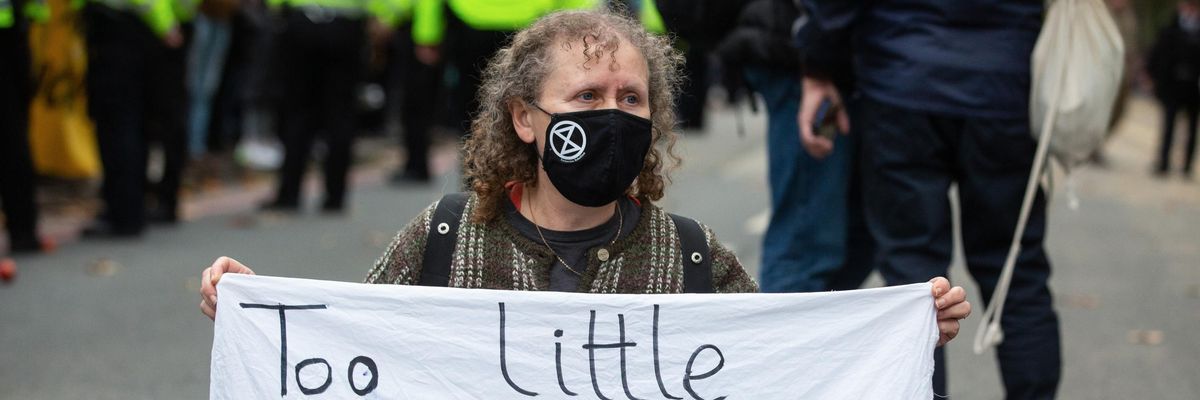
The delegates who were able to attend faced consistent pressure from activists on the streets of Glasgow. Two marches, Fridays for Future and the Global Day of Action, had much higher attendance than expected. Inside the COP26 meetings, delegates from the Global South and allied organizations kept the pressure on as well.
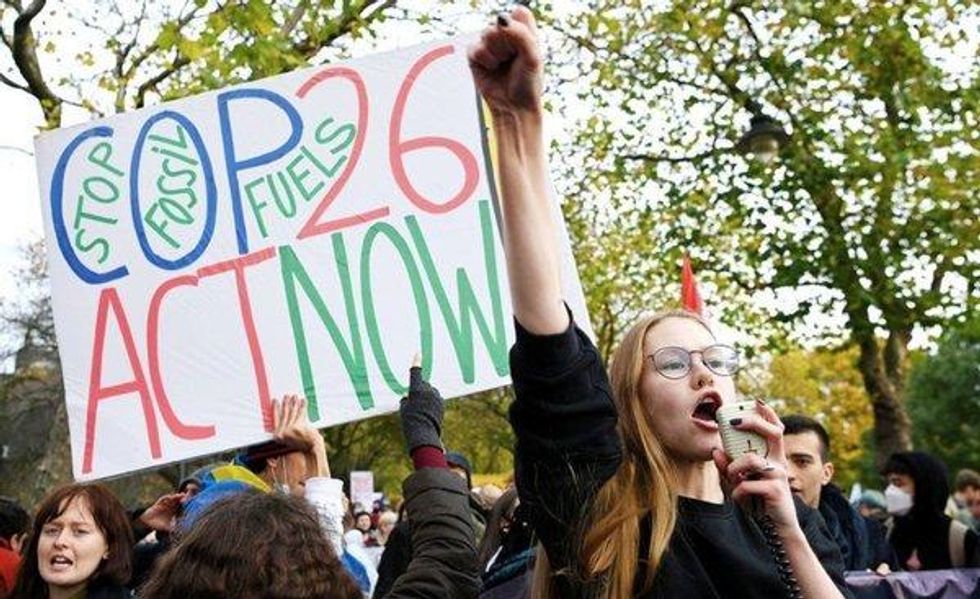
A protester speaks during the Friday for Futures rally.
The U.N.'s goal is to limit global warming to 1.5degC, a decision made in accordance with the science of the Intergovernmental Panel on Climate Change. Now, as a part of the Glasgow Climate Pact, nations must commit to emissions reductions of 45 percent based on 2010 levels by 2030. But according to the Climate Action Tracker, current pledges have the world on track for 2.4degC of global warming.
While the announcements of the first week on methane and coal were welcome, the other fossil fuel--oil--needs to be addressed, too. On coal, while twenty-three countries committed to shutting down coal, of the five biggest coal producers--China, India, the United States, Australia, and Indonesia--only Indonesia signed on. Some have surmised that the United States did not sign on due to U.S. Senator Joe Manchin's machinations with regard to the Build Back Better Act currently winding its way through Congress.
The Glasgow Climate Pact specifically calls for "a phasedown of unabated coal and a phase-out of inefficient fossil fuel subsidies." In a high drama moment in the final hours of COP26, India called for the phrase "phase-out" of coal to be replaced with "phasedown."
Many nations around the world are already suffering the impacts of climate change and have been dealing with them for at least a decade. These impacts include drought in Kenya--with 2.1 million facing starvation right now, crops failing, and animals dying--as Elizabeth Wathuti shared in her opening day address. They also include rising sea levels, which threaten low-lying islands as delegates from the Maldives, the Marshall Islands, and Tuvalu repeatedly underscored.
Through the UNFCCC developing nations receive funding from developed nations for mitigation and adaptation, and the funds are supposed to be split evenly between the two. Mitigation refers to actions that reduce greenhouse gas emissions, for example, shifting to renewable energy. Currently, mitigation receives about 75 percent of the funds. Adaptation, which receives the other 25 percent of funds, refers to actions that respond to the effects of climate change, such as sea level rise and moving infrastructure or people inland.
Developing nations that produce negligible amounts of emissions but have already been disproportionately impacted by climate change are more in need of the adaptation funds in order to protect and save themselves. So developing nations, especially the G77+ China and the Alliance of Small Island States negotiating blocs, pushed hard to increase the contribution to adaptation. One positive outcome of COP26 is that adaptation funds will be doubled beginning in 2025.
Lastly, developing nations have been pushing for "loss and damage," or unforeseeable climate change impacts, to be included in the Glasgow Climate Pact. In an initial draft, a facility for loss and damage was going to be established. Foundations offered to contribute $3 billion to kick-start it. This facility was, however, later replaced with a "Glasgow Dialogue" to "discuss arrangements for funding." Delegates from the Global South, especially the G77+China and AOSIS, were fuming. They do not want to dialogue or discuss; they need to see developed nations take action.
While the removal of the facility for loss and damage irked most impacted developing nations, they plan to keep the pressure on. The historical responsibility for emitting lies with developed nations. While some countries call these climate reparations, the United States has explicitly expressed concern that it might expose the U.S. government and corporations to liabilities.
With the focus on coal and natural gas (via the methane pledge), concerns loom that oil is not getting enough attention. The biggest oil and gas producers are the United States, Saudi Arabia, Russia, and Canada, so tracking their movement toward winnowing down oil use is pivotal as well.
In sum, COP26 brought some movement but not enough. Activists and allied organizations are sure to keep pushing for substantial change. This decade is key. "We have exactly ninety-eight months to halve global emissions," Aminath Shauna, Environment Minister of the Maldives, said. "The difference between 1.5 and 2 degrees is a death sentence for us."
The pact creates a timeline to bring nations back to the table with higher commitments to reduce greenhouse gas emissions, references the reduction of fossil fuels, and allocates more funding from developed nations to developing nations.
But, while those are worthwhile goals, the pact lacks an ambitious plan to reduce developed nations' emissions, fails to phase-out coal, and heel-drags on paying up owed funds.
With the focus on coal and natural gas, concerns loom that oil is not getting enough attention.
Though COP26 was promised to be the most inclusive climate negotiation ever, it ended up being the most exclusionary. One-third of Pacific island nations did not have any delegates in attendance due to travel restrictions, and many African nations did not have full representation citing visa issues. Overall, vaccine apartheid, visa troubles, and prohibitive costs prevented many delegates, journalists, and members of civil society from attending, disproportionately impacting representation from the Global South.
The delegates who were able to attend faced consistent pressure from activists on the streets of Glasgow. Two marches, Fridays for Future and the Global Day of Action, had much higher attendance than expected. Inside the COP26 meetings, delegates from the Global South and allied organizations kept the pressure on as well.
A protester speaks during the Friday for Futures rally.
The U.N.'s goal is to limit global warming to 1.5degC, a decision made in accordance with the science of the Intergovernmental Panel on Climate Change. Now, as a part of the Glasgow Climate Pact, nations must commit to emissions reductions of 45 percent based on 2010 levels by 2030. But according to the Climate Action Tracker, current pledges have the world on track for 2.4degC of global warming.
While the announcements of the first week on methane and coal were welcome, the other fossil fuel--oil--needs to be addressed, too. On coal, while twenty-three countries committed to shutting down coal, of the five biggest coal producers--China, India, the United States, Australia, and Indonesia--only Indonesia signed on. Some have surmised that the United States did not sign on due to U.S. Senator Joe Manchin's machinations with regard to the Build Back Better Act currently winding its way through Congress.
The Glasgow Climate Pact specifically calls for "a phasedown of unabated coal and a phase-out of inefficient fossil fuel subsidies." In a high drama moment in the final hours of COP26, India called for the phrase "phase-out" of coal to be replaced with "phasedown."
Many nations around the world are already suffering the impacts of climate change and have been dealing with them for at least a decade. These impacts include drought in Kenya--with 2.1 million facing starvation right now, crops failing, and animals dying--as Elizabeth Wathuti shared in her opening day address. They also include rising sea levels, which threaten low-lying islands as delegates from the Maldives, the Marshall Islands, and Tuvalu repeatedly underscored.
Through the UNFCCC developing nations receive funding from developed nations for mitigation and adaptation, and the funds are supposed to be split evenly between the two. Mitigation refers to actions that reduce greenhouse gas emissions, for example, shifting to renewable energy. Currently, mitigation receives about 75 percent of the funds. Adaptation, which receives the other 25 percent of funds, refers to actions that respond to the effects of climate change, such as sea level rise and moving infrastructure or people inland.
Developing nations that produce negligible amounts of emissions but have already been disproportionately impacted by climate change are more in need of the adaptation funds in order to protect and save themselves. So developing nations, especially the G77+ China and the Alliance of Small Island States negotiating blocs, pushed hard to increase the contribution to adaptation. One positive outcome of COP26 is that adaptation funds will be doubled beginning in 2025.
Lastly, developing nations have been pushing for "loss and damage," or unforeseeable climate change impacts, to be included in the Glasgow Climate Pact. In an initial draft, a facility for loss and damage was going to be established. Foundations offered to contribute $3 billion to kick-start it. This facility was, however, later replaced with a "Glasgow Dialogue" to "discuss arrangements for funding." Delegates from the Global South, especially the G77+China and AOSIS, were fuming. They do not want to dialogue or discuss; they need to see developed nations take action.
While the removal of the facility for loss and damage irked most impacted developing nations, they plan to keep the pressure on. The historical responsibility for emitting lies with developed nations. While some countries call these climate reparations, the United States has explicitly expressed concern that it might expose the U.S. government and corporations to liabilities.
With the focus on coal and natural gas (via the methane pledge), concerns loom that oil is not getting enough attention. The biggest oil and gas producers are the United States, Saudi Arabia, Russia, and Canada, so tracking their movement toward winnowing down oil use is pivotal as well.
In sum, COP26 brought some movement but not enough. Activists and allied organizations are sure to keep pushing for substantial change. This decade is key. "We have exactly ninety-eight months to halve global emissions," Aminath Shauna, Environment Minister of the Maldives, said. "The difference between 1.5 and 2 degrees is a death sentence for us."
The pact creates a timeline to bring nations back to the table with higher commitments to reduce greenhouse gas emissions, references the reduction of fossil fuels, and allocates more funding from developed nations to developing nations.
But, while those are worthwhile goals, the pact lacks an ambitious plan to reduce developed nations' emissions, fails to phase-out coal, and heel-drags on paying up owed funds.
With the focus on coal and natural gas, concerns loom that oil is not getting enough attention.
Though COP26 was promised to be the most inclusive climate negotiation ever, it ended up being the most exclusionary. One-third of Pacific island nations did not have any delegates in attendance due to travel restrictions, and many African nations did not have full representation citing visa issues. Overall, vaccine apartheid, visa troubles, and prohibitive costs prevented many delegates, journalists, and members of civil society from attending, disproportionately impacting representation from the Global South.
The delegates who were able to attend faced consistent pressure from activists on the streets of Glasgow. Two marches, Fridays for Future and the Global Day of Action, had much higher attendance than expected. Inside the COP26 meetings, delegates from the Global South and allied organizations kept the pressure on as well.
A protester speaks during the Friday for Futures rally.
The U.N.'s goal is to limit global warming to 1.5degC, a decision made in accordance with the science of the Intergovernmental Panel on Climate Change. Now, as a part of the Glasgow Climate Pact, nations must commit to emissions reductions of 45 percent based on 2010 levels by 2030. But according to the Climate Action Tracker, current pledges have the world on track for 2.4degC of global warming.
While the announcements of the first week on methane and coal were welcome, the other fossil fuel--oil--needs to be addressed, too. On coal, while twenty-three countries committed to shutting down coal, of the five biggest coal producers--China, India, the United States, Australia, and Indonesia--only Indonesia signed on. Some have surmised that the United States did not sign on due to U.S. Senator Joe Manchin's machinations with regard to the Build Back Better Act currently winding its way through Congress.
The Glasgow Climate Pact specifically calls for "a phasedown of unabated coal and a phase-out of inefficient fossil fuel subsidies." In a high drama moment in the final hours of COP26, India called for the phrase "phase-out" of coal to be replaced with "phasedown."
Many nations around the world are already suffering the impacts of climate change and have been dealing with them for at least a decade. These impacts include drought in Kenya--with 2.1 million facing starvation right now, crops failing, and animals dying--as Elizabeth Wathuti shared in her opening day address. They also include rising sea levels, which threaten low-lying islands as delegates from the Maldives, the Marshall Islands, and Tuvalu repeatedly underscored.
Through the UNFCCC developing nations receive funding from developed nations for mitigation and adaptation, and the funds are supposed to be split evenly between the two. Mitigation refers to actions that reduce greenhouse gas emissions, for example, shifting to renewable energy. Currently, mitigation receives about 75 percent of the funds. Adaptation, which receives the other 25 percent of funds, refers to actions that respond to the effects of climate change, such as sea level rise and moving infrastructure or people inland.
Developing nations that produce negligible amounts of emissions but have already been disproportionately impacted by climate change are more in need of the adaptation funds in order to protect and save themselves. So developing nations, especially the G77+ China and the Alliance of Small Island States negotiating blocs, pushed hard to increase the contribution to adaptation. One positive outcome of COP26 is that adaptation funds will be doubled beginning in 2025.
Lastly, developing nations have been pushing for "loss and damage," or unforeseeable climate change impacts, to be included in the Glasgow Climate Pact. In an initial draft, a facility for loss and damage was going to be established. Foundations offered to contribute $3 billion to kick-start it. This facility was, however, later replaced with a "Glasgow Dialogue" to "discuss arrangements for funding." Delegates from the Global South, especially the G77+China and AOSIS, were fuming. They do not want to dialogue or discuss; they need to see developed nations take action.
While the removal of the facility for loss and damage irked most impacted developing nations, they plan to keep the pressure on. The historical responsibility for emitting lies with developed nations. While some countries call these climate reparations, the United States has explicitly expressed concern that it might expose the U.S. government and corporations to liabilities.
With the focus on coal and natural gas (via the methane pledge), concerns loom that oil is not getting enough attention. The biggest oil and gas producers are the United States, Saudi Arabia, Russia, and Canada, so tracking their movement toward winnowing down oil use is pivotal as well.
In sum, COP26 brought some movement but not enough. Activists and allied organizations are sure to keep pushing for substantial change. This decade is key. "We have exactly ninety-eight months to halve global emissions," Aminath Shauna, Environment Minister of the Maldives, said. "The difference between 1.5 and 2 degrees is a death sentence for us."