SUBSCRIBE TO OUR FREE NEWSLETTER
Daily news & progressive opinion—funded by the people, not the corporations—delivered straight to your inbox.
5
#000000
#FFFFFF
To donate by check, phone, or other method, see our More Ways to Give page.
Daily news & progressive opinion—funded by the people, not the corporations—delivered straight to your inbox.
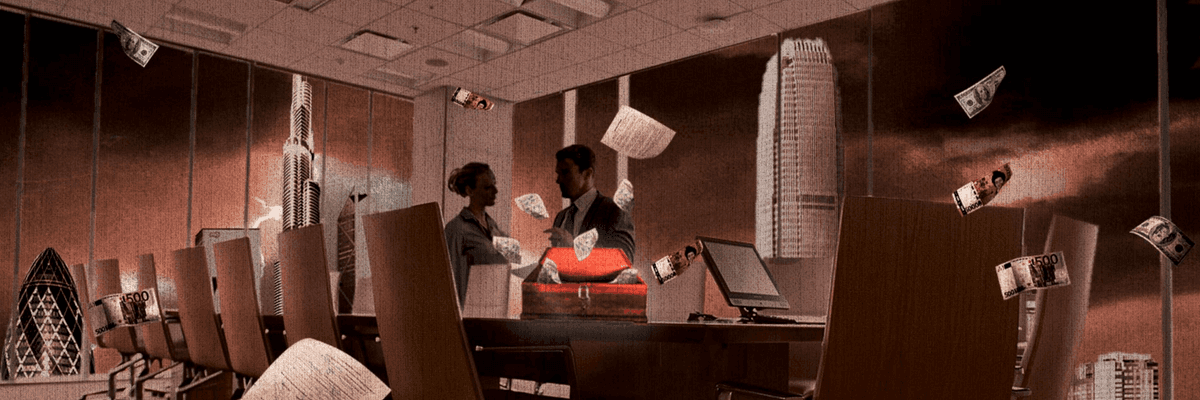
The Pandora papers are a massive expose about the secret shell games and tax avoidance schemes of the world's ultra-wealthy, from over 200 countries. (Image: Inkyfada / ICIJ)
This week we are closely watching the disclosures emerge from the Pandora Papers, a massive leak of secret data about the illicit financial activities of the super-wealthy from 200 countries. In the days to come, we will learn more about the tax avoidance of billionaires and the ways states like South Dakota and Florida have become U.S. tax havens.
Here are Five Things You Need to Know:
1. The Largest-Ever Journalistic Collaborative, More Significant Than the Panama Papers
The Pandora papers are a massive expose about the secret shell games and tax avoidance schemes of the world's ultra-wealthy, from over 200 countries. This massive undertaking involved 600 journalists from 117 countries and was coordinated by the International Consortium of Investigative Journalists (ICIJ) in what they describe as the "largest-ever journalistic collaborative." See initial coverage here in The Washington Post and The Guardian, two of the key media outlets part of the consortium.
Five and a half years ago, the ICIJ released the Panama Papers, which focused on a leak from a single law firm, Mossack Fonseca. According to Gerald Ryle, director of the ICIJ, the Pandora Papers are the "Panama Papers on steroids." See a summary prepared by the ICIJ here.
The Pandora papers draws on leaks from confidential records at 14 different offshore wealth service firms in Switzerland, Singapore, Cyprus, Samoa, Vietnam, Hong Kong, as well as firms in well-known tax havens such as Belize, Seychelles, Bahamas and the British Virgin Islands (BVI). These firms help wealthy individuals and corporations to form trusts, foundations, incorporate companies, and establish other entities in low- or no-tax jurisdictions.
The Pandora Papers analyzed 12 million files from these firms including leaked emails, memos, tax declarations, bank statements, passport scans, diagrams of corporate structures, secret spreadsheets and clandestine real estate contracts. Some reveal the real owners of opaque shell companies for the first time.
2. The Global Implications Are Huge and Politicians Will Be Embarrassed
The Pandora Papers are truly a global story, with major implications for many countries. Some of the largest revelations involve Russian nationals with connections to Vladimir Putin and elites from Latin America. For example, journalists from the Spanish daily El Pais, exposed the "Secret Vault of Mexican Billionaires." In Mexico they found over 3,000 wealthy and powerful Mexicans in the 11.9 million leaked files, with connections to current and previous presidents. They discovered a common pattern of wealthy Mexican elites using a single Panamanian law firm, Alcogal (Aleman, Cordero, Galindo & Lee), along with shell companies and trusts in the British Virgin Islands, and real estate purchases in Miami and around the US.
The Pandora Papers will hopefully turn up the heat on the politicians that maintain the wealth-hiding status quo. The files list over 330 current and former politicians and world leaders from 91 countries that are implicated in transactions. This is twice the number implicated in the 2016 Panama Papers.
Political leaders include King Abdullah II from Jordan and former British Prime Minister Tony Blair (according to The Guardian, Jordan blocked the ICIJ web site hours before the Pandora papers release). This explains why existing political bodies seem incapable of closing down systems that enable wealth hiding and tax dodging.
"It demonstrates that the people that could end the secrecy of offshore systems... are themselves benefiting from it," said Gerald Ryle, director of the ICIJ. "So there's no incentive for them to end it."
3. The US is Exposed as a Global Tax Haven
U.S. citizens are under-represented in these leaks, largely due to where the service providers are located. No U.S. wealth-advisory firms were part of the leaks. Nonetheless over 700 companies revealed in the Pandora papers have ties to beneficial owners connected to the United States.
The Pandora Papers do, however, expose how the U.S. has become a global destination for global wealth, some of it ill-gotten. The Panama Papers, the Paradise Papers (Bermuda and Singapore) and Luanda Leaks (Angola) all reinforced the misperception that most of these financial shell games take place "off shore," in secrecy jurisdictions and tax havens in small countries with weak banking laws.
But the Pandora Papers show that the U.S. and states like South Dakota now rival notoriously opaque jurisdictions in Europe and the Caribbean in financial secrecy. The states with the most active trusts revealed in the files were South Dakota (81), Florida (37), Delaware (35), Texas (24), and Nevada (14).
4. Shady Billionaires from Around the World Are Going to South Dakota
Findings suggest that South Dakota has sheltered billions in wealth linked to wealthy individuals previously accused of serious financial crimes and labor violations. Two examples: Brazilian orange juice baron, Horst Happel, was fined $88 million in 2016 for underpaying his workers. In 2017, he moved substantial wealth to a trust in South Dakota. Carlos Morales Troncoso was the former vice-president of the Dominican Republic. He ran a sugar company called Central Romana that was accused of human rights violations. He set up trusts for his daughters in the Bahamas that were moved, after his death, to South Dakota. The reason global money is flowing to the "Mount Rushmore State" is because of their low taxes and advantageous dynasty trusts.
5. The Pandora Papers Will Boost the Case for US Tax Reform
The Pandora Papers will hopefully give a boost to the US Congress in passing a progressive tax plan to fund the Build Back Better program--and that includes money for IRS enforcement to ensure the wealthy pay their fair share.
As The Guardian reports: "The Pandora papers also place a revealing spotlight on the offshore system itself. In a development likely to prove embarrassing for US President, Joe Biden, who has pledged to lead efforts internationally to bring transparency to the global finance system, the US emerges from the leak as a leading tax haven. The files suggest the state of South Dakota, in particular, is shelter billions of dollars in wealth linked to individuals previously accused of serious financial crimes."
Dear Common Dreams reader, It’s been nearly 30 years since I co-founded Common Dreams with my late wife, Lina Newhouser. We had the radical notion that journalism should serve the public good, not corporate profits. It was clear to us from the outset what it would take to build such a project. No paid advertisements. No corporate sponsors. No millionaire publisher telling us what to think or do. Many people said we wouldn't last a year, but we proved those doubters wrong. Together with a tremendous team of journalists and dedicated staff, we built an independent media outlet free from the constraints of profits and corporate control. Our mission has always been simple: To inform. To inspire. To ignite change for the common good. Building Common Dreams was not easy. Our survival was never guaranteed. When you take on the most powerful forces—Wall Street greed, fossil fuel industry destruction, Big Tech lobbyists, and uber-rich oligarchs who have spent billions upon billions rigging the economy and democracy in their favor—the only bulwark you have is supporters who believe in your work. But here’s the urgent message from me today. It's never been this bad out there. And it's never been this hard to keep us going. At the very moment Common Dreams is most needed, the threats we face are intensifying. We need your support now more than ever. We don't accept corporate advertising and never will. We don't have a paywall because we don't think people should be blocked from critical news based on their ability to pay. Everything we do is funded by the donations of readers like you. When everyone does the little they can afford, we are strong. But if that support retreats or dries up, so do we. Will you donate now to make sure Common Dreams not only survives but thrives? —Craig Brown, Co-founder |
This week we are closely watching the disclosures emerge from the Pandora Papers, a massive leak of secret data about the illicit financial activities of the super-wealthy from 200 countries. In the days to come, we will learn more about the tax avoidance of billionaires and the ways states like South Dakota and Florida have become U.S. tax havens.
Here are Five Things You Need to Know:
1. The Largest-Ever Journalistic Collaborative, More Significant Than the Panama Papers
The Pandora papers are a massive expose about the secret shell games and tax avoidance schemes of the world's ultra-wealthy, from over 200 countries. This massive undertaking involved 600 journalists from 117 countries and was coordinated by the International Consortium of Investigative Journalists (ICIJ) in what they describe as the "largest-ever journalistic collaborative." See initial coverage here in The Washington Post and The Guardian, two of the key media outlets part of the consortium.
Five and a half years ago, the ICIJ released the Panama Papers, which focused on a leak from a single law firm, Mossack Fonseca. According to Gerald Ryle, director of the ICIJ, the Pandora Papers are the "Panama Papers on steroids." See a summary prepared by the ICIJ here.
The Pandora papers draws on leaks from confidential records at 14 different offshore wealth service firms in Switzerland, Singapore, Cyprus, Samoa, Vietnam, Hong Kong, as well as firms in well-known tax havens such as Belize, Seychelles, Bahamas and the British Virgin Islands (BVI). These firms help wealthy individuals and corporations to form trusts, foundations, incorporate companies, and establish other entities in low- or no-tax jurisdictions.
The Pandora Papers analyzed 12 million files from these firms including leaked emails, memos, tax declarations, bank statements, passport scans, diagrams of corporate structures, secret spreadsheets and clandestine real estate contracts. Some reveal the real owners of opaque shell companies for the first time.
2. The Global Implications Are Huge and Politicians Will Be Embarrassed
The Pandora Papers are truly a global story, with major implications for many countries. Some of the largest revelations involve Russian nationals with connections to Vladimir Putin and elites from Latin America. For example, journalists from the Spanish daily El Pais, exposed the "Secret Vault of Mexican Billionaires." In Mexico they found over 3,000 wealthy and powerful Mexicans in the 11.9 million leaked files, with connections to current and previous presidents. They discovered a common pattern of wealthy Mexican elites using a single Panamanian law firm, Alcogal (Aleman, Cordero, Galindo & Lee), along with shell companies and trusts in the British Virgin Islands, and real estate purchases in Miami and around the US.
The Pandora Papers will hopefully turn up the heat on the politicians that maintain the wealth-hiding status quo. The files list over 330 current and former politicians and world leaders from 91 countries that are implicated in transactions. This is twice the number implicated in the 2016 Panama Papers.
Political leaders include King Abdullah II from Jordan and former British Prime Minister Tony Blair (according to The Guardian, Jordan blocked the ICIJ web site hours before the Pandora papers release). This explains why existing political bodies seem incapable of closing down systems that enable wealth hiding and tax dodging.
"It demonstrates that the people that could end the secrecy of offshore systems... are themselves benefiting from it," said Gerald Ryle, director of the ICIJ. "So there's no incentive for them to end it."
3. The US is Exposed as a Global Tax Haven
U.S. citizens are under-represented in these leaks, largely due to where the service providers are located. No U.S. wealth-advisory firms were part of the leaks. Nonetheless over 700 companies revealed in the Pandora papers have ties to beneficial owners connected to the United States.
The Pandora Papers do, however, expose how the U.S. has become a global destination for global wealth, some of it ill-gotten. The Panama Papers, the Paradise Papers (Bermuda and Singapore) and Luanda Leaks (Angola) all reinforced the misperception that most of these financial shell games take place "off shore," in secrecy jurisdictions and tax havens in small countries with weak banking laws.
But the Pandora Papers show that the U.S. and states like South Dakota now rival notoriously opaque jurisdictions in Europe and the Caribbean in financial secrecy. The states with the most active trusts revealed in the files were South Dakota (81), Florida (37), Delaware (35), Texas (24), and Nevada (14).
4. Shady Billionaires from Around the World Are Going to South Dakota
Findings suggest that South Dakota has sheltered billions in wealth linked to wealthy individuals previously accused of serious financial crimes and labor violations. Two examples: Brazilian orange juice baron, Horst Happel, was fined $88 million in 2016 for underpaying his workers. In 2017, he moved substantial wealth to a trust in South Dakota. Carlos Morales Troncoso was the former vice-president of the Dominican Republic. He ran a sugar company called Central Romana that was accused of human rights violations. He set up trusts for his daughters in the Bahamas that were moved, after his death, to South Dakota. The reason global money is flowing to the "Mount Rushmore State" is because of their low taxes and advantageous dynasty trusts.
5. The Pandora Papers Will Boost the Case for US Tax Reform
The Pandora Papers will hopefully give a boost to the US Congress in passing a progressive tax plan to fund the Build Back Better program--and that includes money for IRS enforcement to ensure the wealthy pay their fair share.
As The Guardian reports: "The Pandora papers also place a revealing spotlight on the offshore system itself. In a development likely to prove embarrassing for US President, Joe Biden, who has pledged to lead efforts internationally to bring transparency to the global finance system, the US emerges from the leak as a leading tax haven. The files suggest the state of South Dakota, in particular, is shelter billions of dollars in wealth linked to individuals previously accused of serious financial crimes."
This week we are closely watching the disclosures emerge from the Pandora Papers, a massive leak of secret data about the illicit financial activities of the super-wealthy from 200 countries. In the days to come, we will learn more about the tax avoidance of billionaires and the ways states like South Dakota and Florida have become U.S. tax havens.
Here are Five Things You Need to Know:
1. The Largest-Ever Journalistic Collaborative, More Significant Than the Panama Papers
The Pandora papers are a massive expose about the secret shell games and tax avoidance schemes of the world's ultra-wealthy, from over 200 countries. This massive undertaking involved 600 journalists from 117 countries and was coordinated by the International Consortium of Investigative Journalists (ICIJ) in what they describe as the "largest-ever journalistic collaborative." See initial coverage here in The Washington Post and The Guardian, two of the key media outlets part of the consortium.
Five and a half years ago, the ICIJ released the Panama Papers, which focused on a leak from a single law firm, Mossack Fonseca. According to Gerald Ryle, director of the ICIJ, the Pandora Papers are the "Panama Papers on steroids." See a summary prepared by the ICIJ here.
The Pandora papers draws on leaks from confidential records at 14 different offshore wealth service firms in Switzerland, Singapore, Cyprus, Samoa, Vietnam, Hong Kong, as well as firms in well-known tax havens such as Belize, Seychelles, Bahamas and the British Virgin Islands (BVI). These firms help wealthy individuals and corporations to form trusts, foundations, incorporate companies, and establish other entities in low- or no-tax jurisdictions.
The Pandora Papers analyzed 12 million files from these firms including leaked emails, memos, tax declarations, bank statements, passport scans, diagrams of corporate structures, secret spreadsheets and clandestine real estate contracts. Some reveal the real owners of opaque shell companies for the first time.
2. The Global Implications Are Huge and Politicians Will Be Embarrassed
The Pandora Papers are truly a global story, with major implications for many countries. Some of the largest revelations involve Russian nationals with connections to Vladimir Putin and elites from Latin America. For example, journalists from the Spanish daily El Pais, exposed the "Secret Vault of Mexican Billionaires." In Mexico they found over 3,000 wealthy and powerful Mexicans in the 11.9 million leaked files, with connections to current and previous presidents. They discovered a common pattern of wealthy Mexican elites using a single Panamanian law firm, Alcogal (Aleman, Cordero, Galindo & Lee), along with shell companies and trusts in the British Virgin Islands, and real estate purchases in Miami and around the US.
The Pandora Papers will hopefully turn up the heat on the politicians that maintain the wealth-hiding status quo. The files list over 330 current and former politicians and world leaders from 91 countries that are implicated in transactions. This is twice the number implicated in the 2016 Panama Papers.
Political leaders include King Abdullah II from Jordan and former British Prime Minister Tony Blair (according to The Guardian, Jordan blocked the ICIJ web site hours before the Pandora papers release). This explains why existing political bodies seem incapable of closing down systems that enable wealth hiding and tax dodging.
"It demonstrates that the people that could end the secrecy of offshore systems... are themselves benefiting from it," said Gerald Ryle, director of the ICIJ. "So there's no incentive for them to end it."
3. The US is Exposed as a Global Tax Haven
U.S. citizens are under-represented in these leaks, largely due to where the service providers are located. No U.S. wealth-advisory firms were part of the leaks. Nonetheless over 700 companies revealed in the Pandora papers have ties to beneficial owners connected to the United States.
The Pandora Papers do, however, expose how the U.S. has become a global destination for global wealth, some of it ill-gotten. The Panama Papers, the Paradise Papers (Bermuda and Singapore) and Luanda Leaks (Angola) all reinforced the misperception that most of these financial shell games take place "off shore," in secrecy jurisdictions and tax havens in small countries with weak banking laws.
But the Pandora Papers show that the U.S. and states like South Dakota now rival notoriously opaque jurisdictions in Europe and the Caribbean in financial secrecy. The states with the most active trusts revealed in the files were South Dakota (81), Florida (37), Delaware (35), Texas (24), and Nevada (14).
4. Shady Billionaires from Around the World Are Going to South Dakota
Findings suggest that South Dakota has sheltered billions in wealth linked to wealthy individuals previously accused of serious financial crimes and labor violations. Two examples: Brazilian orange juice baron, Horst Happel, was fined $88 million in 2016 for underpaying his workers. In 2017, he moved substantial wealth to a trust in South Dakota. Carlos Morales Troncoso was the former vice-president of the Dominican Republic. He ran a sugar company called Central Romana that was accused of human rights violations. He set up trusts for his daughters in the Bahamas that were moved, after his death, to South Dakota. The reason global money is flowing to the "Mount Rushmore State" is because of their low taxes and advantageous dynasty trusts.
5. The Pandora Papers Will Boost the Case for US Tax Reform
The Pandora Papers will hopefully give a boost to the US Congress in passing a progressive tax plan to fund the Build Back Better program--and that includes money for IRS enforcement to ensure the wealthy pay their fair share.
As The Guardian reports: "The Pandora papers also place a revealing spotlight on the offshore system itself. In a development likely to prove embarrassing for US President, Joe Biden, who has pledged to lead efforts internationally to bring transparency to the global finance system, the US emerges from the leak as a leading tax haven. The files suggest the state of South Dakota, in particular, is shelter billions of dollars in wealth linked to individuals previously accused of serious financial crimes."