SUBSCRIBE TO OUR FREE NEWSLETTER
Daily news & progressive opinion—funded by the people, not the corporations—delivered straight to your inbox.
5
#000000
#FFFFFF
To donate by check, phone, or other method, see our More Ways to Give page.
Daily news & progressive opinion—funded by the people, not the corporations—delivered straight to your inbox.
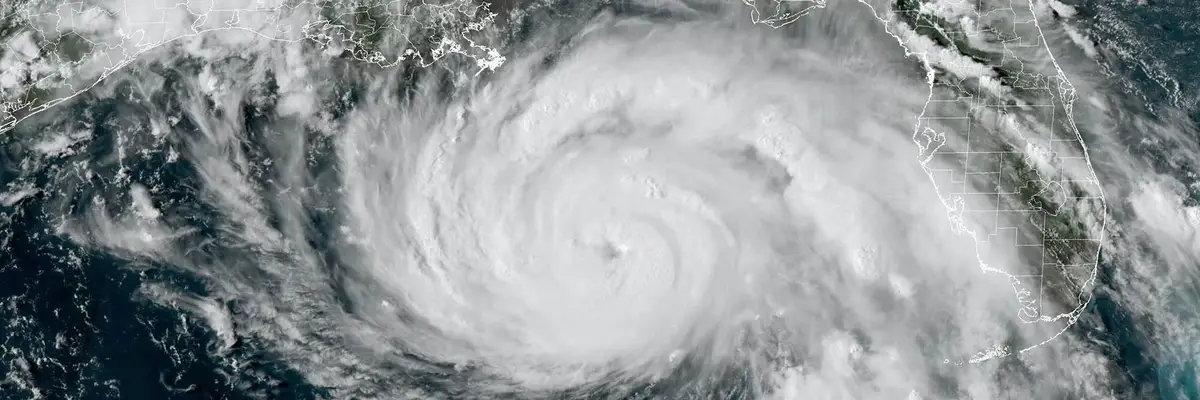
A NOAA satellite image shows Hurricane Ida intensifying over the Gulf of Mexico. NOAA/GOES/AFP via Getty Images
It was 20 years ago that French-speaking fishermen first told me that Hurricane Katrina and Hurricane Ida were coming to Louisiana. These Cajun oystermen and shrimpers didn't know the actual names, of course. They just knew that historically massive storms would soon wipe out the state as sure as the sun sets over the Gulf of Mexico.
Even then, two decades ago, the rising seas and eroding wetlands were inflicting pain. An area of coastal land the size of Manhattan was turning to water every 10 months in Louisiana (and still does). The storms were also getting bigger, and precipitation patterns were changing across the state, fishermen said.
As a triggering force, climate change was just beginning to be understood by the broader public in the early 2000s, when I was a journalist chronicling the fading folkways of Cajun fishermen. Now the scientific knowledge is encyclopedic. Each summer, record global heat turns the gulf into a "hot bathtub" that is the jet fuel for hurricanes like Ida. And a warming climate stores more moisture and raw atmospheric power, which helped to crumple massive electrical towers around New Orleans and destroy hundreds of square miles of bayou country with ocean waves and interior downpours.
We know what's causing these extreme events. In fact, it's a wonder we still name hurricanes after people (and Greek letters when we increasingly deplete the English alphabet during storm season). Noted author Bill McKibben and others have argued we should name hurricanes after the major oil companies that have done the most to trigger our nightmarish heat.
And now, for destroying every major power line into New Orleans and darkening the homes of a million people across Louisiana? For leaving some COVID-filled hospitals with no air conditioning and trapping whole families in their flooded attics? Take your pick: Hurricane Phillips? Hurricane Royal Dutch Shell?
All of which raises the question: Who should pay for the suffering and destruction in Louisiana today? The economic hit to the state and the nation will veer into the tens of billions. Why should utility ratepayers, deceived by mega polluters, pay to rebuild the electrical grid? Why should taxpayers alone foot the bill for repaired roads and the herculean efforts of the Federal Emergency Management Agency?
U.S. Sen. Chris Van Hollen, a Maryland Democrat, believes the oil companies should pay for it -- or at least part of it. In July, as wildfires raged out West and Hurricane season was ramping up, Senator Van Hollen unveiled his "Polluters Pay Climate Fund" legislation. It would assess a superfund-like fee on the world's biggest historic carbon polluters -- mostly mega-rich oil companies -- to the tune of $500 billion over 10 years. The fees would apply in a way that prevents companies from passing the cost on to consumers, and the revenue would be used for climate mitigation and adaptation measures. The bill is supported by groups ranging from the Union of Concerned Scientists to the Sunrise Movement. Polling shows nearly 80% of the public supports the idea that fossil fuel companies are responsible for addressing climate change, including a strong Republican majority.
But that's little current solace to Cajun fishermen whose shrimp boats are now smashed against docks and whose fishing grounds are a wasteland of flattened wetlands and scoured rivers. Decades of misnamed hurricanes, powered by Exxon and company, have taken their toll.
Dear Common Dreams reader, It’s been nearly 30 years since I co-founded Common Dreams with my late wife, Lina Newhouser. We had the radical notion that journalism should serve the public good, not corporate profits. It was clear to us from the outset what it would take to build such a project. No paid advertisements. No corporate sponsors. No millionaire publisher telling us what to think or do. Many people said we wouldn't last a year, but we proved those doubters wrong. Together with a tremendous team of journalists and dedicated staff, we built an independent media outlet free from the constraints of profits and corporate control. Our mission has always been simple: To inform. To inspire. To ignite change for the common good. Building Common Dreams was not easy. Our survival was never guaranteed. When you take on the most powerful forces—Wall Street greed, fossil fuel industry destruction, Big Tech lobbyists, and uber-rich oligarchs who have spent billions upon billions rigging the economy and democracy in their favor—the only bulwark you have is supporters who believe in your work. But here’s the urgent message from me today. It's never been this bad out there. And it's never been this hard to keep us going. At the very moment Common Dreams is most needed, the threats we face are intensifying. We need your support now more than ever. We don't accept corporate advertising and never will. We don't have a paywall because we don't think people should be blocked from critical news based on their ability to pay. Everything we do is funded by the donations of readers like you. When everyone does the little they can afford, we are strong. But if that support retreats or dries up, so do we. Will you donate now to make sure Common Dreams not only survives but thrives? —Craig Brown, Co-founder |
It was 20 years ago that French-speaking fishermen first told me that Hurricane Katrina and Hurricane Ida were coming to Louisiana. These Cajun oystermen and shrimpers didn't know the actual names, of course. They just knew that historically massive storms would soon wipe out the state as sure as the sun sets over the Gulf of Mexico.
Even then, two decades ago, the rising seas and eroding wetlands were inflicting pain. An area of coastal land the size of Manhattan was turning to water every 10 months in Louisiana (and still does). The storms were also getting bigger, and precipitation patterns were changing across the state, fishermen said.
As a triggering force, climate change was just beginning to be understood by the broader public in the early 2000s, when I was a journalist chronicling the fading folkways of Cajun fishermen. Now the scientific knowledge is encyclopedic. Each summer, record global heat turns the gulf into a "hot bathtub" that is the jet fuel for hurricanes like Ida. And a warming climate stores more moisture and raw atmospheric power, which helped to crumple massive electrical towers around New Orleans and destroy hundreds of square miles of bayou country with ocean waves and interior downpours.
We know what's causing these extreme events. In fact, it's a wonder we still name hurricanes after people (and Greek letters when we increasingly deplete the English alphabet during storm season). Noted author Bill McKibben and others have argued we should name hurricanes after the major oil companies that have done the most to trigger our nightmarish heat.
And now, for destroying every major power line into New Orleans and darkening the homes of a million people across Louisiana? For leaving some COVID-filled hospitals with no air conditioning and trapping whole families in their flooded attics? Take your pick: Hurricane Phillips? Hurricane Royal Dutch Shell?
All of which raises the question: Who should pay for the suffering and destruction in Louisiana today? The economic hit to the state and the nation will veer into the tens of billions. Why should utility ratepayers, deceived by mega polluters, pay to rebuild the electrical grid? Why should taxpayers alone foot the bill for repaired roads and the herculean efforts of the Federal Emergency Management Agency?
U.S. Sen. Chris Van Hollen, a Maryland Democrat, believes the oil companies should pay for it -- or at least part of it. In July, as wildfires raged out West and Hurricane season was ramping up, Senator Van Hollen unveiled his "Polluters Pay Climate Fund" legislation. It would assess a superfund-like fee on the world's biggest historic carbon polluters -- mostly mega-rich oil companies -- to the tune of $500 billion over 10 years. The fees would apply in a way that prevents companies from passing the cost on to consumers, and the revenue would be used for climate mitigation and adaptation measures. The bill is supported by groups ranging from the Union of Concerned Scientists to the Sunrise Movement. Polling shows nearly 80% of the public supports the idea that fossil fuel companies are responsible for addressing climate change, including a strong Republican majority.
But that's little current solace to Cajun fishermen whose shrimp boats are now smashed against docks and whose fishing grounds are a wasteland of flattened wetlands and scoured rivers. Decades of misnamed hurricanes, powered by Exxon and company, have taken their toll.
It was 20 years ago that French-speaking fishermen first told me that Hurricane Katrina and Hurricane Ida were coming to Louisiana. These Cajun oystermen and shrimpers didn't know the actual names, of course. They just knew that historically massive storms would soon wipe out the state as sure as the sun sets over the Gulf of Mexico.
Even then, two decades ago, the rising seas and eroding wetlands were inflicting pain. An area of coastal land the size of Manhattan was turning to water every 10 months in Louisiana (and still does). The storms were also getting bigger, and precipitation patterns were changing across the state, fishermen said.
As a triggering force, climate change was just beginning to be understood by the broader public in the early 2000s, when I was a journalist chronicling the fading folkways of Cajun fishermen. Now the scientific knowledge is encyclopedic. Each summer, record global heat turns the gulf into a "hot bathtub" that is the jet fuel for hurricanes like Ida. And a warming climate stores more moisture and raw atmospheric power, which helped to crumple massive electrical towers around New Orleans and destroy hundreds of square miles of bayou country with ocean waves and interior downpours.
We know what's causing these extreme events. In fact, it's a wonder we still name hurricanes after people (and Greek letters when we increasingly deplete the English alphabet during storm season). Noted author Bill McKibben and others have argued we should name hurricanes after the major oil companies that have done the most to trigger our nightmarish heat.
And now, for destroying every major power line into New Orleans and darkening the homes of a million people across Louisiana? For leaving some COVID-filled hospitals with no air conditioning and trapping whole families in their flooded attics? Take your pick: Hurricane Phillips? Hurricane Royal Dutch Shell?
All of which raises the question: Who should pay for the suffering and destruction in Louisiana today? The economic hit to the state and the nation will veer into the tens of billions. Why should utility ratepayers, deceived by mega polluters, pay to rebuild the electrical grid? Why should taxpayers alone foot the bill for repaired roads and the herculean efforts of the Federal Emergency Management Agency?
U.S. Sen. Chris Van Hollen, a Maryland Democrat, believes the oil companies should pay for it -- or at least part of it. In July, as wildfires raged out West and Hurricane season was ramping up, Senator Van Hollen unveiled his "Polluters Pay Climate Fund" legislation. It would assess a superfund-like fee on the world's biggest historic carbon polluters -- mostly mega-rich oil companies -- to the tune of $500 billion over 10 years. The fees would apply in a way that prevents companies from passing the cost on to consumers, and the revenue would be used for climate mitigation and adaptation measures. The bill is supported by groups ranging from the Union of Concerned Scientists to the Sunrise Movement. Polling shows nearly 80% of the public supports the idea that fossil fuel companies are responsible for addressing climate change, including a strong Republican majority.
But that's little current solace to Cajun fishermen whose shrimp boats are now smashed against docks and whose fishing grounds are a wasteland of flattened wetlands and scoured rivers. Decades of misnamed hurricanes, powered by Exxon and company, have taken their toll.