SUBSCRIBE TO OUR FREE NEWSLETTER
Daily news & progressive opinion—funded by the people, not the corporations—delivered straight to your inbox.
5
#000000
#FFFFFF
To donate by check, phone, or other method, see our More Ways to Give page.
Daily news & progressive opinion—funded by the people, not the corporations—delivered straight to your inbox.
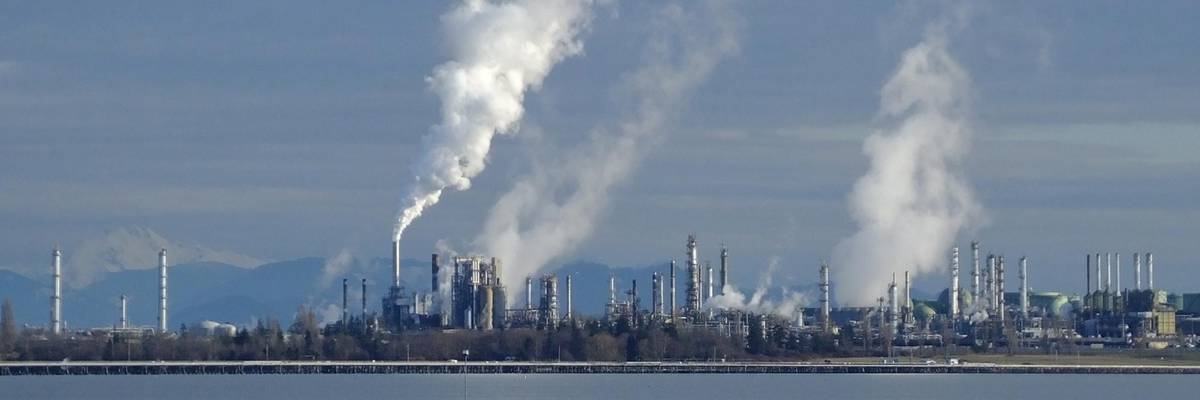
View of the Tesoro Anacortes oil refinery in Skagit County, Washington on January 15, 2017. (Photo: Linda, Fortuna future/Flickr/cc)
The world is processing the dire warnings in the latest Intergovernmental Panel on Climate Change (IPCC) report: We are on a path to see global temperature rise to surpass the 2-degree threshold, bringing more intense heat waves, droughts, and sea-level rise--unless we shift rapidly away from fossil fuels. And the climate movement is grappling with both a sense of urgency and profound disappointment with the Biden administration. It was bad enough that the administration backed a bipartisan infrastructure proposal that jettisoned many key clean energy provisions, but it's even worse that the infrastructure plan includes billions of dollars in new fossil fuel subsidies.
That spending would support "carbon capture," a category of technologies that are misleadingly categorized as climate-friendly. State agencies and lawmakers are making sure that Pennsylvania positions itself as a "carbon capture hub," which means fitting existing power plants with technology to capture emissions, along with miles of new carbon dioxide pipelines and underground storage facilities in western parts of the state. There is even a plan to build a new "zero emissions" coal-fired power plant, thanks to the magic of carbon capture.
Any climate plan that relies on carbon capture is a foolish bet. Unfortunately, right now it is one the White House seems enthusiastic to make.
Proponents like to argue that this suite of technologies will help us reach our net-zero goals, envisioning a world where power plants can capture carbon dioxide from smokestacks--stopping the problem before it starts--or capturing CO2 from the atmosphere (what's known as direct air capture). Either option would require massive amounts of energy or water. Despite billions of dollars in investments already, there is little progress to show for it.
But it's just as revealing--and troubling--to see that the other goal is to actually increase our dependence on burning fossil fuels. When Energy Secretary Jennifer Granholm recently touted the billions of dollars in new funding for carbon capture, she said it "will help the oil and gas sector to be able to ramp up production, but in a way that's clean." While that sounds nice, the catch is that there is no sign that you can make burning fossil fuels "clean."
After billions of dollars in public and private investments, there are no carbon capture success stories. The Petra Nova coal plant in Texas, once the poster child for CO2 removal, consistently underperformed before closing last year. Another high-profile example--the San Juan Generating Station in New Mexico, pushed as the largest capture project in the world--may meet a similar fate.
Look beyond these examples and you find more bad news. A 2020 review of scientific research found that popular carbon capture methods have actually put more CO2 into the atmosphere than they have removed. "Successful" capture projects exist at facilities where the carbon is injected into existing wells to extract more oil, known as "enhanced oil recovery." If you think that doubling down on fossil fuels is an effective climate solution, the planet begs to differ.
Even assuming these burgeoning capture projects are ever successful, their practical effects would be extremely limited. The Energy Department recently announced $12 million to fund "direct air capture" projects, with a goal to remove 100,000 tons of carbon dioxide from the atmosphere. To put this in perspective, the largest corporate polluter in 2018 was responsible for releasing 119 million tons of CO2 and other greenhouse gases. And expanding these technologies would present other insurmountable problems: Removing one billion tons of carbon emissions (a fraction of our country's yearly total) through direct air capture would require nearly the entire electricity output of the United States.
It's not hard to see why swooning over carbon capture has been a bipartisan enterprise. There's an unmistakable appeal to the idea that someday, somehow, we might bottle up climate-warming greenhouse gas emissions from power plants, install this technology on fossil fuel infrastructure, dust off our hands, and move on.
But this kind of wishful thinking is dangerous. Counting on carbon capture's effectiveness squanders the opportunity to enact stronger measures (a phenomenon known as "mitigation deterrence"). In other words, we would extend the fossil fuel era instead of ending it, all while telling ourselves that we are doing the right thing. So long as techno-futurists, fossil fuel companies, and government officials are enraptured by carbon capture, there will be less pressure to stop climate pollution by putting an end to drilling and fracking.
The IPCC report is telling us--in no uncertain terms--that the worst-case climate scenarios are looming, and things are all but guaranteed to get worse before they get better. The energy industry's advertisements promise us an easy fix: No need to transform these systems entirely when we can just capture the bad stuff and bury it. Any climate plan that relies on carbon capture is a foolish bet. Unfortunately, right now it is one the White House seems enthusiastic to make.
Dear Common Dreams reader, It’s been nearly 30 years since I co-founded Common Dreams with my late wife, Lina Newhouser. We had the radical notion that journalism should serve the public good, not corporate profits. It was clear to us from the outset what it would take to build such a project. No paid advertisements. No corporate sponsors. No millionaire publisher telling us what to think or do. Many people said we wouldn't last a year, but we proved those doubters wrong. Together with a tremendous team of journalists and dedicated staff, we built an independent media outlet free from the constraints of profits and corporate control. Our mission has always been simple: To inform. To inspire. To ignite change for the common good. Building Common Dreams was not easy. Our survival was never guaranteed. When you take on the most powerful forces—Wall Street greed, fossil fuel industry destruction, Big Tech lobbyists, and uber-rich oligarchs who have spent billions upon billions rigging the economy and democracy in their favor—the only bulwark you have is supporters who believe in your work. But here’s the urgent message from me today. It's never been this bad out there. And it's never been this hard to keep us going. At the very moment Common Dreams is most needed, the threats we face are intensifying. We need your support now more than ever. We don't accept corporate advertising and never will. We don't have a paywall because we don't think people should be blocked from critical news based on their ability to pay. Everything we do is funded by the donations of readers like you. When everyone does the little they can afford, we are strong. But if that support retreats or dries up, so do we. Will you donate now to make sure Common Dreams not only survives but thrives? —Craig Brown, Co-founder |
The world is processing the dire warnings in the latest Intergovernmental Panel on Climate Change (IPCC) report: We are on a path to see global temperature rise to surpass the 2-degree threshold, bringing more intense heat waves, droughts, and sea-level rise--unless we shift rapidly away from fossil fuels. And the climate movement is grappling with both a sense of urgency and profound disappointment with the Biden administration. It was bad enough that the administration backed a bipartisan infrastructure proposal that jettisoned many key clean energy provisions, but it's even worse that the infrastructure plan includes billions of dollars in new fossil fuel subsidies.
That spending would support "carbon capture," a category of technologies that are misleadingly categorized as climate-friendly. State agencies and lawmakers are making sure that Pennsylvania positions itself as a "carbon capture hub," which means fitting existing power plants with technology to capture emissions, along with miles of new carbon dioxide pipelines and underground storage facilities in western parts of the state. There is even a plan to build a new "zero emissions" coal-fired power plant, thanks to the magic of carbon capture.
Any climate plan that relies on carbon capture is a foolish bet. Unfortunately, right now it is one the White House seems enthusiastic to make.
Proponents like to argue that this suite of technologies will help us reach our net-zero goals, envisioning a world where power plants can capture carbon dioxide from smokestacks--stopping the problem before it starts--or capturing CO2 from the atmosphere (what's known as direct air capture). Either option would require massive amounts of energy or water. Despite billions of dollars in investments already, there is little progress to show for it.
But it's just as revealing--and troubling--to see that the other goal is to actually increase our dependence on burning fossil fuels. When Energy Secretary Jennifer Granholm recently touted the billions of dollars in new funding for carbon capture, she said it "will help the oil and gas sector to be able to ramp up production, but in a way that's clean." While that sounds nice, the catch is that there is no sign that you can make burning fossil fuels "clean."
After billions of dollars in public and private investments, there are no carbon capture success stories. The Petra Nova coal plant in Texas, once the poster child for CO2 removal, consistently underperformed before closing last year. Another high-profile example--the San Juan Generating Station in New Mexico, pushed as the largest capture project in the world--may meet a similar fate.
Look beyond these examples and you find more bad news. A 2020 review of scientific research found that popular carbon capture methods have actually put more CO2 into the atmosphere than they have removed. "Successful" capture projects exist at facilities where the carbon is injected into existing wells to extract more oil, known as "enhanced oil recovery." If you think that doubling down on fossil fuels is an effective climate solution, the planet begs to differ.
Even assuming these burgeoning capture projects are ever successful, their practical effects would be extremely limited. The Energy Department recently announced $12 million to fund "direct air capture" projects, with a goal to remove 100,000 tons of carbon dioxide from the atmosphere. To put this in perspective, the largest corporate polluter in 2018 was responsible for releasing 119 million tons of CO2 and other greenhouse gases. And expanding these technologies would present other insurmountable problems: Removing one billion tons of carbon emissions (a fraction of our country's yearly total) through direct air capture would require nearly the entire electricity output of the United States.
It's not hard to see why swooning over carbon capture has been a bipartisan enterprise. There's an unmistakable appeal to the idea that someday, somehow, we might bottle up climate-warming greenhouse gas emissions from power plants, install this technology on fossil fuel infrastructure, dust off our hands, and move on.
But this kind of wishful thinking is dangerous. Counting on carbon capture's effectiveness squanders the opportunity to enact stronger measures (a phenomenon known as "mitigation deterrence"). In other words, we would extend the fossil fuel era instead of ending it, all while telling ourselves that we are doing the right thing. So long as techno-futurists, fossil fuel companies, and government officials are enraptured by carbon capture, there will be less pressure to stop climate pollution by putting an end to drilling and fracking.
The IPCC report is telling us--in no uncertain terms--that the worst-case climate scenarios are looming, and things are all but guaranteed to get worse before they get better. The energy industry's advertisements promise us an easy fix: No need to transform these systems entirely when we can just capture the bad stuff and bury it. Any climate plan that relies on carbon capture is a foolish bet. Unfortunately, right now it is one the White House seems enthusiastic to make.
The world is processing the dire warnings in the latest Intergovernmental Panel on Climate Change (IPCC) report: We are on a path to see global temperature rise to surpass the 2-degree threshold, bringing more intense heat waves, droughts, and sea-level rise--unless we shift rapidly away from fossil fuels. And the climate movement is grappling with both a sense of urgency and profound disappointment with the Biden administration. It was bad enough that the administration backed a bipartisan infrastructure proposal that jettisoned many key clean energy provisions, but it's even worse that the infrastructure plan includes billions of dollars in new fossil fuel subsidies.
That spending would support "carbon capture," a category of technologies that are misleadingly categorized as climate-friendly. State agencies and lawmakers are making sure that Pennsylvania positions itself as a "carbon capture hub," which means fitting existing power plants with technology to capture emissions, along with miles of new carbon dioxide pipelines and underground storage facilities in western parts of the state. There is even a plan to build a new "zero emissions" coal-fired power plant, thanks to the magic of carbon capture.
Any climate plan that relies on carbon capture is a foolish bet. Unfortunately, right now it is one the White House seems enthusiastic to make.
Proponents like to argue that this suite of technologies will help us reach our net-zero goals, envisioning a world where power plants can capture carbon dioxide from smokestacks--stopping the problem before it starts--or capturing CO2 from the atmosphere (what's known as direct air capture). Either option would require massive amounts of energy or water. Despite billions of dollars in investments already, there is little progress to show for it.
But it's just as revealing--and troubling--to see that the other goal is to actually increase our dependence on burning fossil fuels. When Energy Secretary Jennifer Granholm recently touted the billions of dollars in new funding for carbon capture, she said it "will help the oil and gas sector to be able to ramp up production, but in a way that's clean." While that sounds nice, the catch is that there is no sign that you can make burning fossil fuels "clean."
After billions of dollars in public and private investments, there are no carbon capture success stories. The Petra Nova coal plant in Texas, once the poster child for CO2 removal, consistently underperformed before closing last year. Another high-profile example--the San Juan Generating Station in New Mexico, pushed as the largest capture project in the world--may meet a similar fate.
Look beyond these examples and you find more bad news. A 2020 review of scientific research found that popular carbon capture methods have actually put more CO2 into the atmosphere than they have removed. "Successful" capture projects exist at facilities where the carbon is injected into existing wells to extract more oil, known as "enhanced oil recovery." If you think that doubling down on fossil fuels is an effective climate solution, the planet begs to differ.
Even assuming these burgeoning capture projects are ever successful, their practical effects would be extremely limited. The Energy Department recently announced $12 million to fund "direct air capture" projects, with a goal to remove 100,000 tons of carbon dioxide from the atmosphere. To put this in perspective, the largest corporate polluter in 2018 was responsible for releasing 119 million tons of CO2 and other greenhouse gases. And expanding these technologies would present other insurmountable problems: Removing one billion tons of carbon emissions (a fraction of our country's yearly total) through direct air capture would require nearly the entire electricity output of the United States.
It's not hard to see why swooning over carbon capture has been a bipartisan enterprise. There's an unmistakable appeal to the idea that someday, somehow, we might bottle up climate-warming greenhouse gas emissions from power plants, install this technology on fossil fuel infrastructure, dust off our hands, and move on.
But this kind of wishful thinking is dangerous. Counting on carbon capture's effectiveness squanders the opportunity to enact stronger measures (a phenomenon known as "mitigation deterrence"). In other words, we would extend the fossil fuel era instead of ending it, all while telling ourselves that we are doing the right thing. So long as techno-futurists, fossil fuel companies, and government officials are enraptured by carbon capture, there will be less pressure to stop climate pollution by putting an end to drilling and fracking.
The IPCC report is telling us--in no uncertain terms--that the worst-case climate scenarios are looming, and things are all but guaranteed to get worse before they get better. The energy industry's advertisements promise us an easy fix: No need to transform these systems entirely when we can just capture the bad stuff and bury it. Any climate plan that relies on carbon capture is a foolish bet. Unfortunately, right now it is one the White House seems enthusiastic to make.